
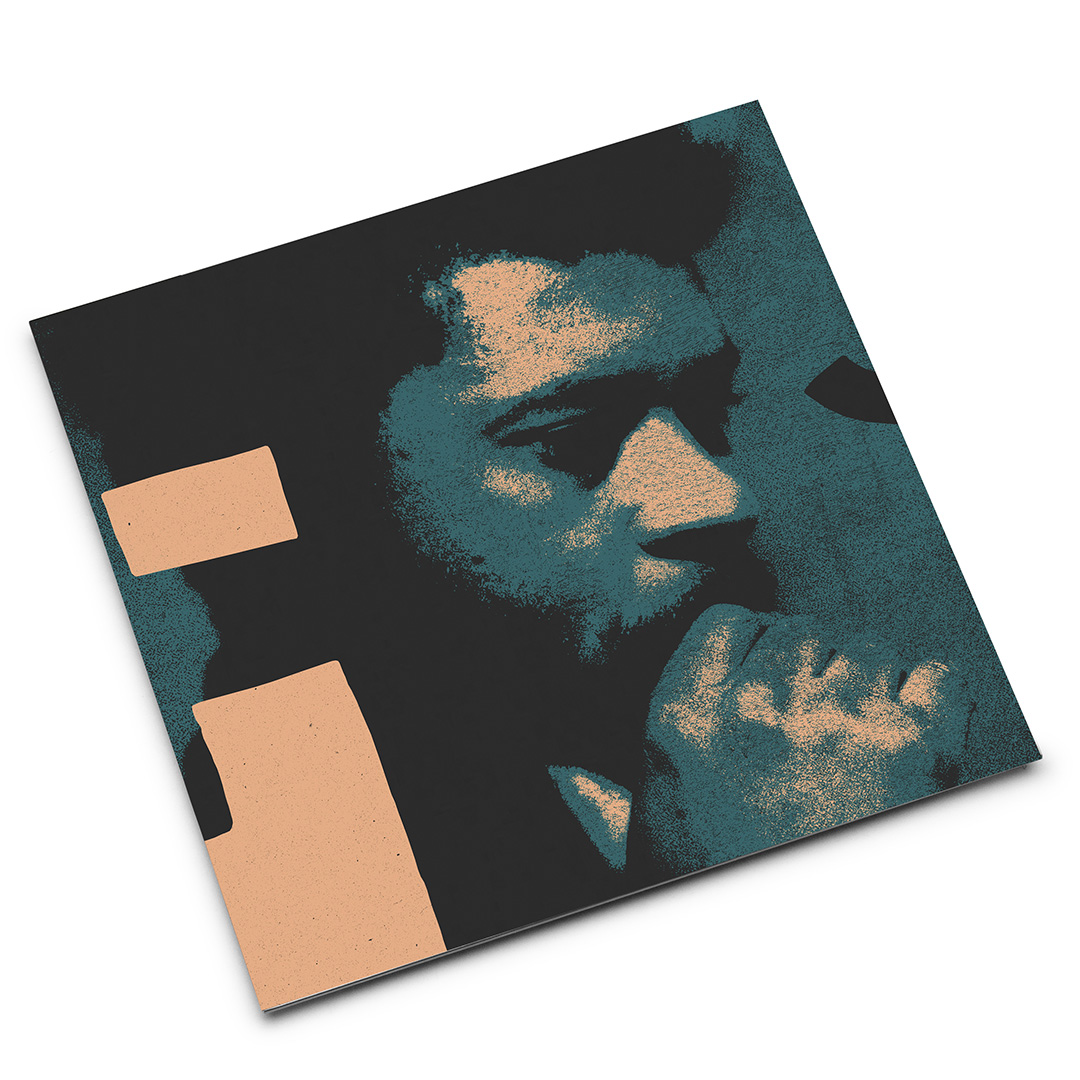
“Comprising four tracks across its two sides, “Orange Fish Tears” is a marvel of mid 1970’s free improvisation, standing high within a canon marked by many masterpieces.”
Just in time for the end of summer, the venerable Souffle Continu returns with the latest instalment of their Palm Redux Series - dedicated to the French pianist composer, Jef Gilson's seminal Productions Artistiques Littéraires et Musicales (PALM) imprint - the first ever reissue of Baikida Carroll's legendary debut LP "Orange Fish Tears".
A singular bridge between the American and French free jazz scenes, with a bit of Brazil thrown in via the contribution of Naná Vasconcelos, it’s one of the great holy grails of creative music of its era, intertwining hard blown fire with complex, intricate passages, and moments of funk driven joy. It's as essential as they come, and easily among the most important reissues of the year.
Since their humble launch in 2014, the Paris based imprint, Souffle Continu, has assembled a discography that is second to none, bringing together some of the most important gestures of the historic French avant-garde. Particularly focused on efforts of free improvisation that sprang from the country across the 1960s and 70s, artefacts from the vaults of seminal imprints like Futura, Saravah, and Un-Deux-Trois have formed an axis around which their cause has spun. Among these labels, few are as important as Palm, which forms the basis of Souffle Continu’s incredible Palm Redux Series, which has already brought us an incredible suite of LPs, including Philippe Maté & Jef Gilson's "Workshop", Jacques Thollot's "Watch Devil Go", and numerous others, since getting off the ground in 2021. Now the series continues with what might just be its most exciting entry to date, the first ever reissue of “Orange Fish Tears”, the trumpeter Baikida Carroll’s debut as leader from 1974. We’ve been waiting a long time to see this one come back into the world.
Trained on trumpet at Southern Illinois University and at the Armed Forces School of Music, Baikida Carroll got his professional start early, working with luminaries like Albert King, Little Milton, and Oliver Sain while he was still in high school. Following the creation of his own band, the Baikida Carroll Sextet, during the late 1960s he joined and became the orchestra conductor/director of the Black Artists Group of St. Louis (BAG), a multidisciplinary arts collective that included Baikida Carroll, Charles ‘Bobo’ Shaw, Floyd LeFlore, Joseph Bowie, Oliver Lake, and Shirley LeFlore. Often considered to be the sister organization to Chicago’s AACM, and deeply connected to the Art Ensemble of Chicago via the brothers, Joseph and Lester Bowie, like many of the most talented figures of American free jazz of that period, BAG collectively moved to Paris during the early 70s, touring and recording their seminal, lone LP, “In Paris, Aries”, which was self-released by the band in 1973. During this period Carroll also performed with Anthony Braxton, Alan Silva, Steve Lacy, his own quartet, Solidarity Unit, Inc., and The Human Arts Ensemble, as well as teaching theory and trumpet at The American Center in Paris and being an artist in residence at the Cité internationale des arts.
While Carroll would later reach legendary status in New York’s fiercely independent free jazz loft scene, working with luminaries like Sam Rivers, Charlie Haden, Cecil Taylor, Reggie Workman, Carla Bley, Wadada Leo Smith, and Roscoe Mitchell, he stayed in Paris until 1975, just long enough to record his legendary debut as a leader, “Orange Fish Tears”, issued by Palm that same year. Instigated by Jef Gilson, he entered the studio with his regular working partner, Oliver Lake, as well as the young Franco-Chilean pianist, Manuel Villaroel of the band Matchi-Oul, and the Brazilian percussionist, Naná Vasconcelos, who was still riding the wave of his debut LP, Africadeus, issued by Saravah in 1973.
Comprising four tracks across its two sides, “Orange Fish Tears” is a marvel of mid 1970’s free improvisation, standing high within a canon marked by many masterpieces. The album’s first side channels jazz’s African roots, with its opener "Orange Fish Tears”, unfurling a rippling tapestry of small percussion and bells that lays beneath sparse interventions of piano, brass, and woodwinds, before the band lets loose with "Forest Scorpion”, harnessing a full throttle percussive groove that borders, at times, on the funky, amidst the wild, free jazz fire unleashed by the band.
While occasionally rising with furious blasts of tonality and rhythm, the two works that comprise the second side of “Orange Fish Tears” - “Rue Roger” and “Porte D'Orléans” - are considerably more restrained, introspective, and complex affairs, encountering the band working with small sounds and space, as well as dissonance and repetition, that carves an incredible middle ground between European avant-garde classical music, and afro-dynamic free improvisation.
Absolutely incredible from its first sounding to the last, over the years since its original release in 1975, “Orange Fish Tears” has climbed toward legendary status and begun to command towering figures on the collectors' market, making Souffle Continu’s first ever reissue incredibly welcome and needed, making it available to serious free jazz fans and a whole new generation of listeners.
Originally published by Soundohm.