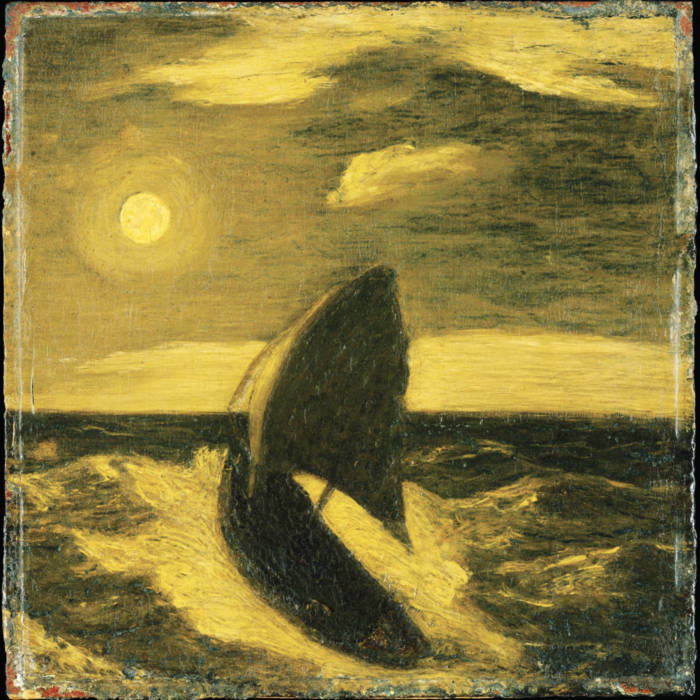
“Offering a perfect, crystalline image of twin poles of the crucial, historical work to which Recital has long been dedicated, each is overwhelmingly beautiful in its own, very distinct ways.”
Hot on the heels of some killer releases by Thomas Buckner, Delphine Dora, Sydney Spann, and Noel Meek & Mattin, the Los Angeles based imprint, Recital, launches into the autumn months with two of their most exciting releases of the year: a brilliant LP capturing the late great Sun Ra in conversation with none other than the sound and intermedia artist, and Fluxus associate, Charlie Morrow, and the first ever vinyl pressing of “Let the Darkness Fall”, a staggeringly beautiful outing from 1999 by the guitar quartet of Suzanne Langille, Andrew Burnes, David Daniell, and Loren Connors.
Offering a perfect, crystalline image of twin poles of the crucial, historical work to which Recital has long been dedicated, each is overwhelmingly beautiful in its own, very distinct ways.
Since its humble founding over a decade ago, the Los Angeles based imprint, Recital, has become an unmissable force in the landscape of experimental sound. Run by the composer Sean McCann, the label has continuously mined the contemporary contexts and shadowy histories of sound art, poetry, and musical experimentalism, bringing forth remarkable recordings by Dick Higgins, Daniel Schmidt, Philip Corner, Adriano Spatola, Geoff Hendricks, Loren Connors, Sarah Davachi, Jackson Mac Low, Roger Eno, Annea Lockwood, François Dufrêne, and a great many more. Adding to their already staggering catalog of historical artefacts are the label’s latest two releases.
Loren Connors stands high among the most important guitarists of the 20th century; a visionary whose singular approach to the instrument has entirely reconfigured how its potential is perceived. Most well-known for his remarkable, experimental improvisations, Connors has always cut a wider creative path, often rethinking more traditional approaches to music making and song. This is particularly apparent via the window of his longstanding creative partnership with the guitarist and vocalist Suzanne Langille. The pair began working together during the 1980s, first on releases that appeared under Connors’ Guitar Roberts moniker. This interplay proved to be so fruitful that the pair began to work steadily as an equally billed duo, before eventually going on to co-found the band, Haunted House, with Andrew Burnes and Neel Murgai.
“Let the Darkness Fall”, originally issued on CD by Secretly Canadian in 1999, is a fascinating counterpoint to Haunted House’s debut LP, “Up In Flames”, issued that same year by Erstwhile. The line up only varies by one, adding David Daniell and lacking Neel Murgai, but encounters the quartet moving toward markedly different territory, defined by inviting ambiences and song-oriented structures. Recorded in the summer of 1998 on a Tascam Porta-5 in Langille and Connors’ Brooklyn living room, it remained a highly sought after cult-artefact over the 25 years since.
Described by Sean McCann as a “tender gloom [that] sounds like a broadcast of some private séance”, “Let the Darkness Fall” weaves the delicate and restrained sounds of four guitars, dancing in slow motion against their corresponding tones, against Suzanne Langille’s ephemerally delivered poetic lines. Marked by a rare sensitivity, arcing seamlessly across the album’s seven compositions, each member of the quartet melds into a single entity that manages to finish the other’s musical thoughts, as Langille’s gentle voice glows through the whispering guitars.
Overwhelmingly beautiful and remaining creatively forward-thinking 25 years on - marking out a distinct territory between post-rock, ambient music, and rigorous experimentation - Suzanne Langille, Andrew Burnes, David Daniell, and Loren Connors’ “Let the Darkness Fall” reenters the present day as an absolute revelation for anyone who missed it the first time around.
Within the history of jazz, few artists carved as unique a path as Sun Ra. He rested within the idiom’s great tradition, where he was remarkably influential, yet somehow stood entirely outside of it on his own. He was a public figure with a larger-than-life persona, yet was mysterious and filled with contradiction and paradox. Thirty years after his death, we’re still piecing together the puzzle and trying to make sense of it all, which makes Recital’s latest LP, a long-lost interview between Charlie Morrow and Ra, that took place in 1989, a truly thrilling event, offering a crucial and previously unavailable window into both artists’ worlds.
Not unlike his more famous meeting with John Cage, the intersection of the sound and intermedia artist, and Fluxus associate, Charlie Morrow, and Sun Ra, feels unlikely and unexpected. But, that’s simply from a creative point of view. Morrow has always worn many hats and been a dedicated supporter of others. With the poet Jerome Rothenberg, he was the founder of New Wilderness Foundation, which staged concerts and released the legendary New Wilderness Audiographics cassette series between 1974 and 1989. He also published the celebrated magazine dedicated to avant-garde and experimental music, EAR, run by Beth Anderson, Laurie Spiegel, and R.I.P. Hayman. The contents of Recital’s LP are very much a product of these latter activities, specifically Morrow’s journalistic tendencies and his New Wilderness concerts.
As Morrow recalls: “My 1989 Summer Solstice Celebration featured Sun Ra and his Arkestra. On March 29, 1989, ahead of this historical performance, Sun Ra came to New York to plan the performance and do an interview with me in the Charles Morrow Associates studio. There were members of the Sun Ra Arkestra, some of my team, and a photographer present. Once in the sound studio, Sun Ra wanted to record the discussion. What he says is so much more than anyone expected. I pushed record on the tape recorder, which quietly took it all in.
What Sun Ra recorded is a breathtaking expression of his feelings and strong convictions, illustrated with personal memories and stories. My few questions to him about the upcoming Solstice and about the sun and his thoughts about a dawn event triggered his mind. He launched into a nonstop journey of ricocheting stories and concepts, climaxing when I started jamming with Sun Ra on conch horn. Our duo drives to a climactic peak with explosive conch breath sounds giving line-by-line affirmations to Sun Ra’s points.”
It’s hard to offer a better description of this incredible artefact than Morrow himself. Across the album’s two sides, the listener is enveloped in Ra’s inner world and stream of consciousness thoughts on a vast range of subjects, doubling as rare and remarkable insight into the warmth of his personality, located in space and time by the ambient sounds of the room in which the interview took place.
Originally published by Soundohm.