
“Each drawing on discrete approaches to experimentalisms in ways that readdress the terms of ambient music, they're absolute stunners that stand high among our favorite releases to have appeared this year.”
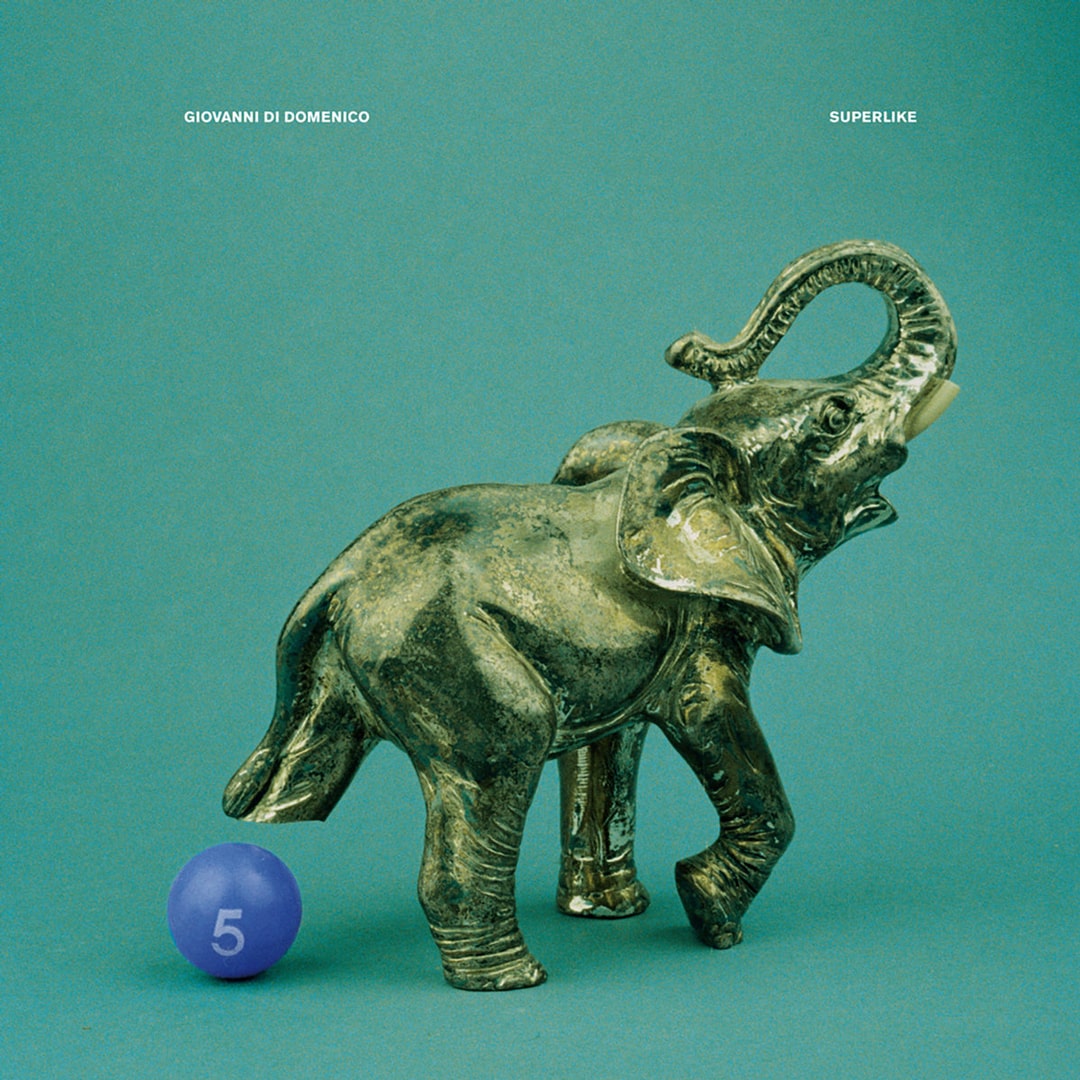
With a handful of mind-blowing releases by Folk Magic Band, Antonio Infantino ed il Gruppo di Tricarico, Langendorf United, Nexus, Ariel Kalma, and Riccardo Sinigaglia already behind them in 2023 alone, the venerable Black Sweat returns with two more stunners, the first ever vinyl reissue of the German multi-instrumentalist Klaus Wiese’s legendary solo debut, “Baraka” - originally issued as a cassette by Aquamarin Verlag in 1981 - and “Superlike” a brand new full length by Giovanni Di Domenico. Each drawing on discrete approaches to experimentalisms in ways that readdress the terms of ambient music, they're absolute stunners that stand high among our favorite releases to have appeared this year.
Since their founding just over a decade ago, the Milan based imprint, Black Sweat, has left an indelible mark on the landscape of recorded music, issuing a strikingly diverse array of efforts, spanning numerous fields and artistic disciplines, ranging from crucial historical gestures by Futuro Antico, Ariel Kalma, J.D. Emmanuel, I.P. Son Group, Wayne Siegel, Zeit, Juri Camisasca, Frederic Rzewski, and numerous others, to contemporary offerings by Maurizio Abate, DSR Lines / David Edren, Al Doum & The Faryds, Everest Magma, and Langendorf United.
The German multi-instrumentalist, Klaus Wiese (1942-2009), was a fairly enigmatic figure in the history of twentieth century music. First appearing within the early 1970s krautrock scene as a member of Popol Vuh - contributing to the band’s iconic LPs, “Hosianna Mantra” and “Seligpreisung” - by the late 70s and early 80s his studies of Sufism and Mysticism had drawn him down an alternate musical path, eventually becoming regarded, alongside Robert Rich, Steve Roach, Michael Stearns, Constance Demby, and Jonn Serrie, as one of the most respected ambient and new age artists of the era.
While Wiese would later gain note for his founding of the Nono Orchestra, an ensemble dedicated to playing the large-scale sheetmetal instruments of Robert Rutman, the bulk of his recorded output is dedicated to his masterful focus on Tibetan singing bowls. While these are beautiful and noteworthy in their own right, they slightly skew the regard and understanding for his creative scope and the breadth of his talents and ambitions as an artist who also had a high proficiency on the zither, persian stringed instruments, synths, diverse percussion, and numerous other instruments from across the world, as well as the human voice. There is arguably no better place to capture a glimpse of this than across the length of his solo debut, “Baraka”, issued on cassette by the German ambient and new age imprint, Aquamarin Verlag, in 1981.
The recording of “Baraka” follows the period during which Wiese collaborated with Deuter on “Silence is the Answer” in 1980. While it is impossible to know to what extent he was responding to those experiences, the mood of the two albums is markedly different. Comprising two suites of five part “Invocations” - “Invocation I (I-V)” and “Invocation II (I-V)” - it is nothing short of a masterpiece within the idioms to which it belongs, harnessing a vast range of acoustic and electronic instrumentation within a creative framework that has unmistakable touchstones within the experimental temperaments from which most of the krautrock generation drew.
Effectively an early work of healing music that laid the groundwork for Wiese’s subsequent decades long research into the mysticism of sound, across the length of “Baraka” the artist seeks the most essential nature of sounds, deploying minimal means - zither, tampora, cymbals, singing bowls with the light touch of effects and processing - to unfurl an infinite spirally vortex of frequencies - riding darkness and light - to reach the otherworldly through sonorous vibration.
An immersive and stunningly beautiful cosmic bath of sound, Wiese’s “Baraka” is a high-water mark in ambient and healing music, taking on a rigorous creative pursuit that pushes the boundaries of the listener’s comfort zone in ways rarely associated with those idioms. Black Sweat’s first ever vinyl reissue of “Baraka” represents the long overdue return of an album that’s chased in its original edition by nearly every serious collector of ambient music the world over, making it nothing short of huge.
In the midst of a remarkably prolific run, Giovanni Di Domenico needs little introduction to SoundOhm’s readers. We’ve written about him again and again. Over the last 2 decades, the Italian, Brussels based composer has carved a deep path through a diverse number of discrete fields within experimental music - bridging improvised music and advanced forms of electroacoustic music - while working in various ensembles - Abschattungen, AufHeben, Bonjintan, Cement Shoes, Delivery Health, etc - as well as producing a discography of critically heralded solo efforts, and intimate collaborations with Jim O'Rourke, Tatsuhisa Yamamoto, Akira Sakata, Arve Henriksen, Alexandra Grima, Nate Wooley, Chris Corsano, and others.
While Di Domenico’s approach to the creative process can be widely varying, making it hard to know how his sonic output might present, generally speaking it tends to fall on the wilder end of the spectrum. It’s rare to encounter him in the midst of a mellow and pastoral exploration, let alone one that finds him working solo on piano, the exact zone occupied by “Superlike”, his latest for Black Sweat.
“Superlike” comprises six compositions of varying length over its two sides, each of which reconfigure the terms of contemporary minimalism within Di Domenico’s longstanding exploratory practice of transmogrifying states of concentration, recollection and contemplation toward a focal node, and channelling repetition as an alchemical state that seeks truth within the smallest nuance of change. Unfurling in a remarkably intuitive way, while drawing on decades of experience and developing and shifting practice, each of “Superlike’s” compositions reach toward states of atmosphere and ambience beyond the individual character of their notes and tonal combinations, working towards a refined purity, simplicity and exactness - resting in baths of silence and space - that nods toward the Chopin of Satie in their simple elegance, while taking on the more complex tonal relationships elements of Ellington (“Live At The Whitney”) and Mingus (“Mingus Plays Piano”) to produce a remarkably individual image of minimalism at the cutting edge of contemporary sound.
Bridging the chasm between the lightest of moods and great melancholy, the calm and the agitated, and the cathartic and meditative, “Superlike” is a staggering piece of work. Not only is it Giovanni Di Domenico at his best and most unexpected, but it might just be his best record to date. A true gem of the highest order, offering endless hours of inner exploration that never lands the same place twice.
Originally published by Soundohm.