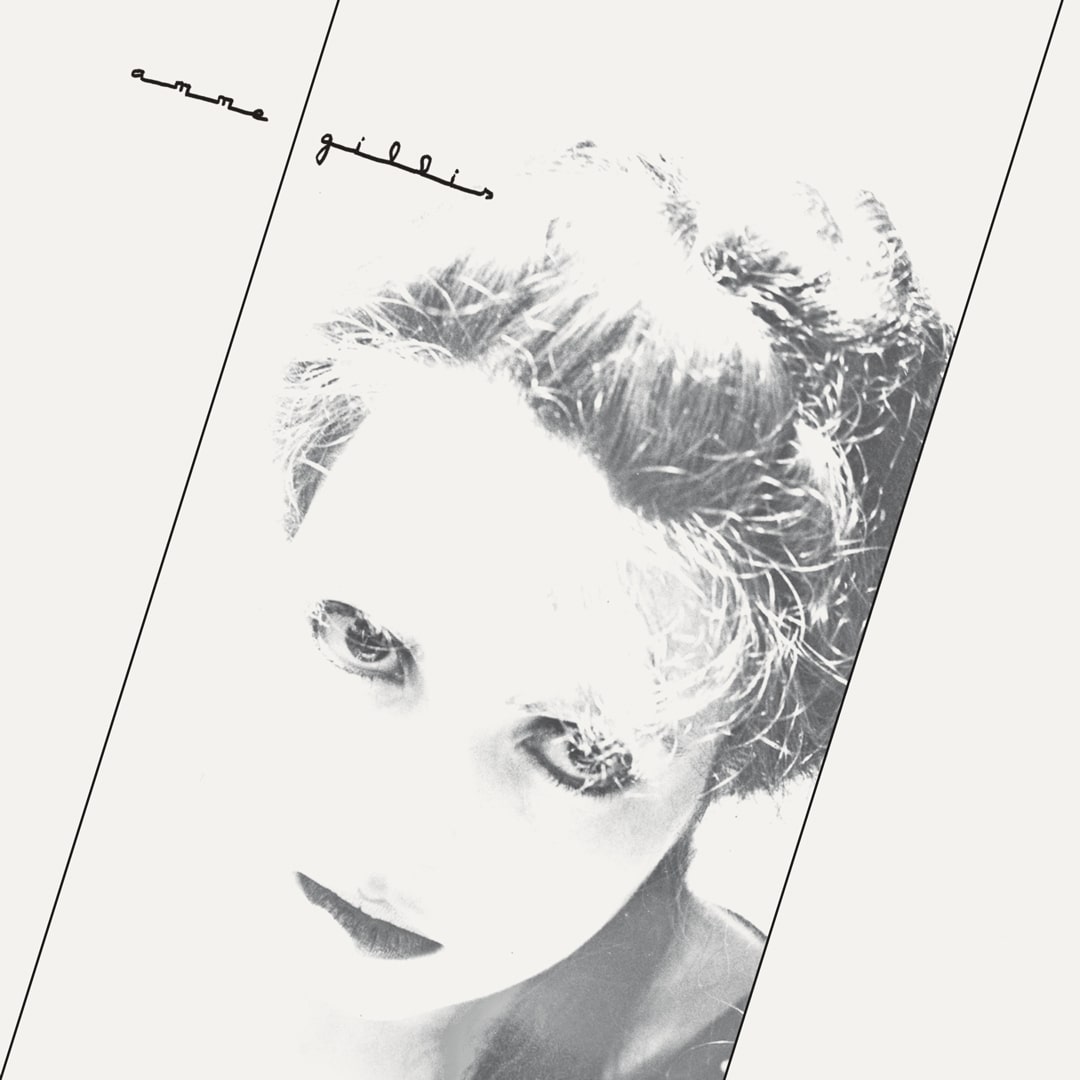
“Aha”, comprising eleven compositions, is effectively a gesture of musique concrete, utilising tape machine as compositional tool to manipulate her sound sources, including field recordings, extended vocal instrumental sounds, as well as electronics and treatments.”
The endlessly incredible La Scie Dorée, founded and run by none other than Timo van Luijk, returns with a truly mind-bending suite of LPs: “Si()six”, a brand new quartet collaboration between Gillis, Jac Berrocal, Vincent Epplay, and van Luijk; “Atlantic Crossing”, a never before heard body of archival recordings that capture Anima Musica (Limpe Fuchs & Paul Fuchs) live in collaboration with R. Carlos Nakai in 1988; a much needed repress of Mark Glynne and Bart Zwier’s “Home Comfort”, that blew us away last year and sold out in a flash; and first and foremost - falling into our cereal gaze here - the first ever vinyl reissue of Anne Gillis’ 1984 LP, “Aha”, one of the most historically important gestures of 1980s DIY musique concrète and experimentalism to have ever been laid to tape.
Founded in 2000 by Timo van Luijk, focused on issuing the work of the rich scene of artists around him, over the last two decades La Scie Dorée has assembled an entirely unique context of experimental sound, releasing brilliant full lengths by Elodie, Lumine, La Poupée Vivante, and numerous others, including his own brilliant work as a musician and composer, and has consistently reminded us that the world of experimental sound is thriving and well. Historically, La Scie Dorée has focused on contemporary offerings, with van Luijk allowing his other imprint, Metaphon, to handle reissues and archival releases like Toshi Ichiyanagi, Michael Ranta, and Takehisa Kosugi’s “Improvisation Sep. 1975”, Jacques Bekaert’s S/T, Nicole Lachartre’s “Mundus”, and Jan Bruyndonckx’s “Rails And Other Tracks”, to name only a few. But, van Luijk has never been one to be easily nailed down. Last year, La Scie Dorée broke with its own norm with the first-ever reissue of Mark Glynne and Bart Zwier’s 1980 Home Comfort LP. Their latest, the first ever vinyl reissue of Anne Gillis’ 1984 LP, “Aha”, continues the defiant trend.
Raised in Provence before settling in Paris, Anne Gillis first emerged during the early 1980s under the moniker Devil's Picnic, producing a series of synth based works that bridged an avant-garde sensitivity with the gloomier temperaments of kosmische Berlin school electronic music. Captured across the length of her seminal 1983 cassette release, “Pomme Ou Pas Pomme”, Gillis’ creative vision stands as a definitive statement of its moment, balancing a tangible sense of the bleak, against a dream of something more radical and free. Very little is known about Gillis herself. Details of her personal life have always been closely guarded, but by later in 1983 - captured by “Angebiguë”, the first album under her own name - her creative trajectory had already begun to evolve. Rippling ambiences and melodies now shared space with harsher elements of noise, electronics, and musique concrete. Marked by a deep sense of intimacy and sensitivity that set her entirely apart, it was these approaches - becoming increasingly more abstract, visceral, and visionary as they went - that would sculpt the body of work - constructed from looped sound samples drawing on found objects and her own voice - that has retained cult status ever since, culminating with 1994’s “Euragine”, her last album before disappearing from view.
Like many artists who followed a similar path, for nearly three decades every indication pointed toward Gillis and her legacy having been swallowed by the shadows of time, but then, unexpectedly in 2015 the Japanese imprint, Art Into Life, delivered “Archives Box 1983-2005” and then in 2021 “«…»”, her first album of new material to appear in 27 years, both of which set the stage for the artist’s return to broader consciousness, more reissues, and increasing activity of new work.
La Scie Dorée’s beautiful, first ever reissue of Gillis’ 1984 LP, “Aha”, now carries on this momentum. “Aha” belongs to Gillis’ earliest known body of work, having been issued as the second outing of the time, Bordeaux, France, based imprint DMA2 (their debut cassette, “Dossier Bordeaux 84”, had included an untitled piece by Gillis). Like its rough contemporaries, "Angebiguë" (1983), "Lxgrin" (1984), and "Monetachek" (1985), the album rides a razor’s edge at the juncture of the movements of minimal synth, industrial, noise, and musique concrete, all of which blossomed as a radically forward thinking form of experimental music during that era, infused with the spirit, energy, and ethos of punk and post punk. This is unquestionably the spirited proximity of Gillis’ earliest works, created between the early and mid-1980s.
“Aha”, comprising eleven compositions, is effectively a gesture of musique concrete, utilising tape machine as compositional tool to manipulate her sound sources, including field recordings, extended vocal instrumental sounds, as well as electronics and treatments. Cohesive across its totality, while each piece feels individual and specific, across the length of “Aha” destabilising, a-rhythmic punctuations, twisting textures, tones, and frantic vocalisations are woven by Gillis’s deft hand into tense tapestries of sonority - flittering abstractions within which the recognisability of sources move in and out of view - that are as brooding as they are overwhelmingly beautiful.
Profoundly sophisticated and focused, encountered 40 years down the road - the near entirety of which it has remained out of print - it’s incredibly striking how fresh, forward thinking, and contemporary “Aha” remains, particularly when recognising that its pieces are very much products of a DIY ethos and made with a fairly constrained set of tools. Had they been made at GRM - and they stand up to the high bar of quality that has become expected of that venerable institution of electroacoustic music - Gillis’ positioning in the cultural landscape, and with it her subsequent legacy, would have been as different as could be.
Originally published by Soundohm.