“Hugely significant on historical terms and absolutely gripping creatively, “Webo” is unquestionably one of the most striking bodies of free improvisational recording laid to date during the 90s.”
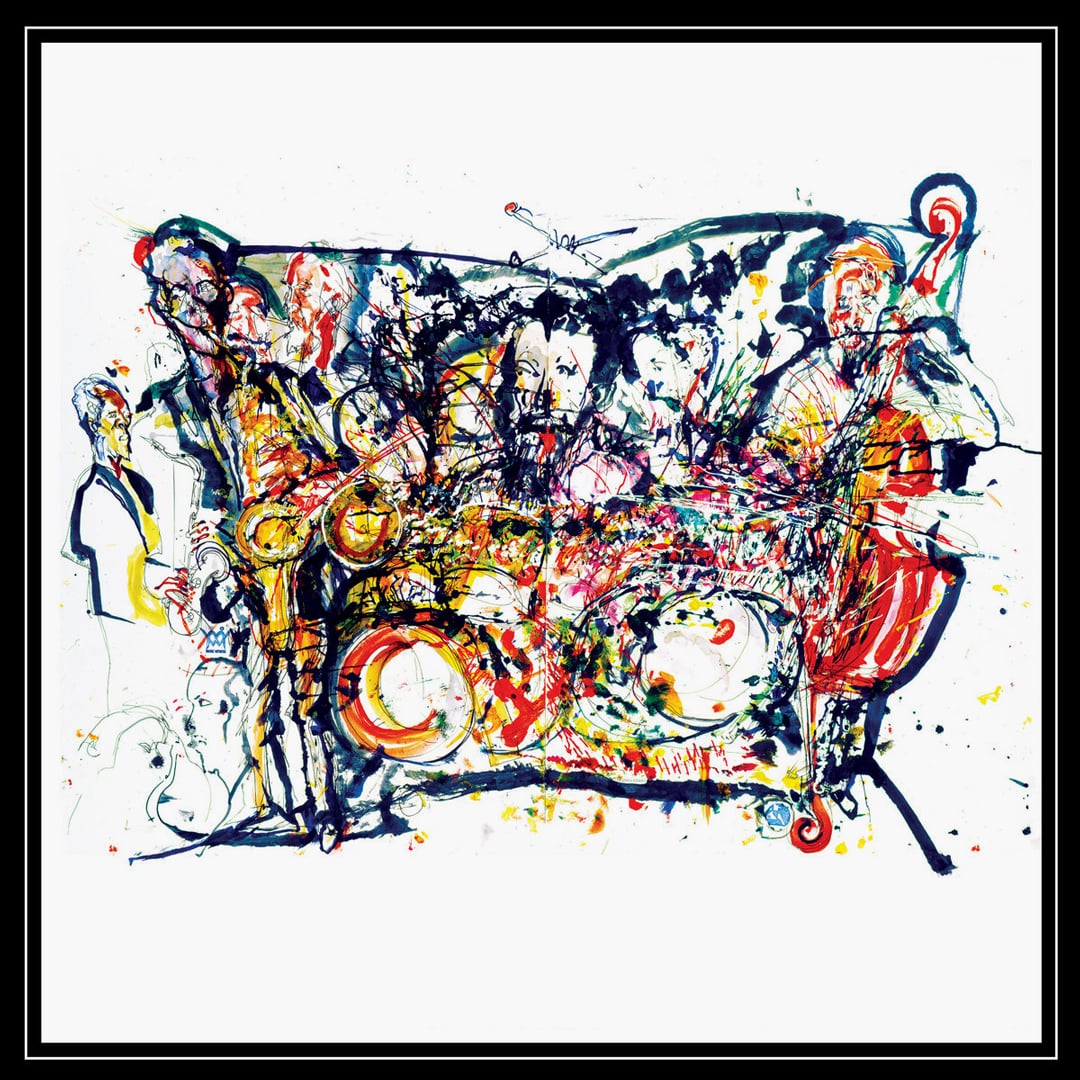
Roaring into 2024 like a ball of fire, Black Editions Archive - dedicated to issuing previously unreleased works of Milford Graves - returns with “Webo”, a towering, deluxe audiophile X3 LP box set, capturing the seminal, but rarely performing and never before released trio of Graves, Charles Gayle and William Parker, live in New York during 1991. The stuff of legend, sprawling to an incredible 2 hours of raw, full throttle free jazz, that pushes the envelope every step of the way, this is easily among the most creatively gripping and historically significant archival releases of the year.
Since its launch in 2015, Black Editions, the Los Angeles based imprint founded by the experimental musician and guitarist Peter Kolovos, has offered a remarkable dedication to bodies of music at the outer reaches of the global avant-garde, particularly historical gestures of free improvisation. One of the key, emerging extensions of this is the Black Editions Archive, launched in 2022 with the focus on issuing previously unreleased works of the serial American drummer, percussionist, teacher, researcher, inventor, and visual artist Milford Graves. Having already blown our minds with 2022’s “Historic Music Past Tense”, featuring Graves working within a trio with Peter Brötzmann and William Parker, and last year’s towering “Children of the Forest”, a body of incredible recordings made with Arthur Doyle and Hugh Glover, the series now continues with “Webo”, arguably the most ambitious of its releases to date: a stunning X3 Lp box set of recordings made with Charles Gayle and William Parker during the 90s. Easily some of the most thrilling free improvisations to emerge from that decade, created in real time by three of the most important luminaries in their field, it’s an immersive and revelatory body of sonority that blows the doors of perceptions of what was happening at the time.
Born in 1941 and first emerging at the outset of the 1960s leading Latin and Afro Cuban dance bands in New York, the drummer and percussionist, Milford Graves, belonged to the generation of musicians who were drawn toward the avant-garde by the innovations of John Coltrane and his legendary quartet. In 1962, he began playing with saxophonist Giuseppi Logan, and fully embraced the newly emerging idiom of free jazz, before quickly forming The New York Art Quartet with John Tchicai, Lewis Worrell, and Roswell Rudd, in addition to working with The Jazz Composer's Orchestra, Paul Bley, Albert Ayler, Sonny Sharrock, and numerous others.
While Graves’ work in the bands of others and larger collectives remains the stuff of legend, it is his work as a leader, driven by his highly singular philosophy about rhythm, for which he remains most celebrated, particularly three highly sought after LPs that he self-issued on his own imprints during the 1960s and 70s, “Nommo”, “In Concert At Yale University”, and “Bäbi”. Of these, the third, “Bäbi”, recorded in 1976 by the trio of Graves, and reed players Arthur Doyle and Hugh Glover, has always been among the most beloved, becoming one of the most highly regarded documents of loft era jazz. What is harder to discern from a historical distance, due to a relative scarcity of recordings, is what came next and where Graves traveled creatively during the subsequent decades of the 80s, 90s, and 2000s.
Among the most interesting collaborations that Graves embarked upon during the 1980s was with the legendary saxophonist Charles Gayle and the equally luminary bassist William Parker, both central figures in New York free jazz. First catching wide scale attention for the noteworthy disposition for playing in clown make-up, Charles Gayle first emerged into the context of music during the 1970s but spent roughly two decades lingering in obscurity, homeless in New York, playing in the streets as a means to focus entirely upon his craft, before coming to prominence during the 90’s as one of the city’s most singular players. William Parker, on the other hand, flowered at a young age during the 1970s within the New York Loft scene, before gaining wide reaching acclaim while working within Cecil Taylor’s group during the 1980s. Over the decades since, he has remained a central force within the global avant-garde, working within and guiding a near countless number of groups.
Graves, Gayle, and Parker only gave seven public performances between 1985 and 2013, and released no recordings, making “Webo” the first moment during which the incredible highs produced by this all-star group can be experienced widely. Among those seven live performances, the trio’s June 1991 two-night stand at the short-lived Lower East Side venue, Webo, has long been regarded as a definitive event that signalled New York free jazz’s 1990s resurgence. Channeling the uncompromising grassroots spirit of the 1970s New York Musicians Organization & loft jazz movements, the band produced & promoted these concerts themselves, and in the instance of the June 1991 gigs, made an official recording, commissioned by the artists - held for decades in Graves’ private tape library - that was never released - until now.
What lies behind the legend that surrounds these evenings is aptly transmitted in William Parker’s liner notes: “Imagine a village or choir of drummers, horn players & strings. You can hear the bass & drums churning with a call & response, a melodic-rhythmic propulsion. In reality there is only one drummer, one bass, & one saxophone.” While each member of the band was at a very different stage of their recording career, all three had been honing their skills and craft for decades, something that immediately becomes clear through the towering artist and interplay displayed across the roughly two hours of recordings comprised across the X3 LPs of “Webo”.
Gathering eleven spontaneously realised pieces, pressed into glorious audiophile quality vinyl, “Webo” is the heights of free jazz, regardless of the era. Each member of the band is focused and tight, locked into, and responsive to, the interventions of their peers, producing complex textures, intimate moments of soulful and emotive depth, and most importantly hard blown free jazz fire, pushing endlessly forward into remarkably surprising and varied realms.
Hugely significant on historical terms and absolutely gripping creatively, “Webo” is unquestionably one of the most striking bodies of free improvisational recording laid to date during the 90s. Shining light, for the first time, on a hugely important trio featuring some of the most significant figures in their field, it’s a diamond that illuminates what this music is all about.
Originally published by Soundohm.