
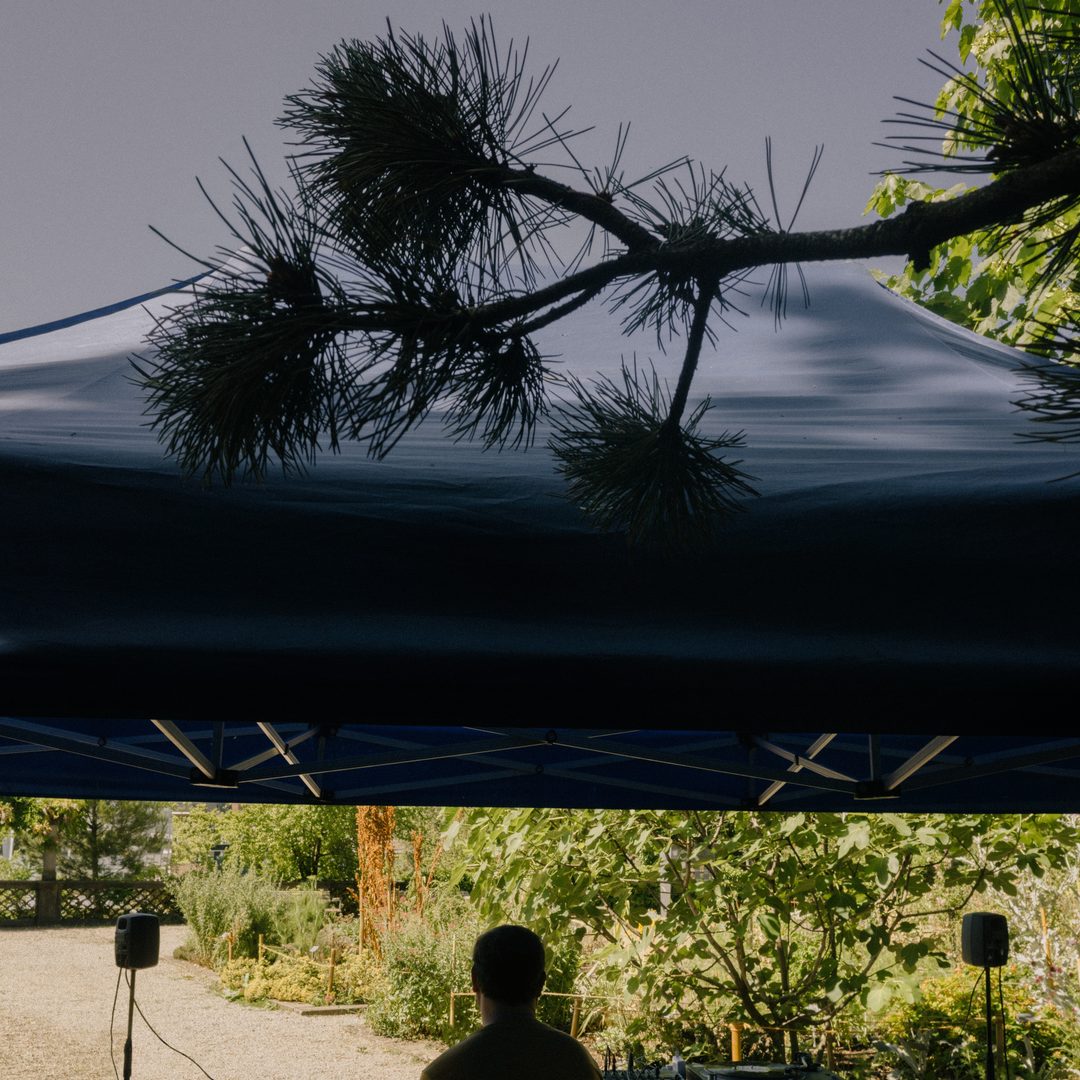
“Weird, wonderful, and absolutely engrossing in its ideas and sounds alike, “Garden of Ediacara”, Ludwig Berger’s ‘fictional’ debut LP, is one of those rare records that continues to unfold with rich rewards at every turn.”
Flowering from the expanded context that is the Zurich based Institute of Landscape and Urban Studies come three astounding releases that explore radically different notions of the intersection between humanity’s relationship to the world: “Sonic Topologies”, “Gotthard Transect”, and Ludwig Berger’s “Garden of Ediacara”, a musical eco-fiction, unlike anything we can call to mind. Exploring radically different approaches - from untreated field recordings to high conceptual musicality - to some of the most important themes of our time, each entirely reframes ways of thinking about the environment and how we might regard our place in it all.
Experimental music and sound practice has always, at its best, contended with social and political aspects of its own time: a means through which we come together, commune, and make meaning around a great many of the subjects that concern humanity the most. In this light, it is unsurprising that an increasing number of artists in this realm of creative sonority have begun to address subjects and sounds connected to our relationship to the natural world and the present realities of climate change.
The Institute of Landscape and Urban Studies is a research team based out of the department of Architecture at ETH Zurich in Switzerland. It comprises a unique constellation of individuals and groups concerned with the large scale environment, engaging with a variety of fields ranging from cities and other urban areas, landscapes and territories, and policy-making. Last year we had the good fortune to immerse ourselves in the collective’s astounding “Bodies of Water” project, a towering box set comprising three LPs - “Melting Landscapes”, “Dammed Landscapes”, and “Buried Landscapes” - that gathered research and recordings spanning multiple years of intensive work by Christophe Girot, Ludwig Berger, Laura Endres, Fabian Gutscher, Dennis Häusler, Johannes Rebsamen, Matthias Vollmer, each regarding “sound as a primary element of the spatial structure and aesthetic quality of a landscape” within a practice that deploys experimental fieldwork to analyze, remodel, and recompose sonic spaces.
Both of the Institute’s latest releases - the X2 LP, “Sonic Topologies”, and the X2 cassette box, “Gotthard Transect” - carry on from the groundwork laid by the “Bodies of Water” project, while radically expanding the sonorous and conceptual scope. “Sonic Topologies” began by asking a simple question: “How many ways are there to listen to a place?”. Comprising the efforts of numerous artists in the field, the album presents a wide range of sonic research in Zurich’s urban landscape - underground and above ground, underwater and on the water, exploring the sounds and acoustics of an empty reservoir, a botanical garden, a thermal bath, and a lake, setting out to reveal hidden and overlooked sounds and voices as the artists make a given space vibrate, shift their contexts, enabling encounters across species and disciplinary boundaries.
The first LP of “Sonic Topologies” opens with acoustic stimulations of the empty reservoir chambers in the form of long reverberating vocal improvisations by Christian Zehnder and Saadet Türköz, calling to mind as much Tibetan vocal music as they do the efforts of Deep Listening Band, David Hykes, and Prima Materia. From here we are immersed in resonant instrumental pieces for horn and electronics by Canadian duo Reimer & Stein and Tomoko Sauvage's water bowls, followed by a fantastic synthesizer composition by architect and composer Li Tavor and an engrossing ambient effort by Perila that intertwines field recordings with resonant vocalisations.
“Sonic Topologies’” second LP immerses the ear in the fauna and flora of the botanical garden, first with a fascinating chronological montage by sound anthropologist Patricia Jäggi that traces the morning birds in spring. This is followed by intriguing laser recordings of the biologists Juan López & Rok Śturm that reveal the hidden vibrational world of summer insects and an electronic piece by Banu Çiçek Tülü that unspools the narrative history of botanical plants, before closing with live performances on the lake: Fabian Gutscher rows a boat with underwater piano wires, and Emaille & Sartorius play a drum duo on two moving boats, disappearing into the acoustic horizon of the lake.
Undeniably connected to the legacies of artists like Pauline Oliveros, Knud Viktor, and Michel Redolfi, “Sonic Topologies” is a truly engrossing intersection of music with the world and meaning that swirls around us.
The double cassettes, “Gotthard Transect”, issued by the Institute of Landscape and Urban Studies accompanied by a booklet and four photographic leporellos, falls within a closer conceptual auditory proximity to what we encountered from the group across the length of their “Bodies of Water” project. The album is the result of a seminar at the Chair of Landscape Architecture of Christophe Girot at ETH Zurich. Applying the transect method, participants recorded and collected acoustic and visual samples along a predefined line through the landscape within the Gotthard, a passage over a mountain range that began as a mule track in the 13th century before becoming an important road in the 19th century. Associated with a variety of stories and myths, this area boasts the longest railway tunnel in the world, as well as bridges and galleries that became landmarks within Switzerland. The Gotthard has nearly always been a central link between major political, economic and cultural centres, and illuminates a unique interplay between imposing alpine summits and modern transport infrastructures, as it imbues Swiss identity with a strong presence of symbolism.
The material featured across the duration of “Gotthard Transect” is divided into four sections, each corresponding to a stage in the crossing over the range. They are reflecting the physical proximity of the recordist to the alpine landscape. Each - “Erstfeld - Bristen”, “Bristen - Sedrun”, “Lukmanier - Faido”, and “Faido - Bodio” - bristles with texture and pointillistic imagery that shifts between the abstract and tangible, rethinking the terms and rich potentialities of field recording every step of the way as the journey unfolds.
“Gotthard Transect” is yet another fascinating gesture at the forefront of environmental sound studies that rests at the juncture of art and science. Pregnant with striking ideas and means to contend with shifting attitudes toward being and place, it’s an absolute must for anyone interested in field recording, sound art, and conversations between humanity and the natural world.
Ludwig Berger is one of the many artists who works within the larger organisation of the Institute of Landscape and Urban Studies. Berger is a landscape sound artist, educator and musician. In his compositions, installations and performances, he engages intimate, playful encounters with plants, animals, buildings and geological entities. While a sound researcher and teacher at the Institute for Landscape Architecture at ETH Zurich from 2015-2022, he studied the sonic dimension of Japanese gardens, alpine glaciers and urban landscapes, which among other things led to the release of the acclaimed album trilogy ‘Melting Landscapes’, ‘Dammed Landscapes’ and ‘Buried Landscapes’.
“Garden of Ediacara” is Berger’s ‘fictional’ debut album: a musical eco-fiction, passing through a speculative ecosystem with synthesized vocals. Offering clues to the album’s underpinnings, the artist states: “Music is a form of world building. I love to develop sonic characters and set them into fictional ecosystems with unique textures, acoustics and atmospheres. Each song forms a different landscape, through which a vocal character guides us and tries to tell us its stories.”
Infused with storytelling techniques drawn from sci-fi and fantasy, “Garden of Ediacara” intertwines melodic songwriting with electroacoustic sound design. Inspired by hydrofeminism and eco-fiction novels, the album’s sonorities were conceived by Berger to inhabit the geological period of Ediacara around 600 million years ago, characterised by a peaceful and thriving ecosystem inhabited by soft-bodied creatures without eyes and bones, celebrating this period’s biodiversity as well as mourning its inevitable loss. The narrative unfolds as an exploration of growth and interconnection in the shadow of a coming extinction, arguably painting a mirrored image of the juncture in epochs at which humanity currently rests.
Drawing upon Berger’s long standing practice of field recording that focusses on intimate encounters with plants, animals and geological phenomena, as well as his studies in electroacoustic composition, “Garden of Ediacara” encounters the artist expanding his sound palette to incorporate a post-human, non-binary death metal voice synthesizer, physical modeling instruments, and microscopic field recordings of plants, insects, as well as aquatic and geological life.
From this heady brew of materials, Berger crafts something entirely unexpected, a rippling, harmonically and structurally rich form of ambient, electroacoustic music, dense with shimmering relationships and pulsing and jittering rhythms. Remarkably visionary and impressionistic, across the album’s length the artist’s glassy timbres and more-than-human voices guide the ear through emotionally ambiguous terrain, seamlessly oscillating between moments of intimacy and irritation, melancholy and playfulness, culminating as one of the most engaging and intriguing electroacoustic records that we’ve heard in some time.
Weird, wonderful, and absolutely engrossing in its ideas and sounds alike, “Garden of Ediacara”, Ludwig Berger’s ‘fictional’ debut LP, is one of those rare records that continues to unfold with rich rewards at every turn. It’s a visionary window into the diverse, multidimensional realities that flow from the Institute of Landscape and Urban Studies.
Originally published by Soundohm.