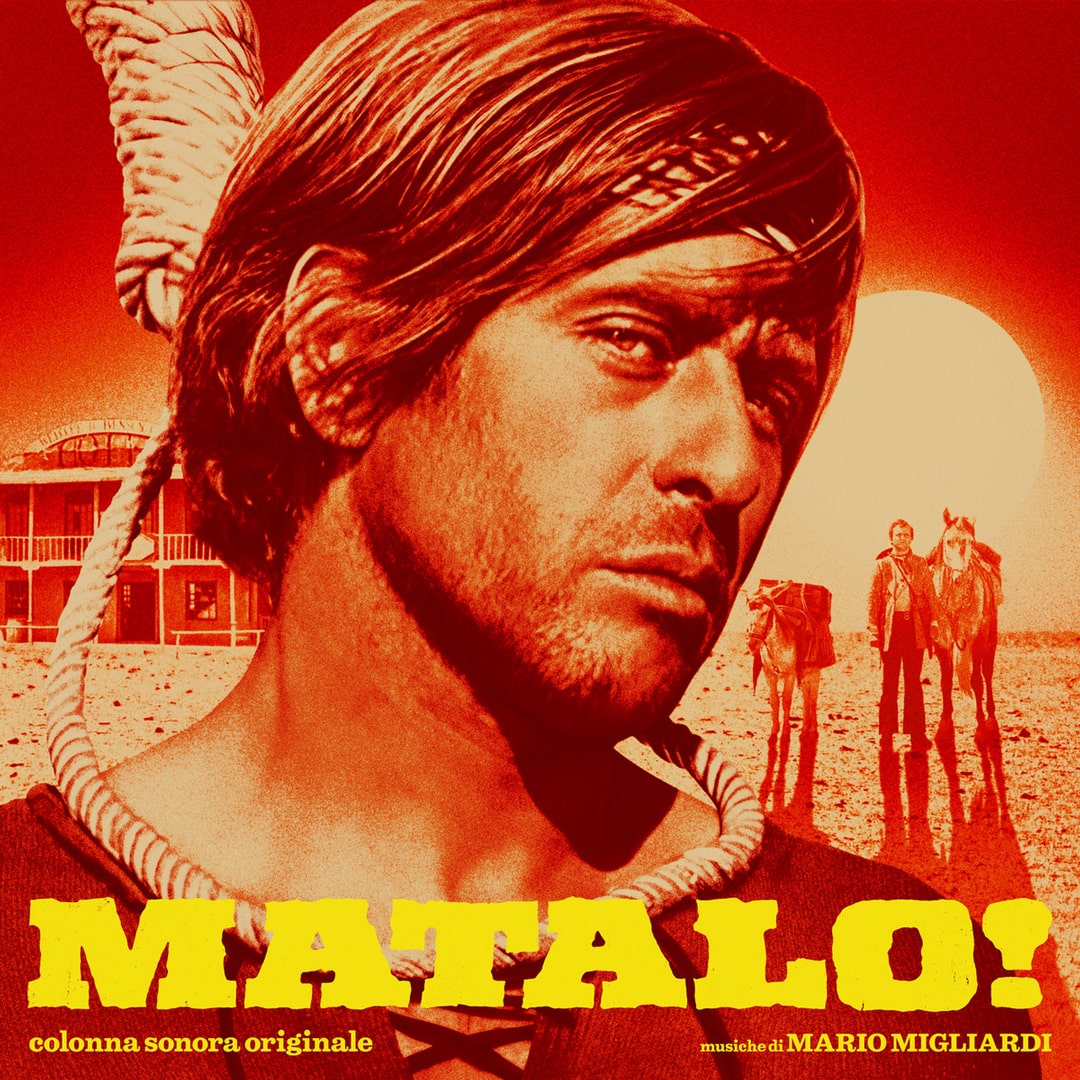
“A visionary effort that threw out the rulebook for sounds associated with "spaghetti western", folding in wild electronic experimentalism, pastoral folk, and allusions to the emerging movement of krautrock on the other side of Europe”
From the venerable imprint, Four Flies, comes the first-ever vinyl pressing of one of the greatest lost 1970s Italian soundtracks of all time: Mario Migliardi’s astounding genre-bending score for the Milanese director Cesare Canevari’s 1970 western “Matalo!”. A visionary effort that threw out the rulebook for sounds associated with "spaghetti western", folding in wild electronic experimentalism, pastoral folk, and allusions to the emerging movement of krautrock on the other side of Europe, more than 50 years on it remains as captivating as the day it was laid to tape.
Over the years, we’ve drawn a lot of attention to astounding Italian music made during the 1960s and 70s for film and television. A relatively brief and singular, unlike many other contexts of soundtracks and library music in different parts of the world, during this period Italian composers were offered an unprecedented creative freedom, often working under numerous pseudonyms and treating it as a laboratory for wild experimentation, producing one of the great treasure troves of recordings to have emerged during the 20th Century. An electro-acoustic alchemy that ranges from driving psychedelia to experiential atmospheres, this absolute stunner feels as fresh and timeless today as the day it was made.
Unlike many of his peers who worked within the distinct context of library music and film soundtracks during the 1960s and 70s, very little is known about Mario Migliardi. First emerging sometime during the 1950s as a member of various jazz bands, the pianist, Hammond organist, conductor, and composer embraced radio, television, and film as a fascinating vehicle for experimentation, producing a wide range of pop gestures as well as ambitious compositions of electronic music. While he did continue to produce a slim catalog of library music into the 1980s, the bulk of his work appeared during a brief period between the mid 1960s and the mid 1970s. Among the most noteworthy and celebrated of these is his incredible score for the Milanese director Cesare Canevari’s 1970 spaghetti western “Matalo!”, which remained unreleased until it appeared on CD during the mid 2000s.
“Matalo!” is a particularly interesting film of moment and idiom. Similar to what numerous composers did within the field of library music, Canevari deployed a popular form - the western - as a means for radical experimentation, adopting an atmospheric approach throughout the film that utilised out-of-focus effects, unconventionally framed shots, and action sequences that replaced dialogues, leaving actors with very little to say and placing the music at centre stage.
Faced with such a distinct opportunity via the structural make-up of Canevari’s brooding masterstroke, Mario Migliardi threw out the rulebook for soundtracks of Italian westerns, drawing upon a palette of traditional folk instruments - acoustic guitars, percussion, etc. - electronic processes, haunting reverberance, and concrete sounds, to produce a writhing gesture of psychedelia with its feet firmly planted in the avant-garde. Across the LP’s four sides, including a 9-minute extended version of the hard rock stormer featuring vocals by Giano Ton (aka Giacomo Tosti), the composer takes us on an astounding inner journey that stands firmly in its own moment and culture, particularly in more pastoral folk moments, while also alluding to some of the wilder avenues of krautrock experimentalism that would emerge from Germany over the coming years, and aspects of electroacoustic music that wouldn’t appear until the turn of the new millennium 30 years down the road.
An absolute stunner that remains completely captivating more than half a century since it was laid to tape, it’s truly inexplicable how Mario Migliardi’s visionary soundtrack for Cesare Canevari’s “Matalo!” has, until now, never appeared on vinyl.
Originally published by Soundohm.