
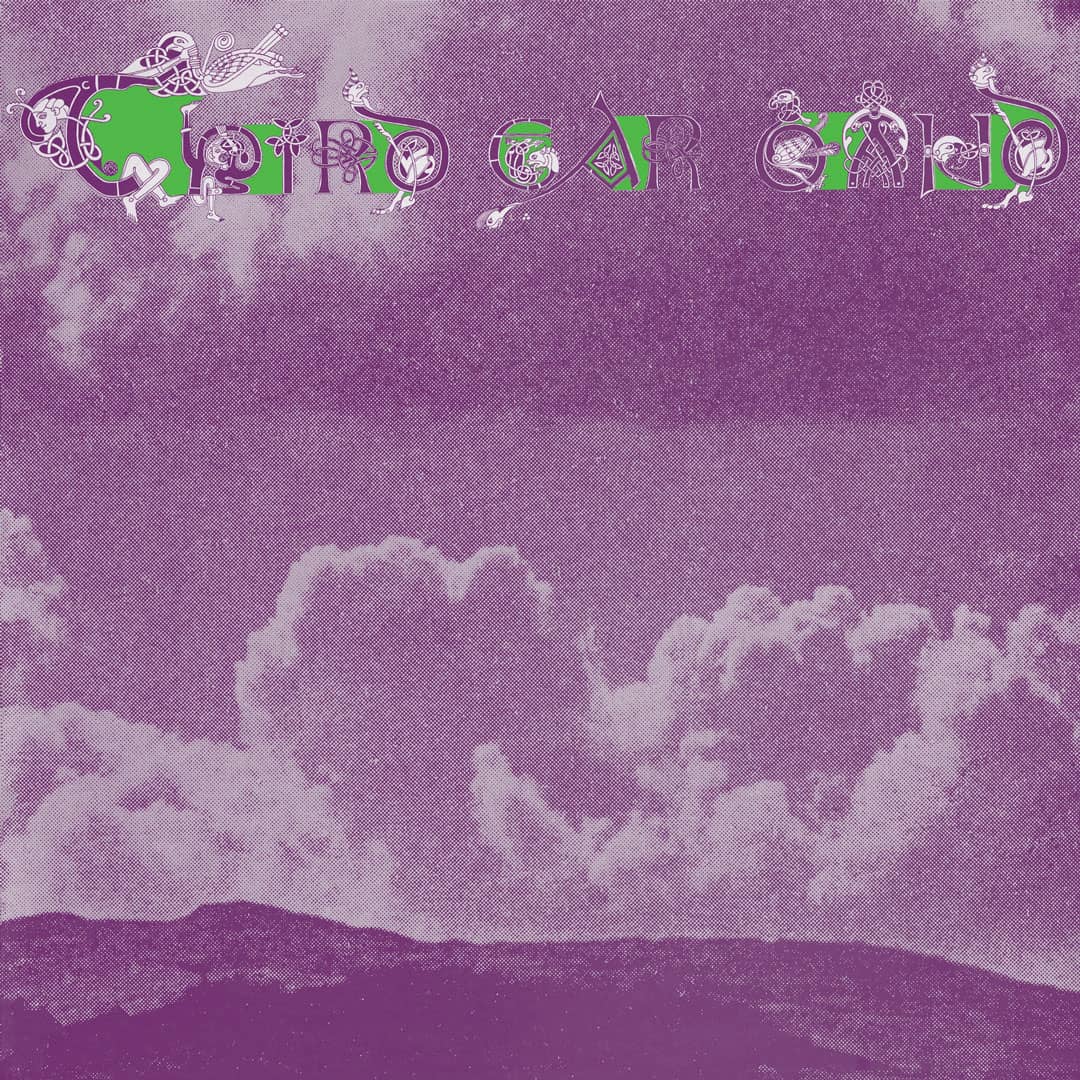
“Nothing short of a towering achievement on both creative and conceptual terms, Third Ear Band’s self-titled second outing stands among the most important sonic bridges between experimental music and the popular realm.”
Continuing their long-standing dedication to reissuing long out of print grails and albums of towering importance within the history of recorded music, Superior Viaduct’s Antarctica Starts Here imprint returns with one of its greatest to date: the long overdue vinyl reissue of Third Ear Band’s astounding self-titled second LP from 1970, often referred to as “Elements”, due to its thematic allusions via the album’s four pieces: ‘Air’, ‘Earth’, ‘Fire’, and ‘Water’. A trance inducing immersion, blending Indian raga, chamber music, free improvisation, folk, minimalism, and drone - entirely visionary and distinct in its moment, this sonic wonder remains one of the most influential bodies of recording that can be called to mind, laying the groundwork for projects like Aktuala, Sonorhc, Futuro Antico, Arica, Popol Vuh, Trad, Gras Och Stenar, and Dom, who would follow in their wake, as much as the current efforts of Natural Information Society, France, Tanz Mein Herz, Luster, Roxane Métayer, Lise Barkas, Roberto Musci, and so many others. Truly astounding, this one is as important as it gets.
Even in the wildest moments and scenes, there are certain musical excursions that entirely stand apart; forging their own path and sounding like nothing before or since. Of all of the singular bands to have emerged from the late 1960s British psychedelic and progressive scenes, few could be better described in these terms than the Third Ear Band. Founded in 1968 and lasting four short years, the band’s ground breaking sound - appearing across three legendary LPs issued by Harvest - entirely defied expectations and norms, forgoing the standard guitar, bass, vocal, and drums for configurations for cello, oboe, violin, viola, and percussion, and a handful of other acoustic instruments, and producing sonic arrangements that blended Indian raga, chamber music, free improvisation, folk, minimalism, and drone. While Third Ear Band’s catalog has been attended to by a handful of CD reissue initiatives over the years, their representation on vinyl has largely been restricted to the original pressing on Harvest from the late 1960s and early 1970s.
The narratives surrounding Third Ear Band are filled with contradiction and surprise: a band of outliers who sounded like nothing else in their moment, and yet found themselves at the heart of one of the great cultural phenomenons in the history of 20th Century music. Founded from the ashes of two previous projects led by the percussionist Glen Sweeney - Giant Sun Trolley and Hydrogen Jukebox - rooted in the 1960's London countercultural scene, playing The UFO Club - famed for its performances by contemporaries like Pink Floyd and Soft Machine - and other underground venues, the Third Ear Band was founded sometime between 1967 and 1968, but the emergence of its singular sound came slightly later and was partially a response to chance and misfortune. Following a concert at the Middle Earth Club in July 1969, its equipment was stolen, leading to their guitarist quitting, forcing an adaptive rethinking that resulted in an all acoustic ensemble of hand drums, violin/viola, oboe/recorder, and cello: easily one of the most distinct instrumental arrangements of the psychedelic era.
Rapidly developing a singular sound that blended elements of Indian classical; European chamber, folk, and early music; free improvisation; minimalism; and drone - described by Glen Sweeney as “acid raga” - despite the wildly experimental nature of the band’s sound, which drew heavily on its members early participations within London’s free music scene, Third Ear Band found a recording contract within a year of its reconfiguration, signing to Harvest records alongside Pink Floyd, Deep Purple, Michael Chapman, Quatermass, Bakerloo, Kevin Ayers, and numerous others, placing them in the position to open for The Rolling Stones and Al Stewart, play and tour widely, and appear on numerous televisions programs over their three year run. From here, accounts vary. Some recall audiences being repelled, with the Third Ear Band being “artist’s artists”, with a fan base rooted on rock and roll royalty. Others point toward surprisingly good record sales and more receptive listeners. Whatever the truth, their three albums for Harvest - ‘Alchemy’, ‘Third Ear Band’, and their soundtrack for Roman Polanski’s ‘Macbeth’ - recorded and released between 1969 and 1972, were radically ahead of their time and have become some of the most highly regarded releases of their moment, laying the groundwork for innumerable bands and artists who followed in their wake. For many, their crowning achievements rest within their second, self-titled full-length. It is here that Superior Viaduct’s Antarctica Starts Here imprint has decided to dedicate its first focus on the band.
Often referred to as “Elements”, due to its thematic allusions via the album’s four pieces: ‘Air’, ‘Earth’, ‘Fire’, and ‘Water’ - the four basic components of medieval European alchemists' doctrines - ‘Third Ear Band’ covers a remarkable amount of ground across its two sides and perfectly showcases what has made this band so intoxicating for listeners over the years. Recorded in a series of acid fueled sessions at Abbey Road Studios, the album’s opener, ‘Air’, unfurls as a bristling, free-form composition of dancing bowed strings and oboe, driven forward by the pulse of hand percussion, that, were it not for the sonic qualities of its instrumentation, keeping it linked to folk and chamber music, feels far more connected to 1970s free jazz than anything else. From here, the first side is complemented by the contrasting piece, ‘Earth’, that encounters the four-piece blending aspects of medieval folk and Indian raga, weaving hypnotic, cycling forms into a joyous, trance inducing work that might be regarded as a close cousin to Terry Riley’s roughly contemporaneous minimalist works.
Entering the album’s second side, ‘Water’ takes another startling turn, creating a distinct hybrid from aspects of the two preceding works. Structured around a dissonant minimalist drone, created by layers of bowed strings, Paul Minns’ oboe threads the tension with soaring free lines, while Glen Sweeney maintains a centered momentum and pulse, culminating as a truly distinct piece of work that manages to be creatively challenging, immersive, and entirely captivating all at the same time. Continuing and concluding the album’s gathering storm, the final piece, ‘Fire’, combines aspects of the entire journey so far, while managing to remain distinct from the rest. Beginning with delicate string tones and field recordings taken from the natural environment, the piece slowly gathers into a slow, rolling, moody hybrid of post-minimalism, folk-drone, and chamber music, pregnant with tension that remains on the cusp before returning to the gentle sounds from which it sprang.
Nothing short of a towering achievement on both creative and conceptual terms, Third Ear Band’s self-titled second outing stands among the most important sonic bridges between experimental music and the popular realm. A landmark that has remained overwhelmingly influential since its initial release on Harvest in 1970, you can hear its echoes across decades. As Dave Segal so eloquently states in the newly commissioned liner notes: "The long songs here stream forth from their skilled hands, evoking a communal transcendence in sound - a hypnotic swirl that doesn't swing, but rather wafts and undulates with cloistered beauty. Third Ear Band's music exists in an eternal now, a perpetual wow. It is an ouroboros of organic textures, seemingly magicked into the air spontaneously, yet possessing a rigor that suggests long hours in the lab. Without electricity, it somehow burrowed deeper into your consciousness."
Originally published by Soundohm.