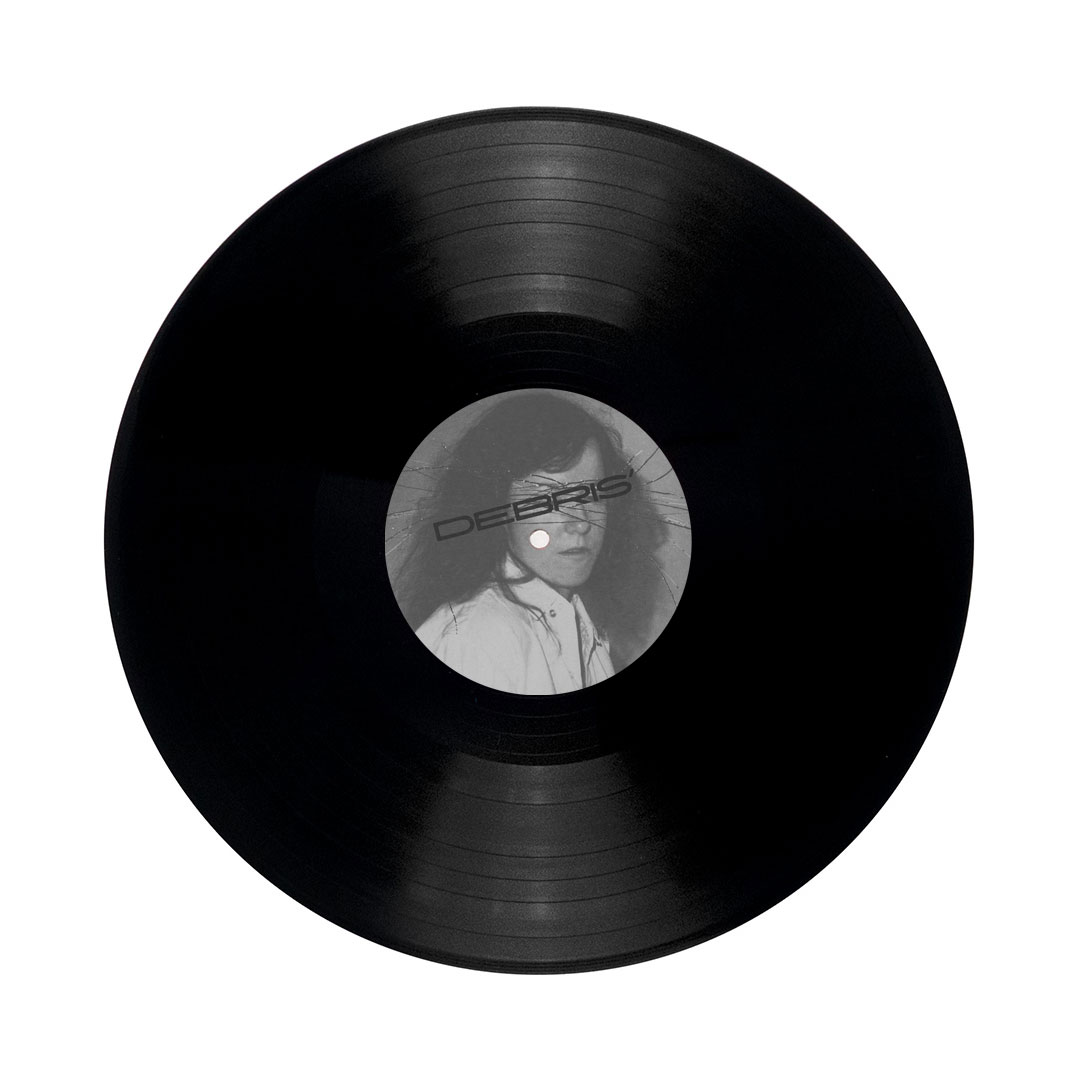
“Debris’s lone full-length, ‘Static Disposal’, embodies a markedly dark, experimental sound, fusing garage punk energy with avant-garde experimentation”
Returning to their raw and fiery roots in the 1970s and 80s American underground, Superior Viaduct drops one of their most revelatory reissues to date: ‘Static Disposal’, the lone full-length by Debris. A visionary, proto-punk masterstroke, fusing garage punk energy with avant-garde experimentation - landing it on the legendary Nurse With Wound List - that was privately released by the band in 1976, drawing influences from The Stooges, Captain Beefheart, and Velvet Underground, and credited as laying important groundwork for Scream, Sonic Youth, and The Melvins, it’s easily among the most obscure, important, and captivating artifacts of underground American music ever laid to tape.
We can’t seem to sing the praises of Superior Viaduct enough. Over the last decade, the label has become synonymous with making the improbable and impossible real. One after another, spanning nearly every idiom of ambitious music, they’ve reissued some of the greatest holy grails in the history of sound, as well as forging important pathways into contemporary practice via their imprint W.25th. While Superior Viaduct has widely become synonymous with reissues attending to various threads of experimental music - notably minimalism, noise, and free jazz - the label’s roots lie in punk and underground music, most particularly sinfully overlooked, yet highly innovative projects existing within the margins of the United States during the late 1970s and early 80s, as evidenced by their early reissue initiatives dedicated to bands like Noh Mercy, Black Humor, Factrix, Avengers, and Sleepers, among others, as well as Devo and Suburban Lawns. Their latest, a much needed and heavily anticipated, stunning reissue of ‘Static Disposal’, the lone full-length by Debris - regarded as Oklahoma's most uncompromising Proto-Punk visionaries - takes them right back to their roots. Originally privately issued by the band in 1976, it’s astounding art-damaged outsider rock - drawing influences from The Stooges, Captain Beefheart, and Velvet Underground - sculpting an astounding, almost entirely unknown counterpart to the roughly contemporaneous, pioneering works by Patti Smith, The New York Dolls, Television, The Cramps, Suicide, and the Ramones, which are among the earliest sounds of one of the most radical musical movements to sweep the globe during the 20th Century.
Hailing from the rural no man's land of Chickasha, Oklahoma - a town roughly 40 miles southwest of Oklahoma City - comprising the membership of Charles 'Chuck Poison' Ivey, Charlie 'Harley' Harrison, Johnny Gregg, Oliver Powers, and Richard Davis, Debris was founded in 1975, emerging from the ashes of previous musical experiments by Ivey and Powers, who had spent years playing in local bands including The Cocktails and "Victoria Vein and the Thunderpunks (using the word punk years before it became the label of the genre)". Far from the beaten path and the cultural ferment of cities like New York, San Francisco, Los Angeles, and Chicago, they represent one of the most unexpected confluences of radical music to have appeared during the mid-1970s, marking them as a crucial statement within the emergence of punk.
By all accounts, Debris was a furious flash in the pan within the Oklahoma musical underground. The band only played four gigs before breaking up. Within this brief run, they booked two sessions during December of 1975, to record their debut full-length, ‘Static Disposal’, which they would privately issue in a tiny edition of 1000 copies, four months later, in April of 1976 - the same month as the Ramones' debut - before fading from view. Eventually reaching the bookers at CBGB and Max's Kansas City, both venues extended invitations to play, but it was too late. The band never made it out of Oklahoma and subsequently broke up, adding to what, as the record slowly crept through the musical underground and gained cult status, would become their mythical status.
Described as “some of the most art-damaged outsider rock 'n' roll this side of MX-80 Sound" while facing what historians indicated to have been "indifference, and even redneck hostility" at home, Debris stands among the most radical and groundbreaking projects to have ever emerged from Oklahoma: a scene long noted for producing its fair share of weirdos and freaks. Fusing elements drawn from The Velvet Underground, The Stooges, Captain Beefheart, and English glam rock - particularly Eno-era Roxy Music - Debris’s lone full-length, ‘Static Disposal’, embodies a markedly dark, experimental sound, fusing garage punk energy with avant-garde experimentation in ways that would lay the groundwork for Scream, Sonic Youth, Nurse With Wound and The Melvins, years down the road. Gritty and raw, with driving guitars pushed to max by the relentless force of Johnny Gregg’s drums, threaded by off-kilter, raging vocals and the sounds of analog synthesizers and electronic effects, “these LSD-tinged tunes are a potent mix of Beefheart-ian controlled chaos and the genuinely weird avant-rock, that would later define industrial and post-punk movements”, painting the fascinating image of a roughly contemporaneous cousin of Los Angeles Free Music Society (LAFMS).
Blistering and filled with pure fire, over the course of its ten astounding tracks, drawing on truly radical palette of sound - low frequency modulators, synthesizer, vocals (“sequential screams, marvelous moans, gorgeous grunts, vericose verbalizations, And gruesome groans”), guitar, saxophone, organ, 8" circular saw, vibraphone, and cornet - Debris’ lone full-length document, ‘Static Disposal’ marks the emergence of punk within the experimental margins of the American near-West, reconfiguring more narratives than we can count. This is wild and wonderful music at its absolute best. It’s little wonder that it ended up on the legendary Nurse With Wound list, and “slowly became a legendary lost album over the next three decades and was highly prized by collectors”. Superior Viaduct’s stunningly produced vinyl reissue, immaculately reproducing the original, delivers an exhilarating breath of energy to our ears and the history of punk, as it’s been known for so long.
Originally published by Soundohm.