“It’s an absolute wonder for body, heart, and mind, drawing the listener deep into its distinct sound-world and delivering gold every step of the way.”
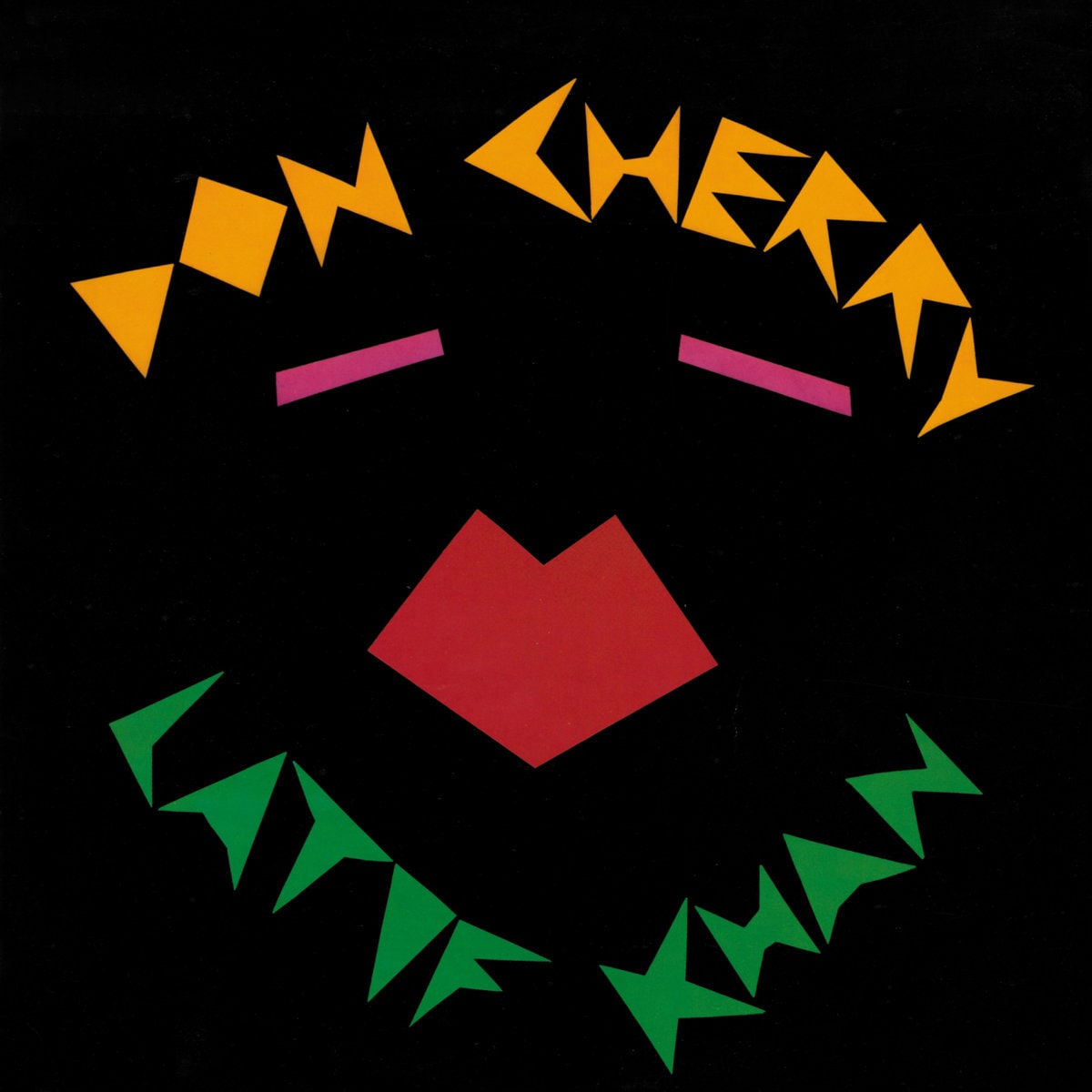
Digging deep into their own overflowing back catalog of jazz gems, Heavenly Sweetness returns to one of their earliest and most illuminating reissues, with a much needed, brand new, fully remastered reissue of Don Cherry and Latif Ahmed Khan’s towering collaboration, ‘Music / Sangam’, recorded in Paris in 1978, and released in 1981. Among the most singular gestures in Cherry’s catalog, encountering the American polymath musician weaving astounding compositions with a vast arsenal of instrumentation, threaded by Khan’s remarkable rhythmic sensibility, it was tragically overlooked for years before becoming celebrated by new generations of fans more than a decade ago, becoming regarded as one of the great immersive journeys into the inner sound-world of one of the most important and influential artists of the 20th century.
Initially noted for their stunning reissues of neglected gems from the Blue Note catalog and deep dives into the incredible world of Ethiopian jazz, over the better part of the last 20 years, the French imprint, Heavenly Sweetness, has shifted and evolved, becoming a crucial platform for historical and contemporary music from nearly every corner of the globe, shining light onto incredible music that might not otherwise be heard. Now, the label looks back over its own history and delivers a much needed repress of one of its earliest reissues, Don Cherry and Latif Ahmed Khan’s lone collaboration, ‘Music / Sangam’, recorded in Paris in 1978, and released by Europa Records in 1981, before quickly falling out of print. Encountering the legendary American musician locked in a singular conversation with one of India’s most notable tabla players, it remains one of Cherry’s most striking and unique expressions - interweaving joyous lines with passages of ambient flow - not to mention a true stand out within the field of jazz during its moment.
Among the most significant figures in 20th century jazz, Don Cherry was born into a musical family, and began his career early as a pianist, becoming a professional musician while living in Los Angeles during his teens, joining Art Farmer’s band, before making the leap to trumpet under the mentorship of Clifford Brown. It was only a few short years later, at the tail end of the 1950s, that he made his first significant mark on the history of music, as a central member of Ornette Coleman's legendary quartet; the band that singlehandedly set the blue print for the emerging idiom of free jazz. Not only did Cherry contribute to an entire rethinking of what jazz could be, but, even more significantly, the entire potential of music itself. Laying down the trumpet parts across the near entirety of Coleman's seminal early output, during the same era he doubled down as a sideman, making equally astounding contributions to the canon of 1960s avant-garde jazz with Sonny Murray, Prince Lasha, Albert Ayler, among others, as well as a member of the New York Contemporary 5, before venturing out on his own as a leader in 1966 and beginning the body of recordings that would leave a permanent mark on the world, and change nearly everything in its wake.
Cherry was a player of astounding touch and sensitivity. By accounts, he could play anything back, note for note, after hearing it once, and was deeply invested in where music could go and what it could emote, rather than chops or technique. His playing was raw, profoundly human, and direct, tapping something basic and human that strips all artifice as it dives toward the heart, drawing countless traditions from across the globe to create a music that stood beyond the locating forces of place, time, or aesthetics. Perhaps most strikingly, Cherry was simply a fan of music and had a voracious appetite, listening widely and seeking inspiration and collaboration in every corner of the globe. One such case was his long-standing love of, and incorporation of elements from, the musical traditions of India. To this end, his meeting with Latif Ahmed Khan, one of India’s most notable tabla players, falls within a broad continuum of his work. On the other hand, their lone LP, ‘Music / Sangam’, equally stands as an entirely singular artifact within his career.
Hailing from Delhi, Ustad Latif Ahmed Khan (1942-1989) was born into a family of classical musicians working within the Hindustani tradition, and quickly came to high regard within that context for his tonal control of the tabla, working with many of the great instrumentalists and vocalists of the post-war period, including Pandit Nikhil Bannerjee, Pandit Hariprasad Chaurasia, Pandit Bhimsen Joshi, and Ustad Imrat Khan. He performed widely across the globe, offering some explanation to how his paths crossed with Don Cherry in Paris during 1978. By accounts, the sessions that produced ‘Music / Sangam’ were preceded by no rehearsals or meetings. The two simply entered the studio - Khan with tablas and Cherry armed with a suitcase full of instruments including his trusted trumpet, augmented by the studio’s concert piano, Hammond B3 organ, and orchestral timpani - and set down to work, quickly producing the astounding six pieces that comprise the LP.
One of the striking aspects of ‘Music / Sangam’ is Cherry’s use of multi-track recordings across the album’s length. While plenty of his releases encounter him moving through a vast arsenal of instruments, very few encounter him playing them at the same time, layered in orchestration, in the way that he does here: laying down organ, piano, donso ngoni (West African harp-lute), trumpet, vocals, etc., against Khan’s rhythmic patterns. While the tabla’s sound can never fully shake its root in the Indian traditions, as Cherry and Khan unfurl across each piece, it becomes quickly clear that what they are pursuing moves far beyond the notions of cross-cultural fusion, but rather is the meeting of two distinct minds with unique sensibilities. Drenched in ambience that pushes beyond the brittle, fiery qualities that mark much of 1970s forward-thinking jazz, Cherry and Khan steadily sculpt sonic spaces that range from the hypnotically immersive to intoxicating states of gentle lyricism and furiously paced passages of startling innovation: everything fans of Cherry know and love, layered in complex knots, showcasing his astounding ability on a vast array of instrumentation.
Whether seen in context - falling within roughly the same period as his work in Old And New Dreams with Dewey Redman and Charlie Haden, as well as his brilliant work with Masahiko Togashi on ‘Session In Paris, Vol. 1 "Song Of Soil"’, Ed Blackwell on ‘El Corazón’, and Bengt Berger on ‘Bitter Funeral Beer’ - or on its own singular terms, ‘Music / Sangam’ rests as a sinfully neglected illumination of Don Cherry’s towering talents as both a musician and a composer, speaking across the boundaries of culture, geography, and time, and is easily one of his most striking gestures to appear during the 1980s. While he would remain active until his untimely passing in 1995, it equally stands as one of the most noteworthy statements of the last decade and a half of his life, quietly laying in wait, prior to Heavenly Sweetness’ original pressing, for discovery by a new generation of ears. It’s an absolute wonder for body, heart, and mind, drawing the listener deep into its distinct sound-world and delivering gold every step of the way.
Originally published by Soundohm.