“It’s a truly stunning thing to behold, revealing new depths and dimensions with every return.”
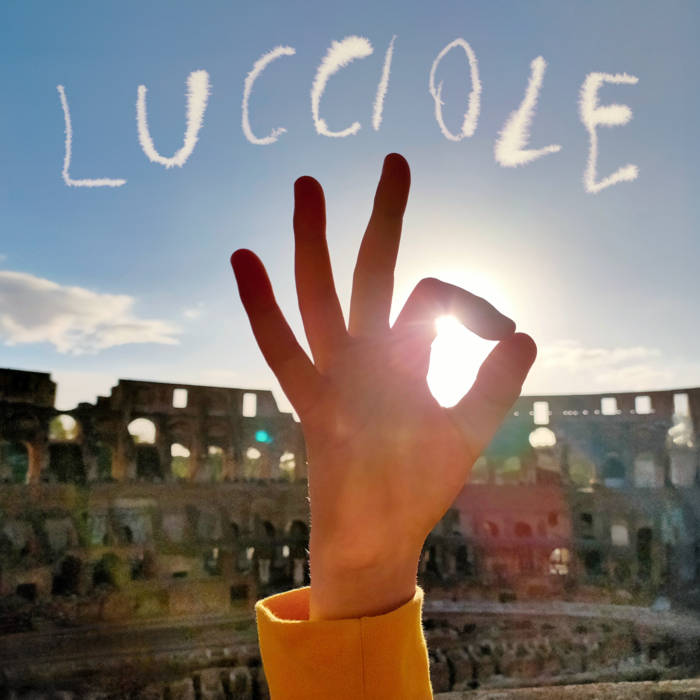
Six years after her astounding solo debut, Mi Specchio E Rifletto, Silvia Tarozzi returns to Unseen Worlds with its absolutely mind-blowing follow-up Lucciole. Comprising fifteen compositions, spread across four sides of a beautifully produced X2LP, that collectively encounter the composer entirely upping her game with seemingly effortless, profound compositional grace and rigor that shatters the boundaries between song and experimentalism, it’s unquestionably an album that will prove to be among 2026’s absolute best.
Over the years, few labels have captured our deep affection in the way that the New York-based imprint, Unseen Worlds, has. Guided by deep passion and love, while also setting a bar of quality that is remarkably rare, since their founding during the mid 2000s they’ve offered a deep dedication to the legacies of historically significant composers like "Blue" Gene Tyranny, Lubomyr Melnyk, Carl Stone, Elodie Lauten, Richard "Dickie" Landry, Maria Monti, Laurie Spiegel, Jacqueline Humbert, David Rosenboom, John McGuire, and Philip Corner, among others, while also offering a crucial platform for younger, contemporary artists like Michael Vincent Waller, Leo Svirsky, James Rushford, Leo Takami, Petr Kotik, Sam Gendel, Giovanni Di Domenico, and Josiah Steinbrick. Among our favorite releases in the Unseen Worlds catalog, ‘Mi Specchio E Rifletto’ - a stunning body of solo work from the Italian Violinist, performer and improviser, Silvia Tarozzi - landed back in 2020 and left us waiting on bated breath for more. While her brilliant, 2022 collaboration with Deborah Walker, ‘Canti Di Guerra, Di Lavoro E D‘Amore’, tided us over, we’ve remained excited for her solo follow-up. Thankfully, Unseen Worlds has brought that wait to a close with ‘Lucciole’, Tarozzi’s incredible second solo outing, comprising fifteen new pieces that radically reconfigure the notion of song within deeply experimental terms. Joining and advancing a longstanding tradition pioneered by artists like Maria Monti, Franco Battiato, Scott Walker, Brigitte Fontaine, Luciano Cilio, Mark Hollis, and others, this truly singular and ambitious body of work finds Tarozzi joined by an all-star cast of instrumentalists - Mattia Marangon, Pasquale Paterra, Federico Pierantoni, Massimo Simonini, Giancarlo Bianchetti, Valeria Sturba, Cecilia Stacchiotti, Stefano Pilia, Edoardo Marraffa, Freya Edmondes, Roberto Rossi, Mariangela Finarelli, Fabrice Villard, Amélie Berson, Christian Pruvost, Valentina Magaletti, Angelica Foschi, and the Piccolo Coro Angelico children’s choir - assembled in various ensemble configurations and collectively sculpting some of the most gripping music we’ve heard in years.
A talented free improvisor and shining light of Italy’s incredible avant-garde and experimental music scene, Silvia Tarozzi is one of those rare and wonderful artists who spent the majority of her career channeling her sensitivity and remarkable talents behind the rendering of the work of others, notably, as longtime collaborator, Eliane Radigue, as well as Pauline Oliveros, Pascale Criton, Cassandra Miller, Martin Arnold, Philip Corner, Jürg Frey, Michael Pisaro, Catherine Lamb, Sébastien Roux, and many others. Remarkably, for all her years in the game, it wasn’t until 2020’s ‘Mi Specchio E Rifletto’ that she released a full-length entirely dedicated to her own compositions. While the years since have kept her busy with live performances and recording projects with Ensemble Dedalus, and collaborations with Radigue, Corner, Stefano Pilia, Deborah Walker, Giovanni Di Domenico, Manu Holterbach, and Sarah Hennies, the world has quietly waited to hear where she goes next, a curiosity more than fulfilled by ‘Lucciole’, the follow-up to the incredible achievements of ‘Mi Specchio E Rifletto’.
Back in 2020, when we took a deep dive into ‘Mi Specchio E Rifletto’, we described the album as “experimental, balladic pop that eludes to infinitely more”. That “infinitely more” has clearly become fully realized across the fifteen pieces that make up ‘Lucciole’. Delving into markedly more experimental territory that intertwines fully or primarily instrumental efforts with others led by vocalizations - largely sung with gripping effect by Tarozzi herself - that find the composer’s palette strikingly expanded and heavily centered around brass, but also a vast array of other instrumentation. While the accomplishments achieved by ‘Mi Specchio E Rifletto’ remain startling six years down the road and should, by all rights, be allowed to stand on their own, the passage of time has clearly not been wasted. When compared to what Tarozzi has achieved across the duration of ‘Lucciole’, its predecessor suddenly feels like a tentative toe in the water.
As we’re beginning to understand about Tarozzi’s compositional work at large, ‘Lucciole’ entirely defies any easy categorization. It is balladic and beautiful - inviting the ear toward it with little resistance, and seducing the heart - while, at constant intervals, entirely upending the basic expectations that are connected to notions of song. While ‘Mi Specchio E Rifletto’ was largely constructed from bowed strings and voices, with the former completing and heightening the effects of the latter, ‘Lucciole’ forwards a much stronger sense of abstraction through the interplay between vocals and instrumentation and within the tonal, timbral, and structural choices within the pieces, a dynamic that is mirrored across the full album through the interplay of the pieces themselves, many of which lack, or have only minimal, vocal presence.
As ‘Lucciole’ defies categorization, it is also impossible to anticipate from one piece to the next, as well as how a discrete gesture might develop and evolve over its duration. What might appear to be a heart-wrenching ballad - tapping 1960s or 70s radio friendly Italian pop - is likely to transform into a state of pure sonic abstraction and tense tonal and timbral relationships, before traveling any number of places next (or not). What remains ever-present, as the album traverses its many territories, is the remarkable sense of compositional rigor, while also managing to feel perfectly balanced and unlabored. Tarozzi elegantly intertwines voices, personal narrative and memories, from the album’s opening blasts of a radiant brass ensemble, reaching startling heights with her own ‘Lucciole’ and a live-in-studio cover of Milton Nascimento’s “River Phoenix”, to its conclusion, ‘Distratta (reprise)’, which enlisted the Piccolo Coro Angelico children’s choir, with whom she has worked for over fifteen years, the album is a profound journey into the potential of music on numerous terms, furthering Tarozzi as one of the most important and distinct artists working today.
A truly astounding accomplishment, it’s hard to imagine an album imbued with a greater sense of wonder, joy, and creative accomplishment than Silvia Tarozzi’s ‘Lucciole’. It’s a truly stunning thing to behold, revealing new depths and dimensions with every return.
Originally published by Soundohm.