“The result is like almost nothing else in the entire history of recorded music.”
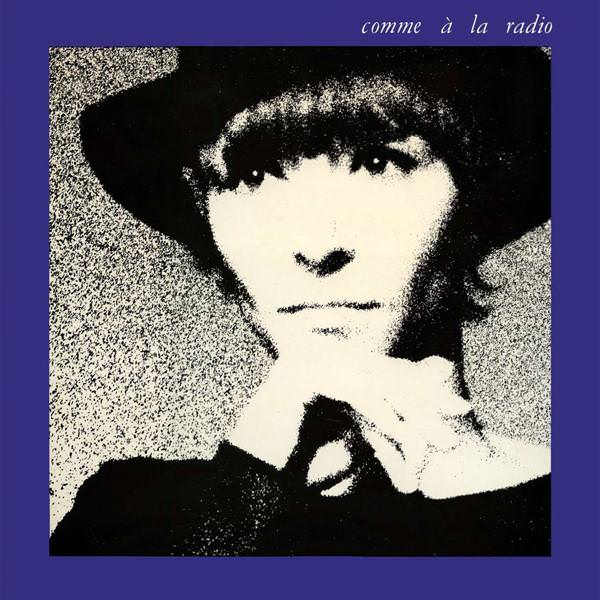
Wewantsounds continues the remarkable, rolling momentum of the last year, delivering what might just be their most important release to date: an astounding, fully remastered, expanded edition of Brigitte Fontaine’s landmark, 1970 collaboration with the Art Ensemble of Chicago ‘Comme à la Radio’. Gathering, alongside the original album’s eleven visionary tracks, the label has assembled an entire second disc of material, comprising alternate versions, previously unreleased ORTF live recordings and additional studio outtakes, making this the definitive edition of one of the greatest albums ever laid to tape.
The Paris based imprint, Wewantsounds, has exemplified the best of what reissue initiatives can do: excavating and illuminating remarkable musical artefacts as vehicles for learning and historical reappraisal, as much as experiences of sonic joy. Since launching into action a decade ago, the label has plumbed the depths of 20th Century music, assembling a remarkably diverse catalog of releases by artists hailing from nearly every corner of the globe. Looking far beyond simple notions of genre or taste, what binds the label’s forward-thinking approach to multiplicity is creative singularity and ambition. With this in hand, it’s only logical that every so often their gaze returns home to France. Their latest does exactly that, coming to rest on one of the greatest releases ever produced by the legendary Paris based imprint Saravah: Brigitte Fontaine’s landmark, 1970 collaboration with the Art Ensemble of Chicago ‘Comme à la Radio’. Easily among the most striking bodies of recordings ever laid to tape by its many renowned artists - distilling the social and political ferment of its moment into pulsing, grooving crystals that rest at the outer junctures of free improvisation, groundbreaking approaches to vocalization, and radical polyculturalism - for decades it has remained one of the most beloved experimental efforts of all time. As some will remember, ‘Comme à la Radio’ received the reissue treatment roughly a decade and a half ago, via the very capable hands of Superior Viaduct, but a great deal of time has passed since that edition went out of print and Wewantsounds is not to be outdone. Their much-needed reissue, fully remastered from the original analog tapes, emerges as easily the most definitive to date, doubling the original single LP worth of music with an entire second LP of rare bonus material, gathering together 11 tracks, including previously unreleased ORTF live recordings and additional studio outtakes, revealing previously unavailable dimensions of the album’s sessions and its artists’ visionary creativity. Issued in a deluxe, X2 LP vinyl edition, accompanied by a lavish 24-page bilingual booklet featuring an introduction by journalist Andy Beta, essays by Wadada Leo Smith, Brigitte Fontaine biographer Benoît Mouchart, and Benjamin Barouh, plus a recent interview with Brigitte Fontaine and Areski Belkacem, as well as the album’s complete lyrics and a selection of rare archival photographs by Jean-Pierre Leloir and Philippe Gras, just when we thought we knew it all about this legendary album, Wewantsounds has dropped a bomb with one of the most revelatory reissues we can call to mind.
In 1968, the quartet of Roscoe Mitchell, Lester Bowie, Malachi Favors, and Joseph Jarman - having come together as members of Chicago’s Association for the Advancement of Creative Musicians (AACM) - working under the collective name of The Art Ensemble, joined a large scale migration of African American avant-garde musicians, removing themselves from endemic social and racial inequity of the United States, for the more welcoming environments of Europe. Slightly preceded by fellow AACM members like Anthony Braxton, Leroy Jenkins, Wadada Leo Smith, and Steve McCall, the band landed in Paris and set themselves up at Théâtre du Vieux Colombier and found themselves welcomed with open arms by the city which offered opportunity and support, the likes of which would never be available back home. Over the course of a few short years, the group would play a steady stream of gigs, refining their sound, have "of Chicago" added to their name by a promoter (which stuck), and enter the studio on numerous occasions to record a legendary series of LPs, including ‘People of Sorrow’ (1969), ‘A Jackson In Your House’ (1969), ‘Message To Our Folks’, ‘Reese And The Smooth Ones’ (1969), and ‘Les Stances a Sophie’ with Lester Bowie's wife, the singer Fontella Bass, that became the soundtrack to the film of the same name. Yet, as towering and enduring as all of these recordings remain, many point toward their collaboration with Brigitte Fontaine, ‘Comme à la Radio’, issued by Saravah in 1970, as the greatest of them all.
By the time she entered the studio with the Art Ensemble, Fontaine was already in the midst of a well-established and remarkable career. Born in 1939, she had arrived in Paris at the age of 17, and by the early 1960s had begun to establish an increasingly singular practice that bridged theatre and song. Between 1965 and 1968, she recorded two solo full-lengths - ‘13 Chansons Décadentes Et Fantasmagoriques’ and ‘Brigitte Fontaine Est...’ - as well as two 45s with Jacques Higelin, which found her steadily pushing toward more experimental ground; a movement that came to full fruition when she began collaborating with her long-time partner Areski Belkacem in 1969. Over the coming years, this partnership would elevate Fontaine as a major figure in the French underground - radically rethinking notions of vocal poetics, rhyme, theatrics, and genre - producing a remarkable run of albums for Saravah, the first of which was ‘Comme à la Radio’.
The recording of ‘Comme à la Radio’ followed upon a series of concerts staged by Fontaine, Areski, Wadada Leo Smith, and the Art Ensemble of Chicago at Théâtre du Vieux Colombier, where the latter were in residence. It doesn’t take a huge leap to understand why Saravah’s Pierre Barouh would have leapt at the opportunity to capture the collaboration as one of the early releases for his newly minted label. Yet, as all-star as such a gathering already was - Fontaine, Areski, and the Art Ensemble augmented by the presence of the virtuosic Smith - when entering the studio, the collective enlisted some of France’s most radically forward thinking artists to expand their sound: Jacques Higelin on guitar, Albert Guez on lute, Jean-François Jenny-Clark on bass, Kakino De Paz on zither, and Jean-Charles Capon on cello. The result is like almost nothing else in the entire history of recorded music.
The original ten Fontaine and Areski penned tracks that comprised the original edition of ‘Comme à la Radio’ mark the wide public emergence of the sound that would largely define the pair’s activities over the coming years, featuring vocal treatments by both artists that vacillate, in fluid movements, between spoken poetics and song; touchstones rooted in numerous traditions from across the world - particularly those drawn from Areski’s own Algerian heritage - European folk; jazz; and avant-garde experimentalism. Perhaps most strikingly, rather than Fontaine, Areski, and the Art Ensemble using the remarkable cast of musicians - Smith, Higelin, Guez, Jenny-Clark, De Paz, and Capon - at their disposal to sculpt a sonic environment of sprawling creative scope and scale, each track features a limited number of players coming together in different arrangements, delivering minimalist arrangements of strikingly abstract structures. Heavily driven by the pulse of Areski’s signature hand percussion, with Fontaine’s captivating dance of vocalizations providing both counterpoint and driving momentum, across each of the album’s tracks shifting ensembles render tonal lines and rhythmic interventions, constructed from constrained sonic palettes, that defy anticipation at every turn, building worlds that are entirely their own. As wild, ambitious, and challenging as it often is, this is an album that never fails to intoxicate the soul with hypnotic grooves.
For more than half a century, ‘Comme à la Radio’ has remained a high-water mark in the canon of experimental vocal music, as well as within the vast catalogs of recordings produced by its many esteemed contributors. For the near entirety of that time, most believed that what we had was all there was. Remarkably, for their brand new, fully remastered vinyl and CD editions, Wewantsounds managed to plumb the vaults and come up with gold, expanding the release with a full second disc of material, gathering rare non-album singles, English-language takes, alternate versions and previously unreleased instrumental recordings showcasing the Art Ensemble's artistry, including the elusive English version of the title track, ‘Comme à la Radio’, and a striking early version of ‘L'été L'été’, as well as previously unreleased ORTF live recordings.
Originally published by Soundohm.