“At moments, its pieces feel ancient, calling out through time, while always indicating something radically forward thinking.”
Endlessly prolific and dazzlingly ambitious, building on the back of a startling run of releases over the last couple of years, Sarah Davachi returns with what is arguably her greatest recorded achievement to date, the towering ‘The Will of Tongues’. Comprising nearly two and a half hours of diverse articulations of interconnected music - five new solo compositions for historical pipe organs, three choral pieces and numerous microtonal ensemble pieces - this monumental statement, rooted in “deep reverence for the act of listening”, is quite easily among 2026’s absolute best, once again framing Davachi as a singular and leading voice within the contemporary landscape of experimental sound.
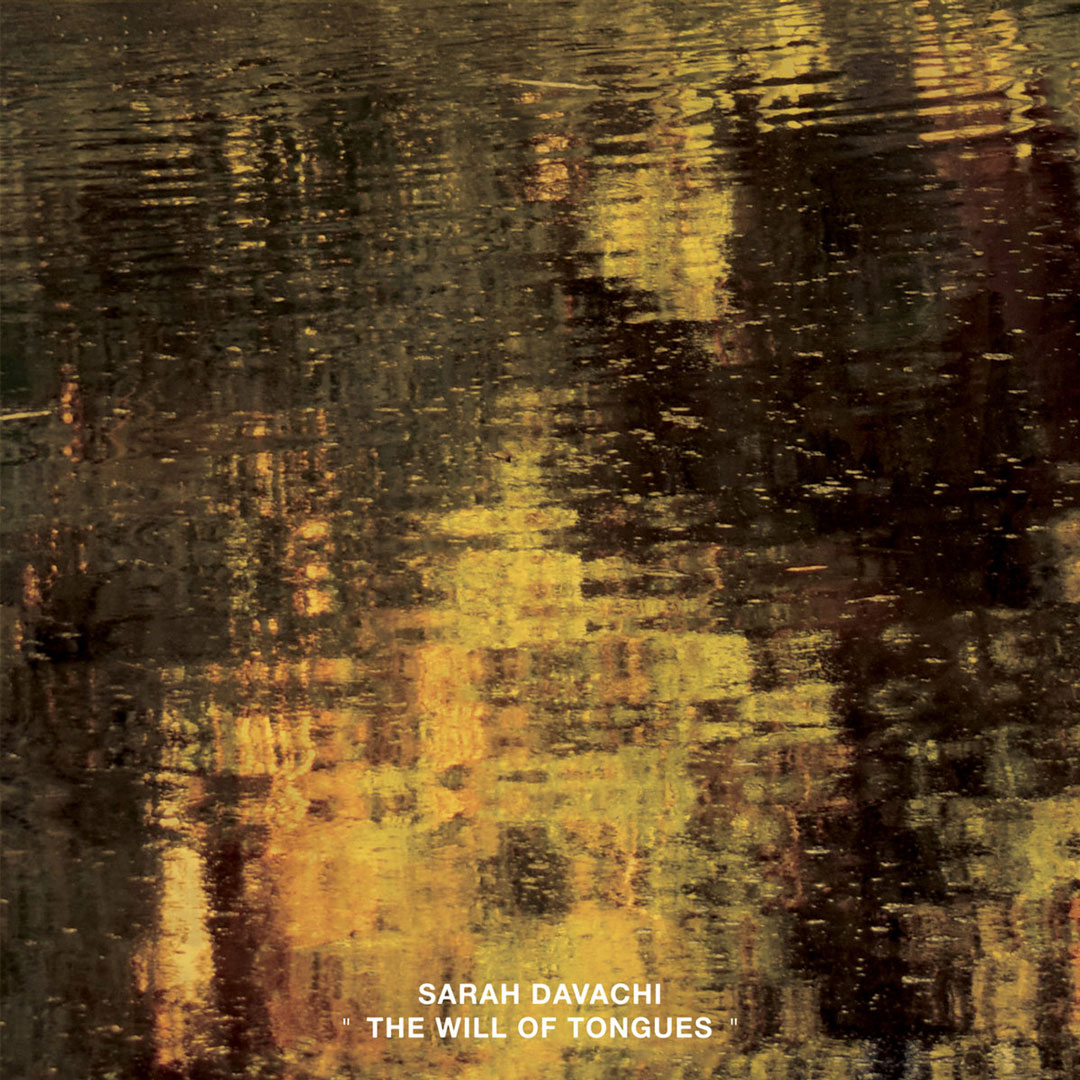
Experimental music points toward the future through radically forward-thinking forms, seeking something fundamental and enduringly human within the practice of organizing and expressing through sound. This practice has often led to surprising relationships with the history of music itself, with many of the idiom’s artists plumbing its depths in search of meaning to be carried forward within contemporary forms. Among the most distinct examples of this is Los Angeles based, Canadian composer Sarah Davachi. First gaining note more than a decade ago for her striking body of electroacoustic works, in recent years Davachi has predominately dedicated herself to composing for acoustic instruments, developing a meticulous practice rooted in research into the sonic possibilities activated by ancient and archaic tuning systems. Appearing at a regular pace, her highly singular compositions represent immersions into the timeless and often deeply physical immersion into our relationship with emotive sound, building startling bridges between the past and experimental music future. Her latest, ‘The Will of Tongues’, issued by her own Late Music imprint, stands among her most ambitious and striking to date. Comprising over 140 minutes of music, the album features five new solo compositions for historical pipe organs (recorded across the USA, Canada, and the Netherlands), a suite of three choral pieces, a collection of “interludes” for various microtonal ensembles (strings, brass, woodwinds), and a long-form chamber piece for string trio (Whitney Johnson, Eyvind Kang, and Lucy Railton), organ, and tape. Monumental and engrossing, once again Davachi has proven herself to be among the most striking, visionary composers working today.
Born and raised in Western Canada, Sarah Davachi initially studied at the University of Calgary, before receiving her master's degree in electronic music and recording media from Mills College. With a developing career well underway and seven full-lengths already behind her on noteworthy imprints like Full Spectrum, Cassauna, Constellation Tatsu, Students Of Decay, and Aventures Ltd. - the majority of which were met with critical acclaim - in 2017 she relocated to Los Angeles to pursue a PhD in Musicology at UCLA. Davachi’s practice, as it has developed over the last decade and a half, represents a rare hybrid within contemporary experimental sound practice. Like members of previous generations of avant-garde composers - Terry Riley, La Monte Young, Lou Harrison, Harry Partch, etc. - she seeks resonance and meaning through a relationship with forms of music that do not utilize (and usually predate) the tuning system of equal temperament. Unlike the aforementioned composers, who drew inspiration from South and East Asian traditions - India, Java, China, Japan, etc. - in their respective cases, Davachi taps European medieval and early music traditions, internalizing aspects of their resonances within her own. Hers is a form of experimental music that alludes to a continuum, passing through the ages, at the very heart of expression through sound.
‘The Will of Tongues’ comprises thirteen pieces that collectively amount to nearly two and a half hours of music: five new solo compositions for organ, composed for, and played by Davachi on, various historical pipe organs in different locations across the world; a suite of three choral pieces performed by Chamber Choir Ireland, conducted by Nils Schweckendiek, a collection of “interludes” performed by various microtonal ensembles featuring an incredible group of musicians and ensembles from across the USA and Europe (including Diapason, an experimental/microtonal brass ensemble based in Los Angeles, consisting of Nev Wendell, Nicholas Ginsburg, Mattie Barbier, and Mason Moy and Phaedrus, a Renaissance flute consort based in Switzerland, consisting of Liane Sadler, Charlotte Schneider, Mara Winter, and Luis Martinez Pueyo), as well as a long-form chamber piece for string trio - Whitney Johnson, Eyvind Kang, and Lucy Railton, working under the heading of The Sung Blood Players - organ, and tape. As is to be expected from Davachi, each work presents a startling level of ambition. Even the “interludes” are no less than seven minutes long.
Davachi conceived of 'The Will of Tongues' as a means “to articulate a deep reverence for the act of listening, and for the awareness that such listening can serve as a kind of imaginative negative space; one that critically promotes confrontation and creation rather than escape.” As a collective, conjoined body of work, the album engages the numerous compositional concepts and methods that have preoccupied the composer over the last decades, most notably “iteration, tuning theory, textural and timbral variation, extended duration, vertical harmony, intervallic affect, and canonic structure”, carrying forward the minimalist approaches to these elements that have come to define her practice over that period, while imbuing them with a greater sense of focus and intentionality, allowing them to transition and drift in various articulations from one piece to the next, and thus between the different ensembles and her playing on solo organ, ebbing and flowing in their balance over sustained durations.
What Davachi goes on to describe as “a celebration of iterative listening and of extreme engagement, of intimate aural experience and its vast psychic horizons”, 'The Will of Tongues' is one of those remarkable auditory experiences that is almost unpalatable on historical terms. At moments, its pieces feel ancient, calling out through time, while always indicating something radically forward thinking. While this is particularly the case for the choral works - their sonic building blocks being rooted in medieval and early music traditions, while massing tonal relationships that are strikingly experimental and contemporary - these tensions echo throughout the entire album, producing a form of minimalism from shifting, sustained timbres and tones, that, despite its profound use of constraint, is too complex to be entirely minimal. Advancing the near indefinable territory pioneered by composers like Tenney - intricate tunings unlocking bristling relationships - 'The Will of Tongues' is challenging listening that offers rich rewards for those willing to follow Davachi into uncharted territory, as the album’s evolutions continuously reveal new dimensions at odds with what we think we know and perceive.
While Davachi has never let us down - each of her releases having respectively represented remarkable achievements over the years - ‘The Will of Tongues’ emerges as a high-water mark in her career. Not only has she produced a monumental body of work in both its duration and what it takes on, but she subtly illuminates deep, interlocked exterior connections within its forms: the collaborations between incredibly talented artists to produce these sounds, as well as with a long and diverse history of music from which it draws.
Originally published by Soundohm.