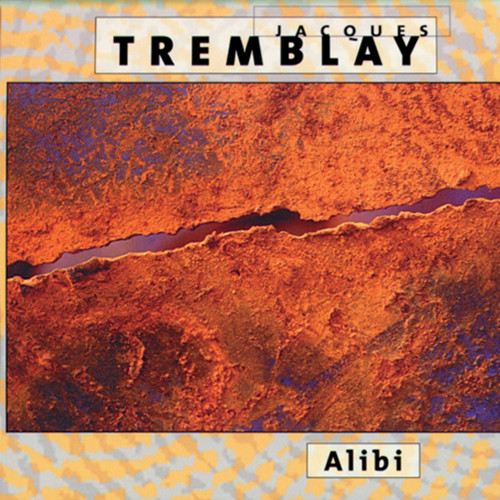
Alibi
Six fixed-medium works by Jacques Tremblay from 1990 to 1995, built from concrete sounds and quotations: Gregorian chant turning to distortion, a night of love in six movements, a jazz tribute and a sound reading of Proust’s Combray.
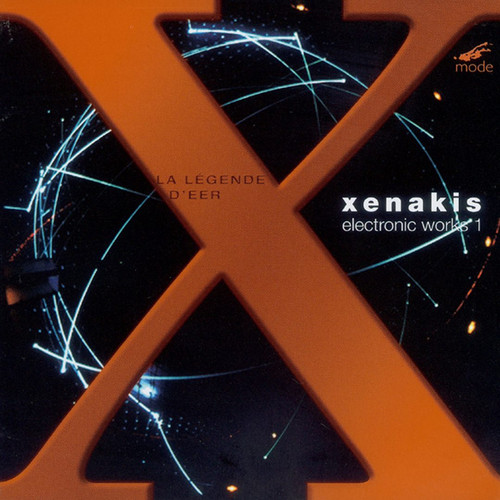
La légende d’Eer
Iannis Xenakis's La légende d'Eer (1977-78) for 7-channel tape, written for the Diatope at the Centre Pompidou, in a new stereo mix by Gerard Pape from the analogue master tape. The DVD adds surround sound, a film and an interview.
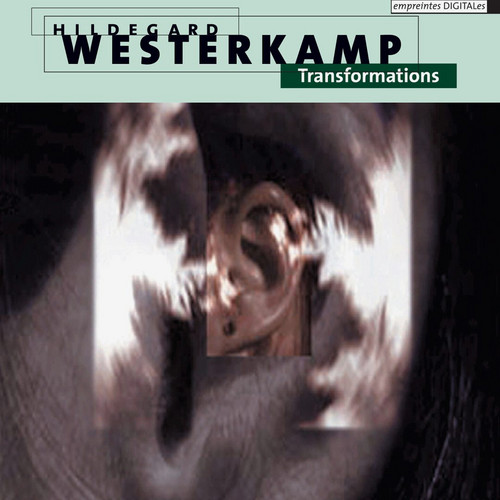
Transformations
Five soundscape compositions by Hildegard Westerkamp from 1979 to 1992, among them Kits Beach Soundwalk and Beneath the Forest Floor, recorded on Vancouver streets, a Mexican desert and old-growth forest on Vancouver Island, with hornist Brian G’froerer.
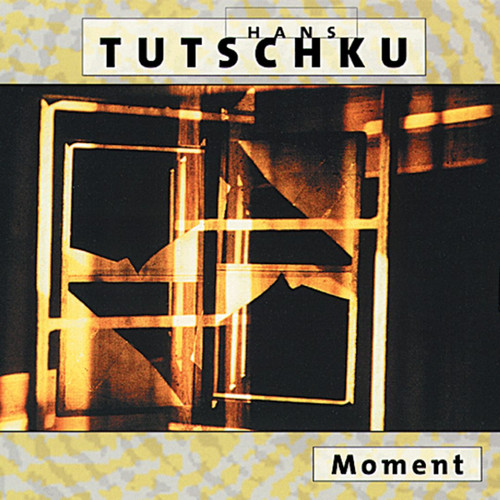
Moment
Hans Tutschku’s first empreintes DIGITALes portrait: five works from 1991 to 1998 built on voice and speech, from poems by Georg Trakl, Karl Lubomirski and Antonio Bueno Tubía to recordings from a 1997 Asian tour in extrémités lointaines.
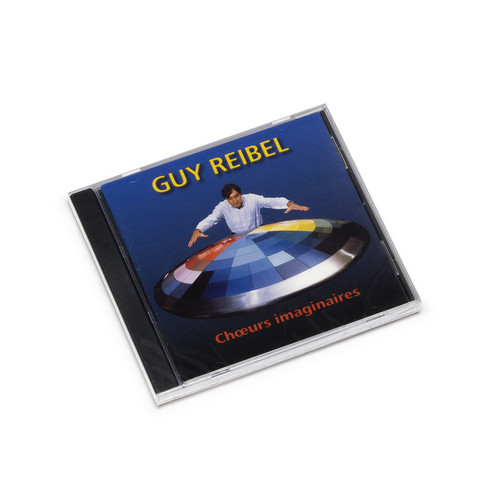
Chœurs imaginaires
This piece develops a preoccupation already begun in “Naissance du verbe” (Birth of the Word), the result of research on language and phonemes undertaken by Bernard Ucla. The idea behind this research is that the sign in language is not arbitrary, but that the choice of phonemes at the origin of languages obeys a long elaboration, and that between the meaning of words and the phonemes that express them, mysterious relationships exist: the phoneme is not a neutral acoustic substance but carries s…
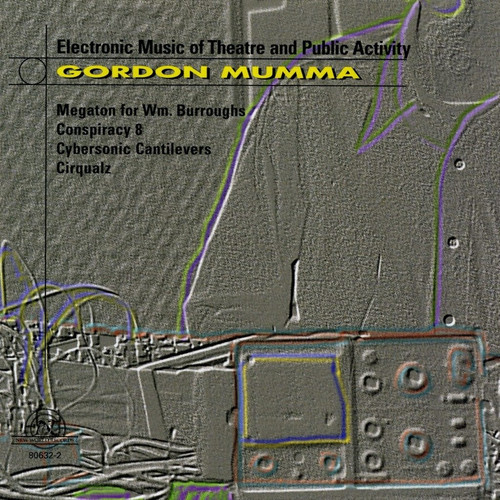
Electronic music of theatre and public activity
Gordon Mumma (born 1935) has played a pioneering role in the development and evolution of 'live-electronic' music. 'Live-electronics' as a concept and practice appears to have originated in the United States in the late 1950s, outside the few institutional electronic studios and often in the context of innovative theatre activity. From its inception, it frequently involved two processes: (1) live performance with accompanying or interacting sound materials on magnetic tape; and (2) the use of el…
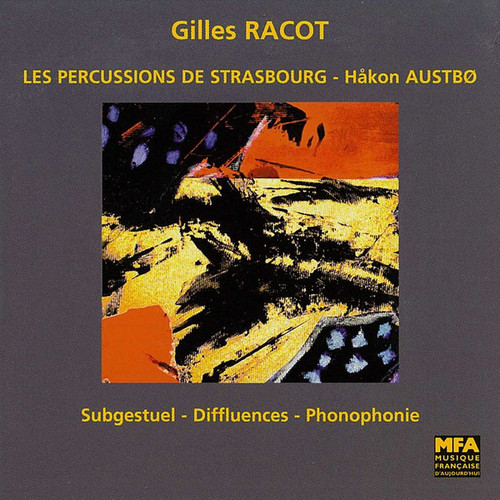
Subgestuel - Diffluences - Phonophonie
A first monographic compact disc for this composer born in 1951, a pupil of Pierre Schaeffer and Guy Reibel, winner of the Villa Médicis Prize "hors les murs" in 1995, who has also contributed to the musical research activities of the IRCAM, in the Atelier de Recherches Instrumentales (1985 and taken part in the development of the Quatron, the real-time synthesis computing system of the IMCA at Auch (1989-1990).
On 'Diffluences': "The relationship between tape and piano is not the classical one…
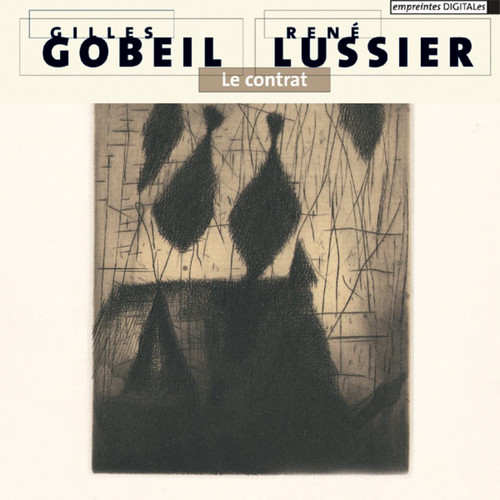
Le Contrat
A 66-minute electroacoustic work after Goethe's Faust, composed over seven years (1996-2003) by old friends Gilles Gobeil and René Lussier, with Lussier's guitars and daxophone set into Gobeil's studio transformations across 17 scenes.
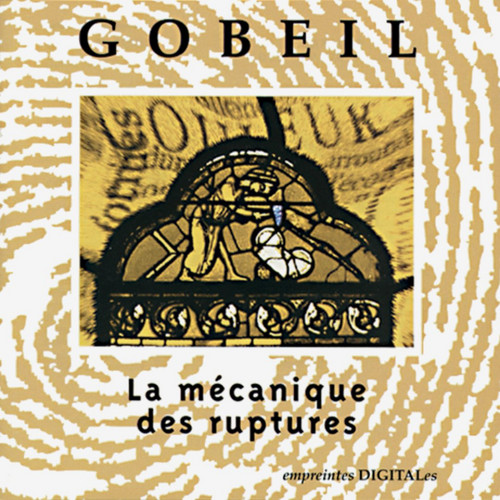
La Mécanique des Ruptures
Eight works by Gilles Gobeil from 1985 to 1994, among them Le vertige inconnu made at the GMEB in Bourges and two pieces for ondist Suzanne Binet-Audet, plus Associations libres with guitarist René Lussier.
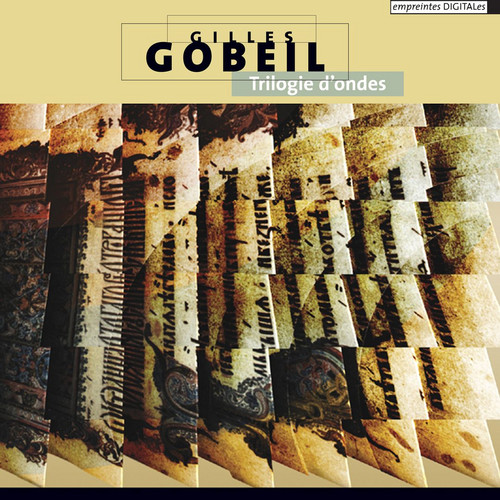
Trilogie d’Ondes
Gilles Gobeil’s three works for ondes Martenot and fixed medium, written between 1988 and 2002 and recorded in 2004-05 with Suzanne Binet-Audet, who commissioned the first; winner of the Prix Opus disc of the year 2004-05. DVD-Audio.
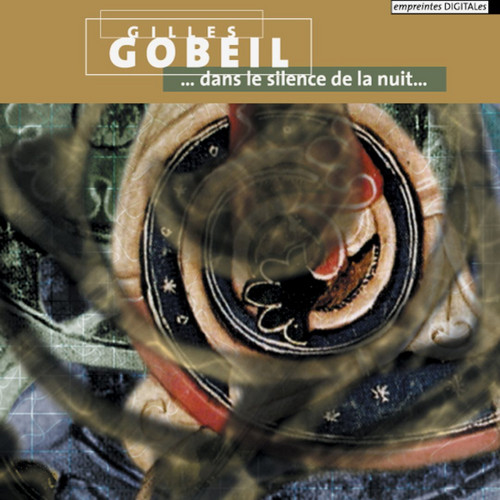
… dans le Silence de la Nuit…
Four acousmatic works by Gilles Gobeil from 1995 to 2001, cinema for the ear drawn from literature and travel: Proust’s Swann’s Way read by Marc Béland, H.G. Wells’s time machine, Jules Verne’s underworld and sounds from a trip to Italy.
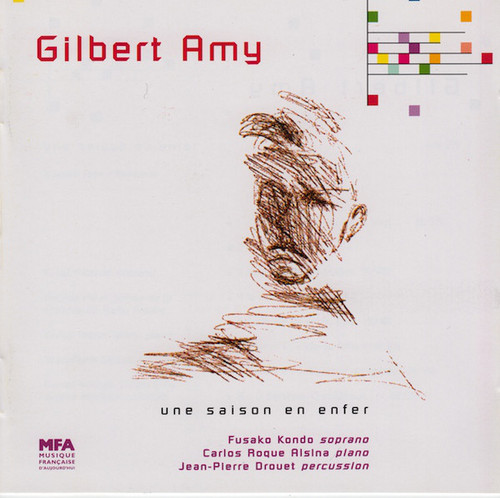
Une Saison En Enfer
Composed in 1979 and realized at Conservatoire National Supérieur de Musique (Lyon, France) by Gilbert Amy with the assistance of Daniel Teruggi. Performed with Fusako Kondo (soprano), Edwige Parat (soloist of Maîtrise de Radio France), Jean-Pierre Drouet (percussions).
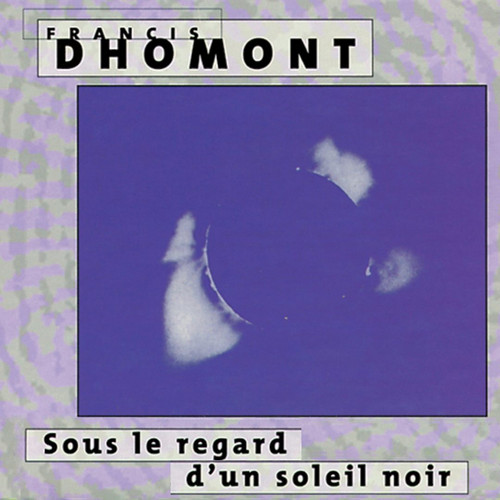
Sous le Regard d’un Soleil Noir
Francis Dhomont’s 51-minute acousmatic descent into schizophrenia, built on the writings of RD Laing and on the single note B natural, winner at Bourges in 1981 and first issued by the Ina-GRM in 1982.
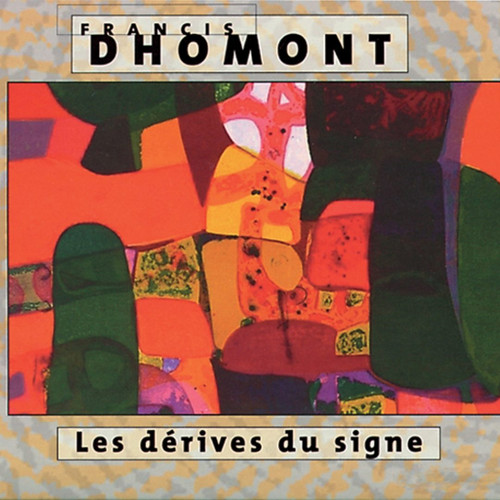
Les Dérives du Signe
Four acousmatic works by Francis Dhomont from 1986 to 1991, the second part of his Mouvances~Métaphores cycle, including the Bourges Magisterium winner Chiaroscuro and Signé Dionysos, a lakeshore opera in which every role is sung by frogs.
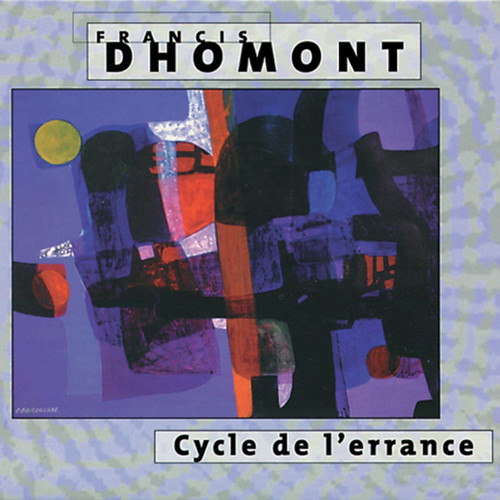
Cycle de l’Errance
Francis Dhomont's acousmatic triptych on wandering, composed in Montréal and Marseille between 1981 and 1989: Points de fuite, the nine-movement … mourir un peu, which quotes Schaeffer and Henry, and the spatial Espace / Escape.
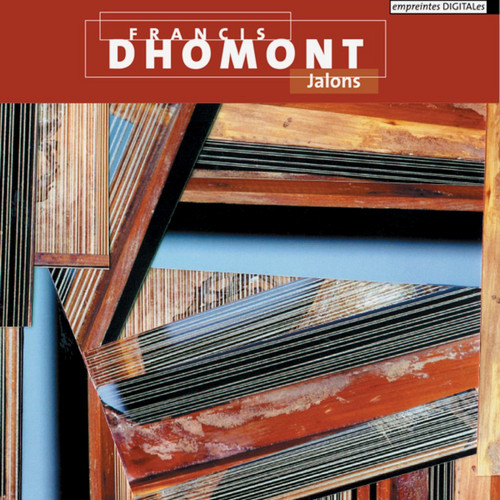
Jalons
Eight acousmatic works by Francis Dhomont spanning fifteen years, from his only purely electronic piece of 1985-86 to Lettre de Sarajevo and the swallows of Vol d’Arondes, several of them prizewinners. Disque de l’année at the Prix Opus 2002-03.
Cycle du Son
Francis Dhomont's four-part homage to Pierre Schaeffer and fifty years of musique concrète (1989-98), built from the first movement of the Étude aux objets, with Machaut, Pierre Henry's door and a list of “inventors of the treasure” along the way.
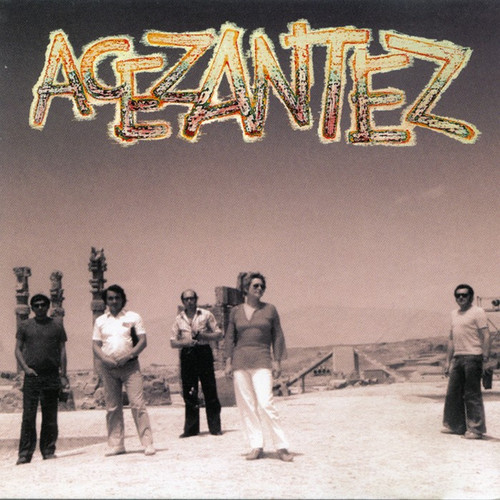
Dubravko Detoni With Acezantez
Croatian composer and pianist Dubravko Detoni is a name barely familiar to even the most hardened and fanatical followers of avant-garde composition. Although he has managed to consistently escape almost all forms of wider public recognition, Detoni has, since 1970 -- both in the solo context and with his Acezantez ensemble -- doggedly pursued a singular and unique musical path. Drawing on the conventions and traditions of modern composition, avant-garde electronics, musique concrète and group a…
Impacts Intérieurs
Five works by Denis Smalley from 1976 to 1992, including Wind Chimes, Valley Flow and the Golden Nica-winning Clarinet Threads with Roger Heaton, plus Piano Nets with Philip Mead, all remastered by the composer for this 2004 edition.
Sources / Scènes
Four acousmatic works by Denis Smalley from 1974 to 2000, each grown from one sound source: Derek Shiel's metal sculptures, air in Cretan garden pots, two water recordings, and the drone of Northumbrian pipes in the early GRM piece Pentes.