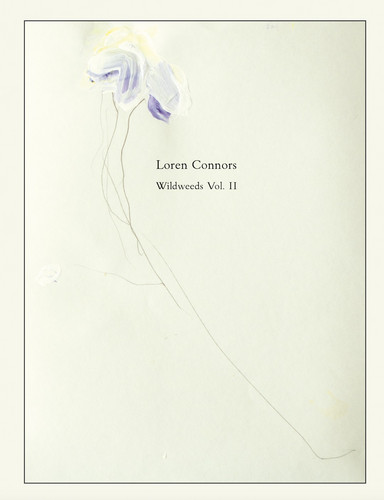
Wildweeds Vol. II
Loren Connors' second art book: 108 full-color pages of fragile flower paintings, drawings and haiku, gathered over a year of mailed envelopes, with a preface by Yuko Otomo. Hardbound, 8.5 x 11 inches, first edition of 150.

Machines: A History of Electronic Music (Book)
Jean-Michel Jarre's illustrated history of electronic music, built on his own collection of instruments: 150 machines from modular synths to one-off prototypes trace a century of electronic sound, with contributions from Vince Clarke, Gary Numan, Gillian Gilbert, Richie Hawtin and Hans Zimmer.

Acousmonium Handbook (Book)
English version, 11 x 17 cm, 68 pages. Conceived and written by members of INA grm (Groupe de Recherches Musicales de l’Institut National de l’Audiovisuel), drawing on more than fifty years of experience in diffusing and presenting electroacoustic music in concert, the »Acousmonium Handbook« offers a synthetic exploration of the issues, techniques and methods applicable to acousmatic diffusion and sound spatialisation. As a manual, it provides numerous keys to designing a multiphonic sound diffu…

A Life in Folk (and Other Bitter Songs) (Book + CD)
A Life in Folk (and other bitter songs) brings Kan Mikami’s uncompromising voice into English through his 2000 autobiography, expanded with further writing, interviews and a previously unreleased 2017 Sapporo concert. Part confession, part cultural history and part raw oral transmission, it follows Japanese folk’s great outsider from provincial beginnings to a life lived against conformity.

Ginga (Book + CD)
Ginga gathers the restless visual and sonic imagination of Seiichi Yamamoto in a newly expanded English-language edition. Reworked in full colour with fresh art and previously unpublished photography, the 244-page volume arrives with an exclusive CD of remixed and new material by Omoide Hatoba and Suido Megane Satsujin Jiken - a compact cosmos of noise, image and unruly memory.
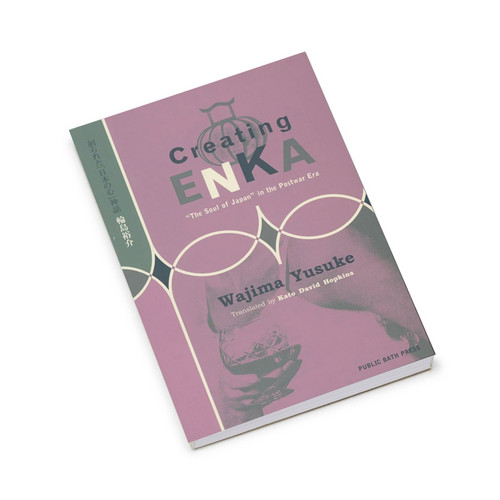
Creating Enka - The 'Soul of Japan' in the Postwar Era (Book)
In Creating Enka: The “Soul of Japan” in the Postwar Era, Yusuke Wajima dismantles one of modern Japan’s most durable cultural myths. This prize-winning history shows how enka - often treated as timeless tradition - was actively remade after the war, becoming a powerful, contested symbol of national feeling, commercial culture and popular memory.

Surreal Odyssey (Zine)
Surreal Odyssey includes a series of drawings by Kervork Yaroden & Shinzo Noda.
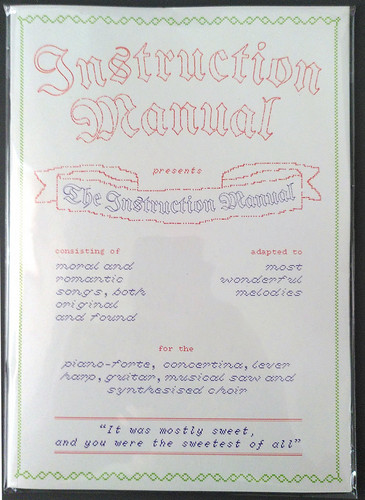
Most Wonderful Melodies (Zine)
The second limited print run of the 'Most Wonderful Melodies' - score and text book to accompany The Instruction Manual by Instruction Manual.Designed by Katie Muir, this book is stunningly illustrated and contains engravings of all your favourite songs from the Glasgow robot folk revivalist's debut album 'The Instruction Manual'.This second edition now comes with an online bonus 'remix' of Faith Eliott's 'thys creatur.'
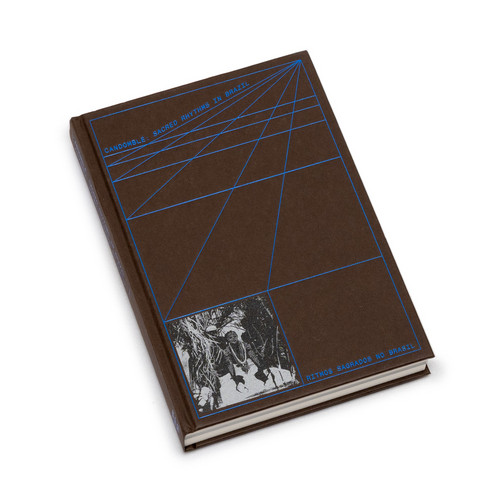
Candomble: Sacred Rhythms in Brazil (Book)
This bilingual book, part of the project Candomblé: Sacred Rhythms in Brazil, brings together a curated selection of archival documentation alongside newly commissioned texts and artistic contributions. Through historical research, essays, and visual materials, it honours this tradition by tracing its foundations while reflecting on its contemporary transformations and future trajectories. By placing past records in dialogue with present-day perspectives, the publication becomes both an archive …

The Encyclopedia of Swedish Punk 1977-1987 (Book)
Do you get nostalgic shivers down your spine when someone mentions the word Punk? Are you a real geek when it comes to record collecting? Have you ever wondered what was out there deep in the underground of the Swedish punk scene? Then this book is for you!
Find out everything you want to know about leading acts such as Ebba Grön, KSMB, Attentat, Anti Cimex, Mob 47, Asta Kask and Strebers. But also about every other band that ever released a record during the first ten years of punk music!
In …

Shot From Both Sides - Photos of UK Punk Gigs 1981-86 Book (Book)
Want to know who won a scuffle between Stoke-On-Trent punks Asylum and 80s pop stars Dexy’s Midnight Runners? What to do when your band has to play after The Seats Of Piss, and the microphone has been down the front and back of Hendrix Deadboy’s nether regions most of the set? Henry Rollins and Ian MacKaye’s brushes with skinheads on the first Black Flag UK tour? Just a few of the numerous and unique reflections revealed in Shot From Both Sides, the first book from Paul May, and Sealed Records.
…

Vinyl . Album . Cover . Art The Complete Hipgnosis Catalogue (Book)
The complete, definitive and never-before-published catalogue of Hipgnosis, Vinyl • Album • Cover • Art finally does justice to the work of the most important design collective in music history, which, according to Roddy Bogawa, director of the documentary Taken by Storm (2011), ‘designed half your record collection’.Founded in 1967 by Storm Thorgerson, Aubrey ‘Po’ Powell and Peter Christopherson, Hipgnosis gained legendary status in graphic design, transforming the look of album art forever and…
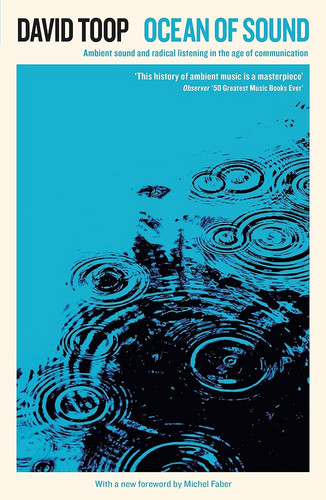
Ocean of Sound : Ambient Sound and Radical Listening in the Age of Communication (Book)
The classic account of ambient music, with a new foreword by Michel Faber. David Toop's extraordinary work of sonic history travels from the rainforests of Amazonas to the megalopolis of Tokyo via the work of artists as diverse as Brian Eno, Sun Ra, Erik Satie, Kate Bush, Kraftwerk and Brian Wilson.
Beginning in 1889 at the Paris exposition when Debussy first heard Javanese music performed, Ocean of Sound channels the competing instincts of 20th century music into an exhilarating, path-breaking…

Renegade - The Lives and Tales of Mark E. Smith (Book)
Still going after thirty years, The Fall are one of the most distinctive British bands, their music - odd,spare, cranky and repetitious - an acknowledged influence on The Smiths, The Happy Mondays, Nirvana and Franz Ferdinand. And Mark E. Smith IS The Fall - 47 members have come and gone over the years yet he remains its charismatic leader, a professional outsider and all-round enemy of compromise, a true enigma. There have been a number of biographies of the legendary Smith, but this is the fir…
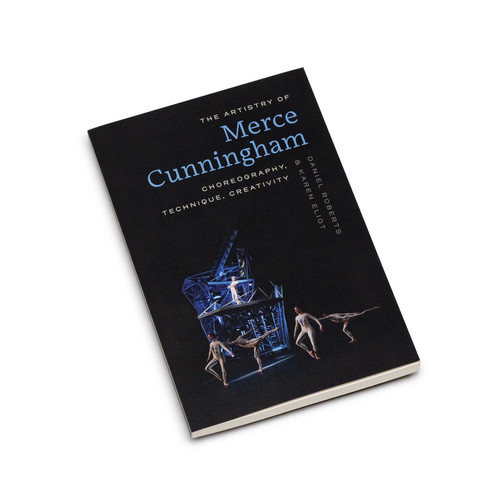
The Artistry of Merce Cunningham : Choreography, Technique, Creativity (Book)
Revealing Merce Cunningham’s creative processes as inspiration for today’s dancers and choreographersIn this book, former members of the Merce Cunningham Dance Company detail the technique classes, rehearsal procedures, and compositional approaches that defined Cunningham’s New York studio for more than sixty years. Through firsthand accounts supported by interviews and secondary sources, the authors reveal Cunningham’s creative process—how simple movement phrases introduced in class evolved int…

To Hell With Poverty! (Book)
To Hell With Poverty! documents Jon King’s story from a South London slum and impoverished working-class background to international success as core musician, lyricist, writer, and producer in legendary post-punk/funk band Gang of Four. The reader is taken on an episodic and kaleidoscopic journey full of adventures from childhood to the end of Gang of Four’s ‘golden period’ in 1984. Thrown off Top of the Pops, truncheoned by police at an anti-Nazi rally, being at the heart of Leeds music scene a…

Corporate Rock Sucks The Rise and Fall of SST Records (Book)
A no-holds-barred narrative history of the iconic label that brought the world Black Flag, Hüsker Dü, Sonic Youth, Soundgarden, and more, by the co-author of Do What You Want and My Damage.Greg Ginn started SST Records in the sleepy beach town of Hermosa Beach, CA, to supply ham radio enthusiasts with tuners and transmitters. But when Ginn wanted to launch his band, Black Flag, no one was willing to take them on. Determined to bring his music to the masses, Ginn turned SST into a record label. O…
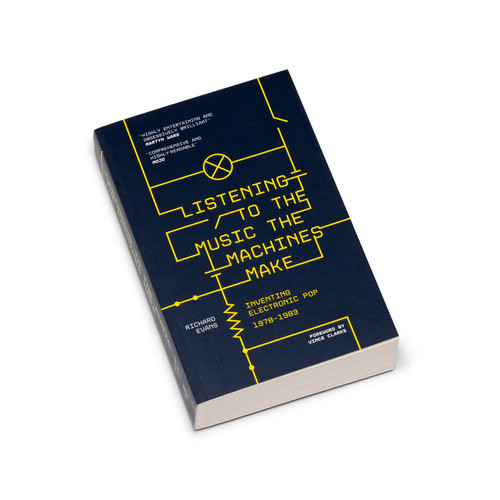
Listening to the Music the Machines Make (Book)
Listening to the Music the Machines Make is the revolutionary story of electronic pop from 1978 to 1983, a true golden age of British music. This definitive account explores how krautrock, disco, glam rock and punk inspired a new generation to rip up the rulebook and venture toward a new frontier of electronic music – one that laid the foundations for Hip-Hop, house, techno and beyond.
Including an extensive collection of archive images throughout, Richard Evans’s kaleidoscopic narrative draws o…

Spanish Cante Jondo and Its Origin in Sindhi Music (Book)
The second outing for our short run book publishing imprint, The End books, takes the form of a reprint of Spanish Cante Jondo and Its Origin in Sindhi Music, originally published in Spanish in 1955 under the name Cante Jondo: Su Origen y Evolución and later in this English translation. Aziz Balouch presents his theory on the roots of flamenco's 'deep song' in modern-day Pakistan, a cultural journey that mimics the routes of his own life, having been brought up among the Islamic mysticism and de…
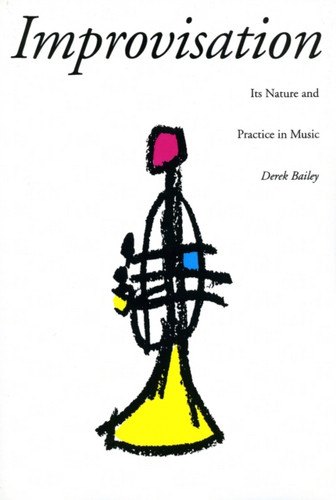
Improvisation : Its Nature And Practice In Music (Book)
Derek Bailey's Improvisation , originally published in 1980, and here updated and extended with new interviews and photographs, is the first book to deal with the nature of improvisation in all its forms,Indian music, flamenco, baroque, organ music, rock, jazz, contemporary, and "free" music. By drawing on conversations with some of today's seminal improvisers,including John Zorn, Jerry Garcia, Steve Howe, Steve Lacy, Lionel Salter, Earle Brown, Paco Peña, Max Roach, Evan Parker, and Ronnie Scot…