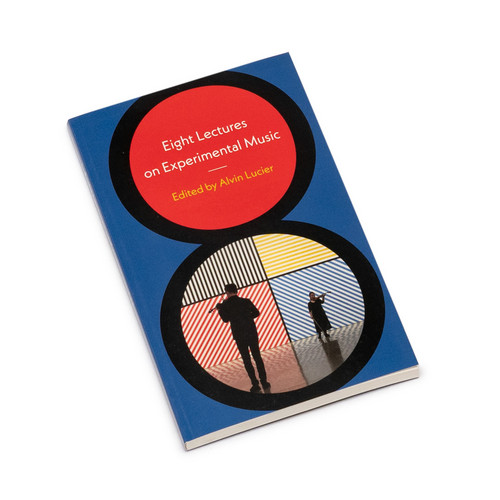
Eight Lectures on Experimental Music (Book)
In this brilliant collection, path-breaking figures of American experimental music discuss the meaning of their work at the turn of the twenty-first century. Presented between 1989 and 2002 at Wesleyan University, these captivating lectures provide rare insights by composers whose work has shaped our understanding of what it means to be experimental: Maryanne Amacher, Robert Ashley, Philip Glass, Meredith Monk, Steve Reich, James Tenney, Christian Wolff, and La Monte Young. Collected here for th…
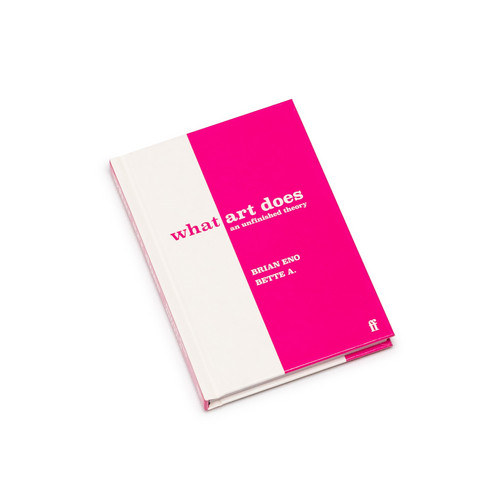
What Art Does: An Unfinished Theory (Book)
Legendary artist Brian Eno and writer/visual artist Bette Adriaanse present a major new work exploring the meaning and purpose of art.
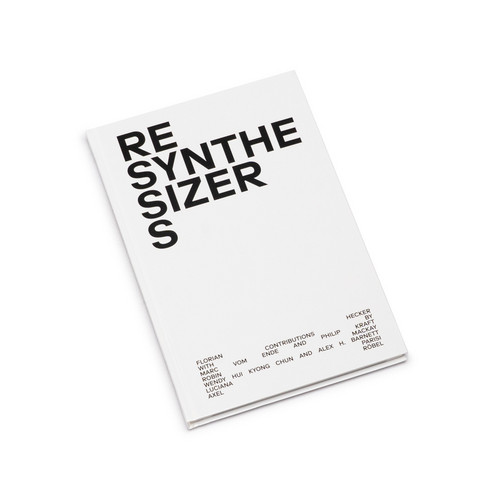
Resynthesizers (Book)
An illustrated monograph documenting and extending Resynthesizers, a project by artist Florian Hecker combining electroacoustic, olfactory, and textual elements, staged at the modernist Fitzpatrick-Leland House in Los Angeles.
Florian Hecker is an artist whose work is realized through the technical manipulation of sensory data. By utilizing machinic scales and registers, Hecker creates environments marked at once by overwhelming complexity and vexing subtlety, where audience members are led to d…
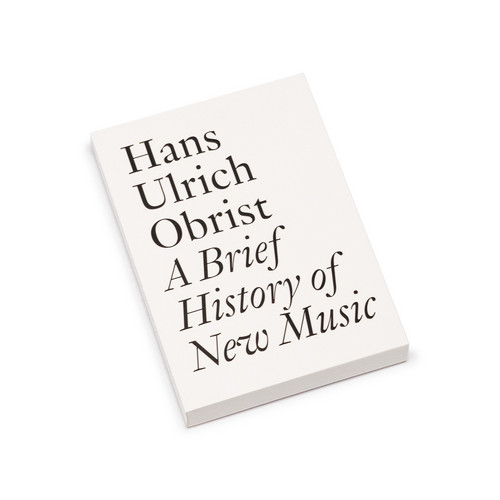
A Brief History of New Music (Book)
Following the success of “A Brief History of Curating” (now available in nine different languages, in its sixth reprint, and as an e-book), this publication gathers together interviews with pioneering musicians of the 1950s to the 1980s. The book thus brings together avant-garde composers such as Elliott Carter, Pierre Boulez, and Karlheinz Stockhausen; originators of electro-acoustic music such as François Bayle, Pauline Oliveros, Iannis Xenakis, Robert Ashley, and Peter Zinovieff; Minimalist a…
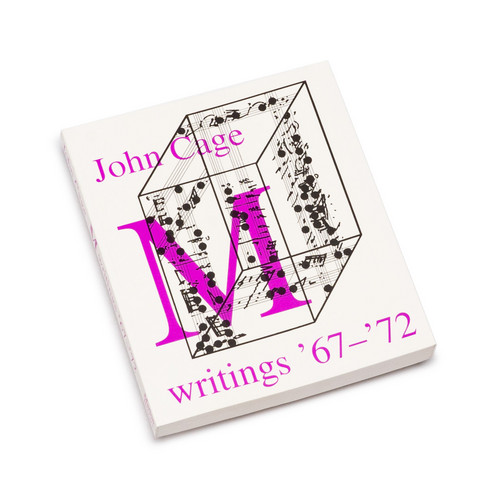
M: Writings 67-72 (Book)
Why does the letter 'M' stand alone as the title of this book by the author of Silence and For the Birds? The dictionary gives the definition of 'M' as the 13th letter of the alphabet, the symbol for 1000, and if you think they fit, they do. Or you may find clues in Cage's topics, words beginning with M that figure among the author's concerns: including music, mesostics, Marcel Duchamp and making matters worse. From Buckminster Fuller to Chairman Mao, from Merce Cunningham to mushrooms - here ar…
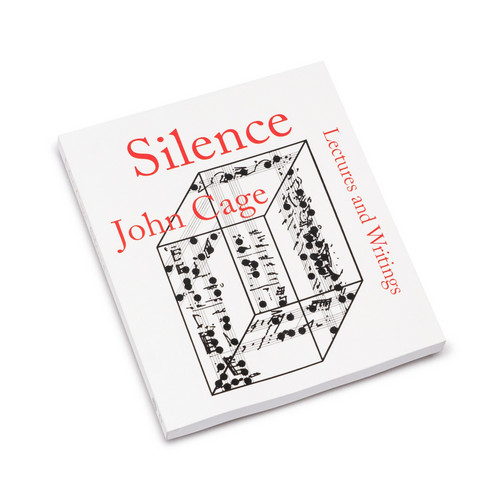
Silence: Lectures and Writings (Book)
John Cage (1912-1992) was an American composer, philosopher, poet, music theorist, artist, printmaker and amateur mycologist. He is arguably the most influential composer of the mid-twentieth century. He dedicated himself to the search for new horizons in musical composition. His method of composition: an amalgam of chance operations, latitude in performace, the use of electronic sound and the inclusion of ambient noise. His aim: to increase the territory of his art and to celebrate the richness…
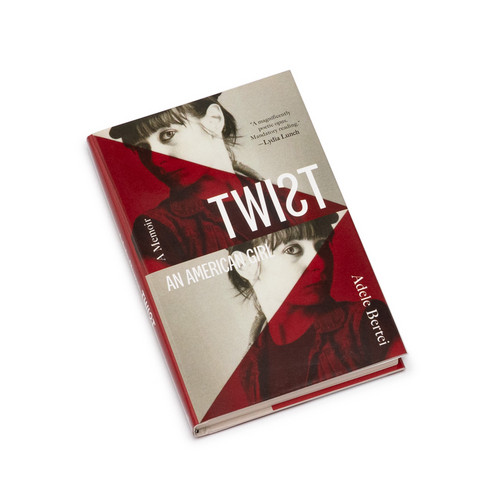
Twist: An American Girl, A Memoir (Book)
From iconoclastic writer and musician Adele Bertei comes a wholly original hero's journey that wages war on the cliché of the “misery memoir.” Set in a 1960s and ’70s American neighborhood rife with poverty and violence, fatherless Irish mothers and Italian mobsters, and women crucified into madness by misogyny, Bertei speaks through her electrically alive avatar Maddie Twist to flip the victim script. Through her unshakable belief in imagination, poetry, music, and community, she transforms tra…
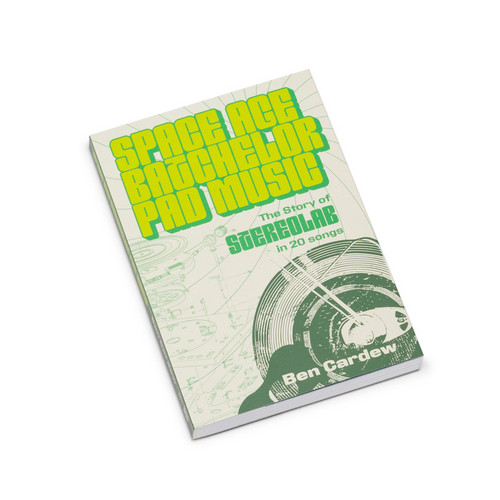
Space Age Batchelor Pad Music: The Story Of Stereolab In 20 Songs (Book)
Stereolab are one of the most fascinating groups of the past fifty years, a source of constant reinvention and illuminating contrasts, where political ideology meets the sweetest pop melodies and driving guitars rub along with space-age jazz. They are perhaps the greatest Anglo-French collaboration since Concorde: a hugely respected, highly influential group whose fan base grows larger by the year, stretching from chart-topping hip hop artists to underground indie stars. And yet their appeal rem…
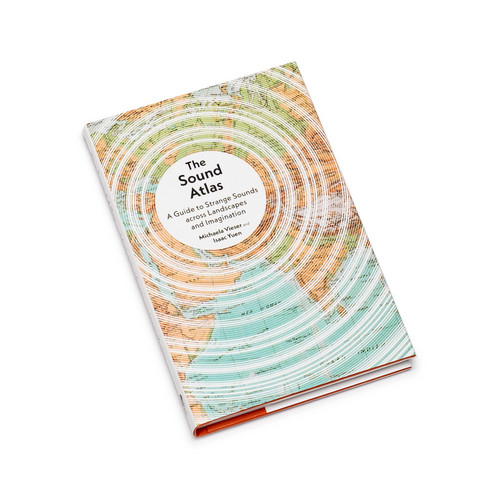
The Sound Atlas - A Guide to Strange Sounds across Landscapes and Imagination (Book)
Explores the profound, cultural significance of sounds, blending history, science and personal reflection.
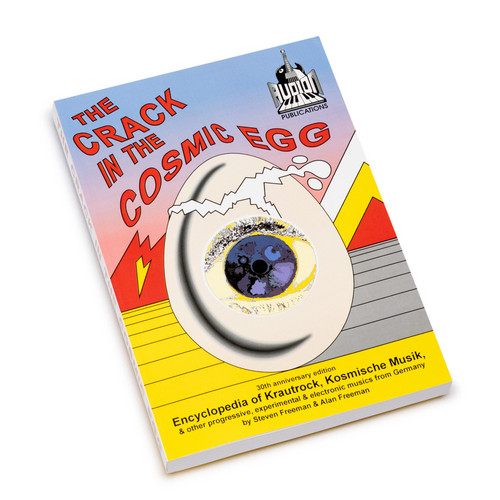
The Crack In The Cosmic Egg (Book)
30th anniversary edition. Revised and expanded printed book edition of The Crack In The Cosmic Egg. Thirty years after its original publication, Steve Freeman and Alan Freeman return to print with an anniversary edition of their encyclopaedic work on Krautrock - the most comprehensive and authoritative ever published on the subject. A long-awaited return: previous printed editions have been out of print for years and are now collector's items.
This new edition - A4, perfect-bound, 484 pages - is…
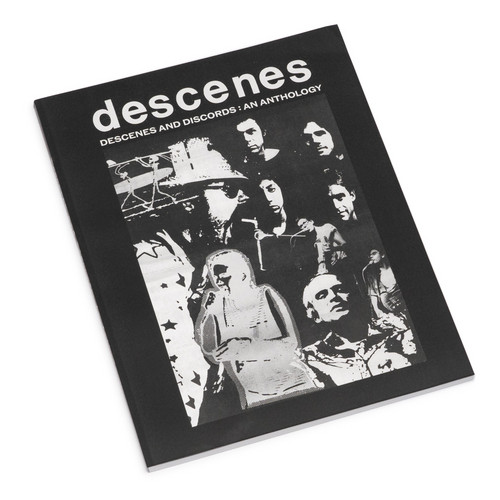
Descenes and Discords: An Anthology (Book)
Limited to 800 copies! Each book is numbered and signed by the author. Large format book. Descenes and Discords: An Anthology is a powerful time capsule of the birth and evolution of punk music through the pages of two influential fanzines: Descenes and Discords. These publications, originally printed and distributed in Washington, D.C. during the late 1970s and early 1980s, captured the raw energy, irreverent spirit, and revolutionary ethos of the underground music scene - first local, then nat…
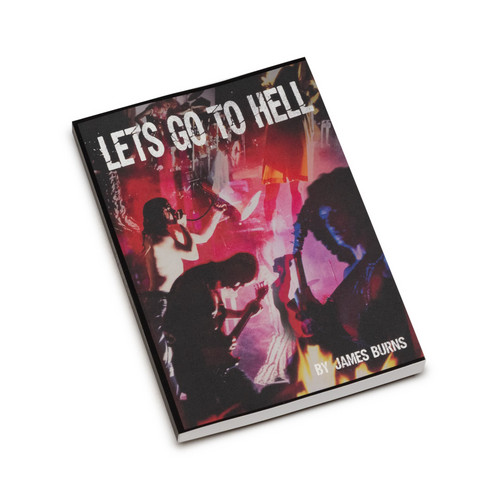
Let's Go To Hell: Scattered Memories of the Butthole Surfers (Book)
The Butthole Surfers lived like nomads, built their legend on never-ending tours and shows resembling hedonistic acid tests. Author James Burns returns with new interviews and shocking revelations in this explosive 10th anniversary edition of Let's Go to Hell — the first no-holds-barred chronicle of the band's rise, fall, and enduring infamy. 315 pages.
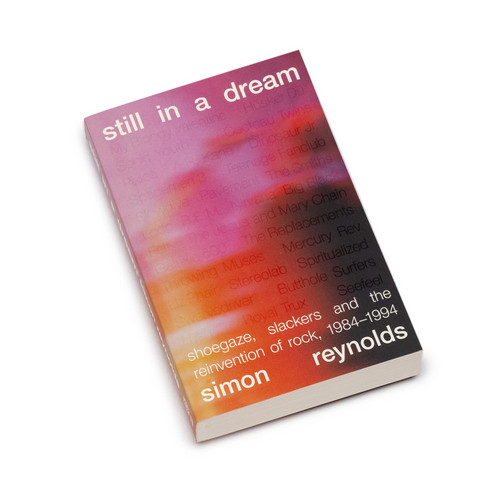
Still in a Dream : Shoegaze, Slackers and the Reinvention of Rock, 1984–1994 (Book)
The definitive story of the slackers and shoegazers who reinvented rock. Twenty years after his acclaimed postpunk best-seller, Rip It Up and Start Again, Simon Reynolds tells the tale of what happened next: the underground explosion of noisepop, shoegaze, slacker rock and grunge that reverberated through the late Eighties into the early Nineties. Capturing the musical exhilaration of the era along with the alienation of youth during a period of ascendant conservative politics and glitzy mainstr…

Iannis Xenakis's Persepolis (Book)
In Iannis Xenakis's Persepolis, Dr. Aram Yardumian situates the composer’s monumental electroacoustic piece amid wartime biography, architectural practice and Iranian state spectacle, tracing how one work came to shadow both the Shiraz Festival and the Revolution that followed.

BBC Radiophonic Workshop's BBC Radiophonic Workshop - A Retrospective (Book)
In BBC Radiophonic Workshop – A Retrospective, writer William L. Weir recounts how a small, overstretched BBC unit accidentally invented the sound of the future, tracing its tape‑loop alchemy from children’s shows to the DNA of electronica and ambient.

20th Century Ambient (Book)
In 20th Century Ambient, writer Dusty Henry blends prose and comics to trace how ambient music quietly became one of the century’s most pervasive forms, from Satie and dub to Eno, Alice Coltrane and streaming‑era wellness soundscapes.
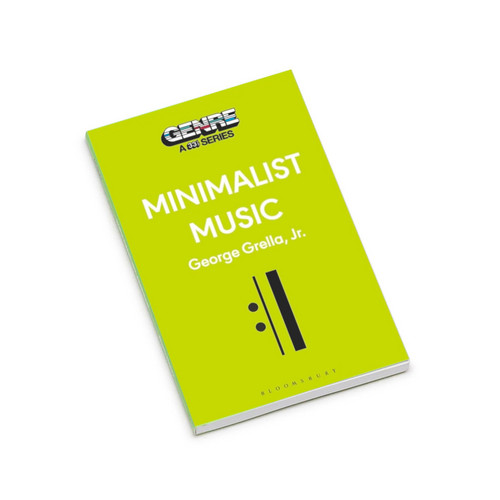
Minimalist Music (Book)
In Minimalist Music, critic George Jr. Grella treats minimalism less as a style than as a set of techniques, tracing how process, repetition and reduction have migrated across genres to become one of contemporary music’s most adaptable practices.

The Sound of the Machine: My Life in Kraftwerk and Beyond (Book)
In The Sound of the Machine, former Kraftwerk member Karl Bartos offers a wry, detailed memoir of life inside and beyond Kling Klang, tracing how post‑war childhood, pop dreams and classroom work converged in some of electronic music’s most enduring songs.
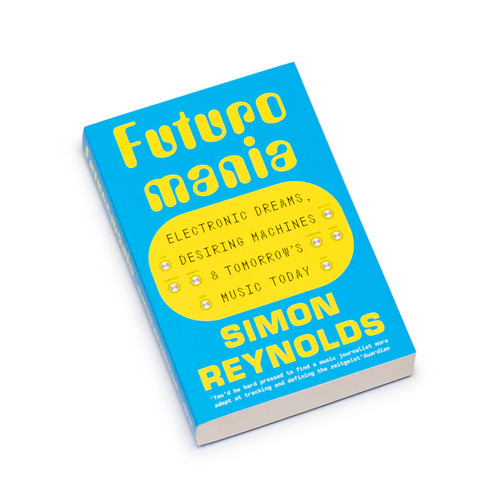
Futuromania: Electronic Dreams, Desiring Machines and Tomorrow's Music Today (Book)
In Futuromania, critic Simon Reynolds assembles essays and interviews into a time‑spanning narrative of machine music, tracing how electronic pop, from Moroder to Burial, has channelled science‑fiction fantasies and anxieties into new futures for sound.
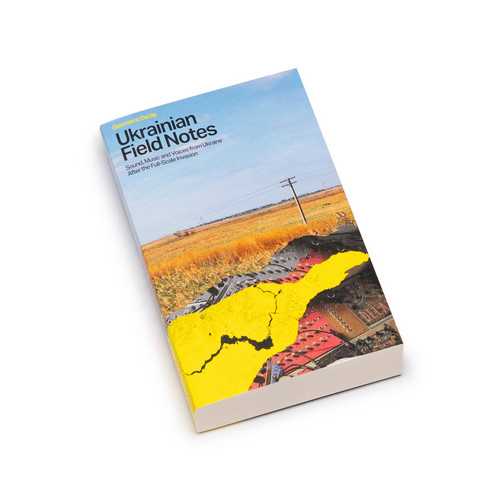
Ukrainian Field Notes: Sound, Music And Voices From Ukraine After The Full-Scale Invasion (Book)
In Ukrainian Field Notes, Gianmarco Del Re uses more than 300 interviews to trace how war reshapes listening, following Ukrainian musicians as they compose amid sirens, shelters and displacement while forging new local and diasporic sonic communities.