Sarah Hennies & Tristan Kasten-Krause Prisoner's Cinema
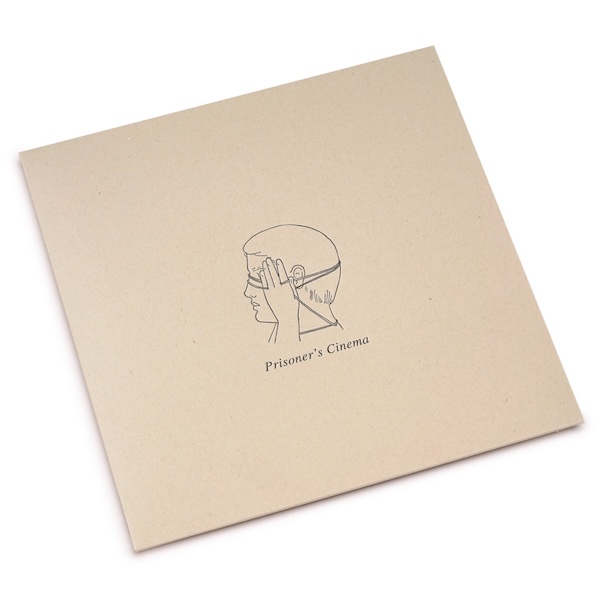
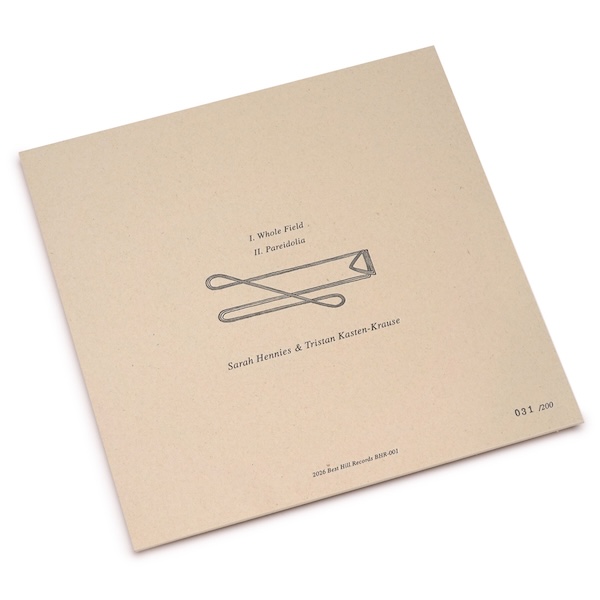
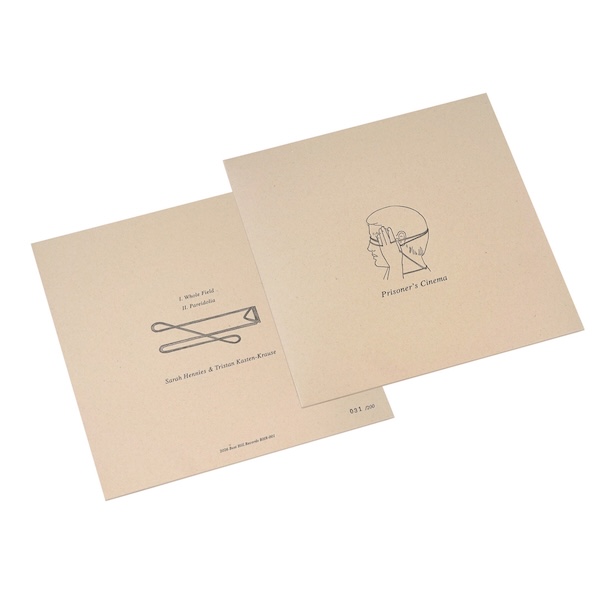
Over the years, it's been a rare pleasure to witness the ascendant star of the American composer and percussionist Sarah Hennies. Active within the context of experimental music for roughly two decades, every step of the way she has continued to push the boundaries of sonic consciousness through live performance and a growing catalog of incredible, critically heralded releases. Among these is last year's The Quiet Sun, a stunning duo collaboration with the bassist Tristan Kasten-Krause. Now Hennies marks the launch of her imprint, Best Hill Records, with Prisoner's Cinema, her second full-length with Kasten-Krause, featuring a virtuosic guest appearance by Madison Greenstone on clarinet. As was the case with its predecessor and Hennies' work in general, the album's two side-long works reconfigure expectations of the generative possibilities of each of their instruments, as well as the use of field recordings and compositional structure and form, massing glacially paced minimalist gestures imbued with a profound sense of tension and emotional depth. Issued by Best Hill in a stunning hand-numbered edition of 200 180g black vinyl LPs, accompanied by a custom printed insert and housed in a letterpress sleeve, once again the partnership of Hennies and Kasten-Krause has drawn us toward unforeseen depths and totally blown us away. Absolutely incredible and not to be missed.
Following her studies in percussion at the University of California-San Diego with Steven Schick and others, Sarah Hennies first emerged into the landscape of experimental music within the thriving scene of improvisers and composers working in Texas, primarily producing a brilliant body of solo compositions and collaborations, as well as interpretations and renderings of works by composers like John Cage, Alvin Lucier, Jandek, Jürg Frey, Ellen Fullman, Radu Malfatti, Arnold Dreyblatt, and others. Even at this stage of her career, for those lucky enough to encounter her in performance or via her recorded output, Hennies rapidly emerged into the collective consciousness as an artist to watch. That said, despite her prolific pace and the gathering critical rumble connected to her efforts, it wasn't until after Hennies' relocation to Upstate New York during the mid-2010s that her work began to fully get the attention it deserved, swirling around a rapid fire suite of releases - Gather & Release, Orienting Response, Everything Else, Embedded Environments, Sisters, Reservoir 1 - issued over the span of three short years, between 2016 and 2019. This flurry of recorded activity was doubled by a startling number of live performances, ensemble works and commissions, and collaborations, all harnessing a singular practice rooted in explorations of musical, sociopolitical, and psychological issues including queer and trans identity, love, intimacy, psychoacoustics, and percussion. Despite Hennies picking up incredible pace across 2020, witnessing no less than six full-lengths across that year, her recorded output entered a quiet period that lasted until 2024. Over the years since, however, she's been landing some seriously incredible work that more than makes up for the silence, including 2024's astoundingly ambitious Motor Tapes and last year's collaboration with Tristan Kasten-Krause, The Quiet Sun, which was critically celebrated and described by Peter Margasak as a "marvel of shifting timbre, motion, and texture."
A bassist and composer based in New York City, like Hennies, Tristan Kasten-Krause is an artist whose work is rooted in duration, catharsis, and perception. Also like Hennies, over the years he has dedicated considerable efforts, in addition to efforts penned under his own name, to exacting renderings of other composers as an instrumentalist, notably the work of Alvin Lucier, Julia Wolfe, Sarah Davachi, Caroline Shaw, David Lang, Ichiko Aoba, and Steve Reich, working with ensembles like the Bang on a Can All-Stars, International Contemporary Ensemble, Talea Ensemble, Wet Ink, Contemporaneous, and Ensemble Signal, as well as within the microtonal metal band Scarcity. Given his remarkable skills and sensibilities, as well as the many intersections of their respective practices, it's little wonder why Hennies and Kasten-Krause embarked upon the fruitful partnership that they did, now resulting in their second outing as a duo, Prisoner's Cinema, nor why Hennies would choose the astounding heights achieved by this LP to mark the launch of her imprint Best Hill Records.
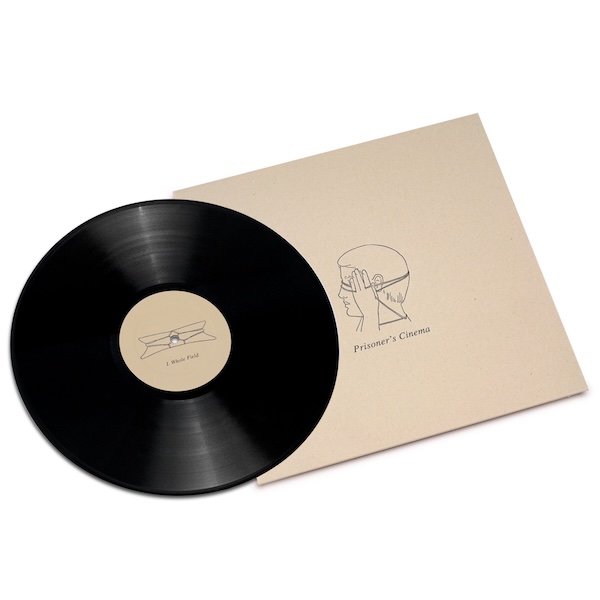
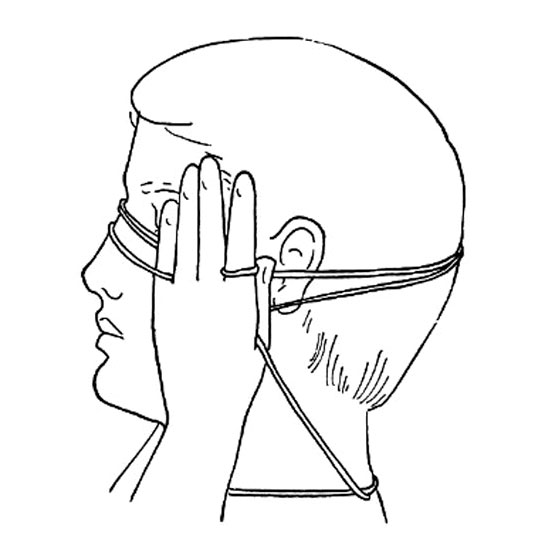
Comprising two side-long works - Whole Field and Pareidolia - according to the artists, Prisoner's Cinema "derives its name from a neurological phenomenon in which colors and shapes appear as visual hallucinations for those who have spent extended periods of time in darkness". It was originally commissioned by the Wassaic Project in 2025 as a 20-minute live work, performed in total darkness, with the exception of a single candle flame that was subsequently extinguished by air from a pounding bass drum at the piece's conclusion. When embarking upon the choice to record the work, Hennies and Kasten-Krause decided to expand it into the two distinct long-form compositions that we encounter as the LP, the first conceptually embarking into a "contemplative darkness", while the second "evoking images and memories as part of the music's hazy reality." Featuring Hennies on singing bowls, Thai gongs, Aarti gong, bass drum, mokusho, and field recording, and Kasten-Krause on singing bowls, double bass, clarinet, and field recording, both works draw upon the pair's development of an idiosyncratic and organic approach to collaborative composition, harnessing a tension between depth and restraint that results in a remarkable sense of sonic scope and range, as well as an emotional impact that is often rare in compositions like these.
Both Whole Field and Pareidolia can be regarded as minimalist in the simplest sense of the word due to the remarkable sense of restraint that they deploy, rendering an exacting constraint of sonic materials, with an equal sense of compositional weight offered to rests and space as to the active counterparts. However, neither piece is rooted in the kind of harmonic or structural relationship typically associated with Minimalism, being far more open, fluid, and responsive in form, and generally veering toward the timbral and textural extremes capable of being produced by each respective instrument. Whole Field is an immersive work of glacial pacing that places tuned percussion at its core - the sporadic pulse of bells and gongs - with bowed bass increasingly deployed to render a remarkable sense of emotion and tension, at times producing a relationship between the two players that displays a flirtation with the percussion and growling vocals of Tibetan monks. Pareidolia, on the other hand, beginning with the engrossing tones produced by Madison Greenstone's clarinet, quickly enmeshes the ear in the deeply affecting psychoacoustic realms for which both Hennies and Kasten-Krause have become known, playing the pulse and complex harmonics of the latter's bowed bass against the roving, clock-like pulse of Hennies' singing bowls and rumbling bass drum, building both bass and microtonal tension until around the 7-minute mark, when they release into an expanse of field-recording laden soundscapes that endures for its remainder, transitioning through various movements within which the pulse of bass and tuned percussion rise and fall in prominence and produce an unexpectedly hypnotic effect.
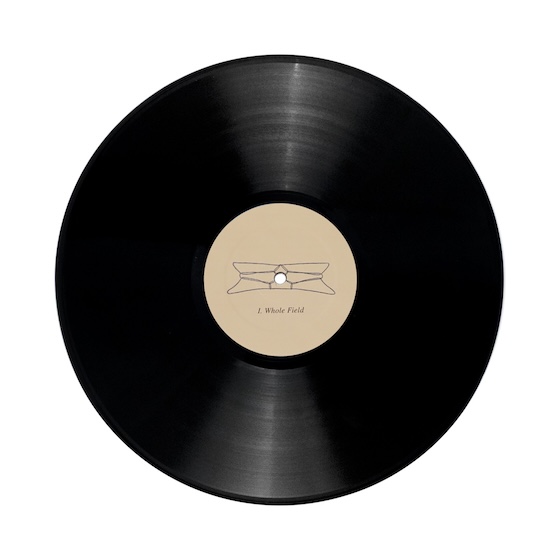
Absolutely astounding in every discrete moment as well as its collective whole, Prisoner's Cinema marks a thrilling high point in both Hennies and Kasten-Krause's careers, offering further proof of how important their collaboration is. This is experimental composition as it always should be, but all too often isn't: a vital music, rooted in risk and adventure, that takes the listener into uncharted territories and leaves them changed at its conclusion. Prisoner's Cinema is issued by Best Hill in a stunning hand-numbered edition of 200 180g black vinyl LPs, accompanied by a custom printed insert and housed in a letterpress sleeve, and is unquestionably one of our favorite releases of 2026. It's hard to imagine it leaving our listening pile anytime soon. Absolutely essential sounds. These aren't going to sit around for long once the word gets out, so grab a copy while you can.
Sarah Hennies & Tristan Kasten-Krause, Prisoner's Cinema (Whole Field, Pareidolia). LP, hand-numbered edition of 200 copies, 180g black vinyl, with printed insert and letterpress sleeve. Issued by Best Hill Records.