Ivan Wyschnegradsky
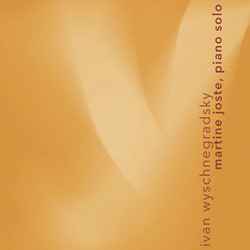
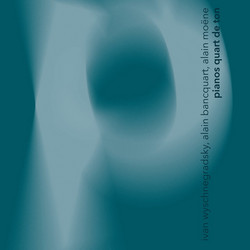
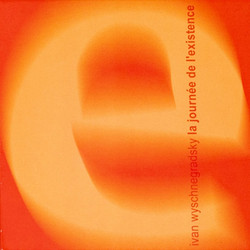
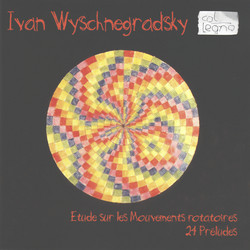
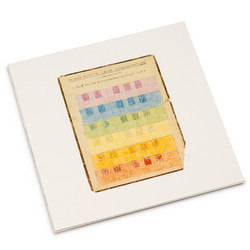
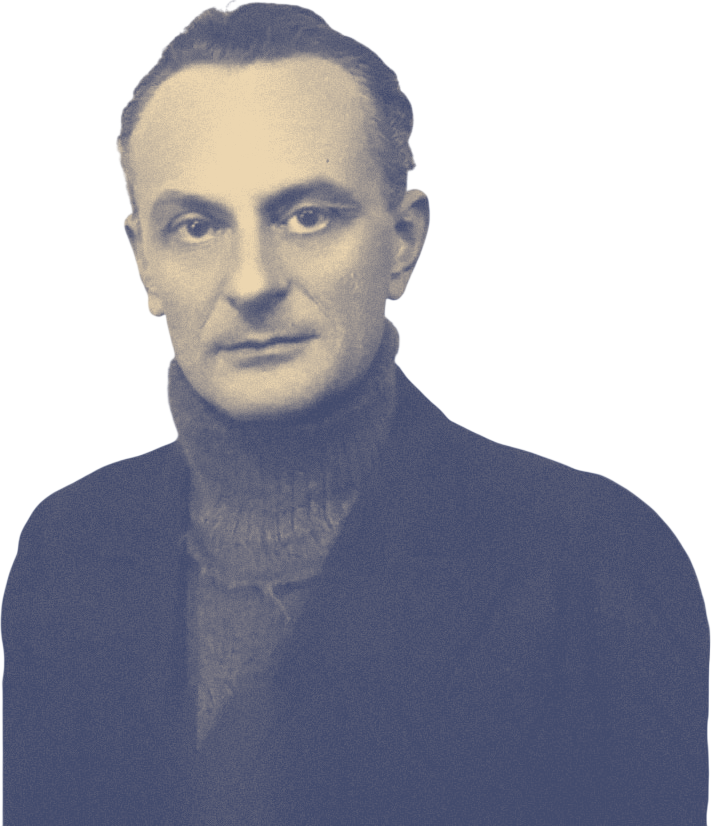
Ivan Wyschnegradsky (1893-1979) was a Russian composer who spent most of his life in Paris and gave it to microtonal music. Born in Saint Petersburg, he studied with Nikolai Sokolov and was shaped by Scriabin's mysticism. A vision in 1916 led to La Journée de l'existence, for narrator, orchestra and choir, which he revised for decades and heard premiered only in 1978. He moved to Paris in 1920, worked with Pleyel, Alois Hába and the Förster firm on quarter-tone pianos, and wrote much of his music for two or four pianos tuned a quarter tone apart, later dividing the octave into sixth and twelfth tones. His Manuel d'harmonie à quarts de ton appeared in 1932, and his concerts at the Salle Pleyel in 1937 and 1945, with Yvonne Loriod and Pierre Boulez among the pianists of the second, brought him the friendship of Olivier Messiaen. He also made chromatic drawings that map his scales onto colour wheels. In the 1970s Martine Joste and Bruce Mather brought his work back to the concert hall.
Ivan Wyschnegradsky (1893-1979) was a Russian composer who spent most of his life in Paris and gave it to microtonal music. Born in Saint Petersburg, he studied with Nikolai Sokolov and was shaped by Scriabin's mysticism. A vision in 1916 led to La Journée de l'existence, for narrator, orchestra and choir, which he revised for decades and heard premiered only in 1978. He moved to Paris in 1920, worked with Pleyel, Alois Hába and the Förster firm on quarter-tone pianos, and wrote much of his music for two or four pianos tuned a quarter tone apart, later dividing the octave into sixth and twelfth tones. His Manuel d'harmonie à quarts de ton appeared in 1932, and his concerts at the Salle Pleyel in 1937 and 1945, with Yvonne Loriod and Pierre Boulez among the pianists of the second, brought him the friendship of Olivier Messiaen. He also made chromatic drawings that map his scales onto colour wheels. In the 1970s Martine Joste and Bruce Mather brought his work back to the concert hall.