James Tenney
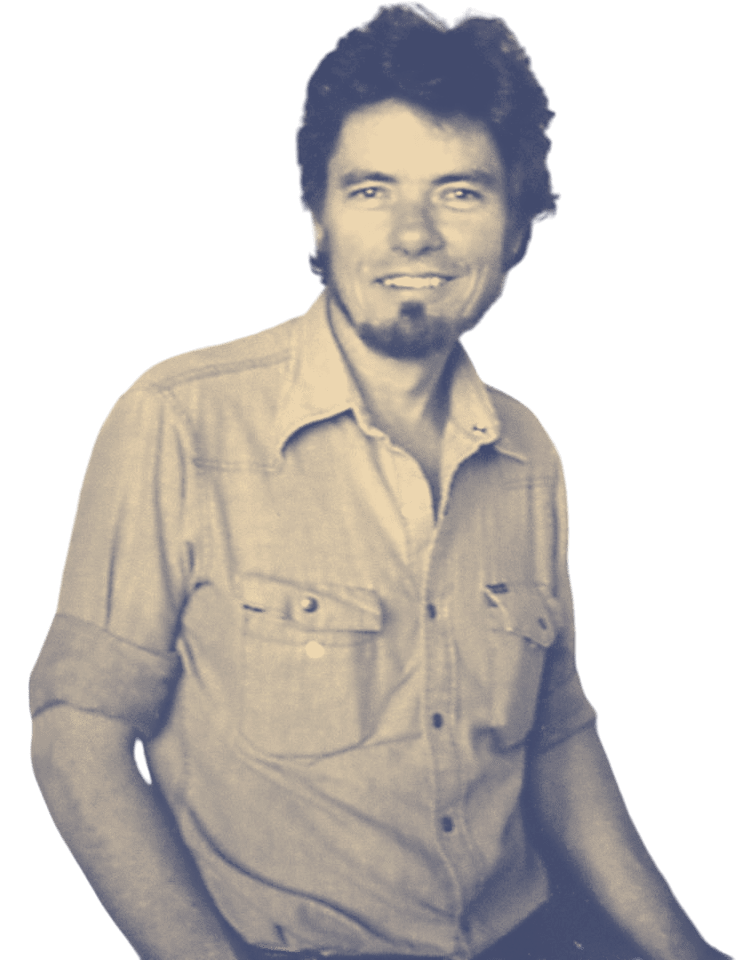
James Tenney (1934–2006) was born in Silver City, New Mexico, and grew up in Arizona and Colorado, where he received his early training as a pianist and composer. He studied with Carl Ruggles, John Cage, Harry Partch and Edgard Varèse, and later played in Cage and Partch's ensembles. His 1961 thesis Meta-Hodos was one of the first attempts to describe how music is actually heard. He was a pioneer of computer music, working with Max Mathews at Bell Telephone Laboratories in the early 1960s, and at the same time a member of Fluxus and co-founder of the ensemble Tone Roads.
West coast soundings
2014 release **
New compilation of works by emerging west coast composers who somehow belong within a John Cage lineage. Music by James Tenney, Michael Pisaro and their students, Mark So, Michael Winter, Chris Kallmyer, Tashi Wada, Liam Mooney, Scott Cazan, Laura Steenberge, Cat Lamb, Quentin Tolimieri and Casey Anderson. "A compilation of work by twelve composers, ten of whom studied with James Tenney and/or Michael Pisaro (who are also represented by pieces here) at Cal Arts, performed by a qu…
Works for String Quartet and Percussion
"The evolution of the string quartet repertory has accelerated during the last half of the twentieth-century and beyond as composers from both the mainstream and the avant-garde have mined its seemingly inexhaustible creative resources. This CD features the virtually unprecedented combination of string quartet and percussion. It contains three works by prominent American experimentalist composers from several generations exploring the ensemble's unique sonic resources in diverse stylistic settin…
Sonatas & Interludes
How rare, and valuable, it is to be able to experience one composer’s masterwork through the sensibility of another significant, stylistically distinct composer – via a performance that reveals unexpected aspects of both. that is to say, an approach to performance not as an act of self-conscious, flamboyant or dramatic interpretation, according to the concerns of technique, expression, and projection that are at the heart of an instrumentalist’s presentation of a musical score to an audie…
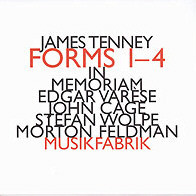
Forms 1-4
Four works by James Tenney, each paired with music by an American composer to whom the Tenney composition is dedicated. The four 'Forms' compositions share with their senior partners -- Edgard Varèse, John Cage, Stefan Wolpe, and Morton Feldman -- a focus on sound and, in a more intuitive way, mood. Tenney's music draws upon an unorthodox and original approach to harmony. The compositions include James Tenney's 'Form 1' (1993) and Edgard Varese's 'Octandre' (1923), James Tenney's 'Form 2' (1993)…
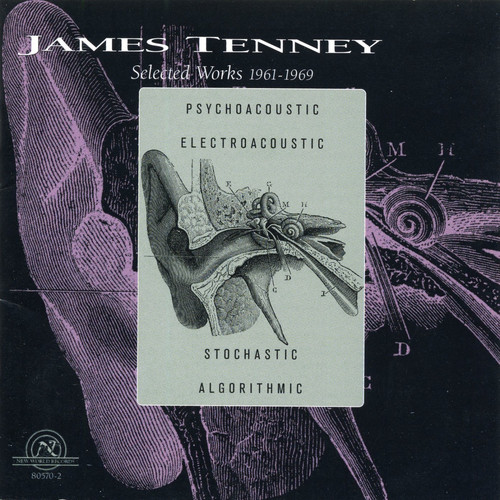
James Tenney: Selected Works 1961- 1969
This recording is a reissue of the 1992 Frog Peak/Artifact CD, the first recorded collection of James Tenney’s music of the 1960s. Many of the pieces on this CD were realized at Bell Telephone Laboratories from 1961 to 1969, where Tenney used Max Mathews’s digital synthesis program that eventually became Music IV. This software became the model for many of the common computer music environments of the last forty years, and was the first system of its kind available to composers. Tenney’s pieces …
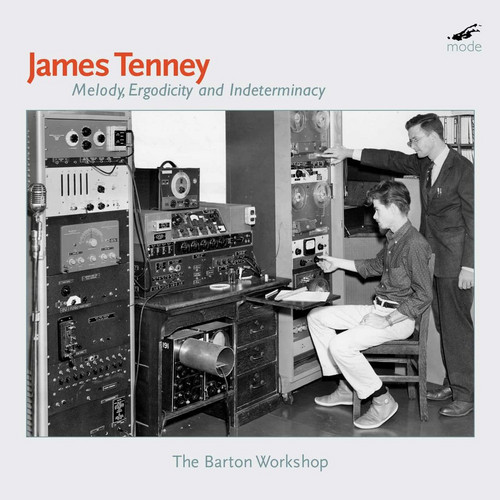
Melody, Ergodicity and Indeterminacy
First recordings of James Tenney's Poem, Monody, Seegersong #1 and #2 and the Ergodos series for computer music, with string, instrumental and percussion responses, played by the Barton Workshop and soloists.