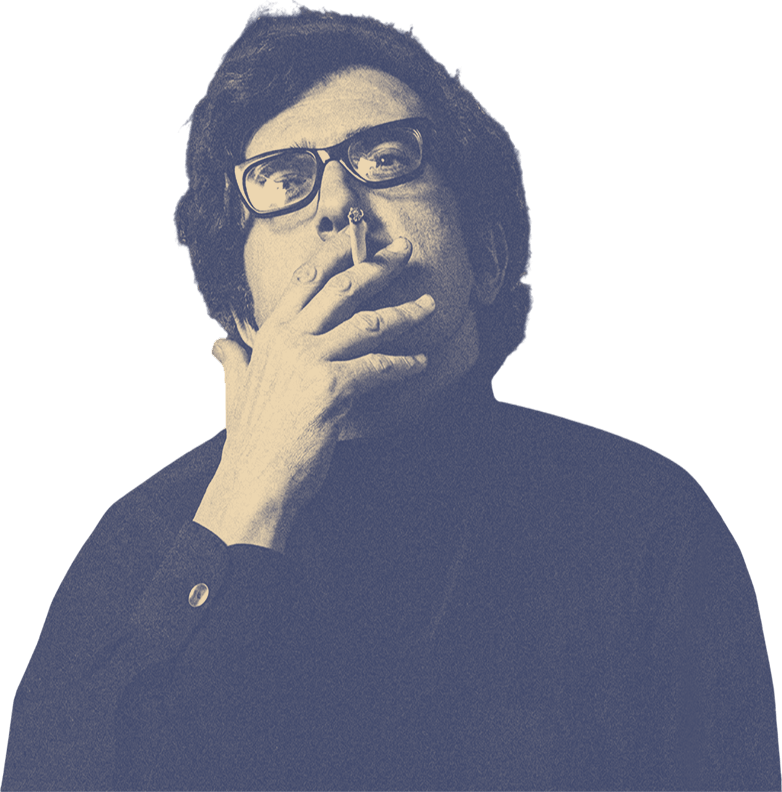
Luciano Berio
Luciano Berio (1925-2003) was born in Oneglia, on the Ligurian coast. He studied at the Milan Conservatory with Giorgio Federico Ghedini and at Tanglewood with Luigi Dallapiccola, and in 1955 co-founded the Studio di Fonologia Musicale in Milan. His works include Sinfonia (1968) and the Sequenza series of solo pieces exploring extended techniques. He married the mezzo-soprano Cathy Berberian in 1950, and later founded Tempo Reale in Florence.

Orchestral Works
The second CD of col legno's Wien Modern Edition is dedicated to Luciano Berio, who throughout his life kept on searching for new sounds, and new instrumental and orchestral organizing principles in his work. His Sequences for solo instruments are among the most important landmarks in recent music; later on, Berio decided to "comment" on some of these notoriously complex solo works from an orchestral perspective. Chemins and Chemins IIb are adaptations of the Sequences for harp and viola. "The b…

Sequenzas I-XIV (Complete)
Although he left an extended and varied output, including five major stage-works, several shorter dramatic pieces, a number of significant choral and orchestral works (not least the famous Sinfonia of 1968), and a sizeable body of instrumental and vocal pieces, the music of Luciano Berio is encapsulated in the Sequenza series running through 34 years of his creativity. Not only have many of them set standards for performance prowess and stamina, each embodies a redefining of the technical limits…

Folk Songs, Sequenza VI, Les Mots sont allés - Dérive
Folk Songs, written in 1964, has long been one of Berio's most popular works. A series of eleven songs for mezzo and chamber ensemble, it is couched in an accessible language with more than a hint of Stravinsky in the instrumentation. The songs here are not all folk songs: some are arrangements of popular songs in folk style and a couple are original Berio compositions, while the last song was transcribed from an old scratched 78 by the composer's then-wife Cathy Berberian. This performance, if …

Sinfonia per 8 voci - Eindrucke
Luciano Berio was commissioned to write a work for the New York Philharmonic's 150th anniversary. What resulted was the Sinfonia, a masterpiece of the twentieth century musical movement. This work combines many of the Italian composers fascinations - from Mahler to Martin Luther King - and sympathizes them. The result is fascinating, stimulating, and thoroughly enjoyable. Boulez's interpretation is really top-notch. He leads the orchestra with great power, gusto, and energy. This vision is evide…

Laborintus 2
Music performed by the Ensemble Musique Vivante, laying down a turbulent racket of avant-crinkle, over which the 4-piece Chorale Experimentale bellows vocal confusion. Berio has also succeeded in discovering sounds, phrasings, effects of all kinds which have permitted him to venture further and further into areas which had so far been thought impermissible or impossible for the human voice. These investigations are magisterially reflected in the larger works and particularly in 'Laborintus II.

Berio / Xenakis / Dashow
Recital disc by violinist Tsjuji Mifune, featuring a trio of Iannis Xenakis pieces, plus an early 80s electro-acoustic piece by James Dashow, plus Luciano Berio’s “corale”.

Zeit(t)räume
Soprano Claudia Böttcher and pianist Jovita Zähl perform Stockhausen's Tierkreis (soprano and piano version) and Klavierstück IX and Berio's Sequenza III and Quattro Canzoni popolari, recorded in Cologne in 2011-2012.

Acousmatrix 7
Seventh volume in the Acousmatrix series. "In 1955, Luciano Berio and Bruno Maderna founded a Studio di Fonologia at a Milan radio station; it was the first electronic music studio in Italy. Berio became very active there, organizing concerts and also publishing a new music journal, both under the name Incontri Musicali. Berio explored the frontiers of sound, particularly vocal sound, thanks to his association with Cathy Berberian. She was willing and able to produce a remarkable variety of exte…

The Complete Sequenzas, Alternate Sequenzas
The first complete recording of Luciano Berio's Sequenzas for solo instruments, with the alternate versions and nine further solo works, on four CDs with verses by Edoardo Sanguineti and a 104-page book.

Giovanni Legrenzi, Luciano Berio, Giovanni Gabrieli, Orchestra della Svizzera italiana, Dennis Russell Davies
Now, And ThenBruno Maderna's chamber orchestra transcriptions of Frescobaldi, Legrenzi, Gabrieli, Viadana and Wassenaer, with the first recording of Luciano Berio's Chemins V (Pablo Márquez, guitar); Orchestra della Svizzera italiana, Dennis Russell Davies, recorded in Lugano in August 2015.