Back in stock
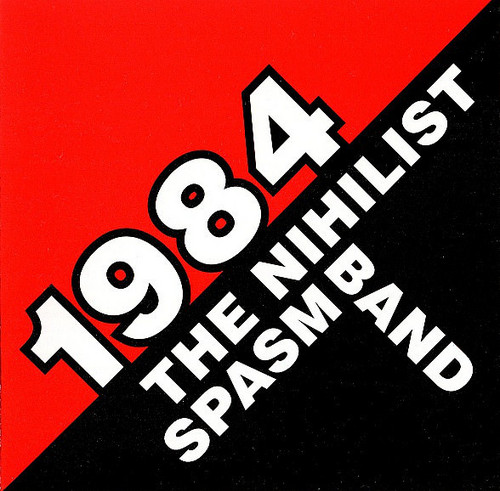
1984
When the cassette 1984 was released on Chimik Communications in 1984, the Nihilist Spasm Band's last record was the 1978 Vol. 2. Although the band was very active at the time, playing every Monday night at Forest City Gallery in London, Ontario, since the mid-'70s, it very seldom recorded. 1984 was an attempt at documenting these weekly sessions. Tracks were edited from domestic recording tapes, therefore the sound quality is poor, bootleg-like at times (like on "Are You OK Bill? July 30 1984").…
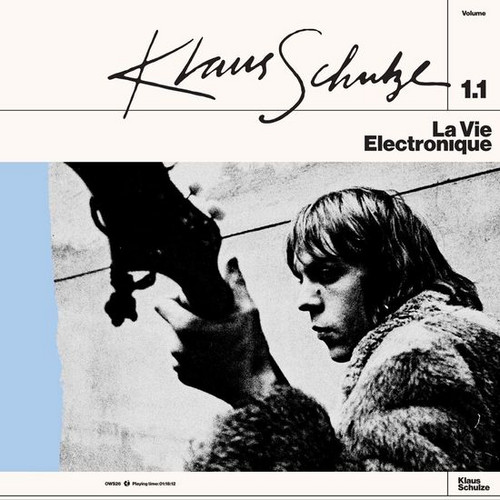
La Vie Electronique Volume 1.1
Now available for the first time on vinyl, One Way Static Records presents the second volume in our new archival series La Vie Electronique. This volume (1.1) focuses on the years 1970-1972 and is spread over two glorious LP’s containing +78 minutes of Klaus Shulze rarities. This deluxe vinyl set also comes with an insert containing extensive liner notes. Klaus Schulze is a German electronic music pioneer, composer and musician that needs very little introduction. In the late sixties & early sev…
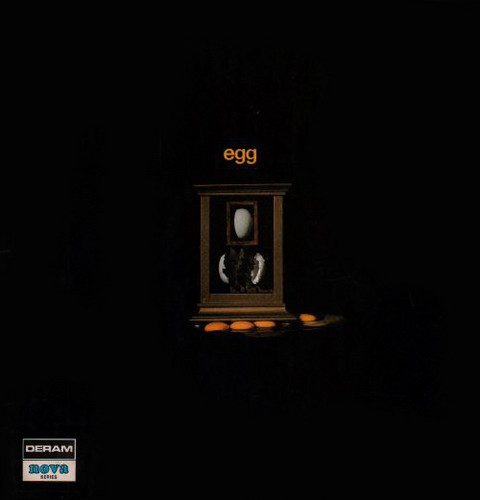
Egg
Exact repro edition. The debut album of Egg ( nothing but Arzachel without guitarist Steve Hillage, who left to study psychology in Kent University) is a real early progressive gem. All Egg's releases stayed in the shadow, and it's a shame. Guitar less trio, heavily based on future on of the greatest Canterbury scene keyboardist Dave Stewart plays perfect mix of psychedelic jazzy symphonic progressive. Nearest comparison could be ELP, but Egg's music is more jazzy and less bombastic.Compositions…
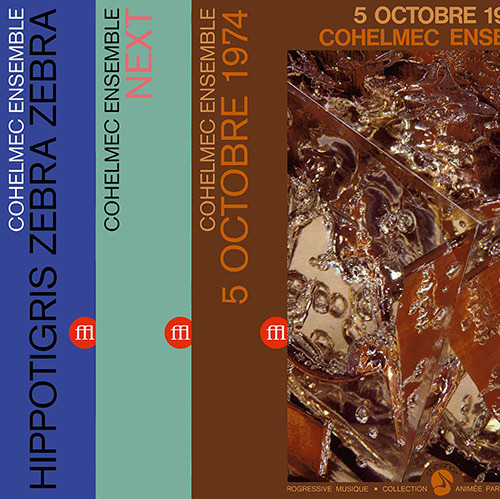
Cohelmec Ensemble LP Bundle
All three reissues of the fantastic free / spiritual jazz french Cohelmec Ensemble at a special price.Souffle Continu Records present the first vinyl reissue of Cohelmec Ensemble's Hippotigris Zebra Zebra, originally released in 1971. The Cohelmec Ensemble celebrate, above all, the pleasure of collective music-making. A group without a designated leader, they base their approach on reciprocal listening, but also on a dialogue between written and improvised material, in which all members have an …
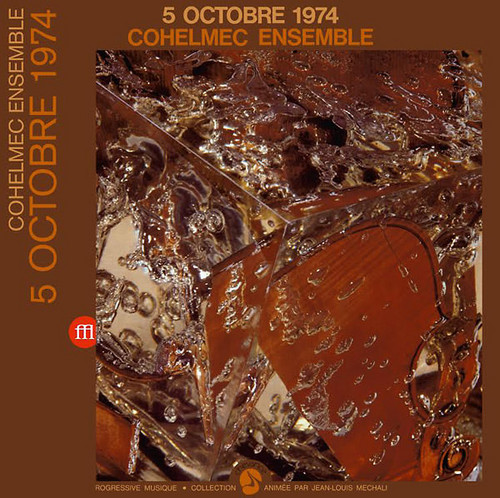
5 Octobre 1974
Souffle Continu Records present the first vinyl reissue of Cohelmec Ensemble's 5 Octobre 1974, originally released in 1974. Out of the musical effervescence in post May 1968 France were born the labels BYG and Futura Records. The concept of collective creation appeared as essential, of which Cohelmec Ensemble was a typical example: in such procedures, individual identities can of course still express themselves but framed within a non-hierarchical common thought process with the emphasis on expe…
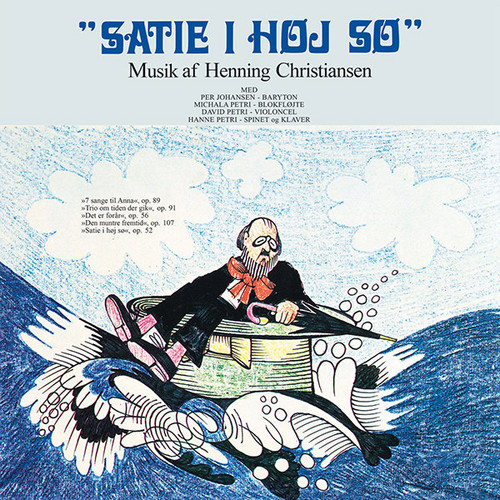
Satie i høj sø
The most enigmatic and rare of Danish artist and composer Henning Christiansen’s albums Satie i høj sø is now re-issued by Institute for Danish Sound Archeology and the Museum of Contemporary Art in Roskilde, Denmark. The album collects five central works from Christiansen’s neo-romantic period in the 1970s. This completely overlooked and virtually unheard period in Henning Christiansen’s oevre contains perhaps his most fascinating and beautiful works.For 10 years from 1969-79 Christiansen turne…
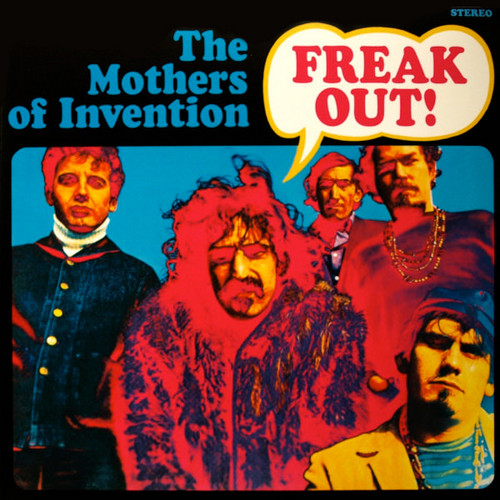
Freak Out
2017 release. One of the most ambitious debuts in rock history, Freak Out! was a seminal concept album that somehow foreshadowed both art rock and punk at the same time. Its four LP sides deconstruct rock conventions right and left, eventually pushing into territory inspired by avant-garde classical composers. Yet the album is sequenced in an accessibly logical progression; the first half is dedicated to catchy, satirical pop/rock songs that question assumptions about pop music, setting the tone…
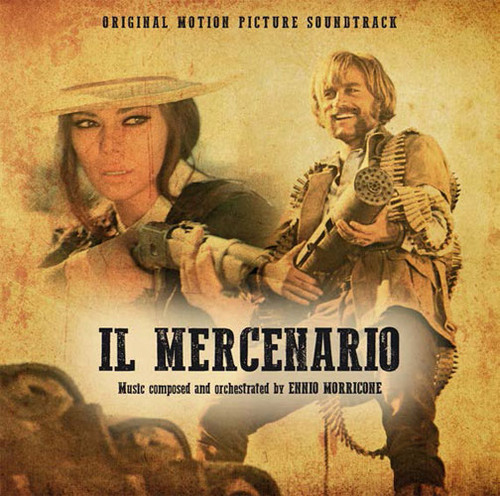
Il Mercenario
Original soundtrack from the movie Il Mercenario (A Professional Gun), a Western movie from 1968 starring Franco Nero and Jack Palance. Music was fully composed and orchestrated by Ennio Morricone and directed by legendary Bruno Nicolai. A lesser-known Morricone soundtrack – written for an obscure western, but right up there with some of the maestro's best for much bigger movies! A number of tunes have that spooky "whistler" style of writing that we love from Morricone – spare whistling over dar…
Optimized!
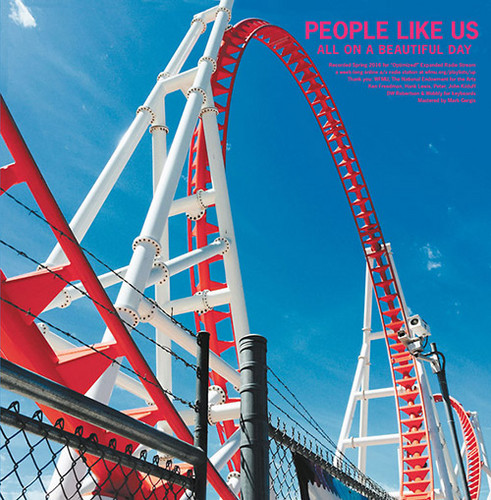
Third volume in Discrepant's irregular split series. This time, they pair two artists at the top of their "collagist" game: People Like Us and Porest. The Parallel Broadcasts presents Porest's recordings from the covert sector of his archives. Culled from shortwave and FM broadcasts, these selections were intercepted via prepared radio -- finely tuned to receive what is known in certain circles as parallel broadcasting. Content explores the trauma of emerging global consciousness, acute cultural…
Purple
Edition of 500 copies LP from this post-Noise Maker's Fifes trio featuring Timo Van Luijk, Greg Jacobs and Marc Wroblewski. Onde play minimal electric psych inspired by tidal waves, using violin, electric guitar and metals to construct monolithic single chord drones that take off on the experiments in elemental form of The Velvet Underground circa Ocean and the Faust/Tony Conrad Outside The Dream Syndicate recordings. Something in the marriage of metronomic guitar jags combined with mile-deep vi…
One
With a press release that simply declares this as "sinister psych, semi-acoustic noise" and a photograph on the back of the LP with the band posturing with instruments in a crumpled shack out in the forest, this record was pretty much made for Aquarius. Onde is a project that has come out of Noise Maker's Fifes, a theatrically Neo-Dada ensemble in the same orbit as Nurse With Wound and HNAS. The best known member of these groups is Timo Von Luijk, who had recorded briefly in Mirror with Andrew C…
Lost City
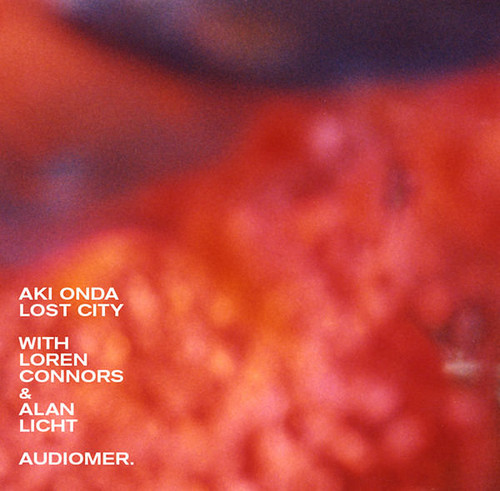
Lost City project started as a series of photographs shot by visual artist and composer Aki Onda in New York starting right after 9.11 in 2001. A decisively introspective response to the major world event taking place, his pictures were devoid of direct references, but documented his immediate surroundings, focusing on how what happened resonated on a personal micro-level.Since 2005, Onda has been presenting this series as slide projections, which function as a visual score for improvisation, a…
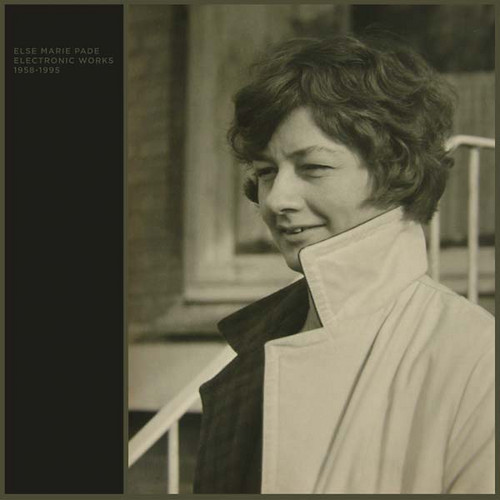
Electronic Works 1958-1995
2016 repress. Triple yellow LP version. Pressed on audiophile grade heavy duty vinyl. Else Marie Pade, born in 1924 in Denmark, is a precious golden gem in the world of contemporary electro-acoustic music. She is a true pioneer of electronic music and musique concrète. Pade is Denmark's first lady of electronic music and her piece "Syv Cirkler (Seven Circles)" became the first electronic piece performed on Danish radio. Pade's fascination with sound began in early childhood. Isolated in her bed …
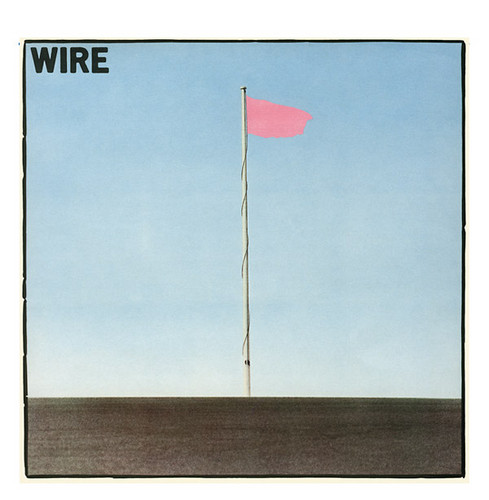
Pink Flag
These are the definitive re-releases. Each album is presented as an 80-page hardback book -- the size of a 7-inch, but obviously much thicker. After a special introduction by Jon Savage, Graham Duff provides insight into each track. These texts include recording details, brand-new interviews with band members, and lyrics. The original album is presented on its own CD, accompanied by discs that feature relevant extra tracks: singles; B-sides; demos; and many previously unreleased songs. All audio…
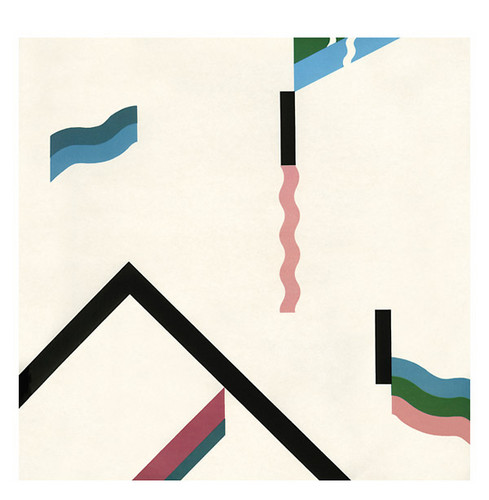
154
Presented as an 80-page hardback book -- the size of a 7-inch, but obviously much thicker. 1979's 154 represented the final tableau in Wire's Harvest released '70s tripych and was the first Wire album to be released to a universal set of 5 star reviews from the British Rock Weeklies thus it represented the point when the British 'pop culture establishment' publicly recognised Wire's primacy. "154 makes 95 percent of the competition look feeble" wrote Nick Kent in the NME; "Wire are achieving a l…
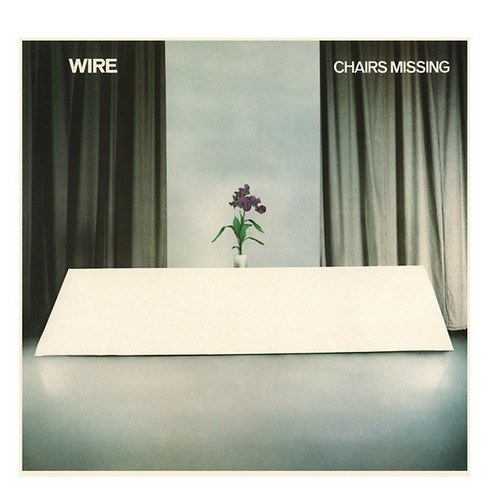
Chairs Missing
Presented as an 80-page hardback book -- the size of a 7-inch, but obviously much thicker. If Pink Flag proposed an almost cut and paste approach to deconstructing rock history, the Wire's Chairs Missing proposed something more radical, a definite futurism with much less influence from its antecedents. Chairs Missingwas at once more stark and more lush than its predecessor and has exerted its own influence on the course of cultural history, having laid down one of the earliest (if not the earlie…
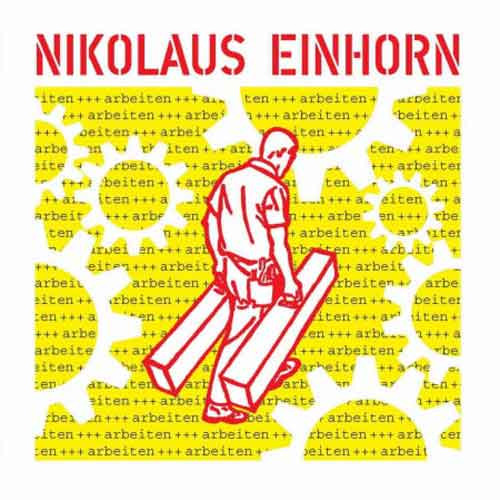
Arbeiten
Great (but very little known) 1970's sound/text poetry recordings. Featuring two sound poetry recordings from 1973, "Arbeiten - ein Stuck fur alle" (already released as tape on the S Press label back in 1973) and "Cudrefin (minuit) - Found Music No.1" (previously unreleased). The first 250 copies include an onesided bonus 7inch with his track "Don't you may be, the essential interview" from the famous "Futura - Poesia Sonora" boxset (Cramps Records).Nikolaus Einhorn was born at dresden in 1940. …
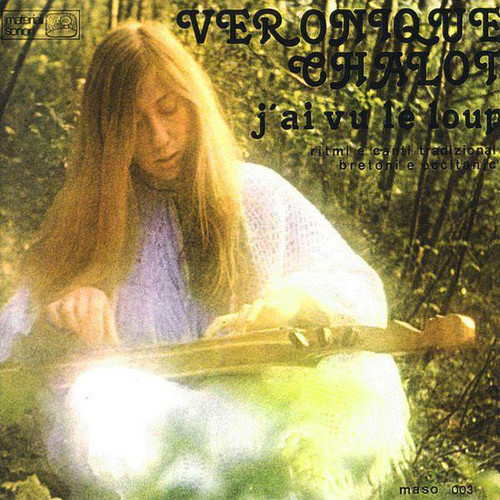
J'ai Vu Le Loup
long out of print, few copies spotted of this late 70's dreamy folk album...Veronique Chalot was born in Normandy in the north of France, but it was in Paris that she first became interested in traditional French folk music. In 1974 she landed in Rome where she soon earned a small, but dedicated following. In 1979 she recorded her first studio effort, J'ai vu le loup, for the Italian Materiali Sonori label. Over the past 30+ years she has given hundreds of concerts, presenting her repertoire of …
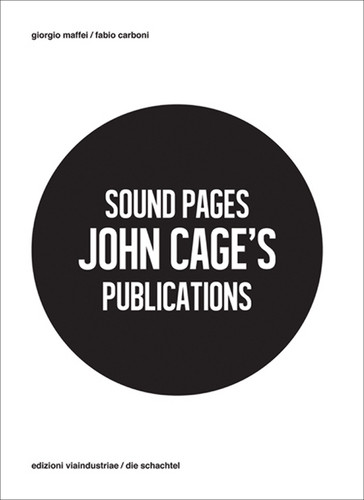
Sound Pages. John Cage's Publications
**few copies back in stock, long out of print** Divided into four sections, respectively, books, scores, records and scattered documents, Sound Pages. John Cage's Publications, the book that accompanies the exhibition of the same name at the Museo Internazionale della Musica in Bologna systematises an important part of the work of John Cage, addressing the various productions of which the American composer was an author, often overturning the traditional component parts and structures. Cage rais…

Untitled #295
Francisco López is not only famous for his profilic sound creations, but also for different aspects of sound manipulations. Since his very beginnings, he explores different fields of sound and almost entire his work belongs to serie "untitled". Untitled #295 is a piece created specially for two sides of vinyl. Besides Francisco Lopez's famous moving soundscapes, it's the pulse what makes this work driving. And not only typical pulse - a regular one with irregular accents. Slowly developing it ta…