Back in stock
Frozen Orchestra (Splitter)
The third release of the 24-piece Splitter Orchester is, like its predecessors, a collaboration. This time they team up with the The Pitch, a quartet consisting to 3/4 out of Splitter Orchester-members. "Frozen Orchestra (Splitter)" is their latest compositional effort in translating the quartet’s language to a large format ensemble utilizing the sensibilites and possibilites of Splitter Orchester’s electro-acoustic instrumentation. "Frozen" thereby indicates a very slowly moving field of harmon…
Curse of Midnight Mary
Recorded between his eight volume "Unaccompanied Acoustic Guitar Improvisations" LP series & the folk albums he would make w/ Tom Hanford & Kath Bloom, these 9 pieces meld those distinct forms. Singing in a trance like moan, he reforms the Mississippi Delta blues on his acoustic guitar w/ flashes of melodic hooks & a percussive guitar style that erupts into boogie-woogie riffs & other world spirituals.
Quiver
“Quiver” continues our subseries of cerebral abstract electronic minimalism after Triac’s “In A Room” and Hanno Leichtmann’s “Minimal Studies”.Yui Onodera is a musician and composer based in Tokyo, Japan. After studying music and architecture, he founded the Critical Path. In terms of environmental functions and spacial relationships of sound, he employs materials from various sources ranging from field recordings, electronics, and voices, to various musical instruments, for process-based, restr…
La Cave Des Étendards
Jérôme Noetinger founded Cellule D'Intervention Metamkine in 1987, with French cinematographer and performer Christophe Auger and Xavier Quérel. They have performed with Nachtluft, Voice Crack, Tom Cora, Keith Rowe… He has collaborated with longtime partner Lionel Marchetti since 1993 and is a member of avant-improv orchestra MIMEO. He founded and runs the record label and distributor Metamkine (curating its “Cinéma Pour L'Oreille” collection). He mostly plays the tape recorder Revox B77. This i…
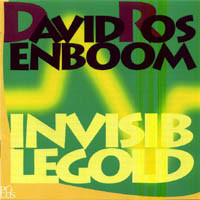
Invisible Gold
David Rosenboom (b. 1947) has been widely acclaimed as a pioneer in American experimental music since the 1960's. He is a composer, performer, conductor, interdisciplinary artist, author, and educator having explored ideas in his work about the spontaneous evolution of forms, languages for improvisation, new techniques for ensembles, cross-cultural collaborations, performance art, computer music systems, interactive multi-media, compositional algorithms, and the structure of the brain and nervou…
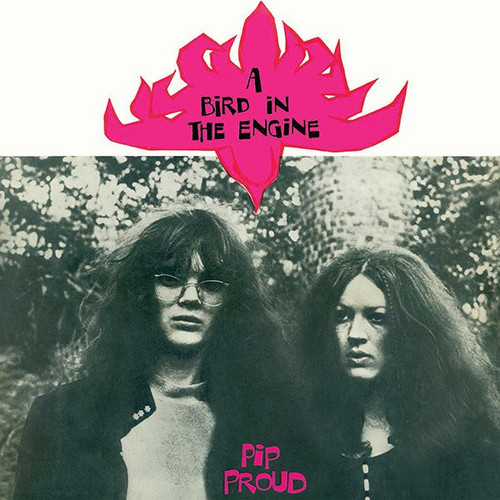
A Bird In The Engine
In the late '60s, Pip Proud recorded two of the oddest records ever to come out of Australia – Adreneline & Richard and A Bird In The Engine – before vanishing into obscurity for the better part of three decades. Often called the "Australian Syd Barrett," yet Proud actually released his second album in 1969, a year prior to The Madcap Laughs, and developed his indigenous psychedelia in virtual isolation.A Bird In The Engine is even more rare than his debut. From the extraordinary "Eagle-Wise" to…
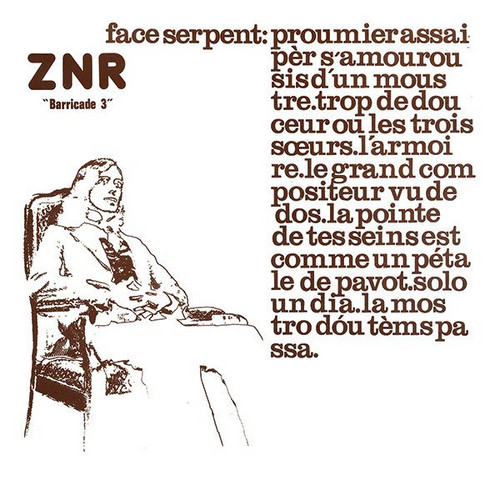
Barricade 3
Restocked!!! ZNR was the French duo of Hector Zazou and Joseph Racaille (hence, Zazou 'n' Racaille) active in the mid to late '70s. Their 1976 debut, Barricade 3, is an anti-pop masterpiece that truly defies categorization; it makes perfect sense that ZNR appears on the infamous Nurse With Wound list. Featuring an array of seemingly dichotomous instruments (piano, synthesizers, woodwinds, electric guitar, and more) as well as genuinely bizarre vocals, the album is composed of fifteen odd experim…
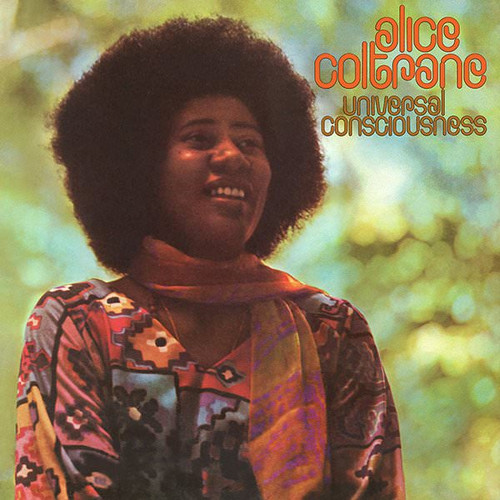
Universal Consciousness
Mindblowing!!! Originally released on Impulse! in 1971, Universal Consciousness is a major turning point in Alice Coltrane's momentous career. While her previous albums pushed the limits of spiritual free jazz and featured much of her late husband's band, Universal Consciousness expands the harpist / pianist's compositional palette with organ and strings (working with Ornette Coleman). "Oh Allah" is the finest example of Coltrane's new direction: tense violins dissolve into sublime organ solos a…
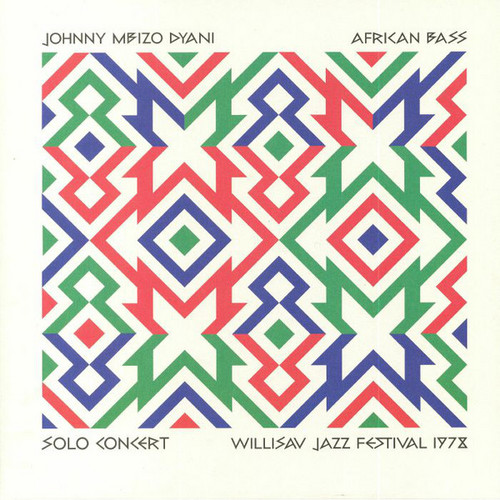
African Bass, Solo Concert: Willisau Jazz Festival 1978
Lifeblood of the cultural diaspora of Apartheid, Dyani left South Africa with the Blue Notes in 1964. His amazing discography includes crucial collaborations with Don Cherry, Steve Lacy, Dollar Brand, the Brotherhood Of Breath and Derek Bailey.Here he is performing solo at a jazz festival in Switzerland in 1978, testing the compositions which would comprise his monumental LP African Bass, out two years later. Double bass, gongs, piano and singing. Knockabout, mystical roots — spell-binding and e…
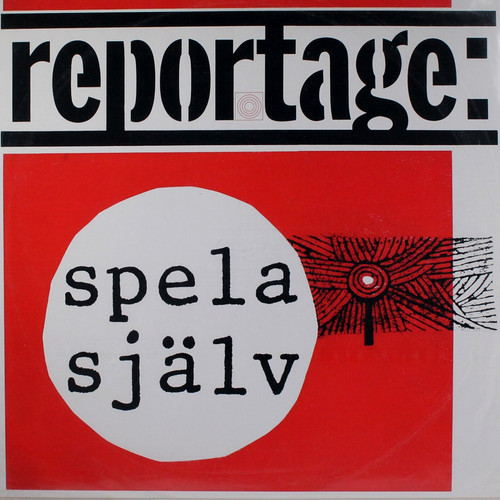
Reportage: Spela Sjalv
Exact reproduction LP of a Swedish release from 1970. A bit of confusion surrounds this release: The album has been credited to Träd, Gräs och Stenar, but they aren't featured on it. Bo Anders Persson did, in fact, in collaboration with Solvieg Bark, compile, edit and release this album. Bo Anders Persson, was a member of the legendary Swedish bands Harvester, International Harvester, Pärson Sound, and Träd, Gräs Och Stenar. Solveig Bark was one of a few young composers that, through the UNM (Yo…
En Pyri / Bacchae
Two previously unreleased recordings from one of Greece’s pioneers of electroacoustic music** It’s an astounding moment for archival releases and reissues - an unprecedented flow of artifacts emerging from the history of the sonic avant-garde. While the sounds of developing electronic technologies were harnessed during the first part of the 20th Century, it wasn’t until the post-war period that they truly took hold - the focus of many of that era’s most ambitious musical minds. Beginning in the …
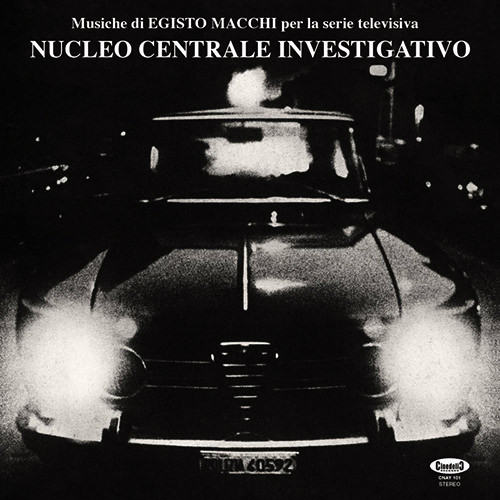
Nucleo Centrale Investigativo
** small reprint available** Another gem from Cinedelic covering the legendary Egisto Macchi of Gruppo di Improvvisazione Nuova Consonanza fame. Nucleo Centrale Operativo is music composed for the TV series from 1974. A classic and avant-garde approach which differs from than the canons of the police movie ost which mostly used funk and American sounds. The LP includes a bonus 45rpm 7″ with the song Action Music, the theme of the series that was not included originally in the LP. 500 numbered co…
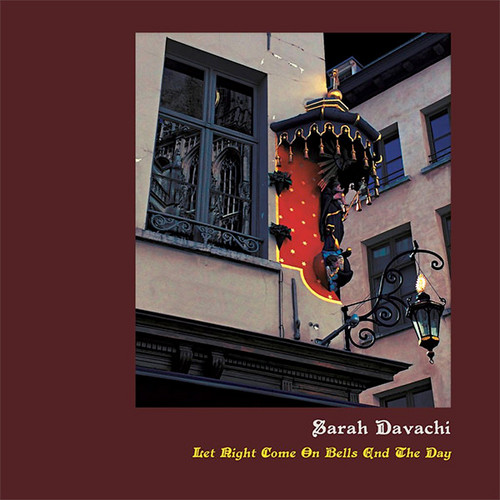
Let Night Come On Bells End The Day
Recital present the newest record by Canadian composer Sarah Davachi. Currently working on her PhD in Musicology at UCLA, her trajectory has been unorthodox. Hailing from Calgary, Alberta, which, if you've never been there, doesn't really scream "avant-garde" (Calgary is the rodeo capital of the world). It is important and interesting that she chose to study esoteric music; as Sarah could have easily been a cowgirl or a concert pianist had her ingrained love of synthesis and sonic phenomenology …
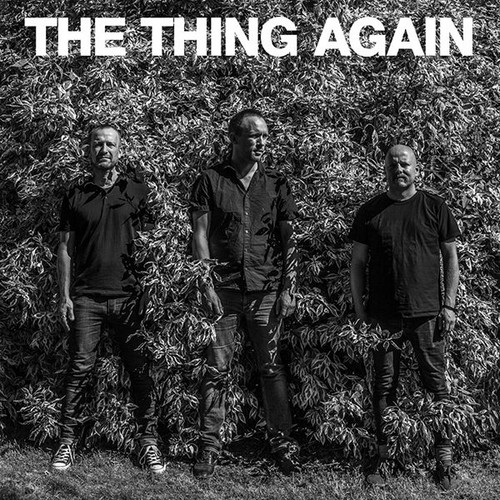
Again
Recorded July 2nd and 3rd, 2017 by Øyvind Gundersen at Studio Paradiso, Oslo Mixed October 2017, by Andreas Werliin at Repeat Until Death, Stockholm Mastered by Lupo at Calyx mastering, Berlin Liner notes by Brian Morto. Mats Gustafsson (saxes), Ingebrigt Håker Flaten (b) and Paal Nilssen-Love (dr) have followed an interesting concept with The Thing. They take the power of blues and heavy rock and mix it with the freedom of improvised music using the riff as the foundation of their pieces.Mats G…
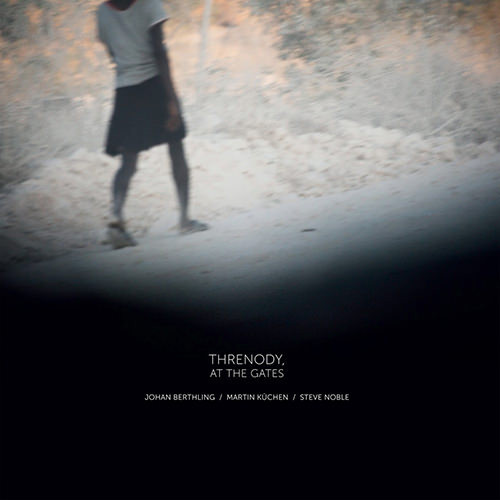
Threnody, At The Gates
This trio is on to something extraordinary; full on furor brushed w thin melodic lines or rage contained in a certain kind of drunken beauty and bliss - all stumbling on towards the heard and the unheard - in a whisper, in a shriek, forces joined and disjoined....This trio is the whole in the never ending audible crack Johan Berthling: double bass; Martin Küchen: tenor and soprano saxophones, retardophone, flute; Steve Noble: drums and percussion. Recorded by David Carlsson at Gula Studion, Malm…
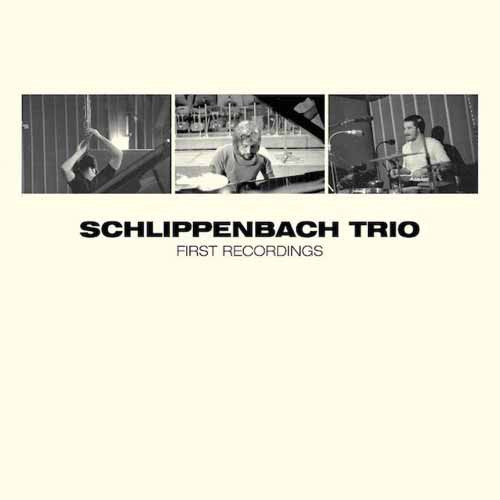
First recordings
Found in the archives of FMP! The very first - never released - recordings of the Schlippenbach Trio! Alexander von Schlippenbach, piano, Evan Parker, tenor and soprano saxophone, Paul Lovens, drums. Recorded by an unknown engineer april 2nd 1972 during the Workshop Freie Musik at the Acadamy of the Arts, Berlin. All music by Parker, Von Schlippenbach, Lovens. Mastering by Olaf Rupp & Martin Siewert. Produced by Jost Gebers."Pianist Alexander von Schlippenbach along with Evan Parker on tenor and…
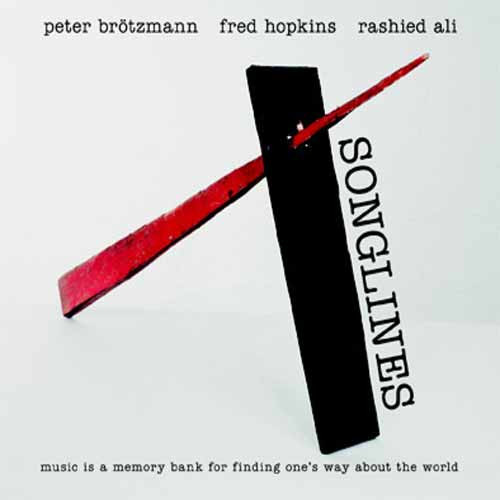
Songlines
Peter Brotzmann, Tenor Saxophone, Alto Saxophone, Tarogato. Fred Hopkins, Double Bass. Rashied Ali, Drums. Recorded by Holger Scheuermann, Jost Gebers, October 30th and 31st, in Berlin, 1991. First released on FMP as FMP CD 53.'In perhaps the most understated performance of his entire career, German saxophone giant Peter Brötzmann played in a trio with American free jazz legends Fred Hopkins and Rashied Ali back in 1991 at the now mythical Total Music Meeting. () Brötzmann appears to have been i…
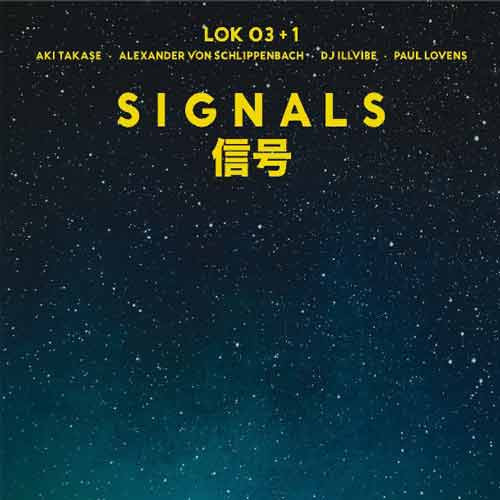
Signals
LP version. Alexander von Schlippenbach: piano; Aki Takase: piano; DJ Illvibe: turntables; Paul Lovens: drums. Recorded by Rainer Robben at AudioCue, Berlin. Lovens joins the Lok 03 trio of Schlippenbach, Takase, and DJ Illvibe for the follow-up to their 2005 debut. Mastered by Beat Halberschmidt. Artwork by Philip Hillers. Liner notes by Yoko Tawada.
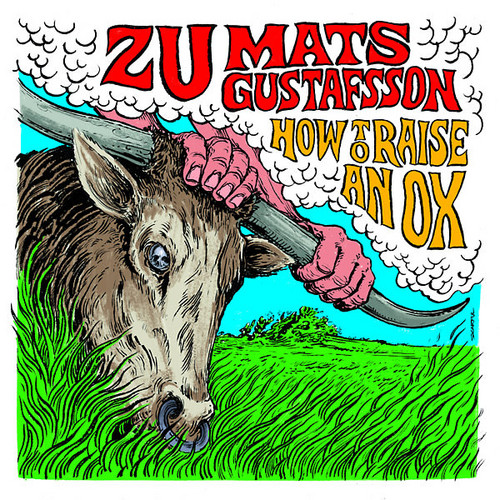
How To Raise An Ox
Trost presents the first vinyl edition of How To Raise An Ox by Zu and Mats Gustafsson. Initially released on CD in 2005 by Atavistic. Features new cover artwork. Long-running intense jazz/noise-core band Zu from Italy teams up with Viking-saxophonist extraordinaire Gustafsson (The Thing, Fire!). Mastering by Andy Moor (The Ex) and Colin McLean.Personnel: Mats Gustafsson - baritone saxophone; Luca Tommaso Mai - baritone saxophone; Massimo Pupillo - bass; Jacopo Battaglia - drums.
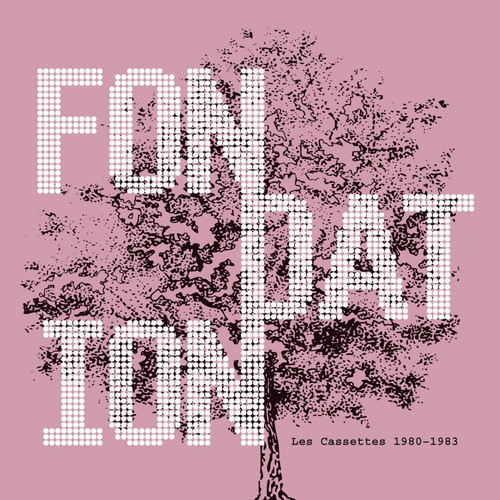
Les Cassettes 1980-1983
French minimal-wave shadows from the cassette years, 1980-83. Fondation's cold drum machines, brittle synths and noir atmosphere distil an entire underground era: austere, romantic and hypnotic. A coldwave excavation.