Back in stock
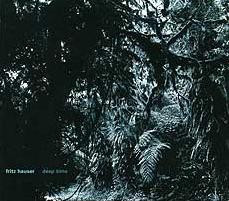
Deep Time
“Deep Time” is a tape composition commissioned in 1991 by the Deep Listening Institute for Deep Listening Band. Fritz Hauser’s tape features recordings of sounding stones (manufactured by Arthur Schneiter) and various watches and clocks (thanks to the Bucher family in Switzerland for permission to record that family clock!). The performers improvise with the tape. On October 26, 1994 Pauline Oliveros, David Gamper, Urs Leimgruber and Fritz Hauser recorded 2 versions of Deep Time. Both of these 3…
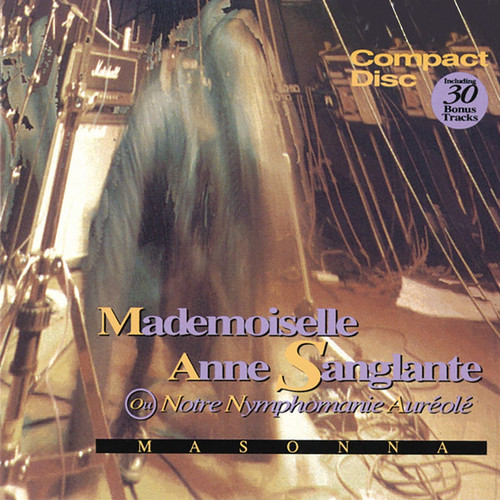
Mademoiselle Anne Sanglante Ou Notre Nymphomanie Auréolé
This is a masterpiece album released in 1993 on Alchemy Records by Masonna, a solo project of Mazo Yamazaki who is acclaimed as one of the leading artists of Japanoise along with Merzbow and Emergency Staircase. It is finally being revived on vinyl! Cascades of electronic noise, a psychedelic touch and vocal belching mixed together constitute the ingredients of Mademoiselle Anne Sanglante Ou Notre Nymphomanie Auréolé, the double-barreled name for Masonna. Maso Yamazaki founded his project in 198…

Answer 81 1981.4.19. Vol.2
An unreleased live recording of the Japanese punk band The Stalin at Taku Taku in Kyoto, 19 April 1981, found among Jojo Hiroshige's tapes, with the early line-up led by Michiro Endo.
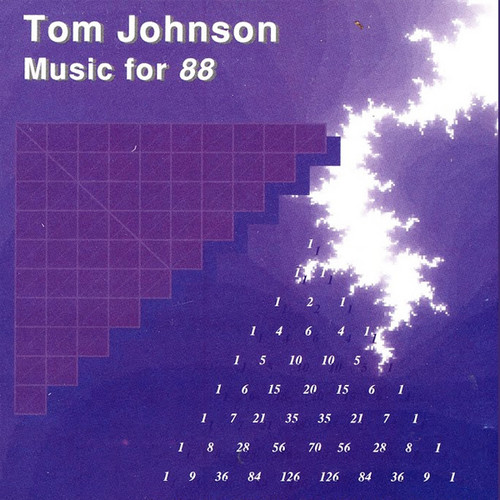
Music for 88
Simplicity and clarity have always been among Tom Johnson's chief concerns as a composer. That concern led him to research number theory, particularly by Pascal, Fermat, and Euclid, and these sources suggested musical structures somewhat more complicated than those that he had used before. Music for 88 is the result of these researches. It contains nine sections (six of which are on this recording), each of which is a musical demonstration of a mathematical phenomenon.

Body music
Body Music is music for Ellen Fullman's unique Long String Instrument, an eighty-foot long instrument with approximately eighty strings. Fullman has been developing this instrument for longitudinally vibrating long strings over the past thirteen years. Having received a BFA in sculpture, her interest in music began with the resonance of materials used in making sculpture. When she started making the Long String Instrument, she saw it as "sculpture as music;" now she has come full circle in conce…

Experimenting with household chemicals
Experimenting With Household Chemicals' is a 1995 album by the laregly elusive post-minimalist Downtown experimenter Peter Zummo. Whilst possibly best known for his work on classic Arthur Russell recordings, he's been a mainstay of New York's vaunted experimental scene since the the mid-late '70s, but only released three solo albums proper. This is his 2nd, exploring "a trombone-specific method for generating melodic movement, as well as a collection of related, "spinoff" melodic material for en…
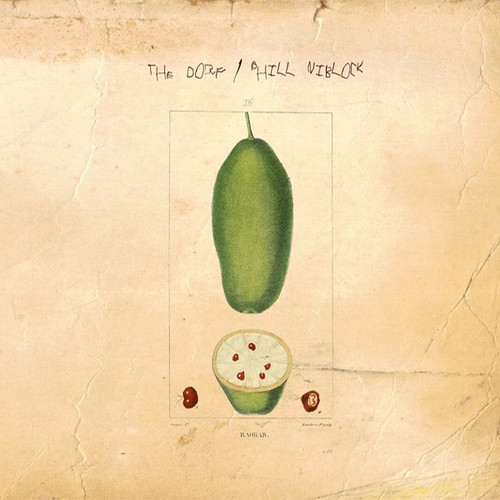
Baobab
Co-released with Umland Records, Germany. On one night in 2019, The Dorf (German for "village") took a heavy dose of the music of Phill Niblock. The impact on the musicians, gathering to play a double-length version of Niblock's Baobab and (in a second set) three "Dorf" tunes, was deep. It felt a bit like going to church -- a truly spiritual experience. At first, the audience did not believe the announcement that the "drone" piece would last for 46 minutes. Afterwards, their reactions showed the…

Privacy Issues (droneworks 1996 - 2009)
Long overdue overview of composer David First's drone works. This special and specially priced set (3 CDs for the price of 2) is comprised of nine works composed between 1996 and 2009. Featuring Chris McIntyre and Peter Zummo, trombones; 'Blue' Gene Tyranny, keyboards; and The Black Jackets Ensemble. 'This was something unexpected and truly different: pulsing electronic textures that derived their rhythm from the beating patterns of closely-tune pitches -- as if Alvin Lucier and Philip Glass had…
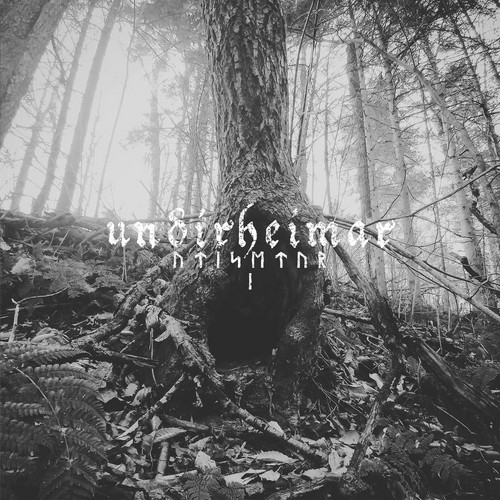
Utisetur I
*100 copies limited edition* Utisetur I is the sixth album by Canadian ritual project Undirheimar. Marking the beginning of an ambitious trilogy, this new work delves deeper than ever into the project’s uncompromising spiritual and sonic vision. Utisetur I unfolds as a six-part ritual chant rooted in the ancient meditative practice of Utiseta. Stripping away all instrumentation, Undirheimar constructs the entire album exclusively from layered overtone singing, creating a dense, immersive field o…
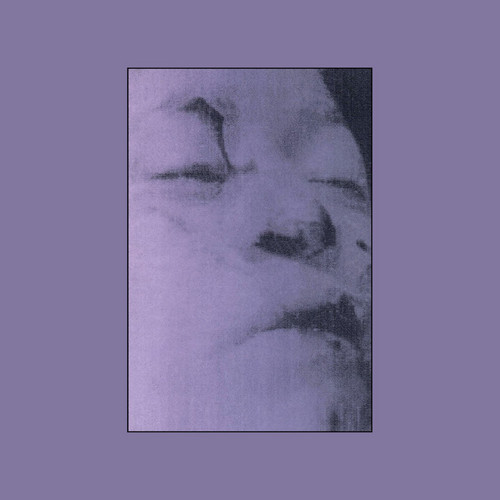
Annihilation Devices Part 2
A slow building, dread filled bass rumble that gradually builds in intensity before you release you're surrounded by dense, crunching textures. Originally released on cassette in an edition of 30 copies, which was the last Less Than Zero cassette and last release for almost 10 years.
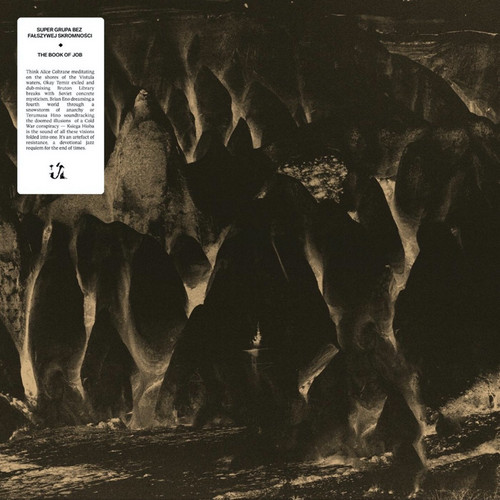
The Book of Job
The Book of Job is a boundary-pushing work by Super Grupa Bez Fałszywej Skromności, merging avant-garde jazz, spiritual recitation, and sound experiments. Conceived in martial-law Poland, the album is both requiem and protest—an immersive journey through collective struggle, transcendence, and artistic resilience.
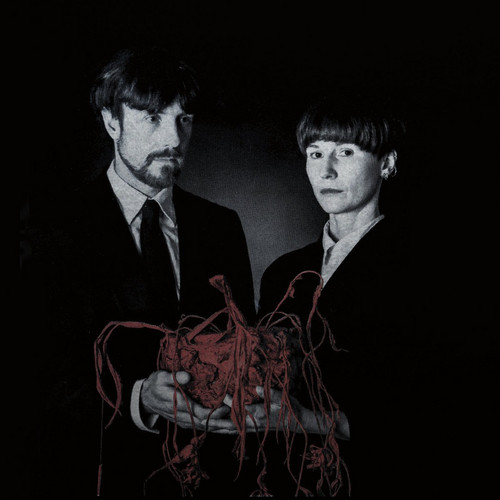
Or Gare: funeral procession music from Ryfylke, Norway
On Or Gare, Stine Janvin and Morten Joh slow time to a funereal crawl, reanimating Ryfylke’s “liksong” tradition as a ghost‑lit microtonal ritual where voices, synths and creaking percussion hover between lament, liturgy and quietly glowing electronics.
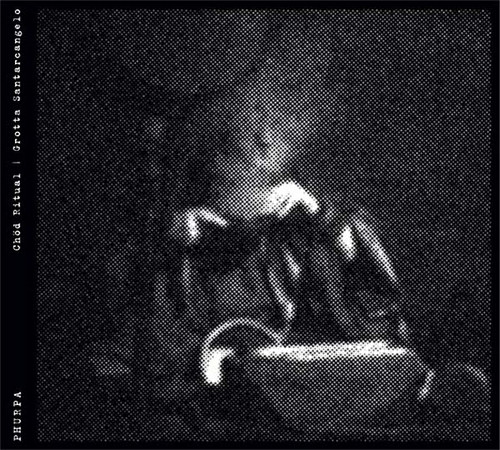
Chöd Ritual / Grotta Santarcangelo
**2020 stock, 300 copies** On July 7, 2017, Phurpa performed a Chöd / Chod live ritual in Santarcangelo, Italy. The ritual was held inside a cave (grotta in Italian). Chöd / Chod is an ancient practice of cutting through tensions, fears, and obstacles in our life. In Chöd / Chod, we visualize making an offering of our body, which is transformed into whatever is wanted by all beings in all realms. In this vast offering we create and cultivate a flow with everything around us and are in contact wi…
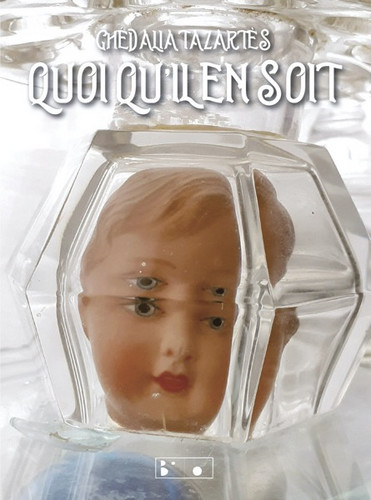
Quoi qu'il en Soit
Bisou presents the book La Chute de l'Ange, a 48 pages book with colour photographs of Ghédalia Tazartès' "Cabinet de curiosités". The photos were taken by Ghédalia himself. Foreword by Dominique Abensour. Includes a CD of the only live performance of the trio Ghédalia Tazartès, Jérôme Lorichon and Quentin Rollet: La Chute de l'Ange, recorded live at Eglise St-Merry, Paris, 2019. Livesound by F/Lor.Ghédalia Tazartès: voice, tibetan bowl, bellsJérôme Lorichon: Buchla synth, effects, trumpetQuenti…

Live at XIV Congresso Post Industriale
**2020 stock, 300 copies** "On April 14, 2018 Old Europa Cafe and Scenasonica organised the historical OEC label festival in Pordenone, Italy.The venue took place in a medieval deconsecrated Monks church, without doubts the perfect environment for a Phurpa ritual. The live recordings of such ritual was done with high professional skills. Enjoy the full spirit of the ritual music of Bon, the oldest Buddhist tradition from Tibet. Album co-released with Scenasonica."
There Is No Silence Left
* 2020 Stock * 'There is no silence left' is a collection of remixes and reworkings by Mkl Anderson of Drekka, released under various monikers between 1996 and 2012. Contains 13 previously unreleased or rarely heard tracks, including mixes for Aube, lovesliescrushing, Racebannon, Soul-Junk, and many more.
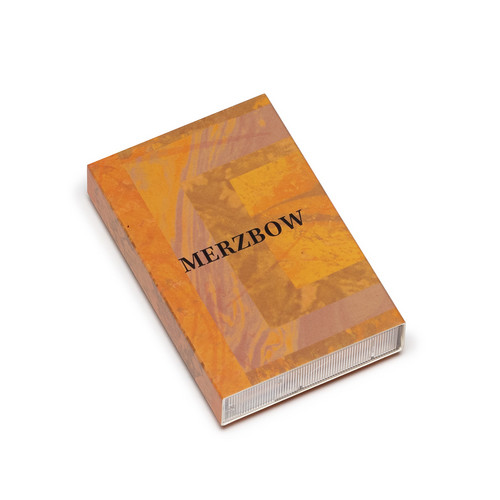
Rainbow Electronics
Tip! *199 copies limited edition* Originally released on CD in 1990 by Alchemy Records as part of the Good Alchemy Series, Rainbow Electronics marks the pinnacle of Merzbow's late 80’s noise phase. Selected and transformed from about 21 hours tape of primitive raw material recorded during three years (1987-1990) in 14 fragments lasting about 74 minutes, this monumental work is an aural trip through a cold plotted universe of intergalactic space ships and golden celestial bodies. Remastered in De…
Examinations: 2016-2018
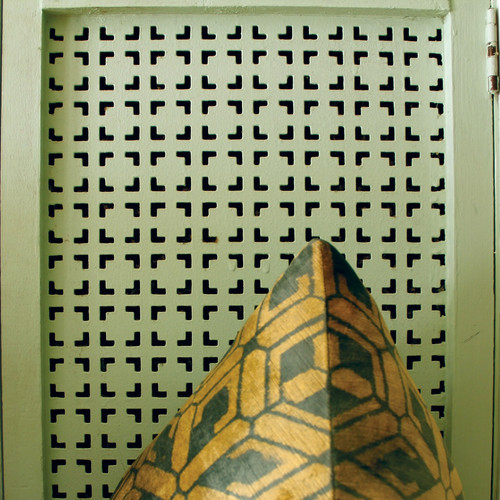
* 2020 Stock * For over twenty years, Mkl Anderson has curated a vast archive of recorded material for his cinematic ambient industrial soundscapes. Working for as many years under the name Drekka, he has sculpted these soundscapes using self-made field recordings of everything from insects in the mountains outside Kathmandu to a washing machine in Reykjavik, from countless sketches and abandoned projects donated by friends, from hundreds of hours of multi-track live recordings of Drekka capture…
Ultratumba
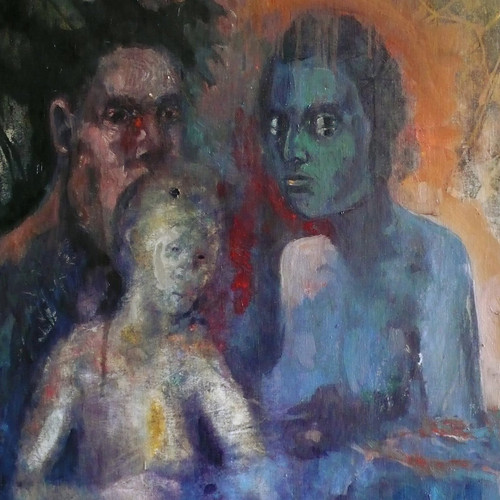
The Galician duo Trajedesaliva (Mon Ninguén – music , synths & Una Vena – words, voice and visual concept) returns with Ultratumba, an album full of passion, anguish, bitterness and sadness. Guided by naked emotions as much as by sparkling intellect, this is a singular work, an architectural wonder of pure analog electronic sound as we have not heard for a long time, with splendorous timbres that tend to the dark but also to the emotionally devastating. An album that feels strangely interactive …
Amphibiaibomma
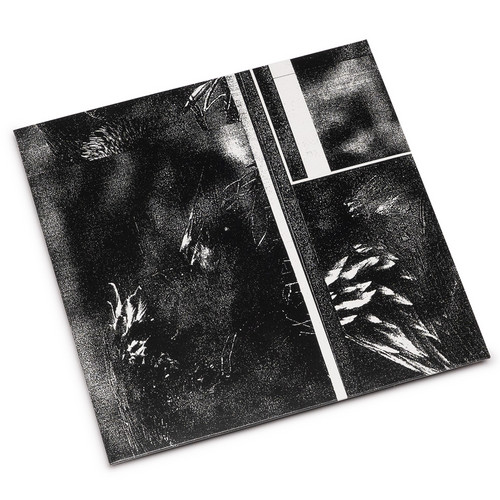
Huge Tip! 200 copies. Mario de Vega engages with sound as a tangible medium to exasperate perception. For over 20 years, de Vega’s work has been exhibited as large scale commissioned interventions leaning towards liminal zones of aurality, ephemeral situations -often displayed as detritus of actions, prints, materials and publications-, sculpture, performative settings, and three-dimensional formats.
A M P H I B I A I B I H P M A (Amphibiaibomma) is a studio work composed between 2020 and 2024.…