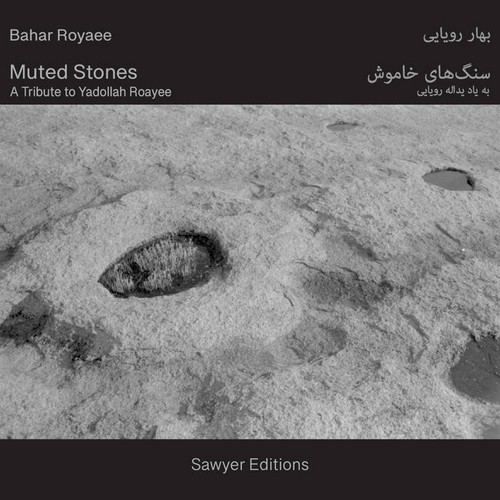
Muted Stones: A Tribute to Yadollah Roayee
*Limited Edition Handmade CDR in cardboard string sleeve with liner notes and album art.* "During the period spanning from 2016 to 2020, I underwent a profound realization that led me to feel lost within myself. As each year passed, I found myself feeling a sense of rupture and absence, far from home. In search for comfort, I turned to my native language of Farsi. However, even within the confines of my language, I was unable to escape the feeling of fragmentation. Each sentence I read seemed to…
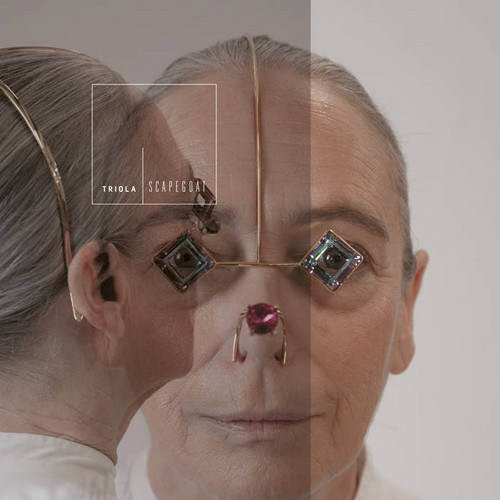
Scapegoat
‘Scapegoat’ is the new album by Triola, the project led by the prolific Tokyo-based composer & experimental string musician Atsuko Hatano, featuring the Japanese violinist Anzu Suhara. Conceived as a string project, with Hatano on viola, cello, bass and Suhara on violin, Triola involves a rotating ensemble of guest musicians, including the likes of Chicago-born musician, composer & producer Jim O’Rourke (Drag City, Sonic Youth, Steamroom), the composer & musician Eiko Ishibashi (Drag City, Black…
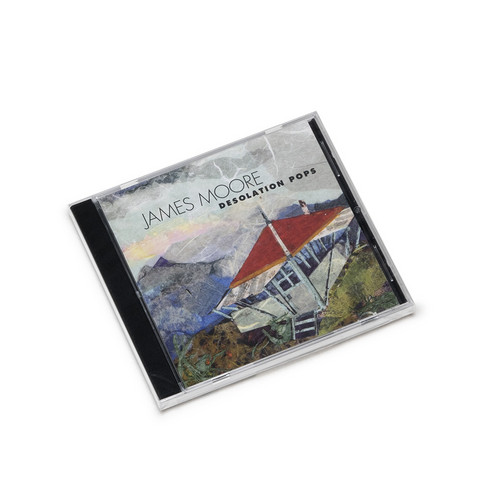
Desolation Pops
"James Moore (b. 1979) is a composer with an eye toward the world of games and experimental theater. He’s an electric guitarist who’s willing and eager to treat his instrument as a playground, not a reverent, static tradition. He’s a tinkerer, a charmer, and a fella who’s always up for another round at the bar of wacky ideas and intellectual questioning. He’s excited for new and unexpected opportunities for collaboration, but always maintains a voice that seems to stay recognizably his own throu…
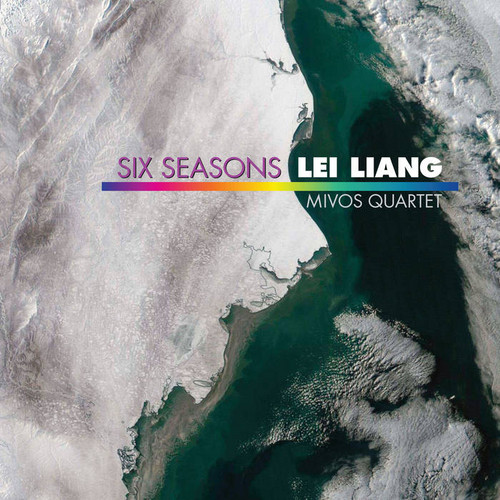
Six Seasons
Tip! "A cycle of six movements and a coda, Six Seasons is as protean as the ocean waters that serve as its substance and underlying metaphor. In creating a space of many spaces and multiple temporalities, Lei Liang (b. 1972) resides in select company, artists who have fashioned a syntax of exploration both attendant to and divergent from music history’s established grooves and curves of innovation and tradition. Of the composers now lionized through the ever-expanding and often-arbitrary canon, …
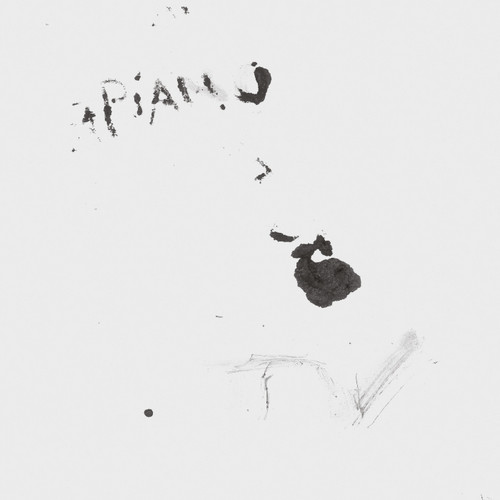
TV Songs
Lisbon based keyboardist, João ‘Shela’ Pereira, a frequent collaborator with many local bands (Paus, Rinding Pânico, LAmA, Linda Martini and others) presents a new strangely haunting album, TV Songs.
A scrapbook of recordings from the heart... Piano TV is a compendium of spontaneous notes of ideas on the piano, to the rhythm of a television set in the background... these are scraps of expression in a form of dirty bucolic sketches aspiring to a hypothetical larger, washed, pristine composition…
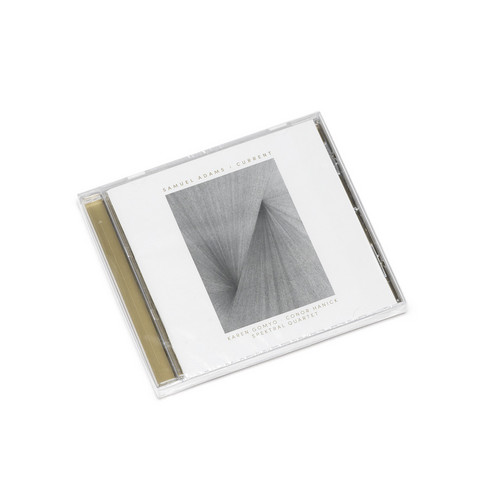
Current
The string quartet Current that provides the centerpiece of Adams’ new album dates from 2016, when Spektral Quartet commissioned the composer to write a short work that became the 12-minute study Quartet Movement. Though that piece stands alone, Adams sensed that it might also be used as the basis for something larger, so over the next few years he expanded its scope. The present five-movement work, completed in 2019, was co-commissioned by Spektral Quartet and Cal Performances, with additional …
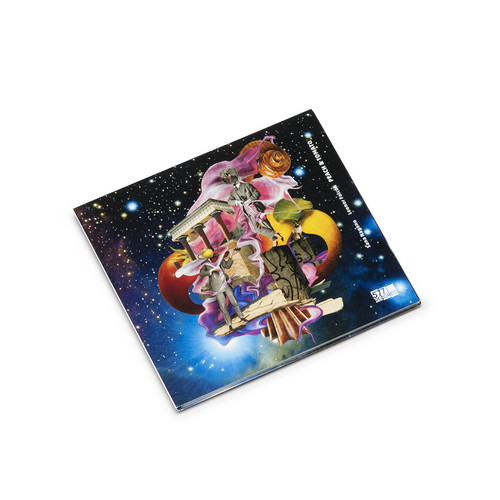
Peach and Tomato
Leonor Falcón and Sana Nagano met in graduate school at Queens College in 2015, and have since collaborated in many projects. On this release, ‘Peach and Tomato,’ the duo offers fresh new compositions that display both their sense of imagination, and their deep appreciation for classical influences. This is particularly true with their version of two movements from the Prokofiev Sonata for Two Violins and the composition Etude 1 and 2, an homage to Bela Bartok and a fluent conversation between t…
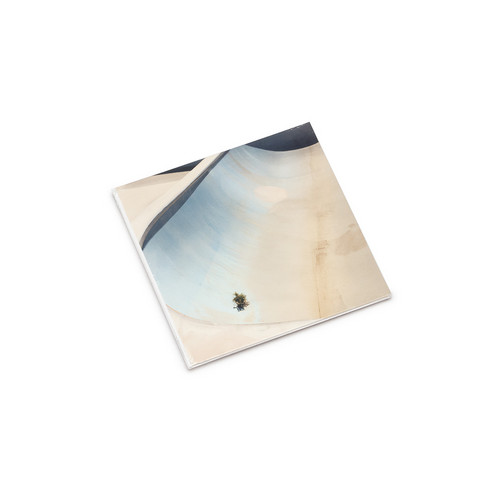
Solo For Cello
The Trilogy Tapes’ first CD presents a studio recording of Jack Sheen’s Solo for Cello, a 35’ work written for Anton Lukoszevieze, the cellist, artist, and Director of the group Apartment House, renowned for their recent recordings of John Cage, Morton Feldman, and Jim O’Rourke, amongst many others.
“Jack Sheen’s Solo for Cello and fixed audio is an extended exploration of the resonant body of the cello, but also a kind of flickering, glitchy and incessant ‘moto perpetuo’, of extreme intensity…
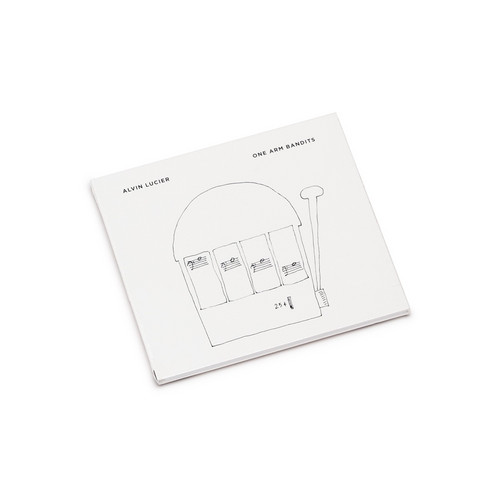
One Arm Bandits
"One Arm Bandits is an hour-long piece in four parts, scored for four cellists. The cellists play only open strings, thus using only their right arms, never fingering the strings with the left hand. Recorded in Alvin Lucier's dining room, this work features cellists Tyler J. Borden, Laura Cetilia, Charles Curtis and Judith Hamann. Lucier oversaw and produced the recording, and approved the final takes. One Arm Bandits was an important project for Alvin Lucier. The idea for the piece goes back to…
Sound Plantings
Jonas Gerigk is a double bass player who is active as a composer/performer in the fields of improvised music. In addition, he collaborates in projects of contemporary composers and is involved in the realization of their works. A main focus of his work deals with the term Explorative Music. He is doing intensive research on the expansion of the sound spectrum of the acoustic double bass. With a physical as well as technical approach and the use of objects he explores the variety of timbres of hi…
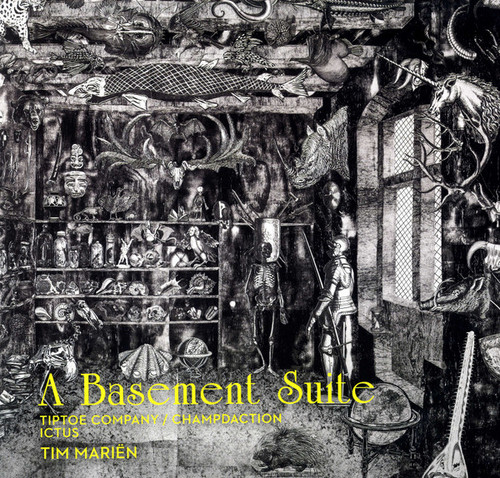
A Basement Suite
“Even without detecting in the figure of the refugee or exile the emblematic figure of our time, the loosening of the bonds with a place of origin is no longer rewarded by a search for a promised land. The loss of a deep-rootedness that would provide an identity is no longer perceived as a lack that needs to be filled. We strangers in our own land, and conversely we feel at home everywhere.”Mario Perniola, Ritual Thinking (tr. Massimo Verdicchio)The Italian philosopher Mario Perniola, in his 200…
Spring & Neap
In 1996 I went on a tour of Japan with Orchestra Carbon; a highlight was the Music Merge Festival in Tokyo. A colorful selection of wonderful musicians from the international scene met there for three days at the Shinjuku Pit Inn: Michiyo Yagi, Otomo Yoshihide, Sachiko M, Jim O'Rourke, Yumiko Tanaka, David Grubbs and others. In addition to performing with Orchestra Carbon and my solo Tectonics, I was allowed to develop a new algorithmic template for a small orchestra of festival soloists under m…
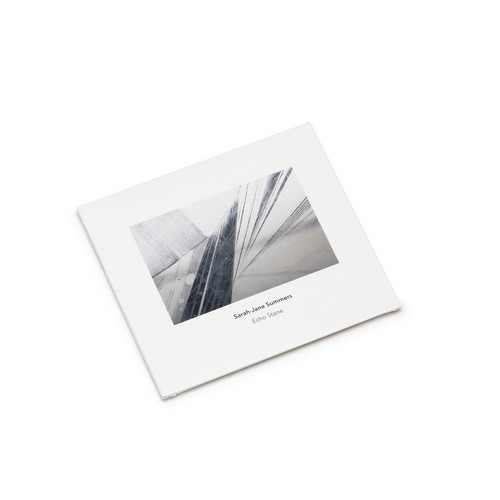
Echo Stane
Nine solos for Hardanger fiddle that trace a fascinating journey between tradition and experimentation, composed and performed by Sarah-Jane Summers, a virtuosic Scottish musician based in Norway. With Echo Stane, Summers employs the Hardanger fiddle – the national instrument of her adopted country – as a bridge across the North Sea, connecting the musical heritage of the Scottish Highlands with Norwegian folk traditions while pushing both toward the avant-garde.
Summers grew up in rural Inverne…
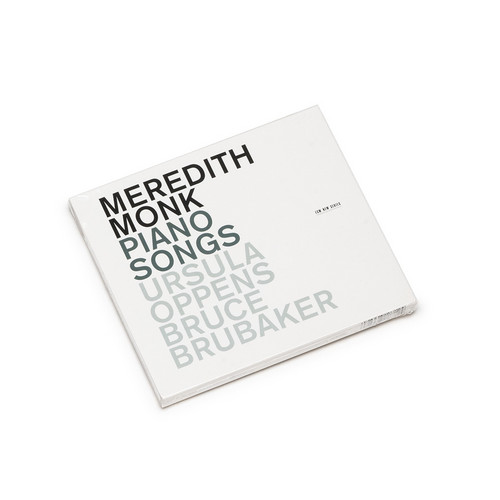
Piano Songs
Celebrating Meredith Monk as composer, these Piano Songs give us a world at once playful and earnest. Written or derived from work composed between 1971 and 2006, the pieces inhabit Monk’s unique universe, as played by two of new music’s most distinguished interpreters, pianists Ursula Oppens and Bruce Brubaker. These pieces are ‘songs’ because they have strong roots in Monk’s pieces for voice, and because they are direct, specific, and imagistic. Meredith Monk on composing for two pianos: “I de…
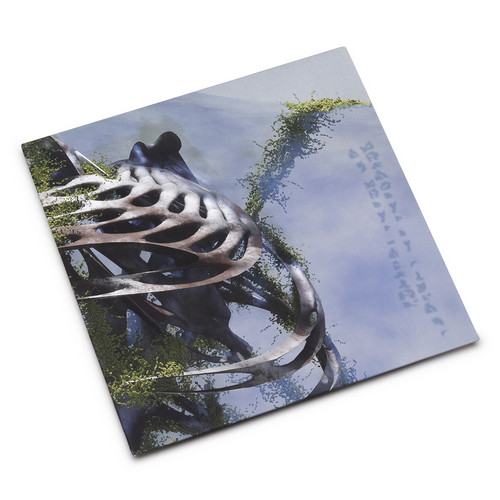
becoming in shadows ~ of being touched
It's hard to parse exactly what you're listening to when you immerse yourself in Jason Doell's new recording, Becoming In Shadows ~ Of Being Touched. The old adage about never judging a book by its cover may often hold true but somehow Xuan Ye's beautiful design speaks volumes about both the sonics and structure of this bewildering document by the Toronto-based composer and sound artist. Though the imagery is blatantly computer-generated, it's rife with references to vegetation, bones, water, an…
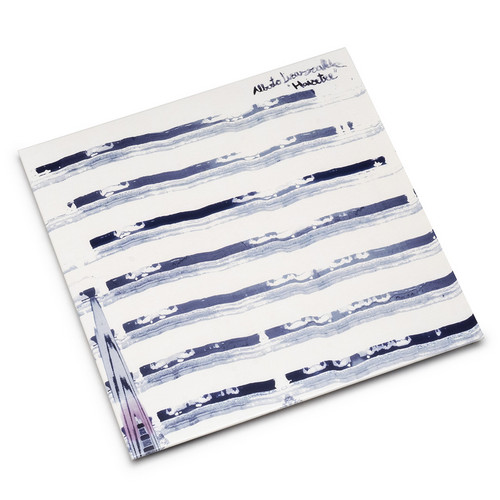
Haizetxe
*300 copies limited edition* Timeless minimalist approach to composition braced by repetition and playfulness. Alberto Lizarralde’s music reflects calm, focus and intimacy. Ethereal and atmospheric, his pieces operate within the digital as well as the analogue realm in equal measures. Sampling, Midi sequencing and field recordings are the instrumentation used in these 15 songs recorded on a four track reel to reel tape. Highest possible recommendation for fans of Suso Saiz, Jon Hassell, Eno or H…
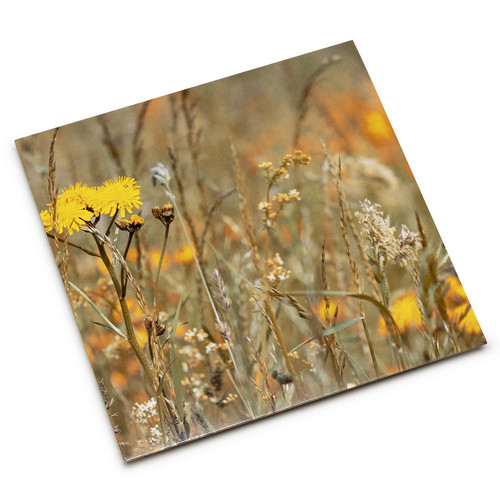
Scarlatti
zeitkratzer director Reinhold and his ensemble present new compositions, grounded on Domenico Scarlatti's piano sonata F-minor K.466. Commissioned by the dance company Rubato and dedicated to Mario Bertoncini (1932-2019).
Was ficht dich an?
impakt Records presents the new record by Huhn | Schönegg | Mahnig "Was ficht dich an?" with Leonhard Huhn (alto saxophone), Stefan Schönegg (double bass) and Dominik Mahnig (drums).
plays Herzog | Muche | Nillesen
impakt Records presents the new record by T.ON "plays Herzog | Muche | Nillesen" with Constantin Herzog (double bass), Matthias Muche (trombone) and Etienne Nillesen (extended snare drum).
2 compositions by Frank Gratkowski
Fo[u]r Alto is the quadrupling of the alto saxophone as a unified body of sound. Since the ensemble was founded in 2008, the four Berlin saxophonists Frank Gratkowski, Christian Weidner, Leonhard Huhn (until 2018 Benjamin Weidekamp) and Florian Bergmann have found an unmistakable sound language characterised by artistic uncompromisingness and continuous musical research. In autumn 2012, they released their first CD "4 compositions by Frank Gratkowski" on the English label Leo Records. Now follow…