Electronics
All records with electronics · Solo electronics only
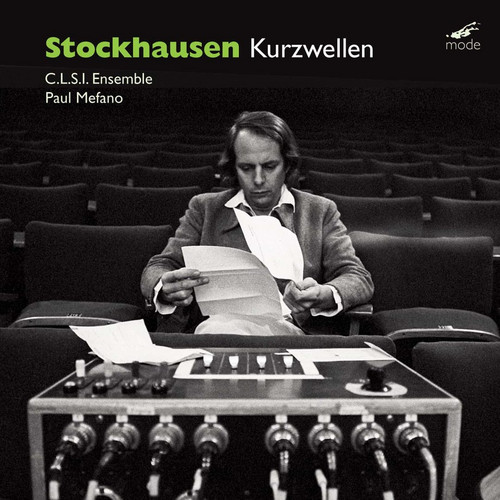
Kurzwellen
Karlheinz Stockhausen's Kurzwellen (1968) in a new performing version by C.L.S.I. for four instruments, four shortwave radios, six computers and conductor, premiered in 2011 and conducted by Paul Mefano.

Reiger Records Reeks Bundle
Fifteen titles on twenty-nine discs: every CD Roland Kayn issued on his own Reiger Records Reeks between 1995 and 2006, from the three Kybernetische Musik volumes and the ten Electronic Symphonies to the late Multiplex Sound-Art sets and the orchestral and keyboard works. Specially priced.
Electronic Symphony I / III
The first instalment of the ten Electronic Symphonies: Symphony I (1966-96), II (1970-96) and III (1971-97), with Equivalence Sonore II and III from 1995. Pieces concreted in real time by a complex autonomous electronic system, a process Kayn documented rather than composed.
Electronic Symphony IV
Electronic Symphony IV (1988-96) unfolds over four sections across two discs, joined by Frottage and Minimax, both from 1996. Sound generated in real time by an autonomous electronic system: since the process cannot be retraced, the recording itself stands in for the score.
Electronic Symphony V / Emissioni Trasformati I-II
Electronic Symphony V (1977-97) in two sections, one per disc, each paired with one of the Emissioni Trasformati of 1996. Twenty years of revision folded into music that a complex autonomous electronic system concreted in real time, beyond any traceable authorship.
Electronic Symphony VI / VII
Electronic Symphony VI (1982-97) on the first disc, Symphony VII (1984-98) and Frottage II (1996) on the second. Two of the longest gestations in the cycle, worked over fifteen years and left to a self-regulating electronic system to concrete in real time.
Electronic Symphony VIII / X
The close of the cycle: Electronic Symphony VIII (1978-98) and the single-year Symphony IX (1999) on the first disc, Symphony X (1982-99) in two sections on the second. Thirty years of Kayn's generative studio work arriving at its last and largest statements.

Kybernetische Musik
The first volume of Kayn's cybernetic works: Ready-Made I and II (1982) on one disc, Collage and Decollage (1984) on the other. Four long pieces that arise, in the composer's words, from the interplay of merged control loops setting a process into motion.

Kybernetische Musik II
The second volume of Kayn's cybernetic works, a single CD holding two long pieces: Assemblage (1984) and Refractions (1995). Music not composed and practised but set going, arising from merged control loops and feedback in a system that can be entirely autonomous.

Kybernetische Musik III
The third volume, six pieces from 1986 to 1996 across two discs: Cybernetic Serendipity, Transfluxion and Syntropie on the first, An Artificial Acoustic Environment, Syzygy Dynamical Units and Equivalence Sonor I on the second. A decade of self-regulating systems at work.

Gärten Der Lüste / Cybernetics II / L'Innominata
Two long pieces from the turn of the millennium, Gärten Der Lüste (1999-2000) and L'Innominata (2000), each in two sections, with the early Cybernetics II (1969) set between them on the first disc. Thirty years of Kayn's electronic practice in a single pairing.

Invisible Music / Hommage a K. R. H. Sonderborg
Invisible Music (2003) spread over three parts across two discs, followed by Hommage a K. R. H. Sonderborg from the same year. Late Kayn, sound with no visible source, left to a self-regulating electronic system to unfold at its own pace.
Etoile du Nord / Ghyress Für Ilse-Emily Kayn
Two long pieces from 2004: Etoile du Nord in two parts on the first disc, Ghyress für Ilse-Emily Kayn on the second, named for the daughter who would later reawaken her father's label. Among the last titles Kayn issued on Reiger Records Reeks himself.
Requiem pour Patrice Lumumba, Interations, Composizione AD
Issued under Kayn's Multiplex Sound-Art heading: Requiem pour Patrice Lumumba (2002) and Interations (2003) on the first disc, the four-section Composizione AD (2002) and Prismes Reflectes (2002) on the second. Among the most recent pieces the composer completed.

Ultra / Redundancy TR / Megaphonie
Also under Kayn's Multiplex Sound-Art heading: Ultra (2001) and Redundancy TR (2003) on the first disc, the three-section Megaphonie (2001) on the second. Three of the last pieces Roland Kayn completed and released on his own label.
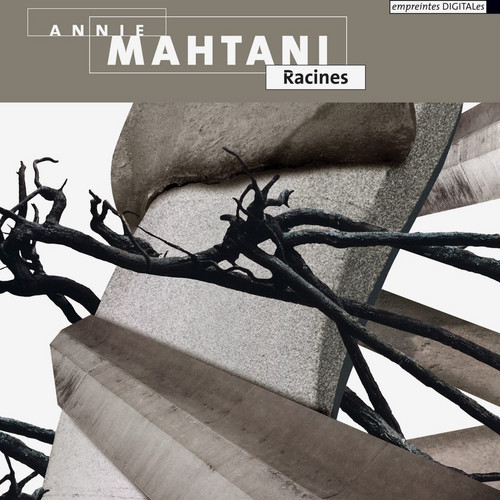
Racines
Five field-recording based works by Annie Mahtani from 2008 to 2019: the Black Country Living Museum, Amazon nights from the Mamori Sound Project, thousands of ice sculptures by Néle Azevedo, wind in the Cheviot Hills, and a piece for her sister.

Micro-Lieux
Eight works by Nikos Stavropoulos from 2003 to 2017 on intimate, close-up acoustic space, several conceived in 5.1 or ambisonics, among them Topophilia, Karst Grotto and Granicus, written for percussionist Alexander Pepelasis, who plays it here.
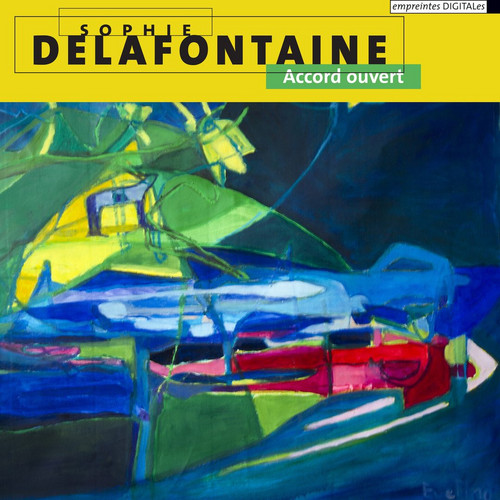
Accord Ouvert
The first album by the Lausanne-born, Brussels-based Sophie Delafontaine: six acousmatic works from 2013 to 2018 drawing on Hesiod, Ovid’s Echo, the Jura cliffs of Creux-du-Van and the spiral spring at the heart of a watch.
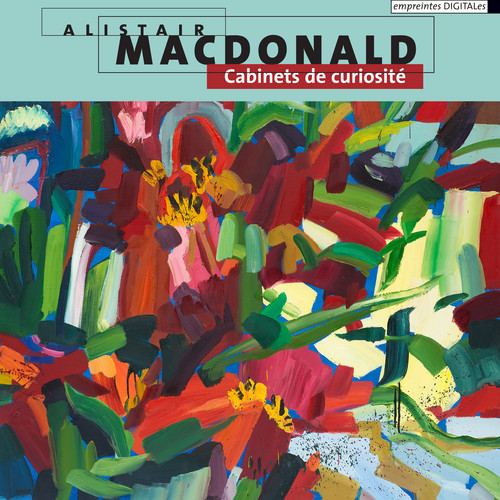
Cabinets de Curiosité
Seven fixed-medium works from 1998 to 2013 by Glasgow-based Alistair MacDonald, arranged as a cabinet of curiosities: Glasgow streets, Carrie Fertig's glass instruments, a tribute to Delia Derbyshire, building bricks and the jungle explored by Alfred Russel Wallace.
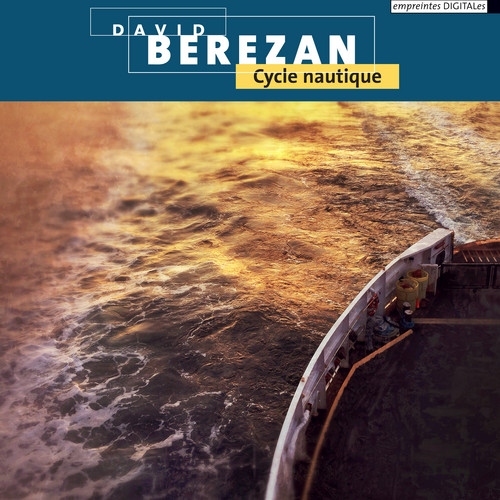
Cycle Nautique
David Berezan’s Nautical Cycle, five multichannel acousmatic pieces from 2011 to 2017 built from sea buoys, unmanned light vessels, mooring chains in Visby harbour and the bass clarinet of Marij van Gorkom, including the Klang ! first prize winner Lightvessels.