★Mode
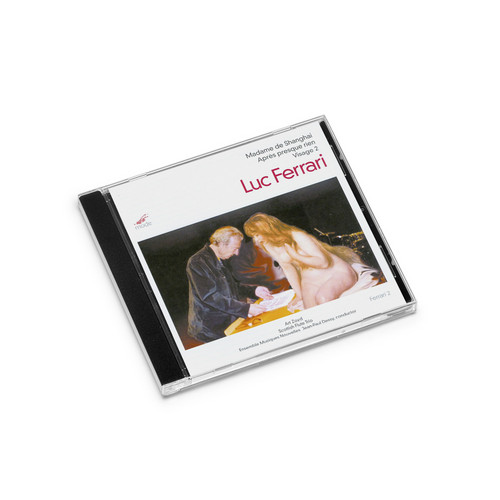
Madame De Shanghai - Après Presque Rien - Visage 2
This is Luc Ferrari’s second disc for Mode and it features three pieces from different periods and for different ensembles, two of which are first recordings. “Visage 2” is for brass and percussion and was written in 1955-56. This is an early work for Ferrari and it is informed by his study of serialism at Darmstadt, yet is based on the confrontation between two sexual bodies (note the lovely nude woman on the cover with Ferrari as he looks over his composition on the page). The music itself is …
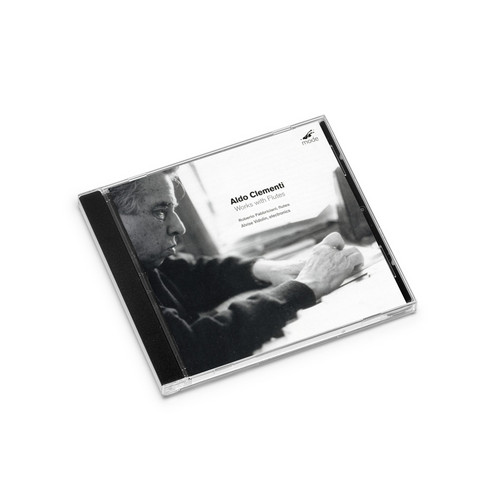
Works With Flutes
The release of this CD celebrates Aldo Clementi’s 75th birthday in 2010. Clementi is one of the remaining living composers of the Italian avant-garde generation, which included Berio, Nono and Maderna. Clementi’s works for flute (including works for multiple flutes and flute with tape) are performed by one of his long-time collaborators, Roberto Fabbriciani – some of these works were written for or dedicated to him. Many of these works utilize Clementi’s signature explorations of the canno…
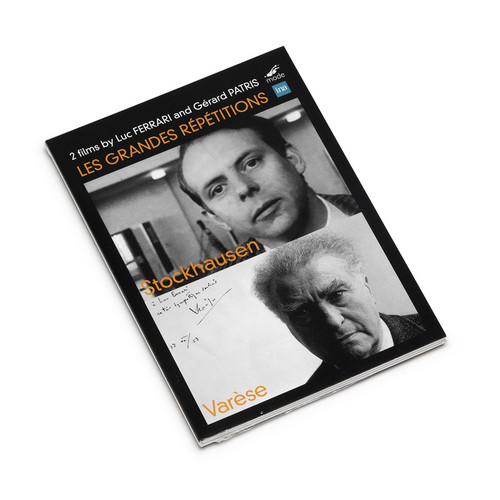
Les Grandes Répétitions
Two films, part of a series made for French television in the mid 1960s, of concert rehearsals. In the earlier film it’s Stockhausen’s Momente that’s being rehearsed (with long sections of performance) interspersed with KS speaking about himself and his work and the thinking behind his work. Just buy it. It’s completely exceptional, in every way. Stockhausen himself is both eloquent and profound, and speaks as he composes, with thought behind every word. His intensity at work, which is gripping,…
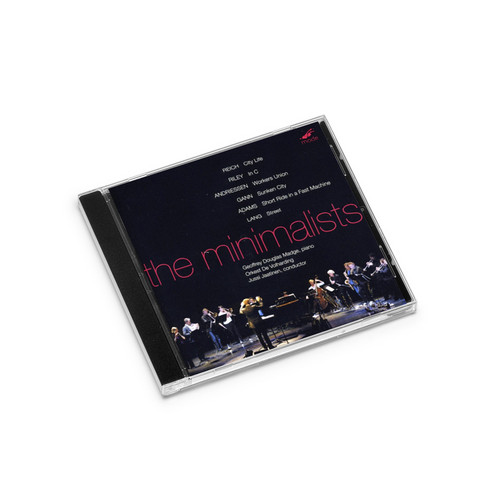
The Minimalists
A two-CD set, and the lineup consists of Steve Reich (City Life) Terry Riley (In C) Louis Andriessen (Worker's Union) Kyle Gann (Sunken City) John Adams (Short Ride in a Fast Machine) David Lang (Street) "Orkest de Volharding, Jussi Jaatinen. In the spring of 1972, composer Louis Andriessen and saxophonist Willem Breuker brought together musicians from improvised and from traditional music, at a historical and tumultuous concert in the Amsterdam Carré theatre.They became the Orkest de Volharding…
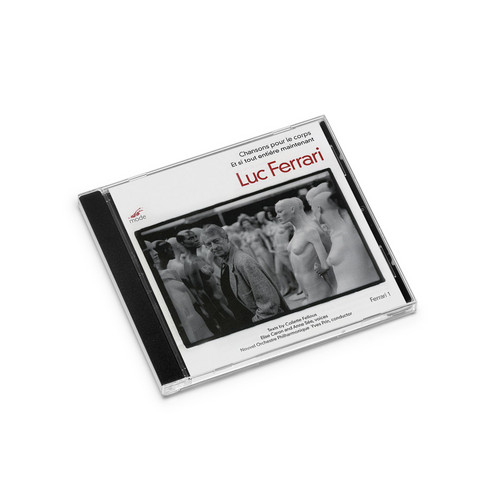
Volume 1: Chansons Pour Le Corps
With recent releases on John Zorn's Tzadik label among others, Luc Ferrari is enjoying a well deserved renaissance. After studies with Messiaen and formative visits to Darmstadt in the '50s, Ferrari (born Paris, 1929), with Pierre Schaeffer, was one of the co-founders of the Groupe de Recherches Musicales in 1959. In the sixties he worked with the Ensemble Instrumental de Musique Contemporaine de Paris and made the first French television documentaries on new music, between 1964-69, he ta…
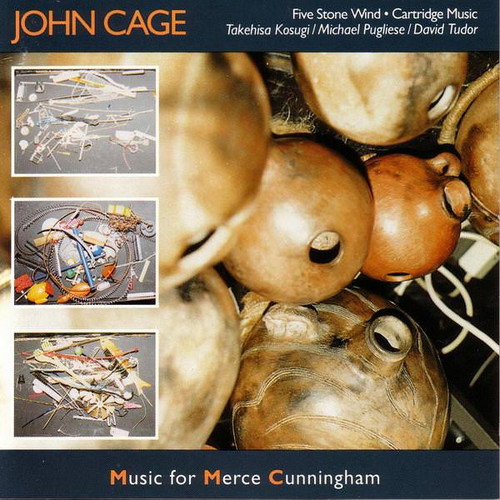
Music for Merce Cunningham
2008 repress, featuring a 24-bit Hi-Definition remaster; originally released in 1991. Volume 4 in the Music of Cage series. The first audio document between John Cage & Merce Cunningham. It includes a 55-minute piece called "Five Stone Wind" performed by David Tudor (live electronics), Takehisa Kosugi (amplified violin, live electronics, bamboo flute) and Michael Pugliese (clay pots and tapes) as well as a 19-minute version of the classic "Cartridge Music" (same 3 performers, "using phonograph c…
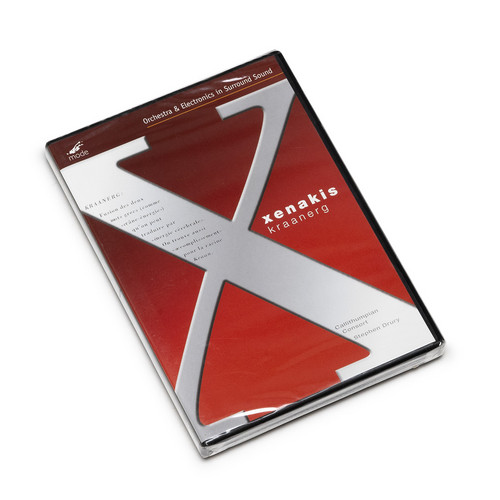
Kraanerg
Kraanerg (1968) for 23 instruments and 4-channel tape. Callithumpian Consort. Stephen Drury, conductor. First recording with restored analog tape. Kraanerg is one of Xenakis' most popular - and infamous - works. A visceral and highly charged score for woodwinds, brass, and strings along with quadrophonic tape. The title, Kraanerg, is a composite of two Greek words: 'kraan', meaning to perfect, to accomplish; and erg, signifying energy. Commissioned for the gala opening of the National Arts Centr…
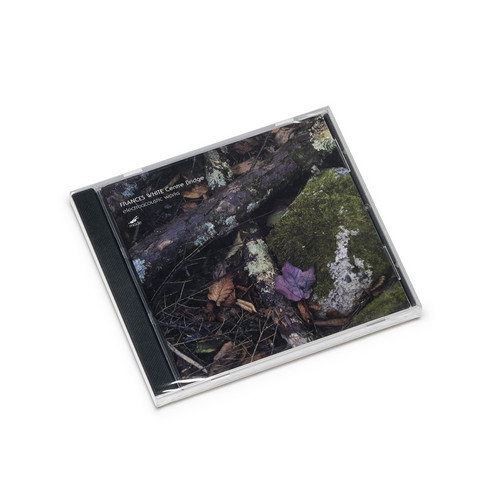
Centre Bridge: Electroacoustic Works
Much of Frances White's music is inspired by her love of nature, and her electronic works frequently include natural sound recorded near her home in central New Jersey. This is the first complete disc of White's electroacoustic works, both with or without instruments. This disc is titled Centre Bridge because it has inspired two of the works contained on it. But beyond this, it is because the role that the bridge has played in White's work is so characteristic of her music. Her music is about li…
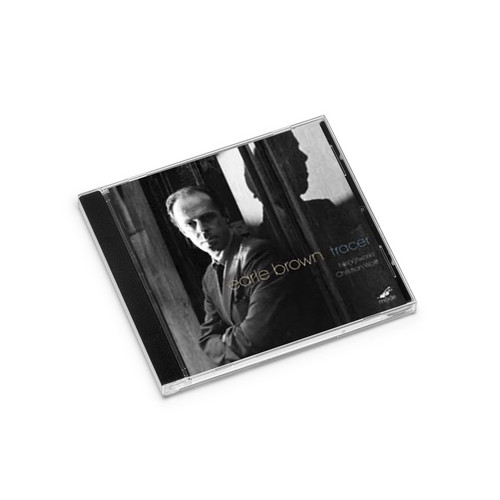
Tracer - Chamber Works 1952-1999
Earle Brown first encountered the work of Alexander Calder in 1948, whose mobile sculptures Brown saw as a visual embodiment of the variable (impermanent) aesthetic that he was striving to create. This Calder aesthetic stayed with Brown throughout his several stylistic shifts. Whether he was writing twelve-tone serial music (Music for Violin, Cello, and Piano), conceptual graphic scores (Folio and Four Systems), composed material open form scores (String Quartet, New Piece and Tracer), or sponta…
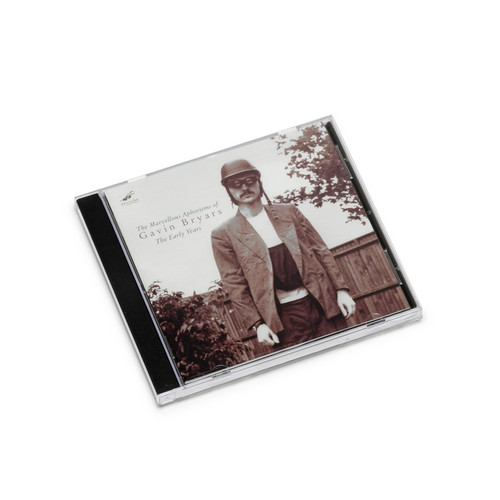
The Marvelous Aphorisms of Gavin Bryars: The Eearly Years
Gavin Bryars' music, post 'The Sinking of the Titanic' and 'Jesus' Blood...', is well known and often performed today. Less known are the earlier works featured on this cd, created during the years 1969-71. At that time, Bryars became associated with Michael Nyman, John Tilbury and Brian Eno - marrying ideas from Cage, Fluxus, free improvisation and experimentalism. Some of the works recorded here appeared on Eno's avant-garde Obscure label in the mid-1970s. In 1, 2, 1-2-3-4, the musicians liste…
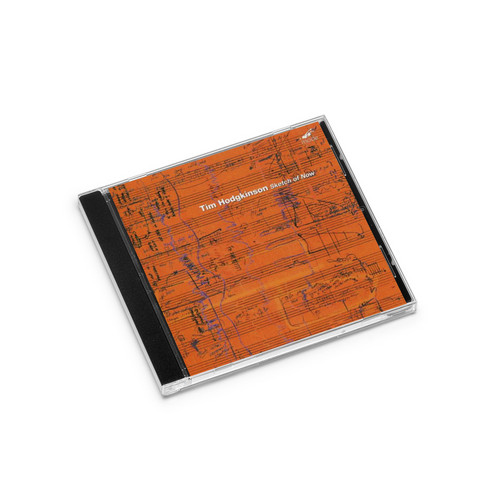
Sketch of Now
Tim Hodgkinson co-founded the politically and musically radical free-jazz/progressive rock group Henry Cow in 1968, which also featured guitarist Fred Frith. He regards his membership in this group, with the opportunity to work closely and collectively with other instrumentalists in developing new sound worlds, as the foundation of his musical education. In addition to composing, Hodgkinson continues to perform as an improviser (clarinets, saxes and keyboards) and considers the practice of impro…
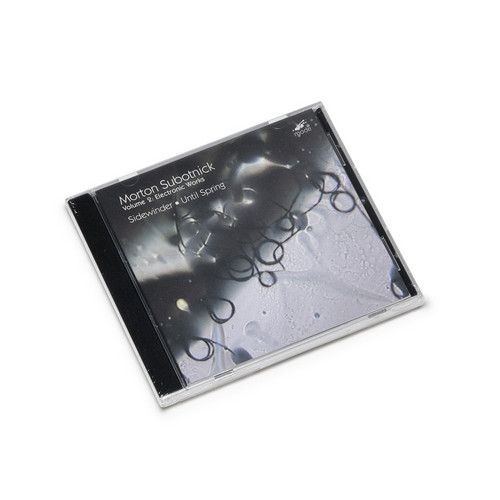
Volume 2: Electronics Works
Multi-channel electronic works in Surround Sound. Morton Subotnick was a phenomenon in the late '60s, the first composer to write substantial works for synthesizer that had a wide audience. He has been mentor to generations of composers, and his influence is so pervasive that it would be impossible to trace completely - the electronica movement, for one, reveres him. This release brings together two of his classic analog electronic works which were previously only available on LP.
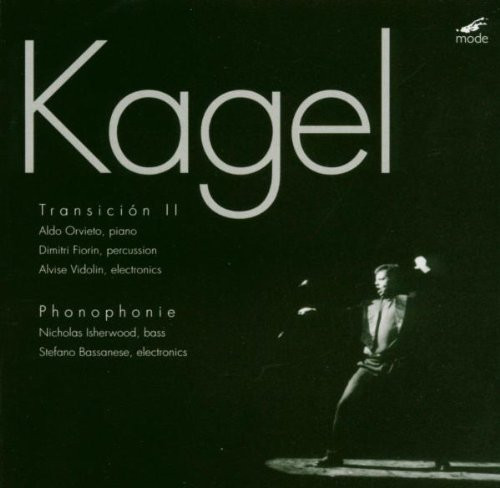
Transición II. Phonophonie
This disc collects two early, forward looking works by Argentine born Mauricio Kagel, now living in Germany. Both works are constructed in such a way so that no two performances can ever be alike. Transición II was an early exploration of what "live electronics" are now being used to achieve. The score is in individual pages which can be placed in any order by the performers. It works on three levels. LIVE: The pianist performs on the keyboard while a percussionist performs inside the pian…
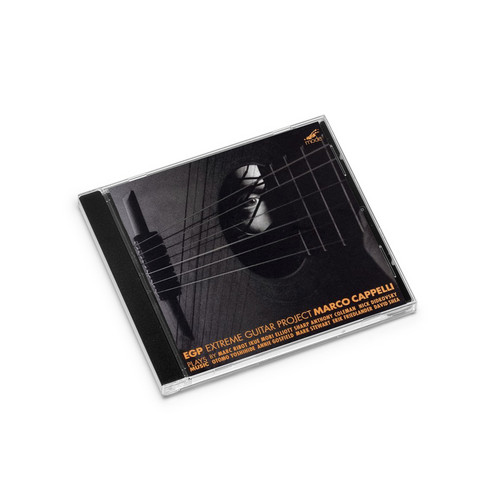
Extreme Guitar Project
During May and June 2002, Italian guitarist Marco Cappelli spent time in New York City. While there, Cappelli became involved with the NYC avant-garde scene - internationally known as Downtown Music - in which composers / improvisers coming from avant-garde jazz, experimental rock, as well as from academic music, created a common musical language. These experiences and influences inspired Cappelli to a new idea and concept: to make a "musical photograph" of the Downtown musical scene thro…
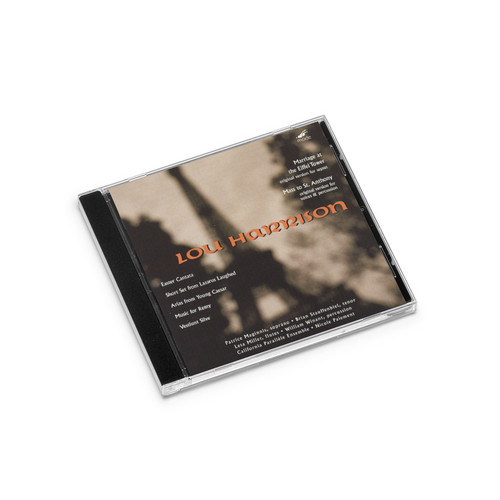
Works 1939 - 2000
We were saddened to learn of the passing of Lou Harrison as this disc just entered production. It is perhaps fitting that it provides an overview of Harrison's work, from 2 movements of a mass composed in 1939 to 3 vocal arias composed in 2000. Mass to St. Anthony was begun when Hitler invaded Poland; a mass for voices and percussion expressing both outrage and hope. Harrison completed the Gregorian-like chant for the entire 5 movements of the work, but only finished the percussion accomp…
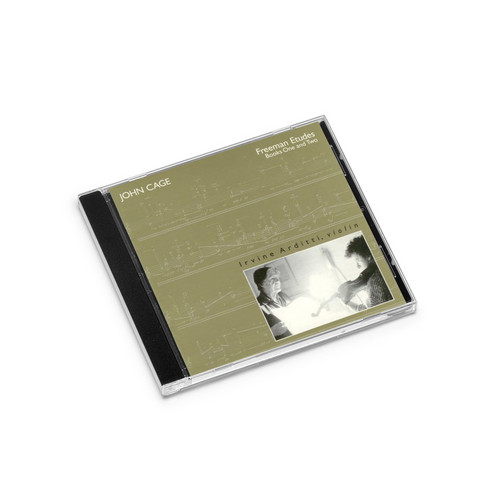
Freeman Etudes, Books One and Two
John Cage's Freeman Etudes are the modern equivalent of Paganini's virtuoso solo violin etudes. Each etude is completely notated down to the smallest detail, and the composer states "...are as intentionally as difficult as I can make them...So I think that this music, which is almost impossible, gives an instance of the practicality of the impossible." The detail and complexity of these etudes give them a unique and unusual spot in Cage's oeuvre.
These first two books (there are 8 etudes p…
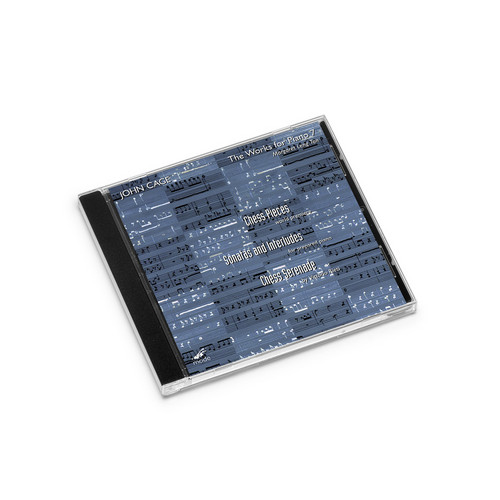
The Piano Works 7 - Chess Serenade
A major discovery and first recording of an important Cage piece from 1944. In 1944, John Cage was invited to participate in “The Imagery of Chess” exhibition at the Julien Levy Gallery in New York City. The artists included Calder, Noguchi, Motherwell, Breton, Duchamp, Ernst, Man Ray, Tanning and other leading surrealists.Cage contributed a painting entitled “Chess Pieces”. It was purchased at the show and went into a private collection. For decades it was deemed lost and was (almost) forgotten…
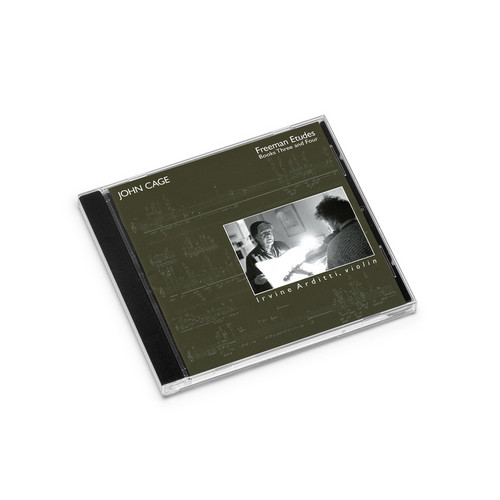
Freeman Etudes, Books Three And Four
This CD presents the first recording of the second half of John Cage's Freeman Etudes for violin. Those familiar with the previously-released volume of this work will already know what to expect: the bewildering complexity of the Etudes and the astonishing virtuosity of Irvine Arditti's performance.
Convinced that the later, more complex etudes were unplayable, Cage abandoned work on the Freeman Etudes in 1980, after completing the first sixteen and beginning the eighteenth Etude. It wasn't…
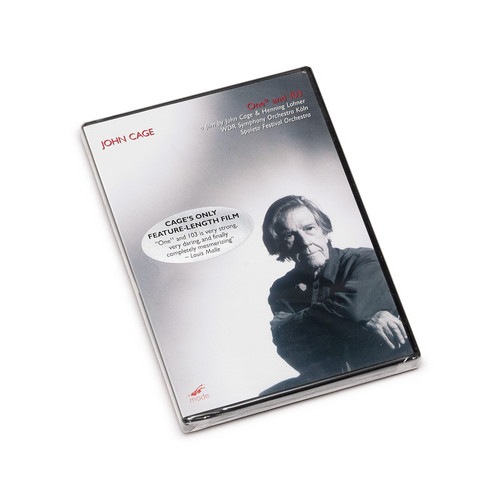
One11 And 103
A performance for camera person and light, One11 is a film without subject. There is light but no persons, no things, no ideas about repetition and variation? Chance operations where used with respect to the shots, in black and white. The light environment was designed and programmed by John Cage and Andrew Culver, as was the editing of the film.The orchestral work 103 musically accompanies One11. Like the film, 103 is 90-minutes long, divided into seventeen parts - its density varies from solos…
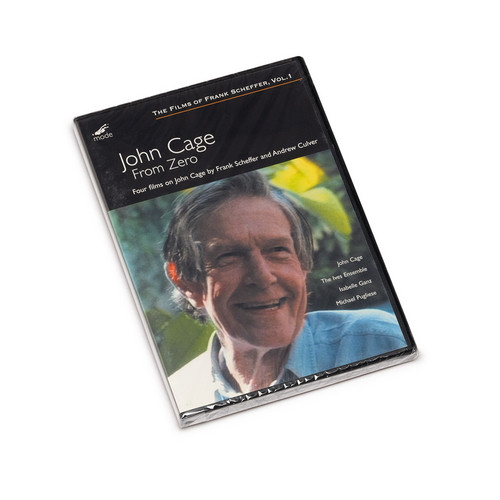
From Zero
Four films on JOHN CAGE by Frank Scheffer and Andrew Culver. Mode celebrates its 20th Anniversary in 2004 with the release of a major film on John Cage by renowned Dutch director Frank Scheffer in collaboration with Cage's long-time associate Andrew Culver. The group of films, entitled From Zero, are:* 19 QUESTIONS: Cage answers 19 questions on a variety of subjects, using chance operations to determine the duration of his colorful and often witty answers. A unique opportunity to view the Cagean…