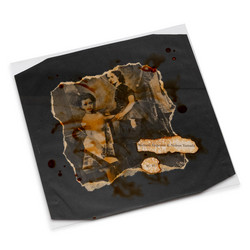
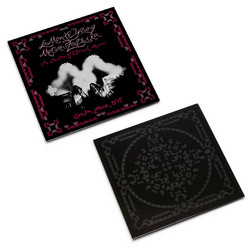
Björn Magnusson, Michael Bodenmann
Hope & Peace (2Tape)
Label: Les Archives de la Médiocrite
Format: 2Tape
Genre: Experimental
In stock
Ships within 1-2 working days.
Tracked express shipping from Italy, no customs or import VAT in the EU. Shipping costs
*100 copies limited edition* It was the spot—where you'd meet up with friends or bump into strangers. Walls covered with deteriorated posters and endless spray-paint conversations. A friendly face in a city suffering from an obsessive-compulsive cleaning disorder. I would stare at those walls, wondering what was behind them, yet there were no doors, no windows, no way to get in. Now it's all open: a stretch of yellow gravel, a wasteland that still feels strangely alive despite being practically barren. The cigarette butt confetti, the fleabane and goldenrod pushing through the cracks, the lizards praying to the sun—all still there, and yet everything has changed. What does this scene speak of? What does it tell (us), in light of everything that has been?
On "Hope & Peace," named after two popular Japanese cigarette brands, Björn Magnusson and Michael Bodenmann work with piano, saxophone, voice, microphones, and a tape recorder. The album is based on improvisations and experiments that were reworked and reshaped until they started to take on the form of songs. Nurtured by repetition and an aesthetic of imperfection they became—at least for a given moment— perfect, right, finished. What came before and in between were conversations, negotiations, the blatant spilling of emotions, playing a recording over and over, discussions about timing, pitch, timbre, or the right amount of softness. What do these recordings speak of? What do they tell (us), in light of everything that has been?
Magnusson and Bodenmann reference and speak with various musical traditions—the emotional minimalism of Ryuichi Sakamoto, Tony Conrad's "Music and the Mind of the World," the ethereal yet mathematical works of CC Hennix, the ecstatic prayers of Alice Coltrane. Their album is just as much a personal reflection, a look inside, as it is a celebration and amplification of musics that shaped, and continue to shape, the artists' lives. Sure, there is nostalgia in these recordings, sadness even, but I also hear confidence, a sort of happiness, and fun. "Hope," the first of the two cassettes, begins with a replayed piano recording that sets the stage for a spacious eight-minute improvisation. Like most songs on this album, "Tiny Grass Has the Same Right to Grow" has Magnusson working with repetition and difference, while Bodenmann's listening ear can be felt in the background. When Magnusson's voice appears on the flip side, it feels close—too close almost. "I love you more than anything," he sings in a cover of Daft Punk's renowned downtempo anthem, "Something About Us."
The second cassette, "Peace," introduces the saxophone, along with other references, colors, and moods. Magnusson continues the nebulous dialogue with an unknown other—or rather, unknown others—on "All of the Time," before the six minutes of "All That I Could Be Is What I'm Not" close the album with a plunge into an ocean of melancholy and peaceful bliss. What persists throughout "Hope & Peace" is a directness and dryness of sound, a feeling of both intimacy and spread-out expansiveness. The "now" may be located here, in the shared space of the studio, in the „too much“ of the present. At the same, it is just as much connected to "back then" and "out there," to the places, living beings, sounds, and scenes encountered along the way. "Hope & Peace" is the result of an in-depth collaborative effort, of nights spent in the studio, of diving deep in search of spaces that connect—if only for a few minutes—the "Now" with the "Then," the "Here" with the "There."