Merzbow
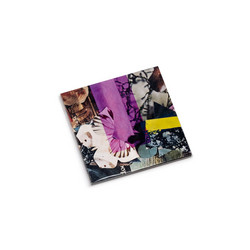
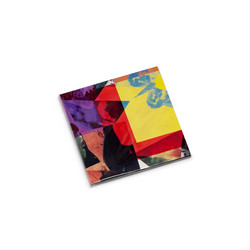
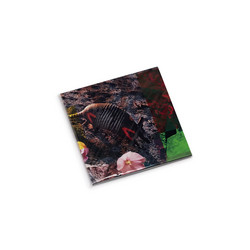
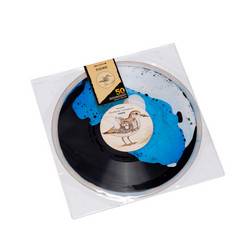
Kachouzu (2 x 6")
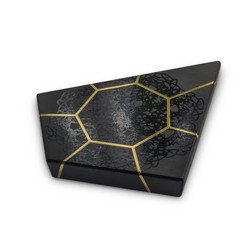
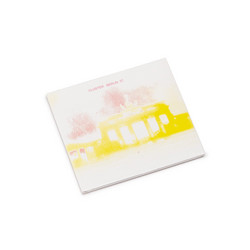
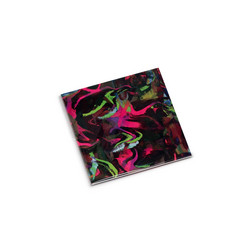
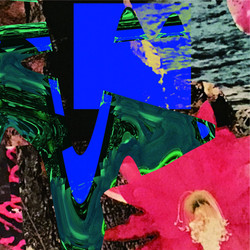
Tip! ** 2 x 6" Lathe Cut, Limited to 50 Hand-Numbered Copies. ** Kachouzu is a small object with outsized force: four pieces, each around four minutes long, issued as a limited 2×6″ lathe‑cut and digital release that channels Merzbow’s current harsh‑noise vocabulary into something closer to a series of etched plates than a conventional album. Put together for the German imprint Frei zum Abriss Kollektiv and later pressed in Japan on white lathe‑cut vinyl, the record focuses on a particular slice of Masami Akita’s sound world - high‑density metallic overdrive, serrated upper‑mid frequencies, and a low‑end that feels less like “bass” than like structural vibration. Where long‑form Merzbow often builds slow ecosystems of accumulation and erosion, Kachouzu works in concentrated blows: each part begins in medias res, as if dropping a contact mic into an already raging machine.
The four sections - “Kachouzu Part 1–4” - form a continuous arc of pressure with distinct internal climates. The opening part establishes the core timbre: broadband noise with a hard, abrasive edge, streaked by feedback lines that tilt between siren and drilling tone. Part 2 tightens the spectrum, pushing more energy into the high registers so that the texture thins just enough to reveal micro‑rhythms and tremors hidden in the grain. Part 3 feels like a pivot toward even more corrosive terrain, with rapidly modulated distortion and shifting bands of emphasis that give the impression of filters being ridden aggressively in real time. By Part 4, the sound has thickened again into a kind of molten slab, small stutters and cuts breaking the surface before the whole mass is abruptly cut off rather than resolved.
Described in Japanese promo notes as “Merzbow特有の金属的で過激な音響が全面に展開するハーシュノイズの極致” - a peak of harsh noise in which his characteristic metallic and extreme sonics are deployed across the entire field - Kachouzu presents Akita in a mode that will feel immediately familiar to followers of his recent high‑saturation work. There is little in the way of ambient drift or environmental reference here; no animal thematics, no extended drones, just unrelenting, sculpted abrasion. The short durations sharpen that stance: there is no time for acclimatisation or slow build, only rapid immersion in a fully formed texture and an equally sudden ejection. It’s Merzbow as flash‑exposure rather than slow hallucination.
As an artefact, the release underscores the continuing role of ultra‑limited physical formats in Akita’s practice. Listed on his official release catalogue as a “2×6″ Lathe Cut” and highlighted by fans as a standout among recent small‑run objects, Kachouzu sits alongside other boutique editions in his vast discography, functioning as both a collector’s item and a laboratory snapshot of a particular rig and approach. The digital version on the label’s page makes the material accessible beyond lathe‑cut circles, but the music’s density and brevity still feel tailored to the tactile idea of dropping a tiny disc onto a turntable and being hit with a disproportionate wall of sound. For listeners already attuned to Merzbow’s extremes, Kachouzu offers a concentrated dose of his current harsh‑noise thinking; for the curious, it’s a reminder that, even this far into a prolific career, he can still find new ways to make distortion feel both absolutely physical and strangely fresh.