1
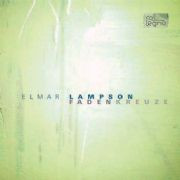
Elmar Lampson’s music has got what is commonly referred to as “soul.” It becomes apparent in the way the music embraces the listeners and accompanies them through time in images of sound. The Mysterienszenen were inspired by the Mystery Dramas of Rudolf Steiner, with whose ideas Lampson (whose grandparents had personally witnessed Steiner’s performances) became acquainted already as a young man.
Both works relate to the old tradition of confronting scientific knowledge with mystical knowledge. Yet one thing is clear: You can listen to this music independently of its spiritual background – and, while you listen, perhaps find your own answers to the question which certainty you are willing to accept.
Details
Cat. number: WWE 1CD20407
Year: 2012
Release notes:
Booklet with notes in German and English attached inside digipak.
"Made in the EU" and "© + ℗ 2012" on CD.
Recorded in 2011.
Tracklist
| 1 | Vision Des Johannes I | ||
| 2 | Vision Des Johannes II | ||
| 3 | Felsen, Luft Und Licht | ||
| 4 | Felsentempel | ||
| 5 | In Fließendem Licht | ||
| 6 | Gebet | ||
| 7 | Vision Johannes III | ||
| 8 | Sonnentempel I | ||
| 9 | Märchenszene | ||
| 10 | Sonnentempel II | ||
| 11 | Vision Des Benedictus | ||
| 12 | Geister Des Lichtes Und Der Finsternis | ||
| 13 | Der Hüter Der Schwelle | ||
| 14 | Ahrimans Reich | ||
| 15 | Gnomen Und Sylphen | ||
| 16 | Die Flammen Fliehen | ||
| 17 | Tempelszene | ||
| 18 | Im Geistgebiet |
Credits
- Elmar Lampson
- Composed By
- Yoel Gamzou
- Conductor
- Circus
- Design Concept
- Soloist Ensemble Of The International Mahler Orchestra
- Ensemble
- Laura Bährle
- Recorded By [Recording Assistant]
- Christian Feldgen
- Recorded By, Mixed By, Mastered By