Reissues
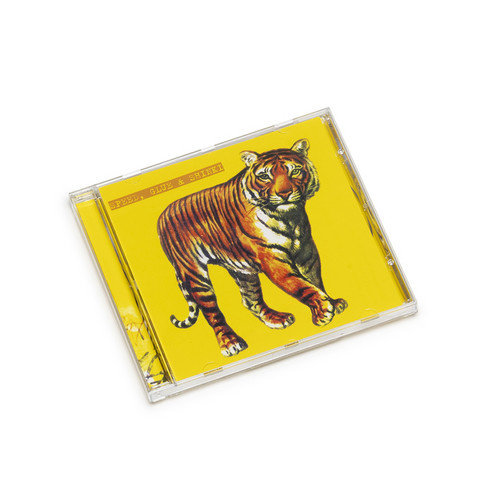
Speed, Glue & Shinki
Speed, Glue & Shinki's second release, originally released in 1972 on Atlantic and often referred to as Tiger, brought together a number of tracks not included on Eve, as well as some new recordings that took a very different musical slant. Joey Smith decided that since he could he handle himself admirably on drums, it was time to challenge a new instrument, so he bought a synthesizer. Drafting in friend Mike Hanopol to take over the bass-playing duties from the departed Masayoshi "Glue" Kabe, S…
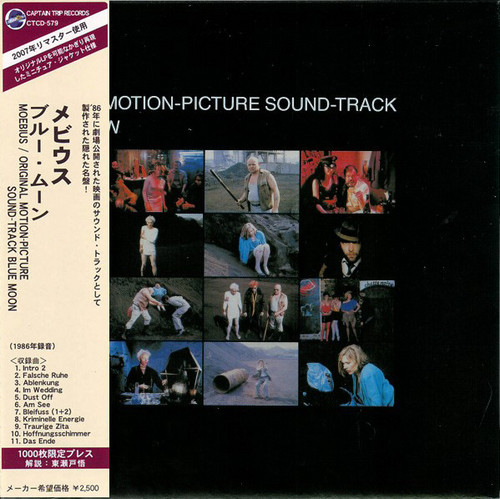
Blue Moon - Original Motion-Picture Sound-Track
Original score to the 1986 Roxy Film Production Blue Moon by Dieter Moebius (of C/Kluster/Harmonia/_ & Roedelius fame...). Nice, if somewhat short selection of synth-themes & pain-relieving sonics. Surprisingly low usage of era sound-producing technologies, although they ARE in there (the DX7 ruined E-Music for an entire generation...). 80's Moebius/Roedelius output is only now starting to ripen w/age, no reason not to enhance your personal selection w/a crate or two of this fine ruby port

No Earthly Man
Updating canonical Scottish folk tunes is a rather unfashionable niche, placing these songs within the context of modern/alternative rock is an even tougher chore, but it's one that Scottish neo-traditionalist Alasdair Roberts approaches with pluck and somber intensity. Previously with the band Appendix Out, No Earthly Man is Roberts' third album as a solo artist and it is undoubtedly his most difficult to approach. His previous album, Farewell Sorrow, was a collection of joyful, filigreed songs…
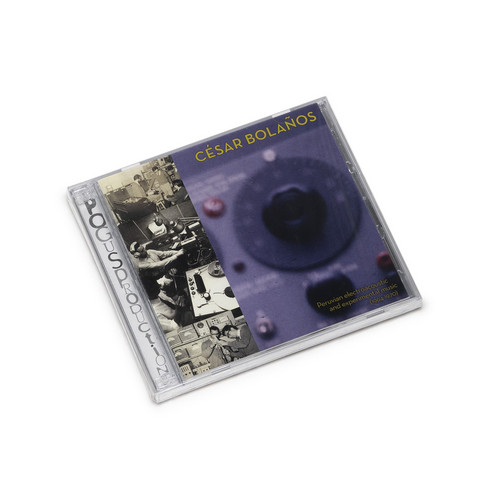
Peruvian electroacoustic and experimental music (1964-1970)
splendid double CD set documenting César Bolaños - one of the leading artists of the Latin American avant-garde of the mid 20th century - amazing early electronic work. The recordings bring together for the first time a definitive edition of his work on a double CD, the music have been digitalised directly from the original tapes and really have a fabulous clarity. So much music these days is labelled as experimental but I often I ask myself if it's creators are genuinely experimenting. That ce…
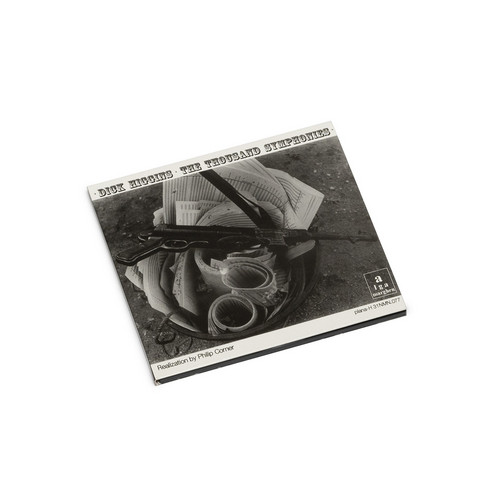
The Thousand Symphonies
2010 release. Alga Marghen presents the first edition ever issued of Dick Higgins' music. Fluxus founding member, in 1958 Dick Higgins studied Composition and Experimental Music with John Cage in his class at the New School for Social Research in New York together with, among others, La Monte Young, Richard Maxfield, Toshi Ichiyanagi, George Brecht, Allan Kaprow, Al Hansen, and Jackson Mac Low. In the Spring of 1968, Geoffrey Hendricks and Robert Watts told Dick Higgins of a project that was afo…
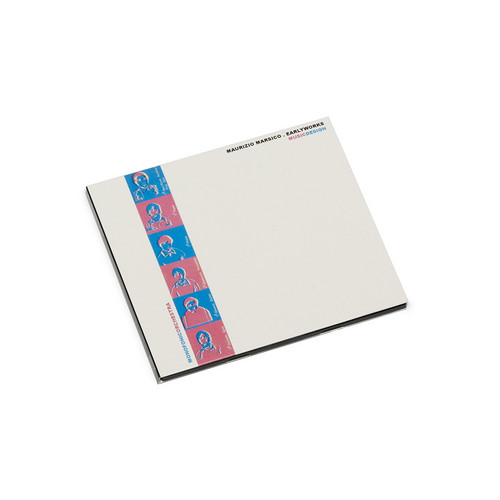
Musicdesign
2010 release. "Monofonicorchestra is not a disc recorded in mono / is not ambient music / is not funky / is not experimental music / is not funny / Monofonicorchestra is not avant-garde / is not pop / is not op / is not Dada / Monofonicorchestra is not fashion / is not hard-core / is not horror / is not Frigidaire." --Maurizio Marsico, at 10h20 on Wednesday, December 23rd, 1981. A country: Italy. Several countries: Italies. Late '70ss, early '80s. The ether of punk is in everyone's nose and disc…

Devil's Music
2025 Stock. EM Records presents the CD and vinyl reissue of Nicolas Collins' Devil's Music, originally released in 1986. The New York-based experimental composer and circuit bender created this work through live radio sampling techniques that anticipated developments in electronic music production by several years. Collins developed his practice through collaborations with Christian Marclay, Elliot Sharp, David Shea, David Tudor, and John Zorn, establishing himself as significant figure in expe…

Vivmmi
LP only. Limited Edition of 130 copies. These 37 minutes mark a turning point in Uhlig,s work. "Genmaicha: At the opal seashore (the last full length Aalfang Mit Pferdekopf-album on Mystery Sea, October 2005) was a already a vague hint of what comes now: Uhlig on the peak of low volume.
"VIVMMI is divided into five segments accompanied by a host of verdant birds and the melancholic and peaceful humming chords of an old droning piano (and without much doubt: completely out-of-tune). As if someone…
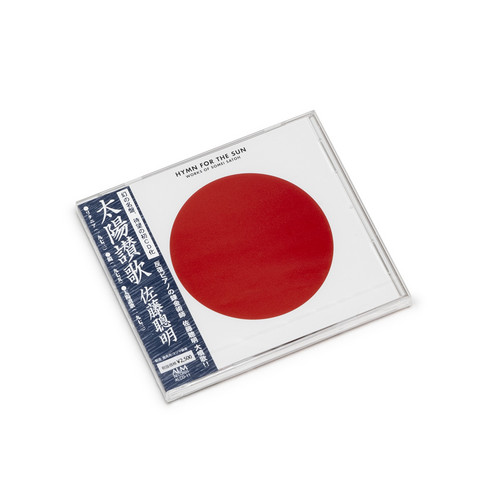
Hymn For The Sun (Works Of Somei Satoh)
This CD is markable reissue of very rare first LP of Somei Satoh. Like several other composers of his generation, Somei Satoh has an affinity for mysticism and meditation, and he attempts to convey stillness and timelessness in his extremely slow music. His works may be described as ambient, but their minor key harmonies and step-wise melodies seem more conventional than the blurred, unearthly sonorities usually found in that atmospheric genre. ALM Records issued some important LPs of Satoh's ta…
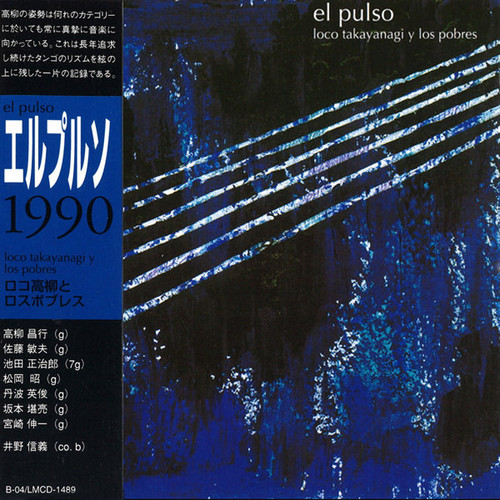
El Pulso
El pulso (1991) is a live collaboration with other guitarists. Masayuki Takayanagi (g), Toshio Sato (g), Shojiro Ikeda (7st.g), Akira Matsuoka (g), Hidetoshi Tanba (g), Taisuke Sakamoto (g), Shinichi Miyazaki (g), Nobuyoshi Ino (bass). Quite possible one of the strangest releases in the Takayanagi (New Direction Unit) discography: an acoustic guitar nontet playing covers of South American tango, milonga, vals, rumba, &c.
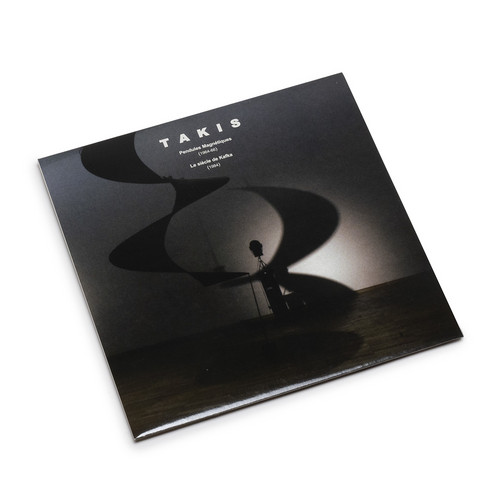
Pendules magntiques / Le siecle de Kafka
Beautiful edition! Takis was born in 1925 in Athens. Preferring, as a matter of principle, to teach himself rather study in a institution, he left Greece in 1954 and lived as a citizen of the world, traveling through Europe and the USA. Some of his earliest manifestations in the 1940s consisted of explosions carried out in open places. His first Signals date from 1954: they were rods consisting of piano wires which created musical vibrations as they stuck against each other in the wind. In fact …

Gilded Eternity
**Finally repressed / repackaged on CD format for these incredible remastered / reissues from 2008. ** A Gilded Eternity is the third and final album from Loop, it originally came out in January 1990, and was recently reissued as part of the Loop Remasters on 2CD in 2009. The 7 tracks on the album (plus the two tracks on the bonus 7”) are from a band at the absolute peak of their power; there was far more to Loop than bludgeoning riffs and cranking up the gain control. Here was a band that also …
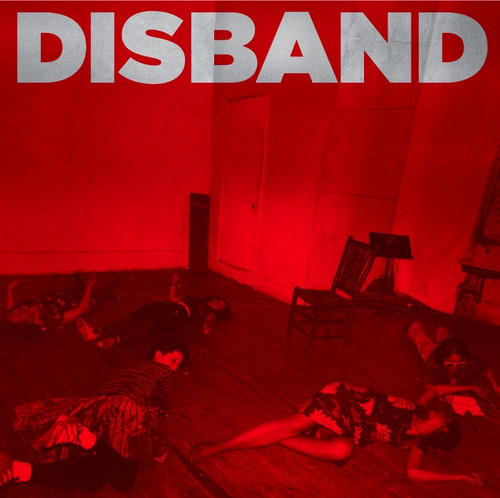
Disband
Long-lost recordings culled from performances between 1979 and 1982 from the loose group of feminist performers known as Disband. Ilona Granet, Donna Henes, Barbara Kruger, Ingrid Sischy, Diane Torr, and Martha Wilson screamed, shouted, sang, and stomped through the heyday of New York City's new- and no-wave scenes, blurring the line between performance art and live music. Mirroring the chaos and temporarity of that time, the band split up in 1982 having never produced a record. This is the firs…
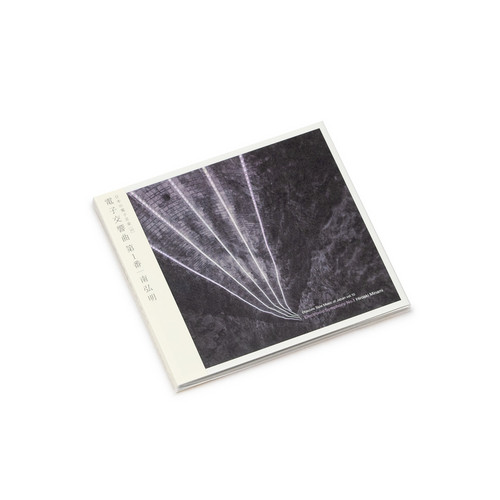
Electronic symphony No.1
Little-known composer Hiroaki Minami was a professor of electronic music at the Tokyo National University of Fine Arts & Music and is a pioneer of synthesizer music in Japan. He built a private studio for his self-made synthesizer in his home in 1976, and shortly thereafter, he composed this piece, Electronic Symphony No. 1, filled with spacey and very noisy analog synthesizer sounds, much like Roland Kayn's '60s concrète works. Contains liner notes by the artist in Japanese and English; h…
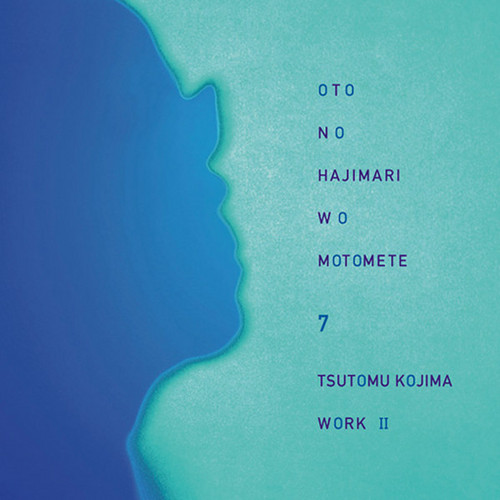
Oto No Hajimari Wo Motomete 7 Tsutomu Kojima Work II
Recent issue of Japanese electronic music made by NHK electronic music studio after EXPO'70. This CD consists of 4 works assisted by engineer Tsutomu Kojima who assisted many electronic works of avant-garde composers. (Jean Claude Eloy's well known concrete music "Gaku-no-Michi" was also assisted by him.)
1. “Palace of Green Space for Electronic Music” Kiyotomi Yoshizaki (1979)
Opposite concepts such as “Science and Art, Yang and Yin, Symmetry and Dissymmetry” are generally constructed based on…
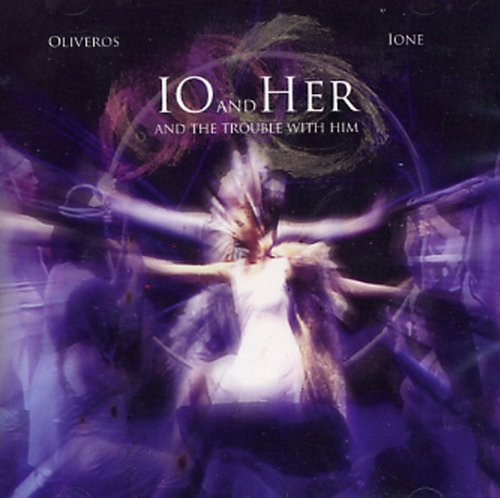
Io and her and the trouble with him
Written and directed by Ione. Music and sound design by Pauline Oliveros. A collaborative venture among artists of all types, this 'dance-opera' is a multimedia panorama of experimental theatre and technical virtuosity that includes aerial ballet, masks, video projection, a sinister thousand-eyed monster, and a highly imaginative electronic soundscape. The one-act story, set in primeval time, retells the myth of Io from a matriarchal perspective. Io, Argivian priestess, is transformed by a terri…
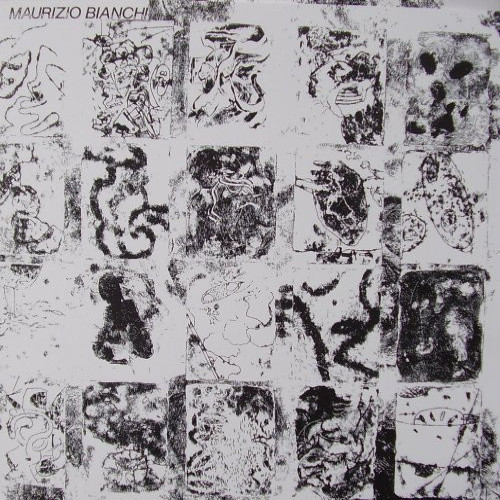
Mectpyo Bakterium / Genocide O.T.M.
Numbered edition of 600 numbered copies in a trifold 10" inch sleeve with original artwork. Re-issue of the Maurizio Bianchi's early Lp Mectpyo Bakterium . Included in this re-issue is a bonus disc with 55 minutes of ultra rare material officially published on CD for the first time here.Disc 1: First two tracks are from the 1982 LP 'Mectpyo Bakterium' released by DYS Records, USA. Third track is from '40 Days/ 40 Nights' compilation on Stratosphere Music, Japan. Fourth track is from 'Internation…

Parallèles
Reissue of a magnificent, impossible-to-categorize French classic originally released on the hopelessly obscure d'Avantage label in 1976. Pretty much the definition of musical anarchy, "Paralleles" begins with an atonal duo for trombones, wends its was through accompanied poetry readings and cornet solos, vamps into a rap delivered by Vince Taylor (France's answer to Eddie Cochran and Bowie's inspiration for Ziggy Stardust!) on 'Rock N Roll Station' (which Nurse With Wound deconstructed later on…
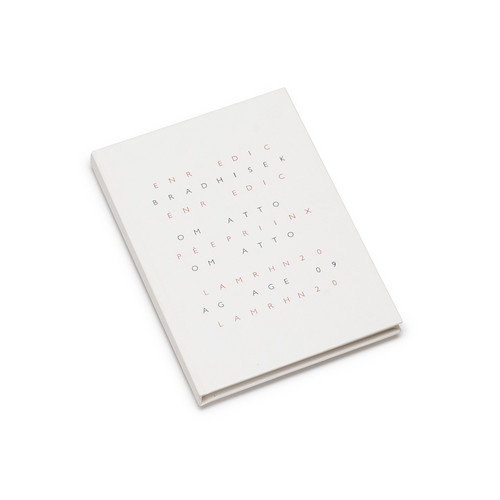
Poeme-Partition X
Alga Marghen is proud to now present this new edition of "Poème-Partition X", extended to the CD format and included in a luxury 96 pages hardbound book, limited to 350 numbered copies. The book reproduces for the first time the complete score, a visual wonder and a major experimental printed work. Bernard Heidsieck memories of an historic lecture at the Jean Tinguely atelier is included as an introduction, as well as his testimony on Ian Sommerville and Brion Gysin's "Dream Machine". Also on th…
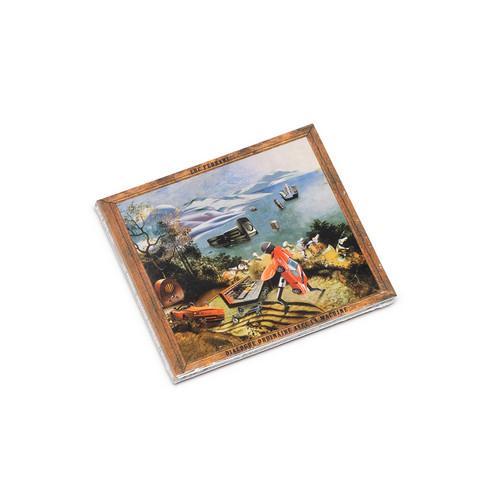
Dialogue Ordinaire Avec La Machine
Few copies back in stock, long out of print. After the publication of Danses organiques, Elica is pleased to present two previously unreleased compositions by Luc Ferrari from the early 80's: the stereo magnetic tape piece Dialogue ordinaire avec la machine coupled with Sexolidad, a composition for fifteen instruments. Both pieces share with the Danses a deep sense of sexual curiosity, a penetrating matter for the composer's musical explorations. This album is yet another fine testament to the F…