Reissues
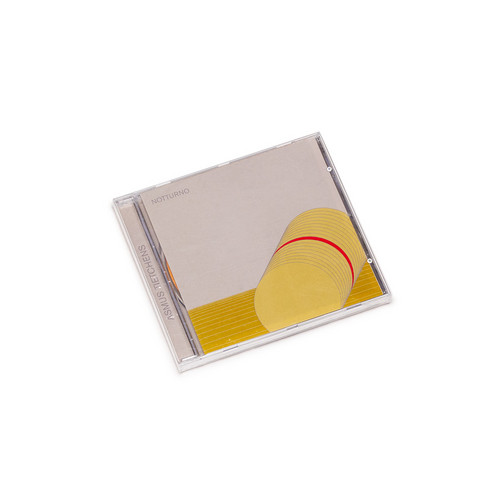
Notturno
10th part in the ongoing re-release series of all early Tietchens albums between 1980—1991. »Notturno« was originally released by spanish label Discos Esplendor Geometrico in 1987 and also by Barooni on CD in 1992. Remastered version in a first edition of 600 copies in jewel case with full colour artwork and poster booklet also feat. the original front and back cover.
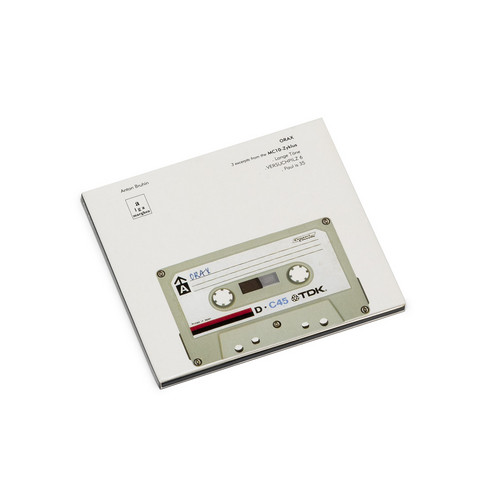
Rotomotor
2001 release. The compact disc by Anton Bruhin issued by Alga Marghen is titled r o t o m o t o r and covers two different areas of the artist's research. The first one is represented by a group of works including the short and mysterious environmental recording "ORAX" as well as "Lange Tone," "VERSUCHPILZ 6," and "Paul Is 35," three excerpts from the epic "MC-10 zyklus" created between 1976 and 1977, recording various layers of sound sources on two cassette recorders with loudspeakers.The compl…
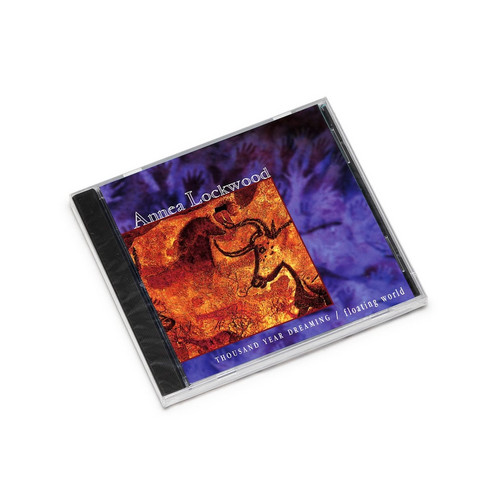
Thousand Year Dreaming-Floating World
Thousand Year Dreaming (1990) was commissioned by Essential Music and was written with the musicians on this recording, their particular strengths and inclinations, very much in mind. It grew out of an improvisatory piece, Nautilus, which Art Baron, Scott Robinson and Annea Lockwood realised in 1989. They found that the sound of conch shell trumpets, didjeridu and frame drums really flowered in the resonant spaces they were using for the piece. Lockwood started imagining the sonorities possible …
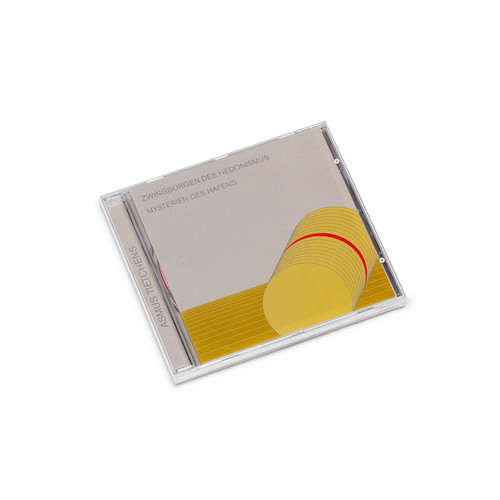
Zwingburgen des hedonismus - Mysterien des hafens
Part 9 of the ongoing re-release series of all early Tietchens albums from 1980—1991 on CD. This combines two seperate releases from 1987 (»Zwingburgen des Hedonismus«) and 1988 (»Mysterien des Hafens« on »Face To Face, Vol. 1«). »Zwingburgen des Hedonismus« was originally released as a one-sided LP on swedish label Multimood and features a singles 21 min. long track composed on a Fairlight CMI. »Mysterien des Hafens« was part of a split LP (the other side feat. Die Form) originally released on …
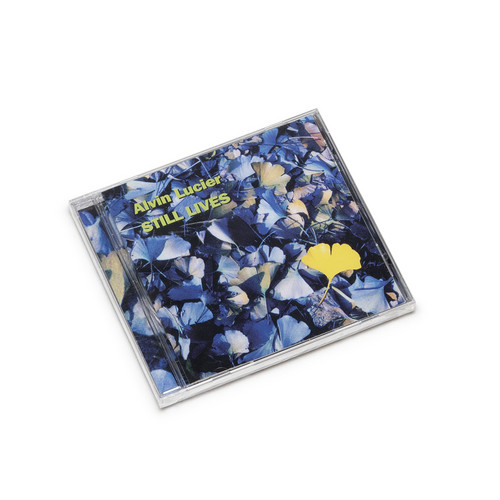
Still Lives
Three amazing works for pure waves and instruments. Lucier has pioneered in many areas of music composition and performance, including the notation of performers’ physical gestures, the use of brain waves in live performance, the generation of visual imagery by sound in vibrating media, and the evocation of room acoustics for musical purposes. His recent works include a series of sound installations and works for solo instruments, chamber ensembles, and orchestra in which, by means of close tuni…
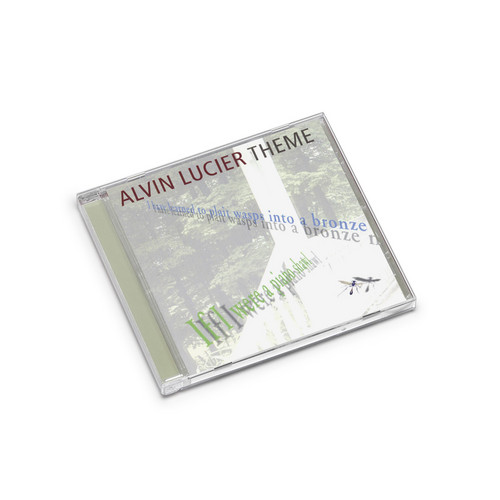
Theme
Theme features three works from Alvin Lucier. Music for Piano with Magnetic Strings is a work in which the strings of a piano sound by themselves. Several EBows (small electromagnets used primarily with electric guitars) which would cause the piano strings to vibrate and sound are placed on the strings of the piano. The pianist works from a prose score which describes the process and suggests she freely position and reposition five EBows on the piano strings, creating strands of sounds of v…
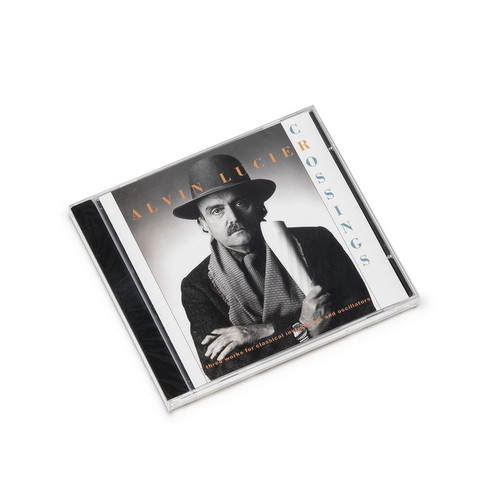
Crossings
Three works investigating interference between instruments and oscillators. When closely tuned tones sound together, their oscillations create audible beats that spin through space. Lucier reveals acoustic phenomena through minimal means
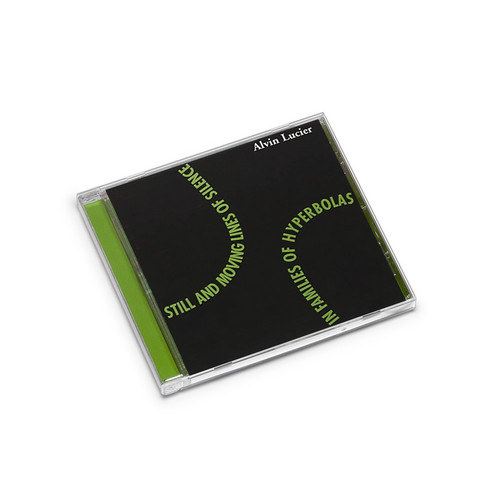
Still and moving lines of silence in families of hyperbolas
Monumental reissue of Lucier's four-part investigation into acoustic interference. Musicians sustain tones against fixed sine waves, creating audible beat patterns that reveal the hidden architecture of sound itself
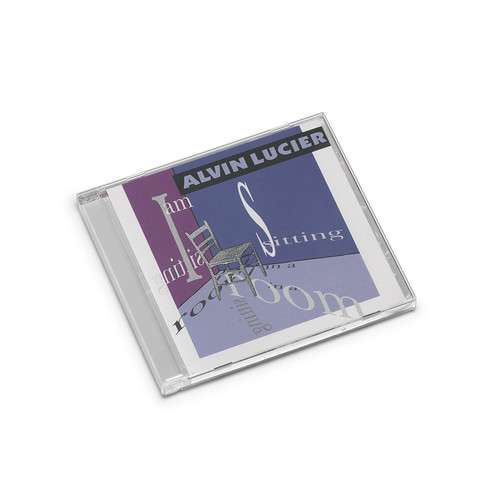
I Am Sitting In A Room
In this fascinating exploration of acoustical phenomena, Alvin Lucier slips from the domain of language to that of music in the course of 40 minutes and 32 repetitions of a simple paragraph of text.In I am sitting in a room, several sentences of recorded speech are simultaneously played back into a room and re-recorded there many times. As the repetitive process continues, those sounds common to the original spoken statement and those implied by the structural dimensions of the room are reinforc…
Music on a long thin wire
A fifty-foot wire runs through the poles of a large magnet and is driven by an oscillator, with microphones at either end. Set going at four different frequencies, it produces not the low drone you would expect but a shifting set of chords.
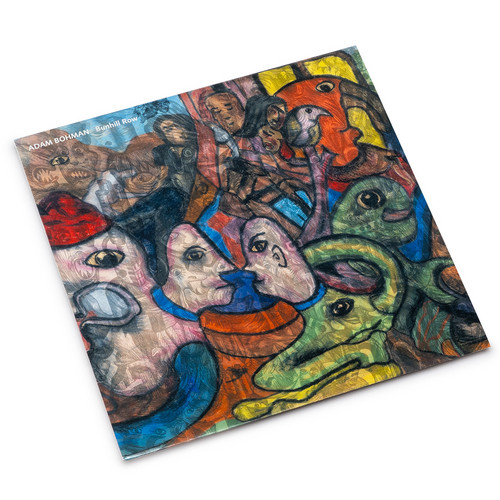
Bunhill Row
500 copies, numbered edition, few available. 1980 was an incredibe year for London’s experimental music scene with many different strands. Recommended Records were rereleasing the first two Faust LP’s, L. Voag had found ‘the way out’, Swell Maps were ‘in occupied Europe’. Throbbing Gristle and other industrialists were giving plenty of live actions. Nurse With Wound had just released their first LP, as had This Heat. The other great LP on Piano Records by Steve Beresford was also on the shelves.…
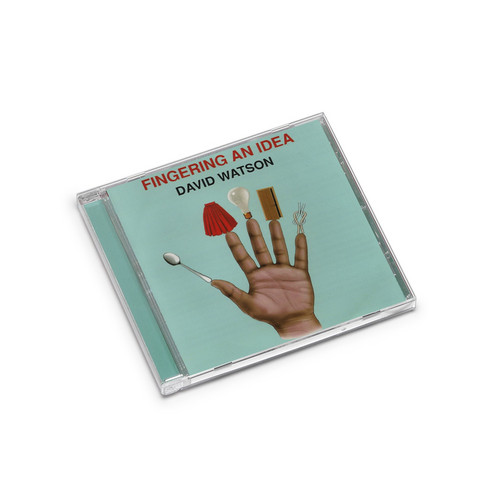
Fingering an idea
Disc 1: Dexter Music for highland bagpipes. Highland bagpipes: David Watson, Matthew Welch, Michael Mahoney, Brendan O'Rourke, Rob Brazius & Richard Baughman. Disc 2: Sinister - Music for acoustic and electric guitars performed by David Watson. " "Fingering an Idea" (a phrase pulled from a Chris Mann piece) resulted from a Phill Niblock invitation to make a double CD for bagpipe and guitar. A bagpipe CD is a particular challenge. A high beam spatial explorer, it is the kind of unstable ph…
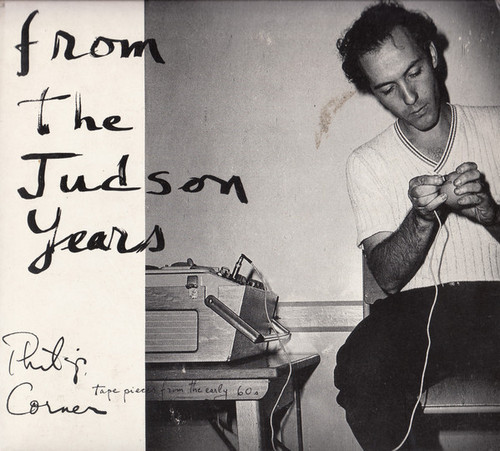
On tape from the Judson days
"'On tape from the Judson days. Remember? When you made these things at home, on the best equipment you or your other poor friends could find? Electronic music from the 1960s. And you had that Japanese taperecorder with built-in mike; indeed that was the only piece of furniture on your tatami floor on the Lower East Side that summer of 1961.' This compact disc presents tape music recorded between 1962 and 1963 for the friends meeting once a week in a loft in NYC. The first track, 'Lucinda Pastim…
More from the Judson years Vol. 2
2004 release. Excerpts from the liner notes of More from the Judson Years (Early 60s) Instrumental-Vocal Works Vol. 2, written by Philip Corner: "Everything Max Has" (1964), Max Neuhaus solo, recorded at the ONCE Festival, 1965. "A performance of Max's taking down all of his stuff; tons of equipment filling entire stages." "Big Trombone" (1963), Jim Fulkerson improvisation over tape collage. "Homage to Revere" (1962) for ensemble of copper-bottom kitchen utensils. "Punkt" (1961) for ensemble of …
More from the Judson years Vol. 1
2004 release. "Yet not to forget that extraordinary place where so much of the new and exciting performances at that most interesting time in New York, took place. There was a Theater there; and a place for the first Happenings. An Art Gallery... and later the famous Judson Dance Theater -- the site of Philip Corner's first performance. The concert was in early 1962, January 2nd, to be exact. Excerpts from the liner notes of volume one of More from the Judson Years, Early 60s, written by Philip …
Gong +
2002 release. Gong + presents three previously-unpublished compositions by Philip Corner recorded in New York City, 1974. "Metal Meditations with Listening Center," a 29-minute long piece, is a collaboration between Philip Corner and Bill Fontana. At that time Bill Fontana was very interested in the resonance properties of every object, putting his ear to everything, and sometimes recording what he called "Listening Centers," a microphone placed in a resonating space (for example a jar, or a pip…