“Deceptively minimal and elegant, Amir is the first the world would hear of Texier's signature sound - a universe of musical legacies, distilled and channeled through delicate, cycling bass tones and a chanting voice.”
During the second half of the 1970s, weaving a masterfully singular hybrid of jazz, minimalism, and various global musics, the French double bassist, Henri Texier - one of the most sought-after artists on the European scene - produced three astounding solo LPs, Amir, Varech, and A Cordes Et A Cris, for the seminal French jazz imprint JMS. Nothing short of brilliant, immersive, and intoxicating, for years these records stood at the top of record collectors' want-lists, finally being reissued by JMS back in 2019. Thankfully, after waiting on bated breath, the imprint has done a beautiful series of vinyl represses of each of these stunning gems, timed with their fantastic reissue of Akagera, Texier's incredible 1980 collaboration with Daniel Humair and François Jeanneau.
Born in Paris during the final months of the Second World War, Henri Texier first gained note during the 1960s for his work with Don Cherry, having been one of the first artists to found the indigenous French movement of free jazz. Across the coming decade he worked steadily in the ensembles of Jef Gilson and Phil Woods, as well as with heavyweights like Bill Coleman, Chet Baker, Kenny Drew, Donald Byrd, Bud Powell, Kenny Clarke, Dexter Gordon, Booker Ervin, and Art Taylor, before striking out on his own. In honor of these represses and as a special celebration of Texier - hoping to shed some light on his career - we wanted to once again take some time to sing the praises of all three of his incredible early LPs.
For years Amir, Henri Texier's debut solo LP, stood slightly in the shadow of its follow-up, Varech, but is equal and towers in every possible way. There is no other record like it on earth - stunning from start to its final turn. In our view, it's one of the greatest artefacts of the 1970s French scene, and that's no small thing!
Deceptively minimal and elegant, Amir is the first the world would hear of Texier's signature sound - a universe of musical legacies, distilled and channeled through delicate, cycling bass tones and a chanting voice. Magical incantations, which draw the listener in, forcing them to follow, leaving them forever changed. This is, in a few words, what great music is all about. Rhythmic pulses of the bass flirt with the sounds of the Oud, Ocarina, sparse hand percussion and clapping hands, painting the image of a deeply spiritual music drawn from countless traditions of music from around the globe and avant-garde jazz. For fans of Don Cherry, Joshua Abrams & Natural Information Society, Areski, and Kahil El'Zabar's Ritual Trio, this is sure to prove to be a definitive missing link.
Amir is just plain incredible. It sounds as fresh and full of life as anything made today, while bearing an ambience that feels as old as time.
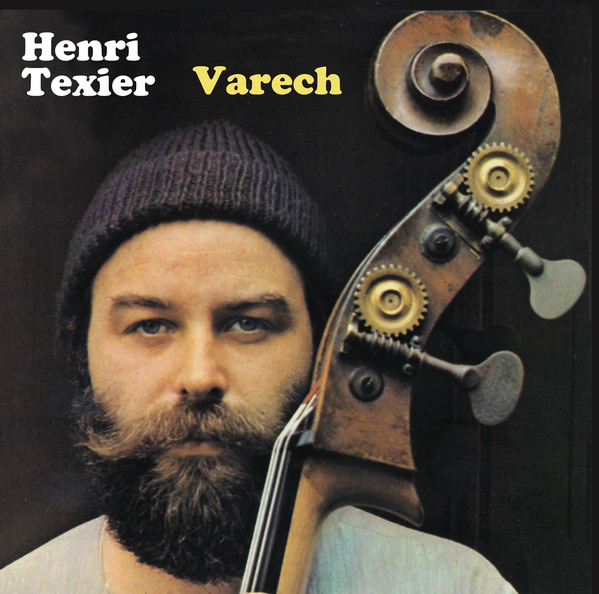
For most fans of Henri Texier, Varech is the one. Original pressings retain holy grail status and are rarely found. It's also the funkiest of Texier's three LPs and is the sample source of the 2016 dance floor anthem / remix by Bonobo, Les La Bas. This one is still as deep and heavy as they come; an astounding emblem of the avant-garde taking on new forms.
Like its predecessor and follow up, Varech is a singular hybrid of jazz, ambient and new age musics, minimalism, and diverse arms of the avant-garde, spliced with elements of Celtic, North African, Indian, and Middle Eastern musics, all channeled through Texier's singular bass, oud, and chanting voice - “fourth world” before the advent of the term. It is a call through time, reminding us of the power of music and its ability to reinvent itself without shedding those depths provided by roots. The mastery of its creator's self-taught vision shines through each note, rhythm and tone, illuminating everything that falls under its spell.
Immersive and intoxicating - spiritualism found through sound which isn't afraid to let loose, inspire a dance, and take you to ecstatic, meditative depths. A stunning piece of work which, as celebrated as it is, truly deserves more.
A Cordes et à Cris represents the third element in the trilogy of albums begun by Amir and Varech. Recorded and released in 1979, it encounters the legendary bassist at the top of his game - evolving and pushing into the future with one eye on countless global traditions of the past. Like all of Texier's solo efforts from this era, it is a stunning tapestry of musical hybridism. The result, emerging from deft hands, is unlike anything else.
A Cordes et à Cris does stand slightly apart from its predecessors - more diverse in its scope, and, at times more introspective, at others more outwardly exuberant and playful. Joined by a cast of contributing figures - the pianist Gordon Beck, guitarist Aldo Romano, cellist Jean Charles Capon, and violinist Didier Lockwood - its palette and voice is greatly expanded from the album's two predecessors, while never losing sight of Texier's signature combination of chanting vocals and metronomic bass rhythms - each instrument given its own distinct role.
Intricate, subtle, and often overlooked at great cost, A Cordes et à Cris is an essential piece in the puzzle of French 1970s music. It's a slow burn; one to get and live and grow with over time.
Originally published by Soundohm.