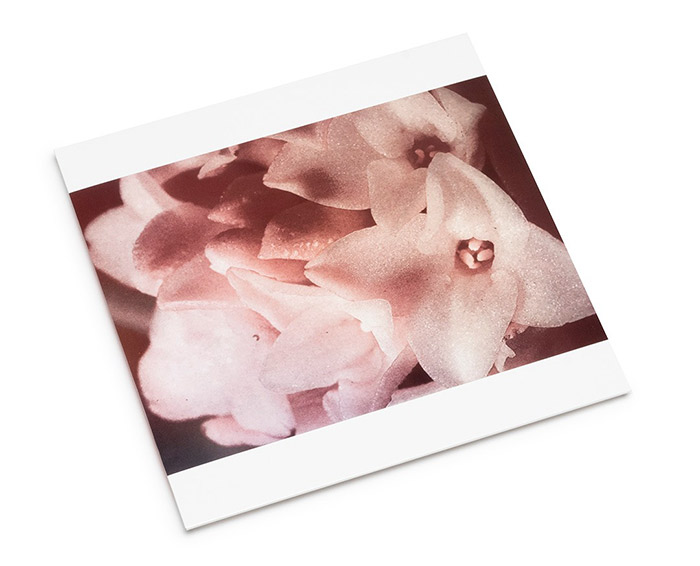
“A deeply resonant pairing of two of the most important documents from the seminal history of Japanese noise, both remain as radical, creatively visionary, and vital today, as when they first appeared.”
Fresh from Urashima, come two more astounding, historically seminal documents from the history of Japanese noise, the first-ever vinyl reissues of Masonna’s 1989 LP “Masonna Vs. Bananamara”, and Merzbow’s 1997 synth masterstroke “Hybrid Noisebloom". Awe inspiring hybrids of frenetic energy and delicate sophistication, both are as beautifully produced as records come.
Since its founding during the late 2000s, the Italian imprint, Urashima, has become a definitive voice in the landscape of noise. Bringing forth beautiful editions, they’ve sculpted a singular vision of one of the most vibrant and revolutionary bodies of experimental sound to have graced the globe. With 2022 only just begun, they’ve already dropped two expansive box sets, Controlled Death’s "Death Synth Box" and Merzbow’s “Collection 001-010”. Building on that momentum, they’re back with absolutely beautiful vinyl reissues of Masonna’s “Masonna Vs. Bananamara”, originally issued in 1989, and Merzbow’s “Hybrid Noisebloom” from 1997. A deeply resonant pairing of two of the most important documents from the seminal history of Japanese noise, both remain as radical, creatively visionary, and vital today, as when they first appeared.
Masonna, the moniker of the Osaka based artist Maso Yamazaki, belongs to the second wave of Japanese noise. The name alone, a pun on Madonna’s name by combining the Japanese words Maso (Masochist) and Onna (Woman), illuminates the wry humor and intensity that rumbles below his work.
Masonna claims that his interest in making noise is rooted in childhood encounters with the sounds of destruction on tv. Initially playing in psychedelic rock bands, following encounters with the work of artists like Hanatarash and Nord, he disappeared from view for a number of years, quietly developing his own singular vision of the idiom, before bursting onto the scene in 1987 with a performance style, marked by frenetic energy, damaged equipment, wild body movement, and often personal injury, that quickly set him apart. The following year, he released his debut album, “Like A Vagina” (reissued on vinyl by Urashima last year), an overdriven blast of psychedelia and harsh noise, that would rattle everything in its wake.
“Masonna Vs. Bananamara”, Masonna’s second release, was originally issued on Vanilla Records in 1989 in a tiny vinyl edition of 290 copies. In classic DIY form, it was recorded at home by Masonna on a variety of instruments, with hallucinatory vocals, and used no mixing and overdubbing, rendering a startlingly visceral and dense effect.
Across the album’s two sides - containing a mind boggling 29 tracks - Masonna transforms his voice into noise, feeding the microphone back through a process of extreme distortion. His shouts become clipped bursts of overloaded sound, doubled and extended by a delay that displaces the sounds into stuttered blasts of static, heavily underscored by blasts of blistering guitar, and cascades of electronic noise, culminating as one of the most striking and emotive gestures in the entire genre of noise.
When it comes to Japanese noise, few projects have pushed boundaries or risen to a more iconic status than Merzbow. The mutant child of punk and experimental music, the project’s blistering sounds - as singular and wild as they are unique - are among the movement’s most important, definitive statements, continuously laying the groundwork for countless artists who have followed in its wake. Like so many artefacts of Japanese noise, Merzbow’s output - often released on small labels in tiny editions - has largely remained difficult to access and highly sought after. Fortunately, over the last few years, the Italian imprint, Urashima, has made serious inroads to making the project’s back catalog available via a dedicated reissue effort. “Hybrid Noisebloom”, originally issued by Vinyl Communications on CD in 1997, is the latest in this thrilling bread crumb trail. It is also the first time that this seminal document from Merzbow’s 90s period has ever appeared on vinyl.
Merzbow came roaring onto the Tokyo scene in 1979, and remains, to this day, one of the most prolific and aggressively forward-thinking projects in experimental music. Eventually simply the moniker adopted by Masami Akita, in its earliest incarnation Merzbow was a duo of Akita and Kiyoshi Mizutani, taking their name from German artist Kurt Schwitters' pre-war architectural assemblage, The Cathedral of Erotic Misery or Merzbau, and quickly set out to challenge entrenched notions of what music could be. Embracing technology and the machine, even in its earliest iterations, Merzbow broke boundaries and pushed toward new territories of the extreme, arriving at a sonic space of pure, unadulterated noise that has continued, now for over 40 years, to set the pace for the entire genre of noise.
“Hybrid Noisebloom” belongs to a distinct period in Merzbow’s output. During a European tour in 1989, Akita was only able to transport simple, portable gear. Rising to the challenge, these limitations led to the development of a signature form of harsh noise, heavily influenced by death metal and grindcore, that would wind its way across the decade to come.
Composed and performed on EMS and Moog Synthesizers, Theremin, Metal Devices, Noise Electronics, and Voice, all recorded at extreme volumes, “Hybrid Noisebloom’s” five tracks present a fascinating sonic assault, heavily driven by the presence of electronic sounds, played against the sparse interjections of Akita’s heavily processed vocals, that push toward new territories of the extreme, while subtly nodding toward historical gestures from the early years of the avant-garde.
Despite its undeniable intensity, “Hybrid Noisebloom” is arguably one of Merzbow’s most accessible and engaging releases.
Originally published by Soundohm.