“Occupying radically different poles of revolutionary approaches to sound practice, each amounts to some of the most thrilling listening we can call to mind.”
From the always incredible Art Into Life comes two of the most exciting releases of the year: the first ever reissues of Harry Van Essen and Fred Gales’ “Sounds Of Egiali - Amorgos” - originally issued as a now impossible to find cassette on Sound Reporters in 1988 - and the legendary “The Sounds Of Sound Sculpture” compilation - one of the most important artefacts of early sound art / sound sculpture - created under the supervision of the sound sculptor John Grayson, and the American composer David Rosenboom, originally issued by A.R.C. Records in 1975. Occupying radically different poles of revolutionary approaches to sound practice, each amounts to some of the most thrilling listening we can call to mind.
Since its founding just over a decade ago, the Japanese imprint, Art Into Life, has constructed one of the most striking catalogs of experimental sound within the contemporary landscape. With stunning releases by David Rosenboom, Akio Suzuki, Alvin Curran, Anne Gillis, Vogelscheiß Und Seine Verrückten Kröten, Sandra Boss, Jonas Olesen, Anders Lauge Meldgaard, Colette Roper, and numerous others already behind them - ranging from reissues, archival releases, and contemporary explorations - they now return with two of their most exciting albums to date. Collectively amounting to a stunning immersion into radical expressions of non-instrumental, experimental sound, both are absolute marvels that illuminate crucially important and nearly lost worlds.
Over the years, most notably through Black Sweat’s reissues of “Amazonia 6891”, “Ethnoelectronics”, “Het Jakoba Prieel” - all originally released during the mid 1980s - we’ve regularly sung the praises of Fred Gales, an avant-garde ethnomusicologist, and an obscure figure in the history of recorded music, best known for his work with Walter Maioli. The majority of Gales’s incredible output is rooted in a visionary practice of field recording and was issued by Sound Reporters, an Amsterdam based cassette imprint that ran intermittently between the early 80s and 90s, focused on the sounds of anthropology, ethnomusicology, religion, travel and history, releasing unique documents of the cultural multiplicity of human societies. Among these is a fantastic sonic adventure from 1988, entitled “Sounds Of Egiali - Amorgos”, created with Harry Van Essen, now finding its first ever reissue via Art into Life.
Predominantly working as a visual artist and painter, Van Essen lived for several years on the Greek island of Amorgos - part of the Cyclades island group in the Aegean Sea. During his time there, he made extensive field recordings, capturing its soundscapes. It is this root material that makes up his lone release “Sounds Of Egiali - Amorgos”.
“Sounds Of Egiali - Amorgos” belongs to a fascinating evolution within the history of sound practice and musique concrète. Where Mid-20th Century practitioners of sound collage tended to heavily process non-instrumental sound sources, artists like Knud Viktor presented field recordings in their rawest, unmediated form, and numerous others deployed them as textural elements within works predominately made up of instrumental sources, Gales and Van Essen find a remarkable middle-ground by collaging unprocessed field recordings into dynamic tapestries that reflect the rich complexity of daily life.
“Sounds Of Egiali - Amorgos” comprises fluid, interwoven lattices drawing upon recordings made by Van Essen of local sounds from Egiali, a port in the northeastern part of Amorgos. The first side of the LP focuses on the people of that island’s daily lives, weaving sounds of the sea with popular music, recitations of poetry, the sounds of fishing boats, people playing boardgames, and a party, sculpting an immersive and deeply engaging sense of imagism into a form of sonic realism that has very little precedent. Standing in counterpoint, the second side of “Sounds Of Egiali - Amorgos” delves away from human civilisation, moving into the mountains, and offering a similar treatment to the island’s simmering natural environment, using the sounds of cicadas, the buzz of honeybees, the bells of the large herds of goats left out to pasture, etc., as its raw materiality to startling effect.
A crucial, almost entirely unheard artifact of its era - stunningly understated in its radicalism - “Sounds Of Egiali - Amorgos”, like so much of the original Sound Reporters catalog, proposes a revolutionary way of thinking about sound as a vehicle for communication, offering the traces of everyday life their own unmediated voice.
One of the more fascinating territories of 20th century sound, centres around an often overlooked territory of practice that rests at the outer boundaries of the avant-garde; “the artist record”. While terms of definition vary, these objects are better understood as a variant on the artist “multiple”, rather than records in the popular sense. They are recordings made by artists whose work is primarily focused within the realm of visual and fine art, as opposed to those made by musicians and composers, representing a conceptual expansion of the gallery context into new, teleologically activated fields that stretched far beyond. Solidifying around early gestures by Kurt Schwitters, Hugo Ball, Marcel Duchamp, Jean Dubuffet, and numerous others - taking the form of incidental works of music, poetry, collage, etc - the form rapidly developed during the 1960s and 70s, taken up and expanded by artists like Bruce Nauman, Dieter Roth, Joseph Beuys, Ben Patterson, Wolf Vostell, Terry Fox, and a near countless number of others. Within the sprawling catalog of releases that fall within the loose territory of “artist records”, a small handful - most often the byproduct of exhibition - endeavour to offer a broader survey of contemporary sound practice during a specific moment. These include “Airwaves”, issued by One Ten Records in 1977; “Sound”, issued by Los Angeles Institute of Contemporary Art in 1979; and “Revolutions Per Minute (The Art Record)”, issued by Ronald Feldman Fine Arts in 1982, among a handful of others. Among the most sought after among this pocket of releases is also among the earliest, “The Sounds Of Sound Sculpture”, released by the Canadian imprint, A.R.C. Records, in 1975. Rare as hen’s teeth, copies, when they turn up, often trade hands for eye watering figures.
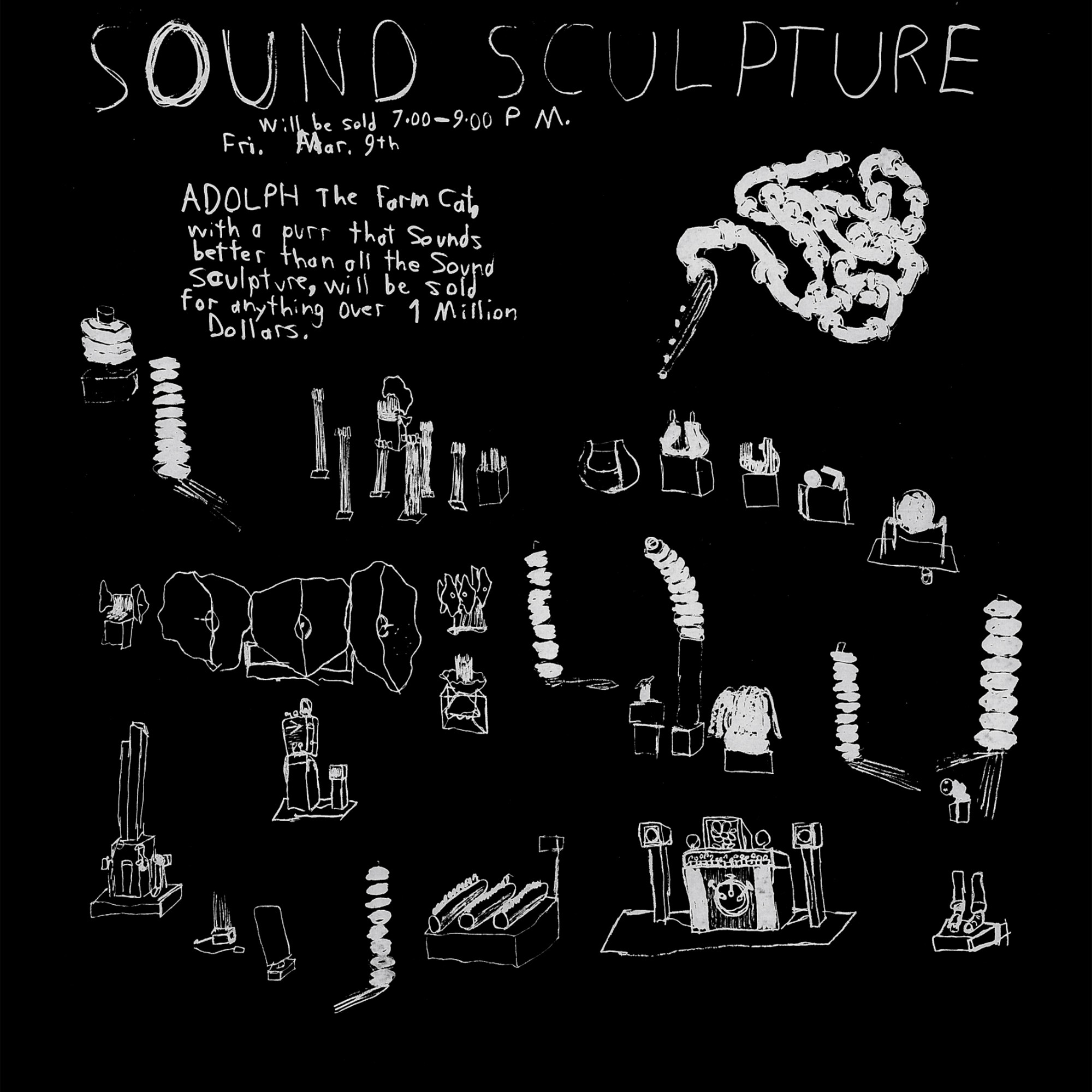
“The Sounds Of Sound Sculpture” is the byproduct of an exhibition of the same name held at the Vancouver Art Gallery in 1973. Two years later, A.R.C. issued the LP, with an accompanying booklet, as an audio catalogue of that show. In itself, the album is a fascinating document of the juncture between the contexts of visual / fine art, and experimental music. It was brought into being under the Canadian sound sculptor John Grayson, who had previously edited “Sound Sculpture”, an important early book addressing the subject, and the American composer David Rosenboom, who many will know for his long-standing and widely celebrated career in radical approaches to sound, and albums like “Brainwave Music” and “Future Travel” (both reissued by Black Truffle). Even more fascinating is the fact that the LP comprised rare takes of Rosenboom and Grayson, amongst others, playing famous pieces by pioneering sound sculptors, including the Baschet brothers and Harry Bertoia, the latter best known for his Sonambient series. It also included some of the few recordings by Stephan Von Huene, who had begun to create his kinetic sculptures, and the profound atmospheric pressure systems constructed by the New York sound artist David Jacobs.
Often haunting in its complex arrangements of dissonance, polyrhythm, and tonality, “The Sounds Of Sound Sculpture” presents an expansive survey of the possibilities of sound sculpture during the early to mid-1970s, ranging from the early pioneering efforts of François Baschet and Bernard Baschet, with all their complex densities, to more contemporary work of artists like Stephan Von Huene and David Jacobs, both of whom emerge as stunning revelations roughly half a century on via profoundly moving mirrors of Minimalism created within a decidedly alternate context.
An absolute seminal document within the (then still emerging) fields of sound sculpture and sound art, offering a rare snapshot of their important (but sometimes elusive) relationship to experimental music, “The Sounds Of Sound Sculpture” is easily one of the most exciting reissues of the year, not to mention one of the most engaging and thrilling listens we can call to mind.
Originally published by Soundohm.