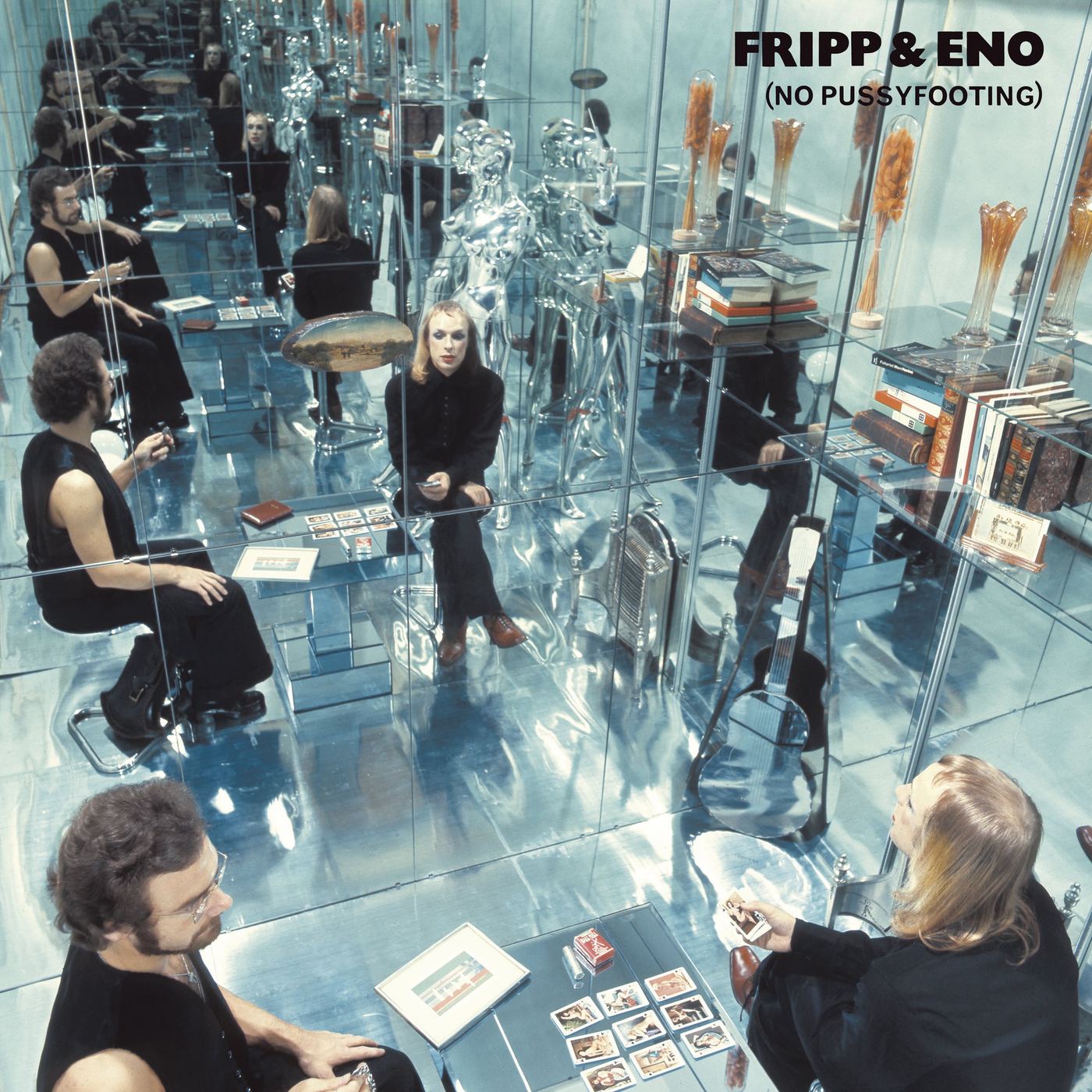
“Island didn't know what to do with this strange music that ranged from ethereal and, well, heavenly, to more angular and menacing; but No Pussyfooting—a Fripp reference to not compromising what he and Eno felt was right—still went on to sell over 100,000 copies in the UK and Europe.”
Few artists think they're doing something momentous, something that can change the landscape of music. Most just follow their instincts, follow their ears, do what they do, and sometimes the result goes far beyond any expectations, personal or otherwise.
When King Crimson co-founder/guitarist Robert Fripp brought his pedal board to Roxy Music keyboardist Brian Eno's home studio on September 8, 1972, hooked himself up to two Revox reel-to-reel tape recorders and, utilizing this primitive, pre-digital approach to looping, recorded two improvised tracks, who was to know how significant they would become? Of course, were it not for Eno's real-time sonic manipulations of what went to tape, there'd never have been a 21-minute "The Heavenly Music Corporation," and the shape of electronic music would, no doubt, be fundamentally altered.
Originally published by All About Jazz.Read it on All About Jazz