Three Blind Mice Supreme Collection

Q
*2026 stock* Bassist Hideto Kanai was one of the most ambitious composer-bandleaders to emerge from the Japanese jazz scene of the early seventies, a writer of long-form pieces that integrated free playing with chamber-jazz architecture, and a player with the patience to leave space where lesser arrangers would clutter. Q, only the sixth release on Three Blind Mice, is one of his most uncompromising early statements: extended group playing built around Kanai's slow, structural bass lines, with t…
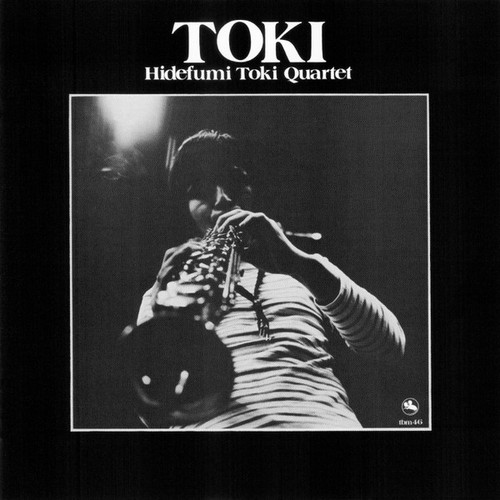
Toki
*2026 stock* Hidefumi Toki's 1975 album Toki offers a deeply personal journey into the realms of jazz, showcasing his expressive prowess on alto and soprano saxophones. Backed by a stellar quartet including Kazumi Watanabe on guitar, Nobuyoshi Ino on bass, and Steve Jackson on drums, Toki creates a stunning sonic landscape filled with gentle, raspy tones. The album's ambiance is laidback and mellow, yet infused with a profound sense of spiritual depth reminiscent of Coltrane's work.
Original com…
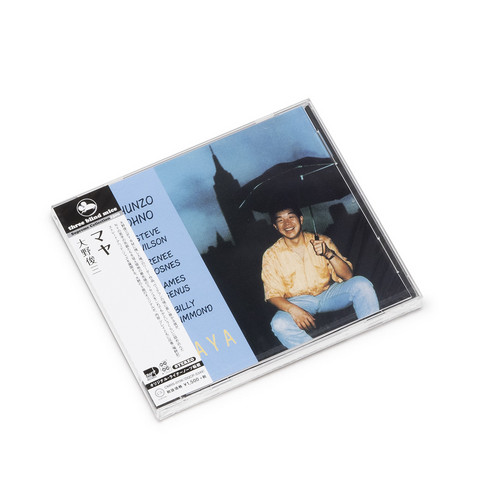
Maya
*2026 stock* Trumpeter Shunzo Ohno spent much of his career moving between the Japanese scene and the New York post-bop circuit, a player whose résumé runs through American bandleaders alongside his domestic work, and whose tone bears the marks of both worlds. His quintet date for Three Blind Mice is one of the records where he sounds most explicitly engaged with the modal and spiritual currents of seventies American jazz: Coltrane shadows everywhere, but absorbed into a particular Japanese pois…
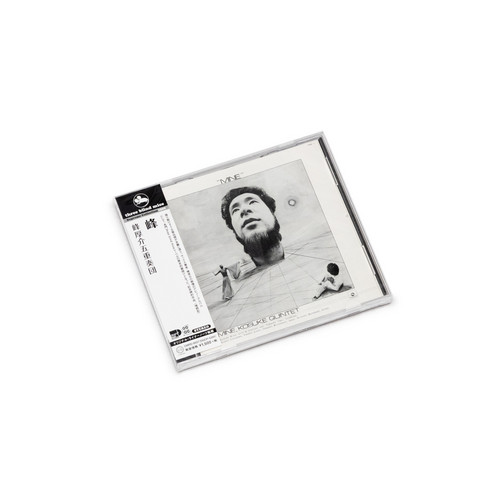
Mine
The very first record released on Three Blind Mice, a debut for both label and bandleader. Recorded in Tokyo in August 1970, Mine announces the saxophonist Kosuke Mine and sets out, in advance, the editorial stance the label would hold for the next two decades: serious post-bop with European clarity, Coltrane-era heat, and a particularly Japanese sense of restraint that lets the most intense solos hold their shape. Mine's quintet pairs his alto and soprano with trombone, the great Hideo Ichikawa…
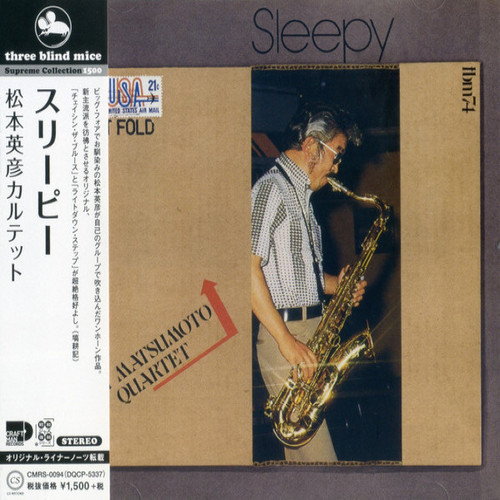
Sleepy
*2022 stock* "Hidehiko Matsumoto Quartet – Sleepy released by Three Blind Mice. Album recorded in 1976 and it was DSD mastering from the original analogue master tapes. This record, made in 1976 in a one-horn quartet setting, showcases Matsumoto’s brilliant playing on both tenor saxophone and flute. He is a true master of both instruments and it is a great pleasure to hear him beautifully recorded by the people of Three Blind Mice. A masterpiece, with great sound." - Audiophile Music
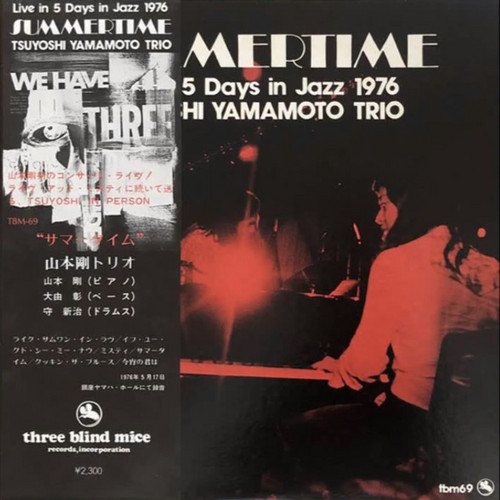
Summertime
*2022 stock* "This is a live recording of "5 Days in Jazz 1976". The album features the seventh release of TBM's "5 Days in Jazz 1976," which concentrates the charm of Tsuyoshi Yamamoto, including his signature tune "Misty," "Summertime," featuring Oyui, and "Cookin' the Blues", which shows off his signature blues feeling to the fullest." - Koki Hanawa
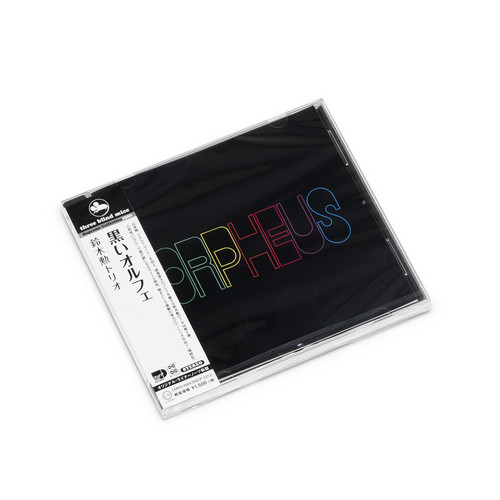
Black Orpheus
*2022 stock* "A beautifully spare session from the mid 70s – one that features bass and cello from Isao Suzuki – stretching out here in a sound that's totally unique! The trio's a great one – with Donald Bailey on drums and Tsuyoshi Yamamoto on both acoustic piano and Fender Rhodes – the latter of which sounds amazing next to Suzuki mellow-stepping lines. If you've heard any of Suzuki's other albums from the period, the style is somewhat similar – quite soulful throughout, but with an easygoing,…
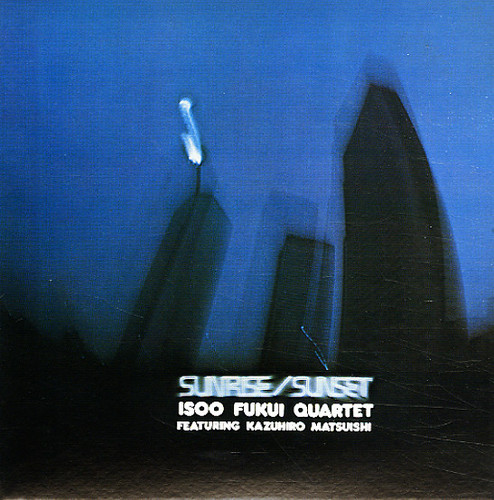
Sunrise/Sunset
*2022 stock* "Mindblowing sounds from Japanese bassist Isoo Fukui – one of a handful of 70s players on that scene who really helped reinvent the sound of his instrument in jazz! Isoo really drives the group here up from the bottom – by playing both bass and cello with these well-inflected notes that are heavy on soul and rhythm, and which often enforce a modal sensibility that's carried out perfectly by the vibes of Kazuhiro Matsuishi and piano of Hideo Ichikawa! A few numbers feature guitar fro…
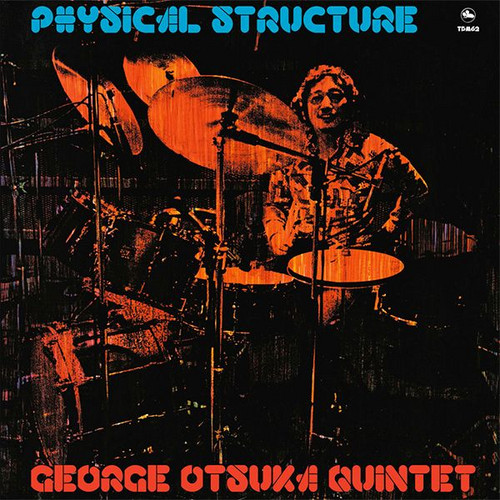
Physical Structure
*2022 stock* Amazing 1976 record by drummer George Otsuka, Physical Structure is an amazing jazz-fusion record featuring Fumio Karashima on piano and Fender Rhodes and Shozo Sasaki on tenor sax. Check the surprising and sublime cover of Naima which alone justifies to get this record! Personell list: George Ostuka (drums), Shozo Sasaki (tenor and soprano sax), Fumio Karashima (piano, electric piano and synthesizer), Mitsuako Furuno (bass), Norio Ohno (percussion).
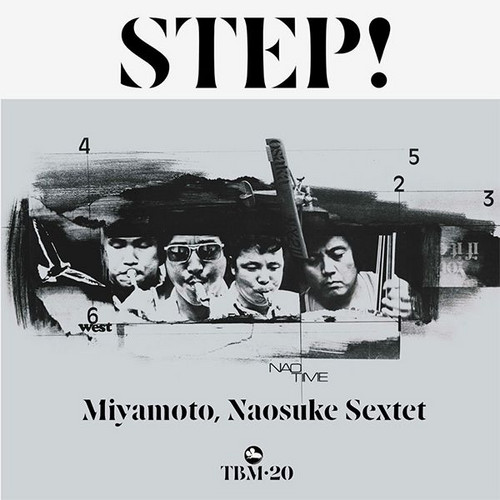
Step!
*2022 stock* Naosuke Miyamoto Sextet's Step!, originally released in 1973. A fantastic modal jazz album, led by Naosuke Myamoto on bass, with Masayoshi Yoneda on the piano and Takashi Goto on saxophone. On One For Trane, the group delivers a strong and amazing moment of spiritual jazz. Also features Kunji Shigi (trumpet), Takashi Furuya and Shoji Nakayama (drums). Produced by Takeshi Jujii. Recorded on August 25, 1973.
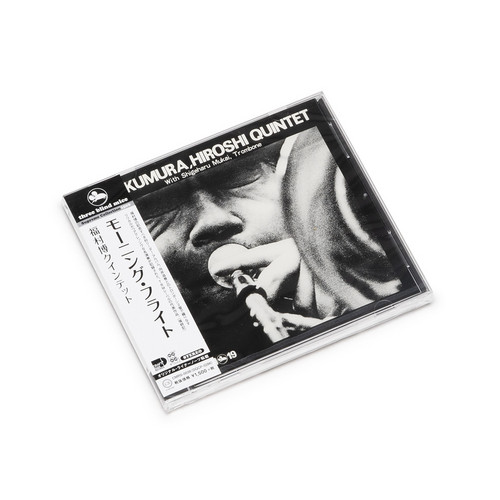
Morning Flight
*2022 stock* Recorded in 1973, “Morning Flight” by trombonist Hiroshi Fukumura is a stunning modal and spiritual jazz album! Genius work from Japanese trombonist Hiroshi Fukumura – working here at the helm of a twin-trombone group that also features the talents of Shigeharu Mukai – in a style that's filled with soul and free-thinking imagination! The two players work together beautifully here – avoiding any of the cliches of trombone-heavy groups from the past – and instead, using the open-ended…
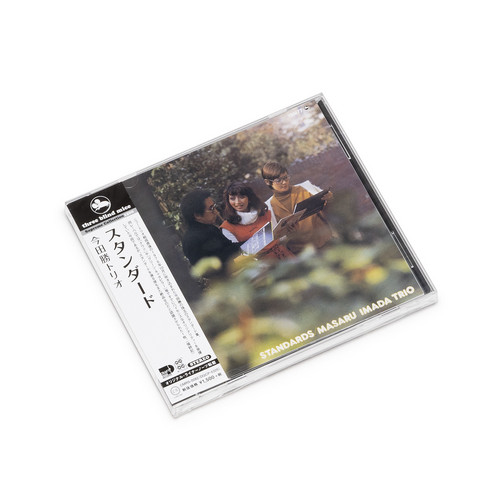
Standards
2026 Repress. Sublime release from Masaru Imada Trio. Imada's got a way of letting a tune really find its way organically – almost as if the songs here are little flowers opening up in his fingers on the keyboard of the piano – although never in a style that's "flowery" at all, because Imada's a master of finding just the right notes at the right moment – never embellishing things just to show off. Instead, his imagination finds all the best paths forwards, especially on his original tunes on th…
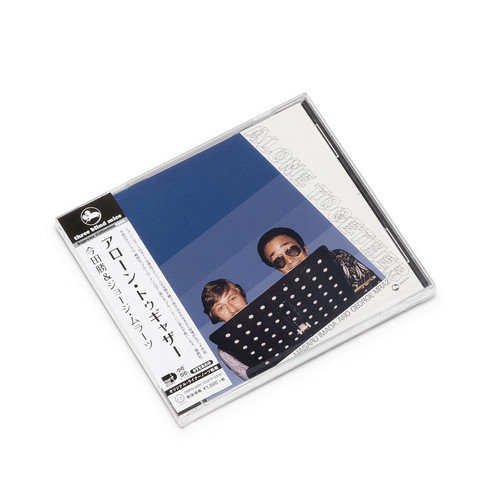
Alone Together
A piano-bass duo session cut in a single day at Tokyo's Onkio Haus on 24 October 1977, during one of the bassist George Mraz's rare passages through Japan. The format leaves nowhere to hide and the two players treat that exposure as the point of the exercise: Masaru Imada's voicings opened up to admit Mraz's lines as full equal voices, the Czech-American bassist drawing on the resonant, singing tone he had developed through his work with Tommy Flanagan and Stan Getz.
The programme alternates two…
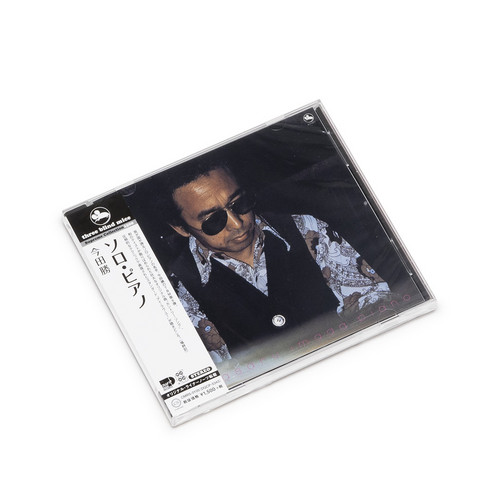
Masaru Imada Piano
Sublime solo piano from Masaru Imada – a Japanese player with talents in a range of different styles, but who sounds especially nice up-close here in an intimate setting! Imada's got a way of letting a tune really find its way organically – almost as if the songs here are little flowers opening up in his fingers on the keyboard of the piano – although never in a style that's "flowery" at all, because Imada's a master of finding just the right notes at the right moment – never embellishing things…
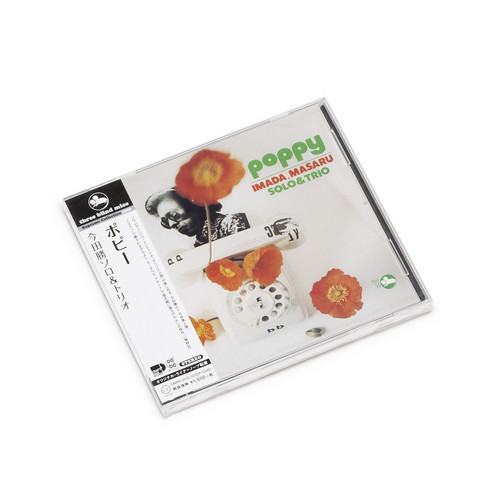
Poppy
Imada's second outing for Three Blind Mice, recorded across two January days in 1973 at Tokyo's Aoi Studio under Takeshi "Tee" Fujii's production. The record's structure follows from a negotiation between artist and producer: Masaru Imada had proposed a straight solo ballad recital; Fujii agreed to the conception but pressed him to balance the standards programme with a working-trio half devoted to his own writing. The LP that resulted is deliberately split — four solo readings on side one (Mist…
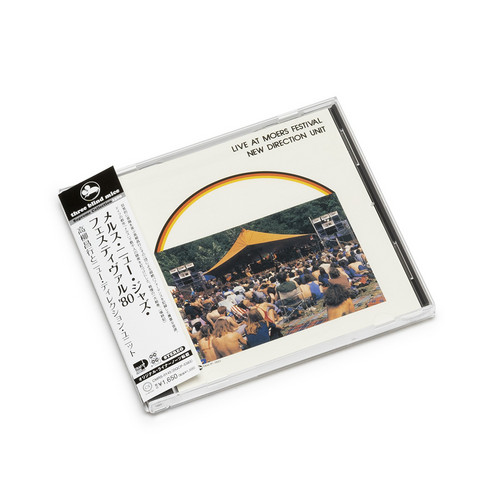
Live at Moers Festival
2026 Re-issue. A cornerstone of postwar Japanese free improvisation, captured before three thousand listeners at the ninth Moers New Jazz Festival on 26 May 1980 and issued later that year as TBM-5023. By this point Masayuki "Jojo" Takayanagi had spent more than a decade refining his theory of mass projection - a model of collective improvisation in which the ensemble operates not as a sequence of soloists but as a single density field, modulating texture rather than line - and the New Direction…
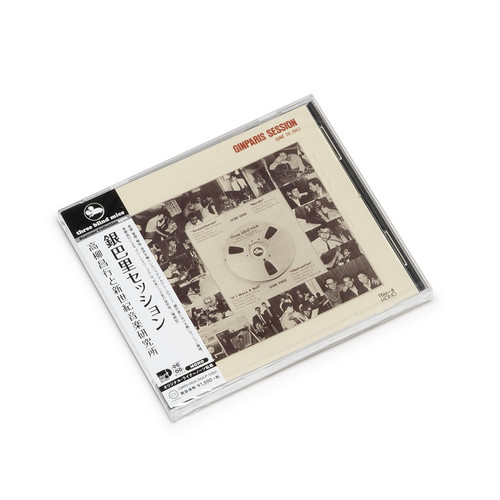
Ginparis Session
2026 Repress. Captured live on a single night — 26 June 1963 — at the Ginparis café in Ginza and held back from release until 1972, when Takeshi "Tee" Fujii founded Three Blind Mice and chose it as the label's ninth title, Ginparis Session is the foundational document of Japanese free jazz. The recording captures the 新世紀音楽研究所 (Shinseiki Ongaku Kenkyūjo, "New Century Music Research Institute"), the study collective convened by Masayuki "Jojo" Takayanagi and Masahiko Togashi as a workshop committe…
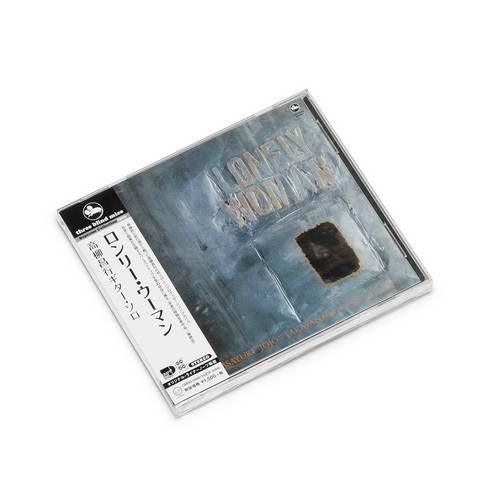
Lonely Woman
2026 Repress. Guitarist Masayuki "Jojo" Takayanagi (1932-1991) was a towering leader in the Japanese jazz world. His first influence was Lennie Tristano, but through the 1960s and 1970s he explored and pushed the boundaries in free form jazz, leading a group called New Direction, among others. Ever a fighting spirit, in 1982, shortly after recovering from a life-threatening medical condition and surgery, Takayanagi decided to take on a challenging task for any guitarist: To record an entire solo…
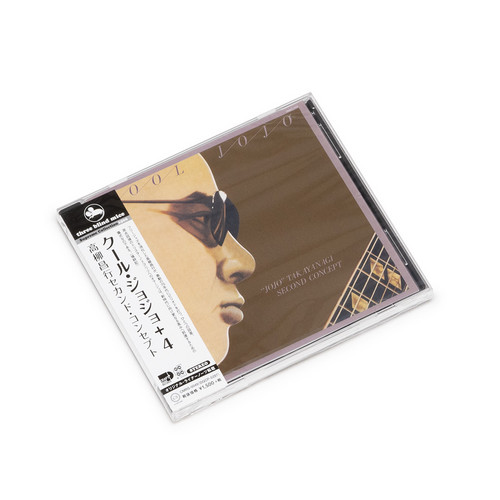
Cool Jojo
2026 Repress. Recorded over three December days in 1979 at Epicurus Studio in Tokyo and issued the following year, Cool Jojo documents a side of Masayuki "Jojo" Takayanagi that sits at considerable remove from the noise-as-method work he was simultaneously pursuing with the New Direction Unit. The guitarist's Second Concept was his vehicle for an explicit return to the Tristano school — the lineage he had absorbed as a young player in postwar Tokyo and never fully set aside — and the programme m…