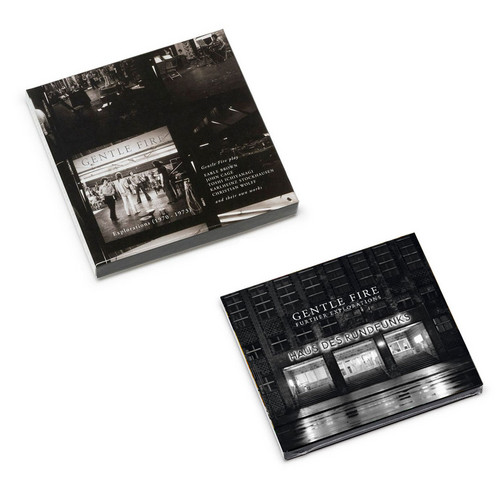
Explorations + Further Explorations Bundle
Bundled together, Gentle Fire’s Explorations (1970–1973) 3‑CD box and Further Explorations CD form the most complete portrait yet of this seminal British experimental ensemble. Studio and festival recordings of Cage, Stockhausen, Wolff, Brown and Ichiyanagi sit alongside radical “Group Compositions” and newly unearthed German radio sessions, revealing a maverick collective equally at home interpreting graphic scores, building their own instruments and inventing new forms of electroacoustic group…
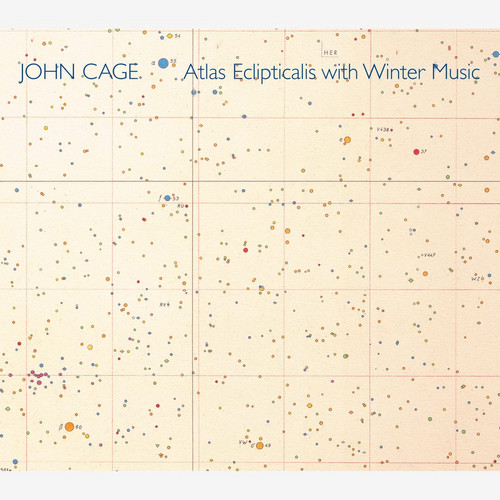
Atlas Eclipticalis With Winter Music (4LP box)
Live 1983 recordings from the Cornish Institute in Seattle of John Cage's Atlas Eclipticalis performed simultaneously with Winter Music, conducted by the composer. Originally released by Mode Records in 1986 as a 4LP box.
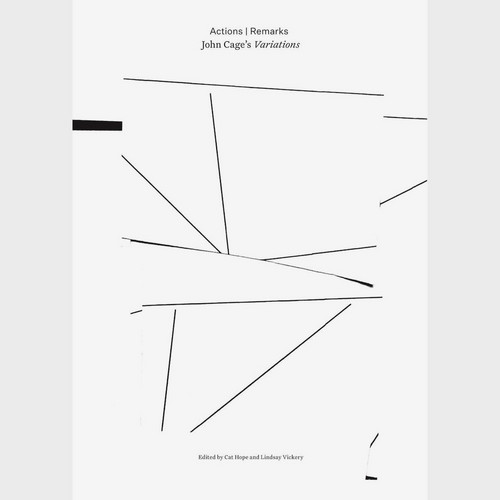
Actions – Remarks: John Cage’s Variations
Book edited by Cat Hope and Lindsay Vickery on John Cage's eight Variations (1958-76), with a CD of the complete Variations performed by the Australian ensemble Decibel using annotated digital scores, acoustic instruments and electronics.
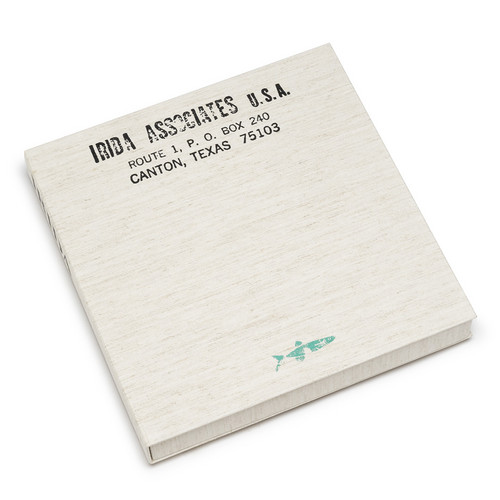
Irida Records: Hybrid Musics from Texas and Beyond, 1979–1986
An incredible set of vinyl reissues explores the unfolding sonic fiction of Texan composer Jerry Hunt and others affiliated with his Irida label.
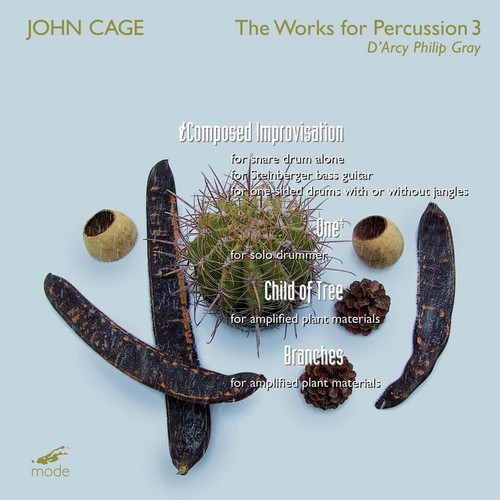
The Works for Percussion 3
John Cage's works for solo percussionist played by D'Arcy Philip Gray: Child of Tree, Branches, One⁴ and three versions of c/Composed Improvisation, volume 3 of the Mode percussion series (Cage Edition 50).
The Works for Percussion I
The complete Imaginary Landscapes 1-5 and Credo in US by John Cage, with radios, phonograph records and percussion, played by Percussion Group Cincinnati in the first volume of the Mode Cage percussion works.

The Number Pieces 5 - Two2
John Cage's Two2 (1989) for two pianos, a renga-based number piece built on time brackets, played in a 74-minute performance by Rob Haskins and Laurel Karlik Sheehan, from the Complete John Cage Edition.
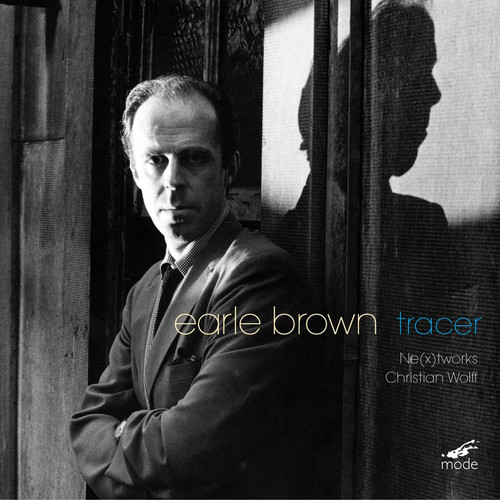
Tracer - Chamber Works 1952-1999
Chamber works by Earle Brown from 1952 to 1999, from Folio and Four Systems to Tracer, with Christian Wolff and Joan La Barbara among the performers and the tape piece Octet in a new transfer.

Explorations (1970 - 1973) 3CD Box
The first ever survey of the seminal British experimental music collective, Gentle Fire, "Explorations (1970 - 1973)" offers a remarkable and previously unavailable glimpse of their activities during the early 1970s.
Desert Plants
Facsimile reprint of Walter Zimmermann's book Desert Plants, his interviews with American experimental composers from a 1976 trip to America, with a CD of the surviving interview recordings as MP3 files.
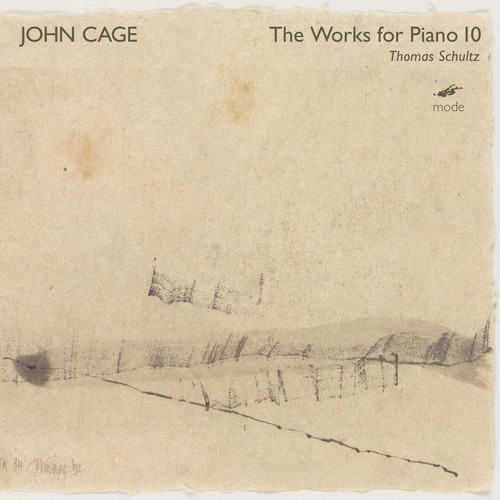
The Works for Piano 10
Volume 10 of Mode's John Cage piano series, with Thomas Schultz playing Two Pieces for Piano (1935), Solo for Piano from the Concert for Piano and Orchestra, Two Pieces for Piano (1946) and Swinging (1989).
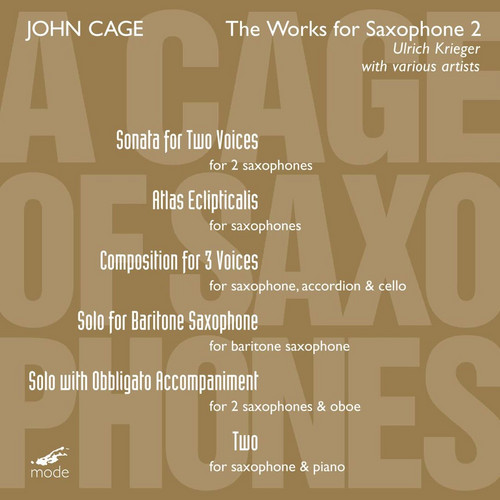
A Cage of saxophones 1
Cage's late works for saxophones, Four5, Five4 and Hymnkus, with Ulrich Krieger's arrangements of Ryoanji and Five, played by Krieger and German new music performers. Volume 24 of the Complete John Cage Edition.
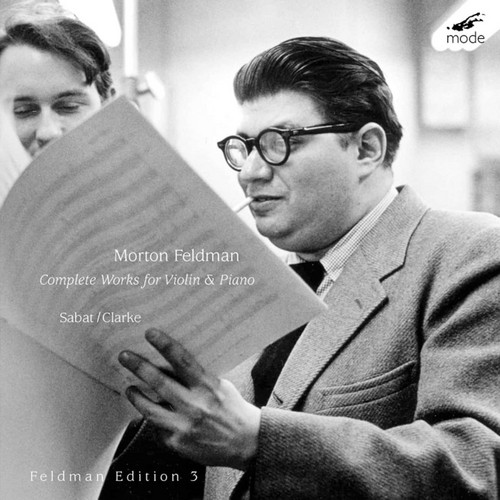
Complete Music For Violin & Piano
Morton Feldman's complete music for violin and piano, from Piece for Violin and Piano (1950) to For John Cage (1982), which spans both discs, played by Marc Sabat and Stephen Clarke.
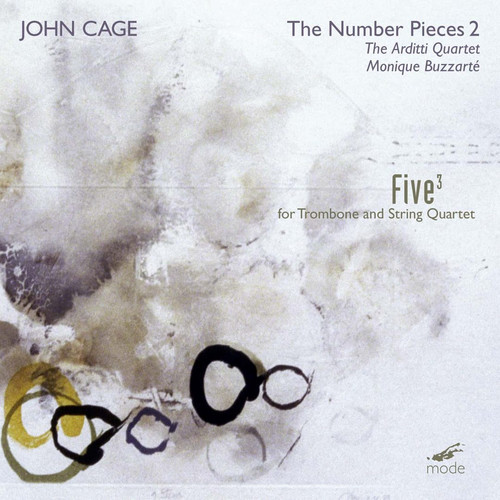
The Number Pieces 2: Five³
John Cage's Five³ (1991), one of the late number pieces, for trombone and string quartet, played by Monique Buzzarté and the Arditti String Quartet. Cover etching by Cage, liner notes by James Pritchett.
Klang Der Wandlungen
From the liner notes by Jakob Ullmann (translated by Peter Gebert and Molly McDolan): "It was during a break in the inaugural meeting of the East German section of the IGNM (International Society for Contemporary Music) in March of 1990 when Reinhard Oehlschlägel, the long-standing music editor of Deutschlandfunk in Cologne, suggested taking advantage of the fact that John Cage was to attend the summer courses in Darmstadt as a special guest by inviting John Cage to East Berlin. . . . Making Gia…
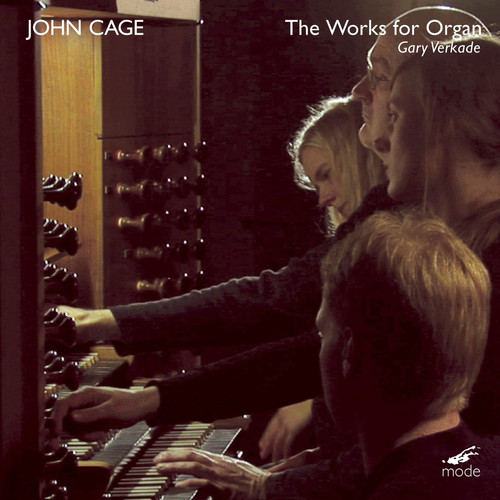
The Works for Organ
First complete recording of John Cage's works for organ, played by Gary Verkade on the organ of Gammelstad Church, Sweden: Some of 'The Harmony of Maine', Souvenir, ASLSP and Organ2/ASLSP, with 4'33'' on the DVD only.
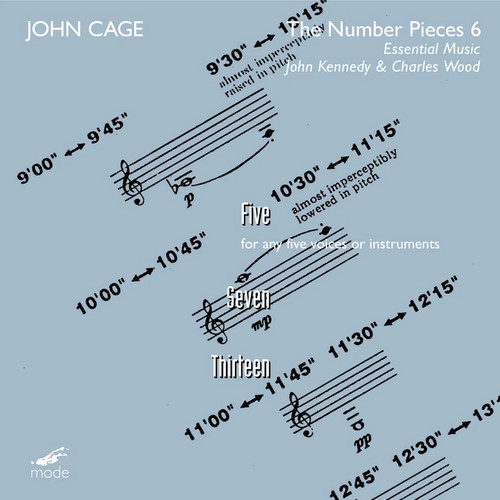
The Number Pieces 6
Three of John Cage's late number pieces, Five, Seven and Thirteen, recorded in 1993-94 by Essential Music of New York and released for the first time. Thirteen, Cage's final completed work, is heard in only its second recording.
Atlas Eclipticalis With Winter Music
Two live 1983 performances of John Cage conducting Atlas Eclipticalis with Winter Music at Seattle's Cornish Institute, first issued on LP in 1986, with a bonus disc of the 86-part Atlas Eclipticalis and Winter Music for 20 pianos.
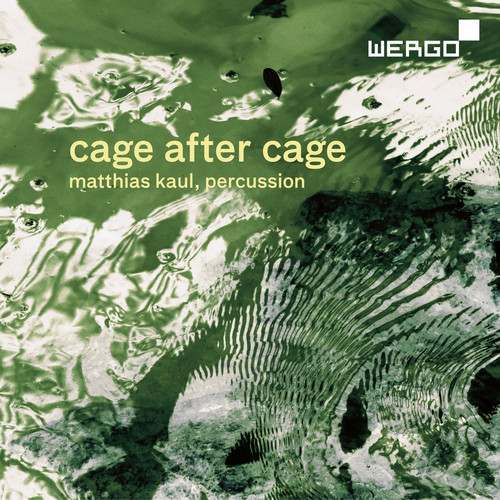
Cage After Cage
Six works by John Cage for solo percussion, among them Variations I, Child of Tree, Inlets and 27'10.554", performed by Matthias Kaul on some ninety instruments and objects; recorded at Deutschlandfunk, Cologne, April 2014.
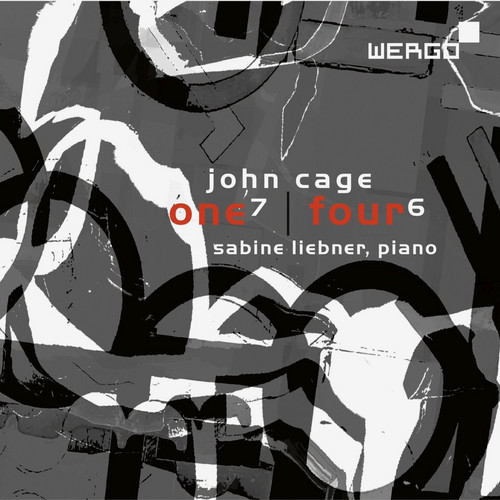
One7 / Four6
John Cage's Number Pieces One7 and Four6 (both 1990) in their first recordings for piano, by Sabine Liebner, who plays all four layers of Four6 by overdubbing. Recorded 2012 and 2013, coproduced with Bayerischer Rundfunk.