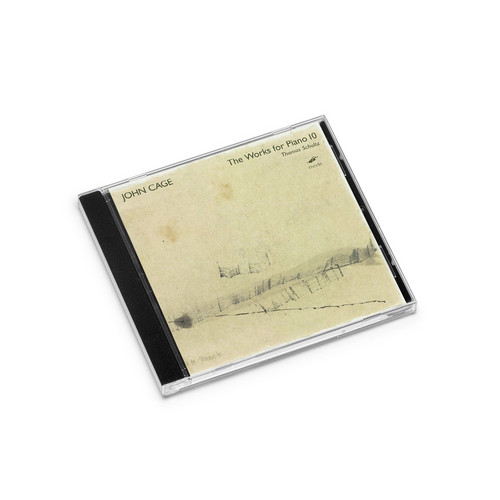
The Works for Piano 10
Volume 10 of Mode's John Cage piano series, with Thomas Schultz playing Two Pieces for Piano (1935), Solo for Piano from the Concert for Piano and Orchestra, Two Pieces for Piano (1946) and Swinging (1989).
Absence
Four chamber works by Gerald Eckert from 2006 to 2015, for piccolos and percussion, voices, flute and cello, and violin and contrabass clarinet with electronics, played by Ensemble L'art pour l'art, Auditivvokal and Ensemble Reflexion K.
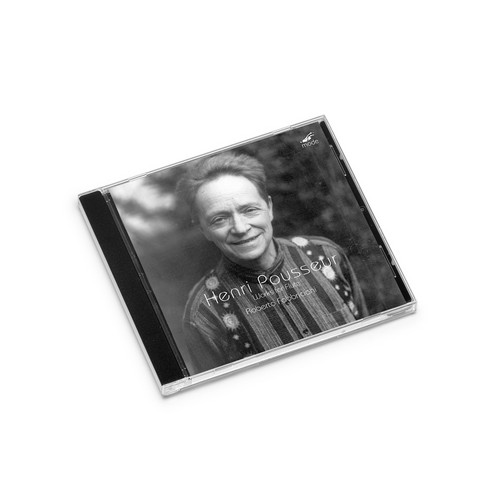
Works for Flute
Roberto Fabbriciani plays the complete flute works of Henri Pousseur, including Flexions I, Éclipticare and Zeus joueur de flûtes with live electronics by Alvise Vidolin, plus the 1957 tape piece Scambi.
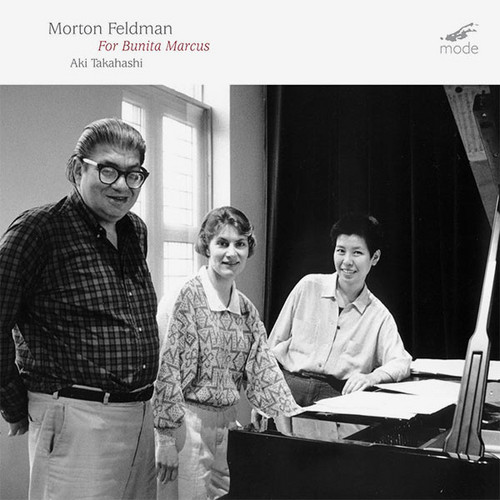
For Bunita Marcus
Morton Feldman's For Bunita Marcus (1985), an hour-long solo piano work, played by Aki Takahashi, for whom Feldman wrote all his piano music after Triadic Memories.
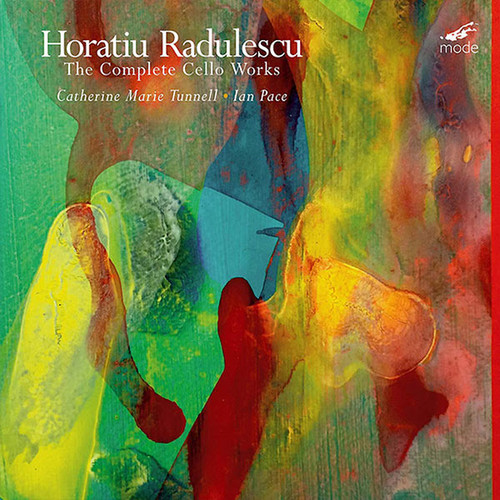
The Complete Cello Works
Four late cello works by Horatiu Radulescu played by his widow Catherine Marie Tunnell, with Ian Pace at the piano: L'Exil Intérieur, Das Andere, Pre-Existing Soul of Then and Lux Animae. Recorded in 2018.
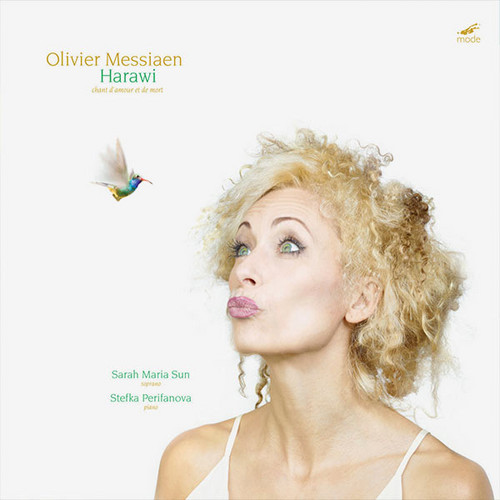
Harawi
Olivier Messiaen's Harawi (1945), a cycle of twelve songs for soprano and piano on the composer's own text, sung by Sarah Maria Sun with Stefka Perifanova, on a deluxe 2LP set with a 12-page book.
Terra che Cammina
"We know Belgian-based pianist Giovanni Di Domenico from his album with Tetterapadequ, and his recent collaboration with Alexandra Grimal, Seminare Vento. On this album, he is joined by John Ruocco on clarinet, Ananta Roosend on violin, Anja Naucler on cello, Claus Kaarsgaard on bass.The music is slow, intimate, precise, and quite expressive. The album starts with solo piano, an eery melody, with sparse notes of the right hand repeating a bluesy phrase. Yet it starts for real with the second pie…

Two Paths With Active Shadows Under Three Moons and Surveillance
"This piece and group developed over the course of a year. It was presented in concert over three initial phases. The concert recorded here (second phase) occurred six months into this process. However, this is not completely accurate; in different forms, the group continues to develop. This recording documents one of many possible manifestations."With: Marcia Bassett, Barry Weisblat, Ron Stabinsky, Che Chen, Laura Ortman, C. Spencer Yeh, Michael Bullock, Andrew Lafkas, Rick Brown, Ryan Sawyer, …
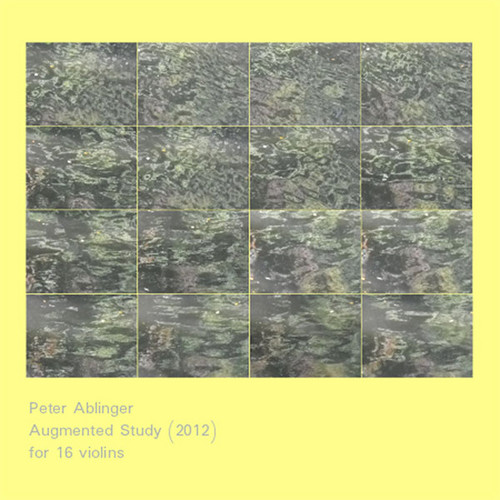
Augmented Study (2012)
**200 copies** "This is a study version composed in the studio from a single recording of a violin glissando. It was never intended to be performed live. The final version for 7 violins was the result of this study.""A single recording of the violin glissando of Johnny Chang has been turned into a multi-track recording. Here one violin becomes sixteen. Peter Ablinger’s Augmented Study Serie is focused on 'tension between redundancy of material and complexity of experience'. Because this work is …
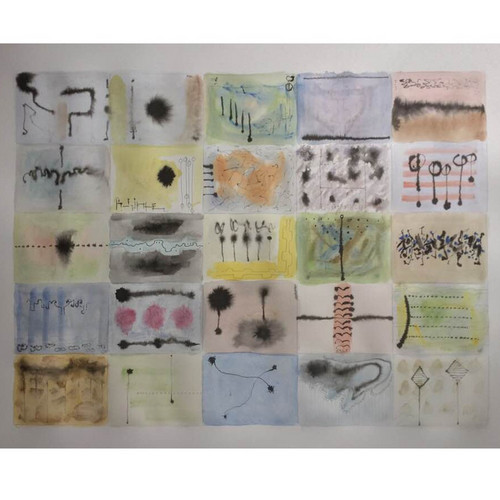
Unconscious Collections
Unconscious Collections emerges as a resonant dialogue between Tomás Cabado’s classical guitar and Christoph Schiller’s prepared spinet, both artists known for their work within experimental, microtonal, and Wandelweiser-inspired aesthetics. The album consists of pieces co-composed and performed by the duo, recorded during a period of close collaboration in Switzerland. Through a process that blends score-based direction and improvisational openness, Cabado and Schiller achieve a rare degree of …
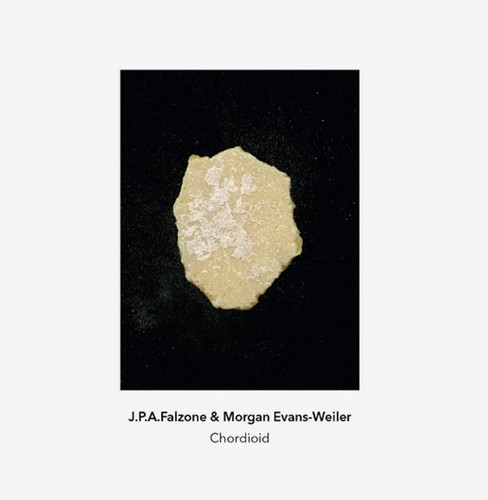
Chordioid
Chordioid documents two distinctive approaches to contemporary chamber music, channeling the shared experience of J.P.A. Falzone and Morgan Evans-Weiler as composer-performers in various experimental contexts. Their collaboration, honed since 2016 in the Ordinary Affects ensemble, finds new voice in these recordings: a pairing of extended works that foreground restraint, attention, and timbral investigation. Falzone’s pieces present a delicate interplay between prepared piano and vibraphone. He …
Ricercar nell’Ombra
Ricercar nell’Ombra grew out of a collaboration between French composer Emmanuel Holterbach and the seven-member Florence-based ensemble Blutwurst, both devoted to the acoustic investigation of slowly transforming sonic patterns. Conceived during residencies at Villa Strozzi and other venues across Florence, the project sets out to pay homage to Italian music history while inventing new forms through a deeply collaborative method. Holterbach’s admiration for Italian music across centuries led hi…
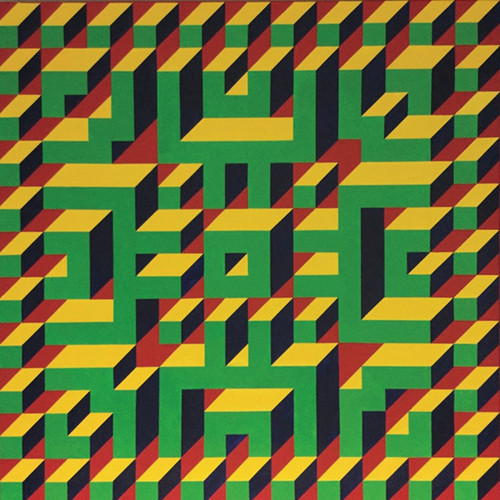
Chamber Works
Luiz Henrique Yudo’s Chamber Works marks an insightful journey into the translation of visual art into sound, presenting music that bridges architecture, painting, and sculpture with contemporary chamber idioms. Brazilian-born and Amsterdam-based, Yudo composes using an original approach that is self-taught, drawing inspiration from structures, patterns, and artworks he admires. The album’s five works are performed by Apartment House, a leading ensemble in contemporary experimental music. Their …
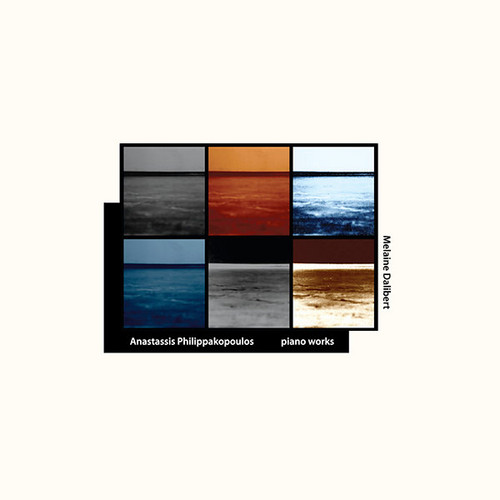
Piano Works
The French pianist and composer Melaine Dalibert possesses an exquisite touch and engagement with his repertoire. On this new album he tackles the stripped-down music of Greek composer Anastassis Philippakopoulos, a key member of the post-Cagean Wandelweiser Collective, tracing out the delicate, sparsely mapped notes from a dozen contemplative, spacious miniatures. The pieces are built around austere melodic fragments, all of which hang pregnant in the air, unfolding carefully before the next p…
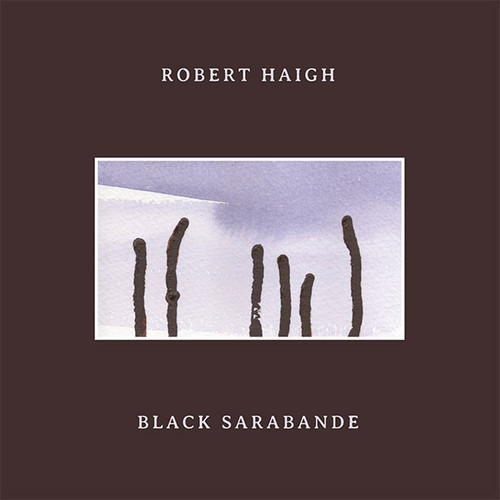
Black Sarabande
Black Sarabande expands upon pianist-composer Robert Haigh’s beguiling debut for Unseen Worlds with a collection of intimate and evocative piano-led compositions. Haigh was born and raised in the ‘pit village’ of Worsbrough in South Yorkshire, England. His father, as most of his friends’ fathers, was a miner, who worked at the local colliery. Etched into Haigh’s work are formative memories of the early morning sounds of coal wagons being shunted on the tracks, distant trains passing, and walking…
Songs & Melodies, 1973-1977
Since the mid-1960s, Jon Gibson has played a key role in the development of American avant-garde music. As a versatile reed player, he has performed with everyone from Steve Reich and Philip Glass to Terry Riley and La Monte Young. In the 1970s, Gibson would emerge as a minimalist composer in his own right and release two exceptional albums, Visitations and Two Solo Pieces, on Glass' Chatham Square imprint.Songs & Melodies brings together recordings from 1973 to 1977 (mostly previously unrelease…
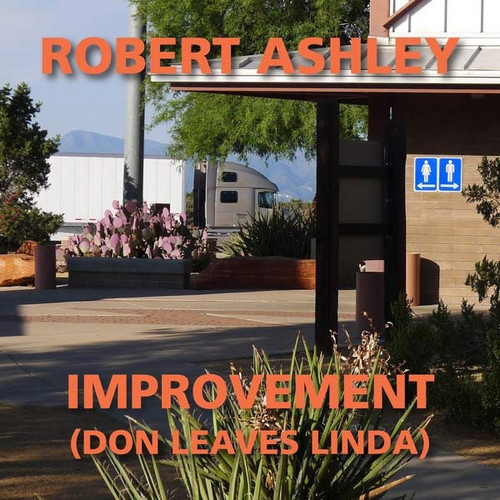
Improvement (Don Leaves Linda)
Improvement (Don Leaves Linda) is the first of four operas about the "American" consciousness. The tetralogy, including Foreign Experiences, eL/Aficionado and Now Eleanor's Idea, is based on the notion of a sequence of events seen from four, different points of view. The operas share principal characters and vocal techniques (including the relationship of the voice to instrumental settings). The singers are used interchangeably as soloists and members of a chorus. The immediacy of choral respons…
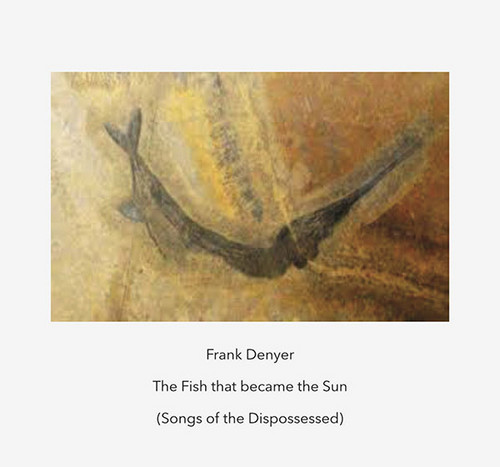
The Fish That Became the Sun
Frank Denyer’s The Fish that became the Sun (Songs of the Dispossessed) stands as one of the most ambitious and singular orchestral creations of recent decades. Conceived over several years and premiered over twenty years after completion, this piece distills Denyer’s fascination with sonic diversity and theatrical intensity. The score assembles a phantasmagoria of acoustic colors: alongside chorus and solo violin, one encounters sitar, crumhorns, cimbalom, children’s songs, and a host of constr…
The Boundaries of Intimacy
British composer Frank Denyer presents seven beautiful chamber works dating from 1974 to 2018, opening a door to his unique soundworld. Released by Another Timbre in November 2019, The Boundaries of Intimacy features sublime, unexpected pieces of delicate intimacy performed by a variety of artists including Luna String Quartet, Juliet Fraser, Elisabeth Smalt, Jos Zwaanenberg and Nobutaka Yoshizawa.
"Most of the music on this CD is soft, some of it very soft indeed. To achieve the optimal listeni…
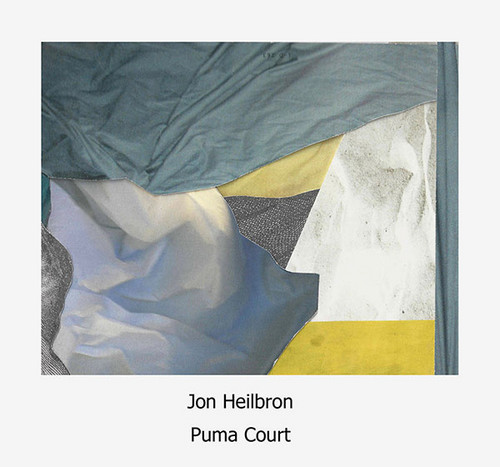
Puma Court
Puma Court stands as a study of texture and sonority, shaped through the unique pairing of two double basses and two hardanger fiddles. Composed by Jon Heilbron, whose practice bridges modern settings and folk tradition, these works were born from collaborative sessions in Norway and Berlin. The project’s genesis traces back to a duo concert with Norwegian bassist Håkon Thelin, inspiring Heilbron to expand his ideas to a quartet format with the addition of hardanger fiddlers Helga Myhr and Rasmu…