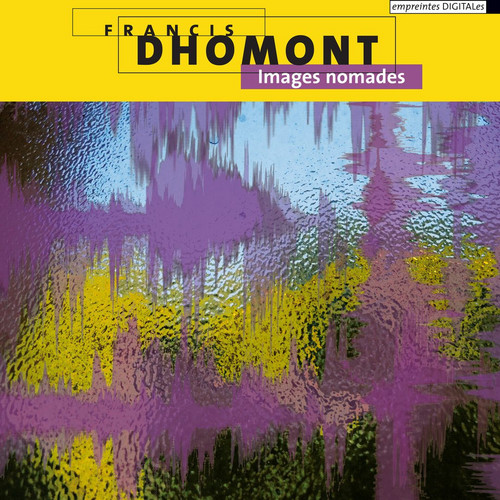
Images Nomades
Francis Dhomont in two halves: three abstract works from 2012 to 2020, including the twin rain pieces Phoenix XXI and Perpetuum mobile, then Ami-versaires, nine short birthday tributes to Parmegiani, Bayle, Ferreyra, Vande Gorne, Harrison and other friends.
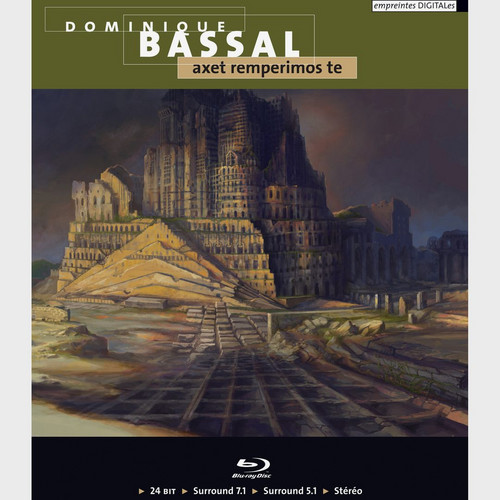
Axet Remperimos Te
A single 70-minute work in seven rooms by Dominique Bassal, composed for 7.1 channels between 2014 and 2017: sound atmospheres from the ruined castle of an imaginary empire born when history skipped Antiquity altogether. Blu-ray audio.
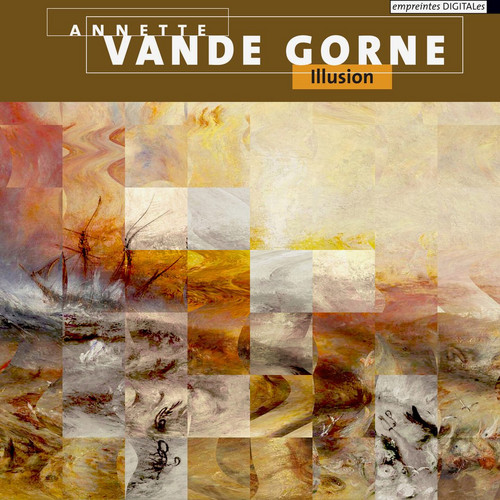
Illusion
Three works by Annette Vande Gorne: Au-delà du réel, built from Arsène Souffriau’s collection of sound bodies, the 28-minute Déluges et autres péripéties on a Werner Lambersy poem with inhaled singing, and Faisceaux in both its fixed and piano versions.
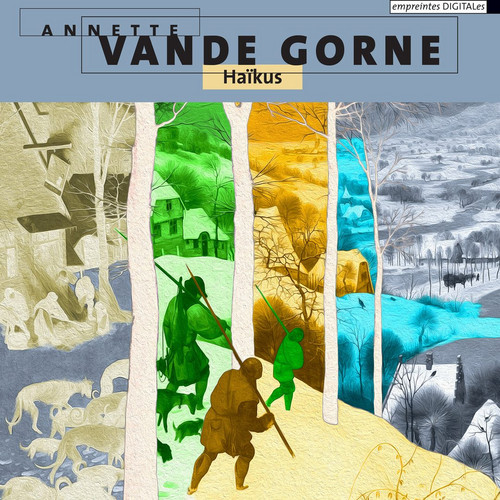
Haïkus
Annette Vande Gorne's 57-minute Haïkus (2016-20), five Japanese seasons in 17 short tableaux for 16 channels, where studio landscapes meet traces of Debussy, Vivaldi, Honegger, Messiaen and Jean-Michel Jarre, with tributes to Pierre Henry and Bernard Parmegiani.
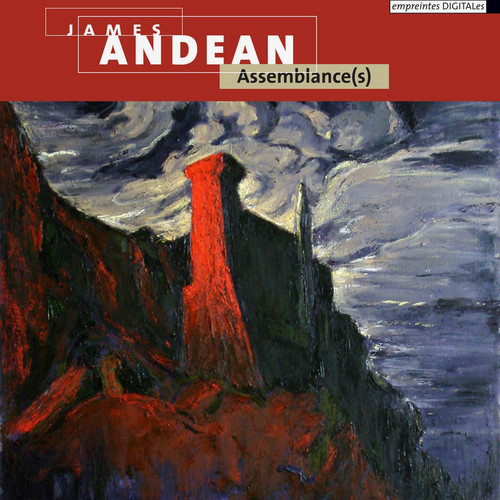
Assemblance(s)
Eight acousmatic works by James Andean from 2010 to 2018, mostly made in Helsinki: sounds from Luc Ferrari's archives, Maria Callas as Medea, a refrigerator in a Greek monastery, the inside of a piano and a garbled recording of John Cage.
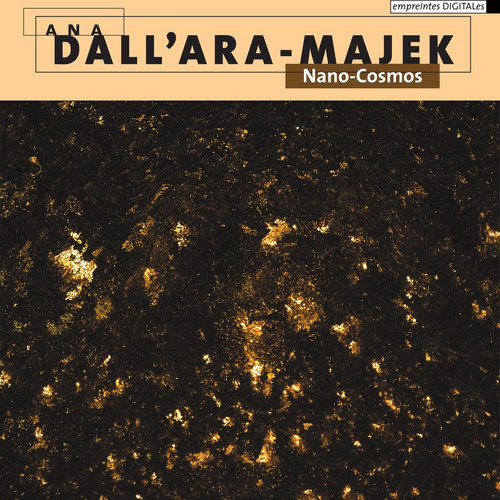
Nano-Cosmos
Ana Dall’Ara-Majek’s acousmatic cycle on insects, mites and bacteria, five pieces from 2012 to 2017 mostly made for 16 channels: a house cricket’s blues, mites on vine leaves, polyphony as bacterial colony, and a carpenter bee among twenty doors in Belgium.
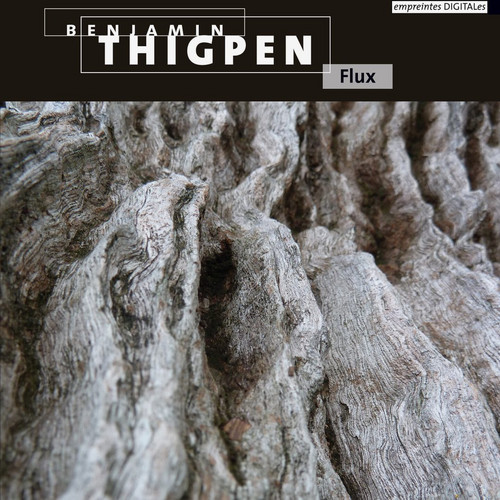
Flux
Two multi-part Ina-GRM commissions by Benjamin Thigpen made in Visby, Stockholm and Paris: still (2007-09), built from untransformed recordings of common objects, and pulse (2010-15), made entirely on a Buchla 200 modular synthesizer.
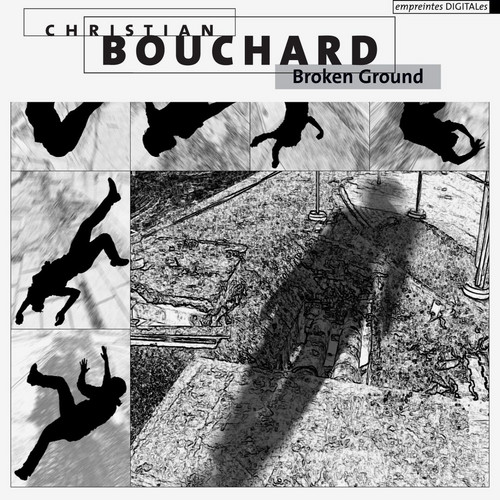
Broken Ground
Christian Bouchard’s 58-minute soundtrack for Derek Besant’s touring exhibition on cities torn up by redevelopment, twelve sections named after material-science terms, mixing soundscape, glitch and acousmatic writing; made in 2011-13 and remixed in 2016.
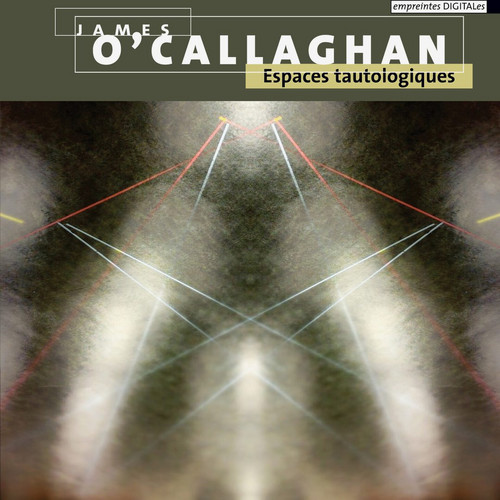
Espaces Tautologiques
James O’Callaghan’s debut on empreintes DIGITALes: a trilogy of acousmatic works from 2013 to 2015 that treat a piano, a guitar, a toy piano and a string quartet as resonant spaces, plus Isomorphic. Opus Prize album of the year 2016-17.
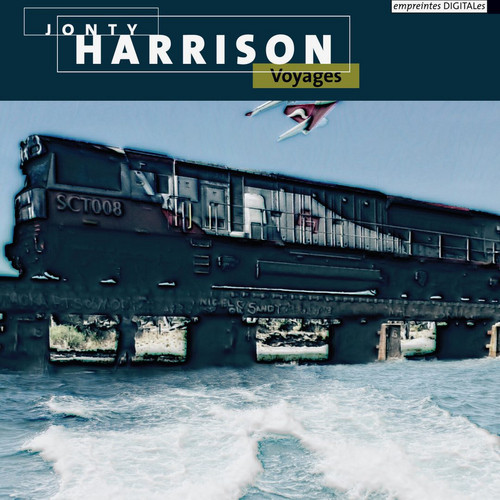
Voyages
Two large multichannel works by Jonty Harrison from 2014 and 2015, built on 25 years of field recordings from train stations, glaciers, rainforests and markets, here in stereo Ambisonic UHJ encodings made by Joseph Anderson in Seattle.
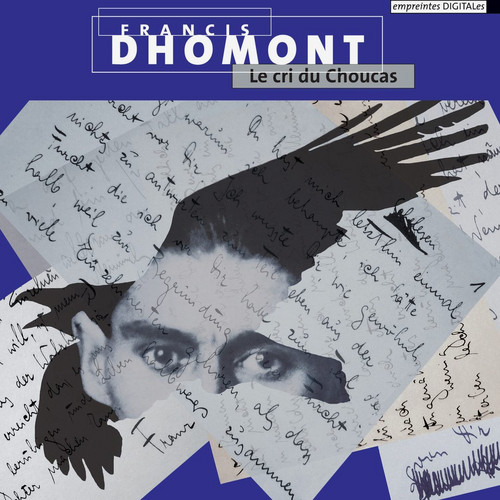
Le Cri du Choucas
Francis Dhomont’s 70-minute electroacoustic melodrama on Franz Kafka, conceived in 1997 and completed in 2014-15, closing his Cycle des profondeurs, with Kafka’s texts newly translated by the composer and voices including Marthe Robert and Annette Vande Gorne.
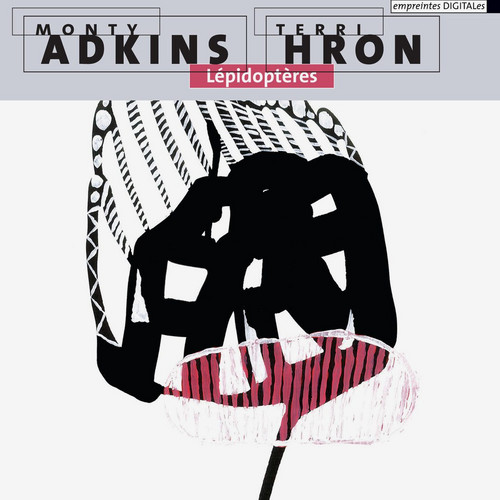
Lépidoptères
Lepidoptera, a five-movement work for recorders and electronics by Monty Adkins and Terri Hron from 2014-15, named after families of butterflies, moths and dragonflies, with every electronic sound drawn from a Renaissance-style recorder consort played by Hron.
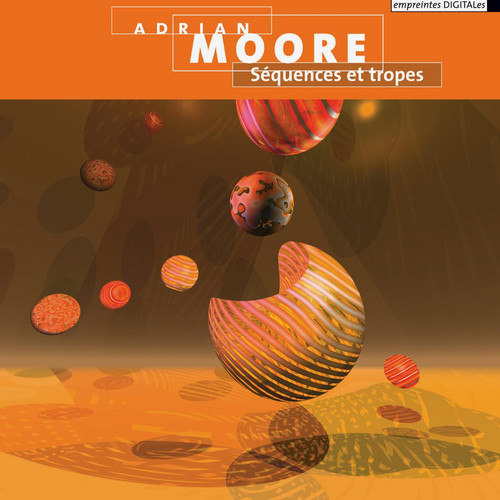
Séquences et Tropes
Four long surround works by Adrian Moore from 2012 to 2014: the paired The Battle and Counterattack, Nebula Sequence, begun on a strike day and with ball bearings after Bayle, and Strings and Tropes, on zheng samples by Sun Zhuo.
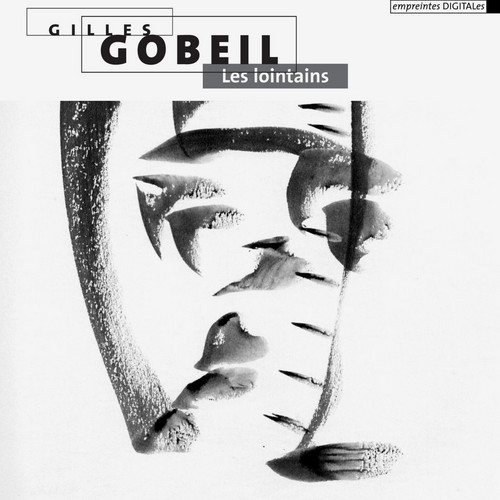
Les Lointains
Six works Gilles Gobeil made between 2008 and 2013 in Berlin, Paris, Lisbon, Stockholm and Montréal, remixed in 2015: sounds from Folkmar Hein's apartment, a Hesse-inspired tribute to musique concrète, Virgil's Sibyl, Meyrink's Golem and a homage to Liszt.
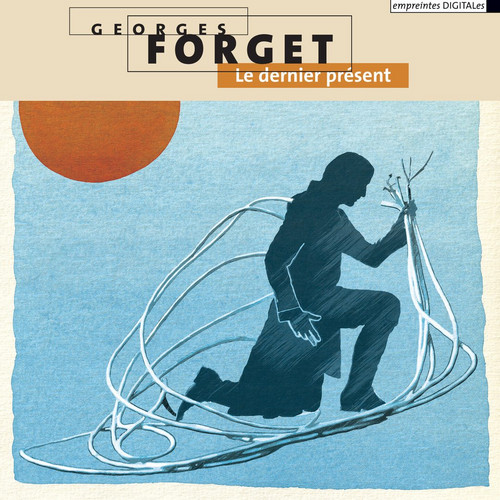
Le Dernier Présent
Six acousmatic works by Georges Forget from 2007 to 2014, each prefaced by a text: a city falling asleep, a war piece after Ernst Jünger and Terrence Malick, and a long sea piece under Melville where a little girl sings to the ocean.
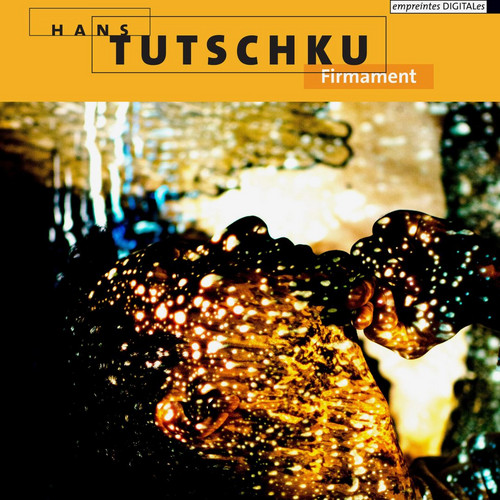
Firmament
Three 16-channel works by Hans Tutschku from 2010 to 2014, mixed to stereo in 2015: a sleepless night under the stars, the old pianos in a hallway of the University of Cologne, and Issho ni, a half-hour ritual of folksongs, lullabies and prayers.
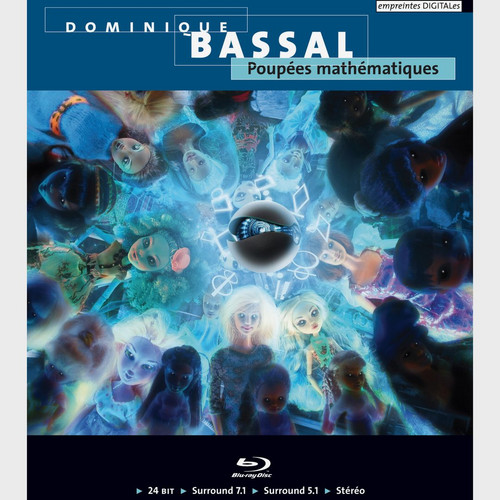
Poupées Mathématiques
Six 7.1-channel works by Dominique Bassal from 2012 to 2014, dark acousmatic fables about spy dolls, the Roman frontier, Babylon and Baghdad, and greenhouse gases, in 7.1, 5.1 and stereo mixes at 96 kHz. Blu-ray audio.
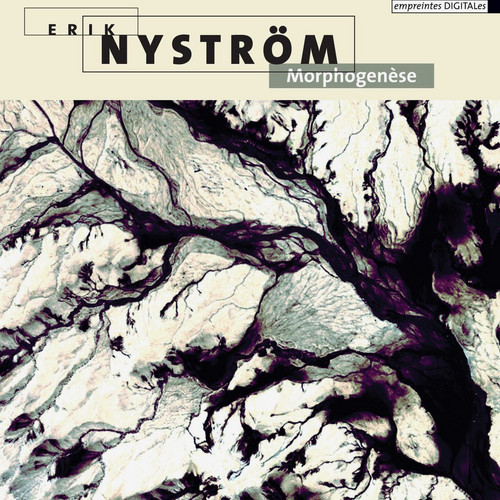
Morphogenèse
Five works by Swedish composer Erik Nyström from 2008 to 2012, four of them first conceived for eight channels: dense, evolving textures of particles, clouds and drones drawn from his research with Denis Smalley on spatial texture and form that grows on its own.
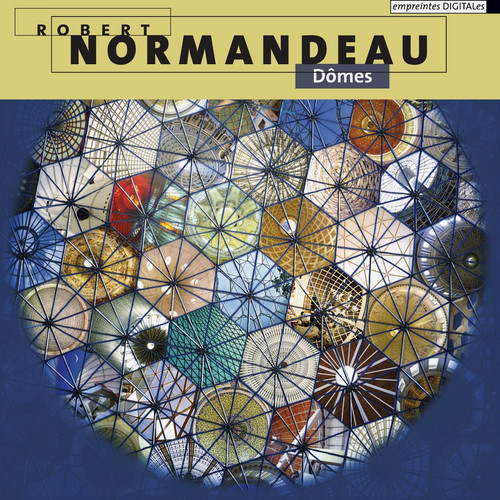
Dômes
Five works by Robert Normandeau from 2005 to 2014, several conceived for loudspeaker domes, from Karlsruhe trams and church bells in Kuppel to Baobabs, a Little Prince piece for four voices and the percussion group Sixtrum that won at Musica Nova 2013.
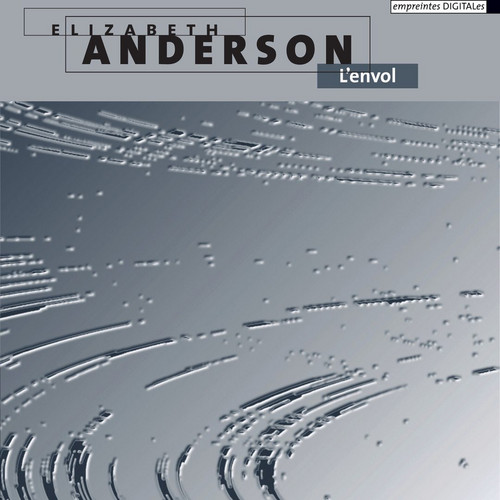
L’Envol
Six acousmatic works by Elizabeth Anderson from 1994 to 2014, mostly octophonic, from the voices of eighteen languages recorded for the Nazi fortress of Mimoyecques to sonified solar winds and a tesseract taken from A Wrinkle in Time.