

Mana
The treasure of Japan’s jazz scene and its most formidable drummer, Takeo Moriyama, drives out a powerful, intense beat. This important work — recorded in April 1994 and the catalyst for Moriyama’s comeback — is being released on vinyl for the first time. Backed by a rock-solid lineup of players — Fumio Itabashi (piano), Toshihiko Inoue (S. Sax & T. Sax), Eiichi Hayashi (A. Sax), and Hiroshi Yoshino (bass) — the recording delivers a ferocious performance that condenses the universe of Moriyama’s…
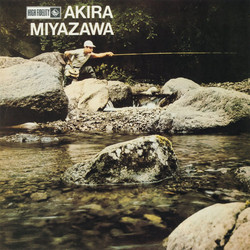
Yamame
Jazz saxophonist Akira Miyazawa was known for his unparalleled love of fishing, and here he gives a masterful performance that conjures the image of silvery fish scales reflecting light through the cold and clear water of a small mountain stream. “Yamame” (the Japanese name for a kind of freshwater salmon) was recorded in 1962 and was Miyazawa’s first album, but the sharpness and avant-garde modernity of the music creates a completely timeless quality. Miyazawa is one of a group of musicians who…

We Now Create - Music For Strings, Winds And Percussion
A pivotal masterpiece by Masahiko Togashi, Masayuki Takayanagi, Mototeru Takagi, and Motoharu Yoshizawa is set to be reissued as the eighth release in the Spin This Now! series
Onjo
*2005 release. 2026 stock* Kahimi Karie and Mariko Hamada guest as two vocalists on this orchestral work, which marks a dramatic advance from ONJQ. Its many scenes—sometimes hushed, sometimes intense—integrate (and disperse) every sonic possibility—jazz, ambient, rock, voice, noise, etc.—bringing new discoveries to every listener’s ear. Delicate sounds that can be heard if you listen closely. Even accidental onstage noises are intentionally included (you can hear them if you listen carefully), p…
Bluffs II
*2006 release, 2026 stock* This is a work that proves the worth of the trio that kept the group alive for 16 years, and at the same time captures a miraculous performance that’s hard to believe was entirely improvised — they went into the studio with no plan and made everything on the spot. Of course there were no overdubs or edits. It might convey the nuance better to call it composition while playing rather than pure improvisation. A series of acoustic treatments by ZAK fully preserves the stu…

Adena Quartet
*2026 stock* Very special quartet of Kazuhisa Uchihashi, Keisuke Ohta, Shinobu Kawai, Akira Sotoyama. This is real free music from Japan.
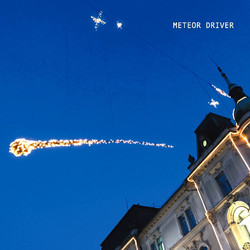
Meteor Driver
*2026 stock* The first duo work by Koichi Makigami and Masataka Fujikake. It contains 9 songs recorded live, all improvised. An improvised sound scroll made up of titles full of mysterious sounds with fantastical and unique ideas. The title song, "Meteor Driver", begins with a reading of a poem from Koichi Makigami's poetry collection "Suprematism" (2019).
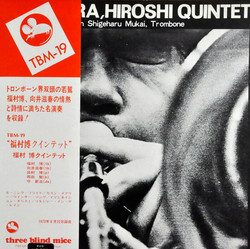
Morning Flight
Japanese jazz enthusiasts rejoice: the Hiroshi Fukumura Quintet’s landmark 1973 album Morning Flight, originally released on the iconic Three Blind Mice label, is being reissued for a new generation of listeners. This trombone-led masterpiece captures the raw energy and improvisational spirit of early 1970s Japanese jazz, blending free-form exploration with lyrical standards.
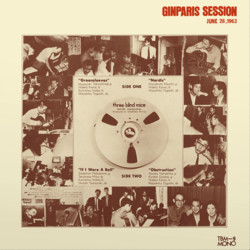
Ginparis Session
For the better part of the 50s and 60s, Masayuki Takayanagi was among Japan's best-respected jazz guitarists. But it wasn't until his experiments with tabletop guitar led him down the seductive path of sonic experimentation that he became the stuff of legend. “Ginparis” (literally translated as Silver Paris) was known as the chanson cafe in Tokyo, Ginza, and the performances often centred around chansons but eventually became the session venue for young jazz musicians. They left their mark on a…

Sky And Future
*2026 stock* This is the Big Band version by Otomo Yoshihide Special Big Band (OSBB) of the 48-minute suite "Sora to Mirai to," written entirely for this performance. "Sora to Mirai to" was originally composed at the request of conductor Yutaka Sado and premiered by the Hyogo Performing Arts Center Orchestra on January 17, 2025, the 30th anniversary of the Great Hanshin-Awaji Earthquake. Although it is an orchestral work, it includes elements of improvisation; soon after its premiere, Otomo imme…

Be-Bop '82
*2026 stock* The title says it: a deliberate, joyful return to bebop fundamentals from the Kenji Mori quintet, recorded at a moment when the language could already feel like a stylistic choice rather than a default. By 1982 the Japanese jazz scene had moved through its modal, free and fusion phases, and Be-Bop '82 is in part a record about choosing to stand somewhere: a claim that the bebop vocabulary still had real things to say. Mori plays with the kind of warmth and confidence that comes from…

Gallery
*2026 stock* Toshiyuki Miyama led The New Herd for decades, one of the most important and most adventurous Japanese big bands of the post-war period, and the working ensemble through which a remarkable number of Japanese composers and arrangers found a sympathetic home. Gallery shows the band in mature form, working through a programme that uses the full resources of the ensemble: brass-heavy passages giving way to chamber-sized features, dense ensemble writing setting up patches of open improvi…

Sunday Thing
*2026 stock* Another date from Toshiyuki Miyama's New Herd for Three Blind Mice, and a strong candidate for the band's most accessible single record. Sunday Thing leans into the warmer, more groove-conscious end of the New Herd's repertoire: there are still the harmonic ambitions and ensemble dynamics that made the band more than a swing-era throwback, but the rhythmic feel runs closer to the soul-jazz and groove-oriented big-band writing that was current at the time.
Long-form arrangements give…
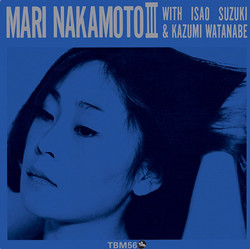
Mari Nakamoto III
*2026 stock* The third album from singer Mari Nakamoto for Three Blind Mice, and the one that pushes hardest at the conventions of mainstream vocal jazz. The line-up is the giveaway: alongside Nakamoto's voice, the record places bassist Isao Suzuki at the centre of the rhythm section and brings in Kazumi Watanabe on guitar, the same Watanabe who would shortly become one of the major figures in Japanese fusion and progressive jazz. The result is a vocal record where the accompaniment is unmistaka…
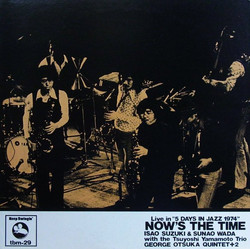
Now's The Time
*2026 stock* A live document from the legendary “5 Days In Jazz” festival in Tokyo in March 1974, and one of the most ambitious multi-band albums in the Three Blind Mice catalogue. The record gathers some of the most important working units of the moment: bassist Isao Suzuki and guitarist Sunao Wada sharing the front of the stage, the Tsuyoshi Yamamoto Trio holding things together from the rhythm section, and the George Otsuka Quintet stepping in with the alto-led horn front-line that defined th…

Active Volcano
*2026 stock* Nobuo Hara led Sharps & Flats for an astonishing run, well over half a century, and the band became one of the institutions of Japanese jazz, in roughly the same way the Clarke-Boland Big Band held its place in Europe. Active Volcano catches the ensemble in particularly muscular form: arrangements that draw on the funkier, groove-conscious end of seventies big-band writing, brass passages that hit hard without losing definition, and a sense of swing that belongs less to the swing er…

Live In Montreux
*2026 stock* The Tsuyoshi Yamamoto Trio in concert at Montreux, and one of the relatively few records that documents the working group on an international stage. By the time of this recording the trio had already been together for years, and the band's mutual understanding shows in the way pieces unfold: long heads, patient solos, and a rhythm section that responds to the leader's harmonic choices before he has finished making them.
Yamamoto plays with the bluesy, slightly behind-the-beat phrasi…

Masaru Imada Piano
Sublime solo piano from Masaru Imada – a Japanese player with talents in a range of different styles, but who sounds especially nice up-close here in an intimate setting! Imada's got a way of letting a tune really find its way organically – almost as if the songs here are little flowers opening up in his fingers on the keyboard of the piano – although never in a style that's "flowery" at all, because Imada's a master of finding just the right notes at the right moment – never embellishing things…

Live at Moers Festival
2026 Re-issue. A cornerstone of postwar Japanese free improvisation, captured before three thousand listeners at the ninth Moers New Jazz Festival on 26 May 1980 and issued later that year as TBM-5023. By this point Masayuki "Jojo" Takayanagi had spent more than a decade refining his theory of mass projection - a model of collective improvisation in which the ensemble operates not as a sequence of soloists but as a single density field, modulating texture rather than line - and the New Direction…
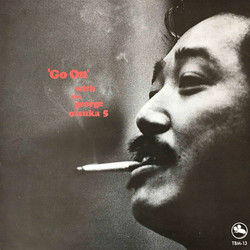
Go On
*2026 stock* Drummer George Otsuka was a fixture of the Tokyo jazz club scene from the sixties onwards, leading a series of working bands that earned a reputation for tight ensemble playing and consistently high temperature. 'Go On', one of the early releases on Three Blind Mice, captures the quintet at the moment when its hard bop foundation was beginning to stretch into something more searching: there's still plenty of swing, but the modal frames and freer improvising of the surrounding scene …

Coco's Blues
*2026 stock* Guitarist Sunao Wada spent the seventies as one of the most consistently working figures in Japanese jazz, a player whose tone owed something to Wes Montgomery and Kenny Burrell but whose phrasing carried a particular Japanese weight, more thoughtful than driving. Coco's Blues, an early release on Three Blind Mice, alternates quartet and sextet formations across the programme, and the shift in scale gives the record a real architectural interest.
The smaller settings let Wada's line…

Firebird
*2026 stock* Saxophonist Kenji Mori belongs to the second generation of TBM regulars, a player whose work for the label spans several years and several formats, but whose quartet records have a particularly distilled quality. Firebird fits cleanly into the modal and post-bop tradition that defined the heart of the Three Blind Mice catalogue: heads with real melodic substance, harmonic openness that gives the soloists space without leaving them stranded, and a rhythm section that knows how to kee…

Gathering
*2026 stock* The pianist Fumio Karashima is best known internationally for his long association with Elvin Jones, having held the piano chair in Jones's working bands for years, a credit that already tells you most of what you need to know about his playing. Gathering, his trio date for Three Blind Mice, is the work of a player who has spent serious time on the bandstand with one of the most demanding drummers in jazz history, and the record's qualities reflect it: a strong rhythmic centre, a le…

Conversation
*2026 stock* One of the more intimate entries in the Three Blind Mice catalogue: a duo session, with all the exposure and concentrated focus the format implies. Conversation lives up to its title. Two players in close, careful dialogue, with neither voice dominating and neither retreating into accompaniment. The duo format strips a lot of the usual jazz furniture away: there's no rhythm section to lean on, no horn section to fill out the harmony, no place for either player to hide.
What's left i…
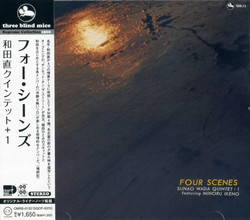
Four Scenes
*2026 stock* A later Sunao Wada session for Three Blind Mice, and one of the more outward-looking records in his TBM run. The quintet-plus-one format brings the saxophonist and flautist Minoru Ikeno alongside Wada's working group, and the addition shifts the music's centre of gravity, opening up the writing to longer tones and more spacious harmonies. There's still plenty of the bluesy swing that runs through Wada's discography, but the textures here are wider: Fender Rhodes lacing through the h…

Blues World
*2026 stock* An earlier Sunao Wada outing on Three Blind Mice, recorded with both quartet and quintet formations across the programme, and built (as the title suggests) around the blues. But this is blues in the broader, more searching sense the seventies were beginning to articulate: harmonic frames borrowed from soul and modal jazz alongside the standard 12-bar architecture, and an improvising attitude that's more interested in development than display.
Wada's guitar carries the writing with t…
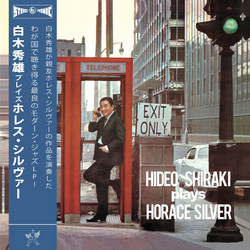
Plays Horace Silver
The music of Horace Silver is magically presented here by drummer Hideo Shiraki – grooving nicely in the same exotic approach to soul jazz you'd find on Silver's best Blue Note sides of the late 50s! Shiraki's always had a bit of a Jazz Messengers approach in his music – at least at this point in his career – so it's no surprise that he does such a great job with Silver's music – recreating some of the best grooves made famous by Horace at Blue Note, but also bringing a bit of his own flavor to …
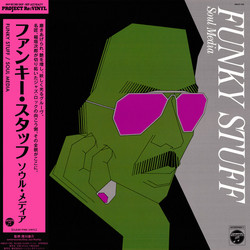
Funky Stuff
*2026 much needed repress!!* "Written and arranged by Hiromasa Suzuki, and originally released in 1975 on Nippon Columbia, this album is incredible, and truly well-named - funky stuff, indeed! Fat bass, a great variety of guitar sounds, horns and organ, and crisp drums: this is an instant favorite! From the end of the 1960s, saxophonist Jiro Inagaki led groups such as The Soul Mates, and His Black Rhythm Machine, blasting down the jazz rock road before forming Soul Media in 1969. The album Funky…
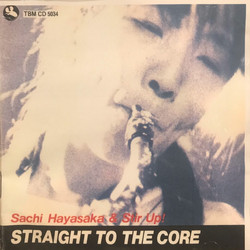
Straight To The Core
*2026 stock* This album is the second release by saxophonist Sachi Hayasaka, following her debut album Free Fight. Most of the music was recorded in Tokyo with members of Stir Up!, capturing the raw energy and spirit of the group. Two additional tracks were recorded in New York at Baby Monster Studio, featuring special guest trumpeter Wadada Leo Smith. These sessions added another dimension to the album, making it an especially rich and memorable work.
The album was produced entirely by Sachi an…

Live!
*2026 stock* A live document from one of the towering figures in Japanese jazz history. By the early seventies Terumasa Hino had established himself as Japan's most internationally fluent trumpeter, a player whose vocabulary moved easily between Lee Morgan-era hard bop, Miles-influenced modal abstraction, and the harder edges of Coltrane-era extended playing. Live! catches his quintet in concert, working through original material at the high temperature his groups were known for: long forms, fie…
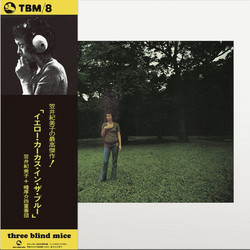
Yellow Carcass In The Blue
*2026 stock* Legendary Japanese jazz vocalist Kimiko Kasai, one of the most innovative singers of the 1970s, joins forces with the fiery Kosuke Mine Quartet on the newly reissued Yellow Carcass in the Blue, originally released in 1971 on the esteemed Three Blind Mice (TBM) label. This rare leader album captures Kasai at her peak, blending her husky, soulful voice with avant-garde improvisation and fusion grooves, featuring standout tracks like the title song—Masabumi Kikuchi's composition elevat…

Q
*2026 stock* Bassist Hideto Kanai was one of the most ambitious composer-bandleaders to emerge from the Japanese jazz scene of the early seventies, a writer of long-form pieces that integrated free playing with chamber-jazz architecture, and a player with the patience to leave space where lesser arrangers would clutter. Q, only the sixth release on Three Blind Mice, is one of his most uncompromising early statements: extended group playing built around Kanai's slow, structural bass lines, with t…

Toki
*2026 stock* Hidefumi Toki's 1975 album Toki offers a deeply personal journey into the realms of jazz, showcasing his expressive prowess on alto and soprano saxophones. Backed by a stellar quartet including Kazumi Watanabe on guitar, Nobuyoshi Ino on bass, and Steve Jackson on drums, Toki creates a stunning sonic landscape filled with gentle, raspy tones. The album's ambiance is laidback and mellow, yet infused with a profound sense of spiritual depth reminiscent of Coltrane's work.
Original com…

Maya
*2026 stock* Trumpeter Shunzo Ohno spent much of his career moving between the Japanese scene and the New York post-bop circuit, a player whose résumé runs through American bandleaders alongside his domestic work, and whose tone bears the marks of both worlds. His quintet date for Three Blind Mice is one of the records where he sounds most explicitly engaged with the modal and spiritual currents of seventies American jazz: Coltrane shadows everywhere, but absorbed into a particular Japanese pois…
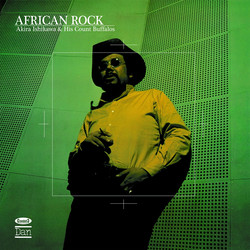
African Rock
This album is a masterpiece in which the three core pillars of Akira Ishikawa’s musical vision—jazz, rock, and African music—are fused in a sublime and thrilling balance. One arresting track follows another: the solemn and majestic “Prayer”, evoking the eternal land; the clear yet subtly psychedelic “Dawn”; the serene and beautiful “Love”; and the highly dynamic, explosive “Jumbo”. The brilliance of Hirmasa Suzuki’s arrangements deserves special mention—simple yet profoundly deep, they give vivi…

Anecdote
**CD version, to be released on 29.05.2020** "WRWTFWW Records is proud to announce the official reissue of Motohiko Hamase’s extremely rare live album Anecdote (recorded in 1987). The album is sourced from original masters and available on vinyl (double LP) for the first time ever as well as on CD. It comes with liner notes from the artist. This marks the sixth release from the Esplanade Series which focuses on the works of Yoshio Ojima, Motohiko Hamase and Satsuki Shibano.Anecdote was recorded …
Sold Out

After The Rain
At a time when the Japanese jazz scene was rapidly maturing and one accomplished musician after another was emerging, another saxophonist worthy of new attention joined the scene: Masafumi Yamaguchi. This work, his memorable first album as a leader, now makes its long-awaited first appearance as part of the seventh installment of "Spin This Now!"

Primrose
A refined jazz work by Hiromasa Suzuki. Featuring Nobuyoshi Ino on bass and the accomplished Steve Jackson on drums, this album unfolds through interplay that is tightly knit yet relaxed throughout, and now makes its long-awaited first appearance as part of the seventh installment of "Spin This Now!"

Hush-A-Bye
Following the great response to the previous release "Flash Up," a live recording from Shinjuku Pit Inn in March 1977, this new work composed by Takeo Moriyama was recorded about a year later. The second release left by the Takeo Moriyama Group on Teichiku now finally makes its debut as part of the seventh installment of "Spin This Now!"
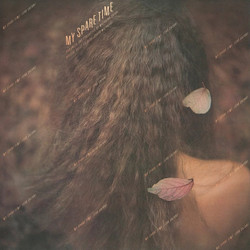
My Spare Time
On My Spare Time, Isao Suzuki steps out front on piccolo bass in a luminous set of standards and ballads, wrapping bossa, Ellington and songbook classics in a warm, conversational post‑bop glow with some of Japan’s finest players.