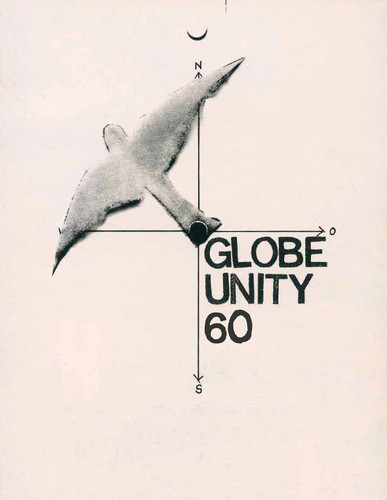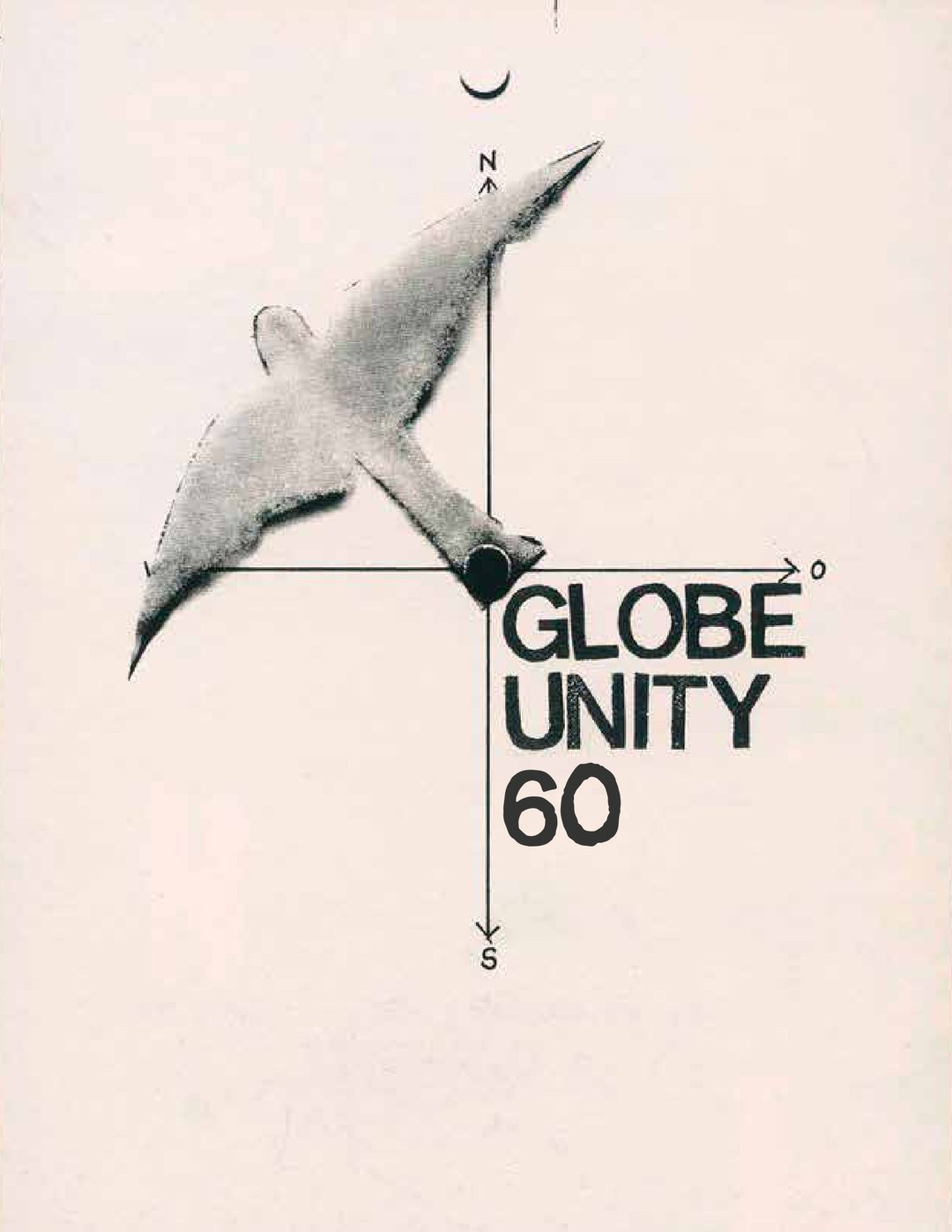
Globe Unity 60: Schlippenbach, Brötzmann & FMP
Furthering the incredible accomplishments witnessed across the length of their previous collaboration, FMP Free Music Production - The Living Music, FMP joins forces once again with Markus Müller, publishing Globe Unity 60, an immersive and expansive monograph celebrating the 60th anniversary of Globe Unity Orchestra, launched by the groundbreaking pianist Alexander von Schlippenbach at the Berlin Jazz Festival in the autumn of 1966. Doing the justice deserved by one of the most radical and important groups to have ever operated on the European free improvisation scene, the 288 pages of this incredible volume draw the reader into the collective’s world, gathering together extensive, exploratory texts by Müller, alongside material attending to the group’s recorded output, including all of Schlippenbach’s known liner notes, cover images, and further exploratory texts by Paul Hubweber, John Corbett, Steve Lake, and Mats Gustafsson, alongside a wealth of archival material, including scores, contemporaneous newspaper reviews, and rarely seen photographs. High among the best books we’ve ever encountered attending to avant-garde and free music, Müller has pulled off something truly miraculous that will set a new bar in publishing for years to come.
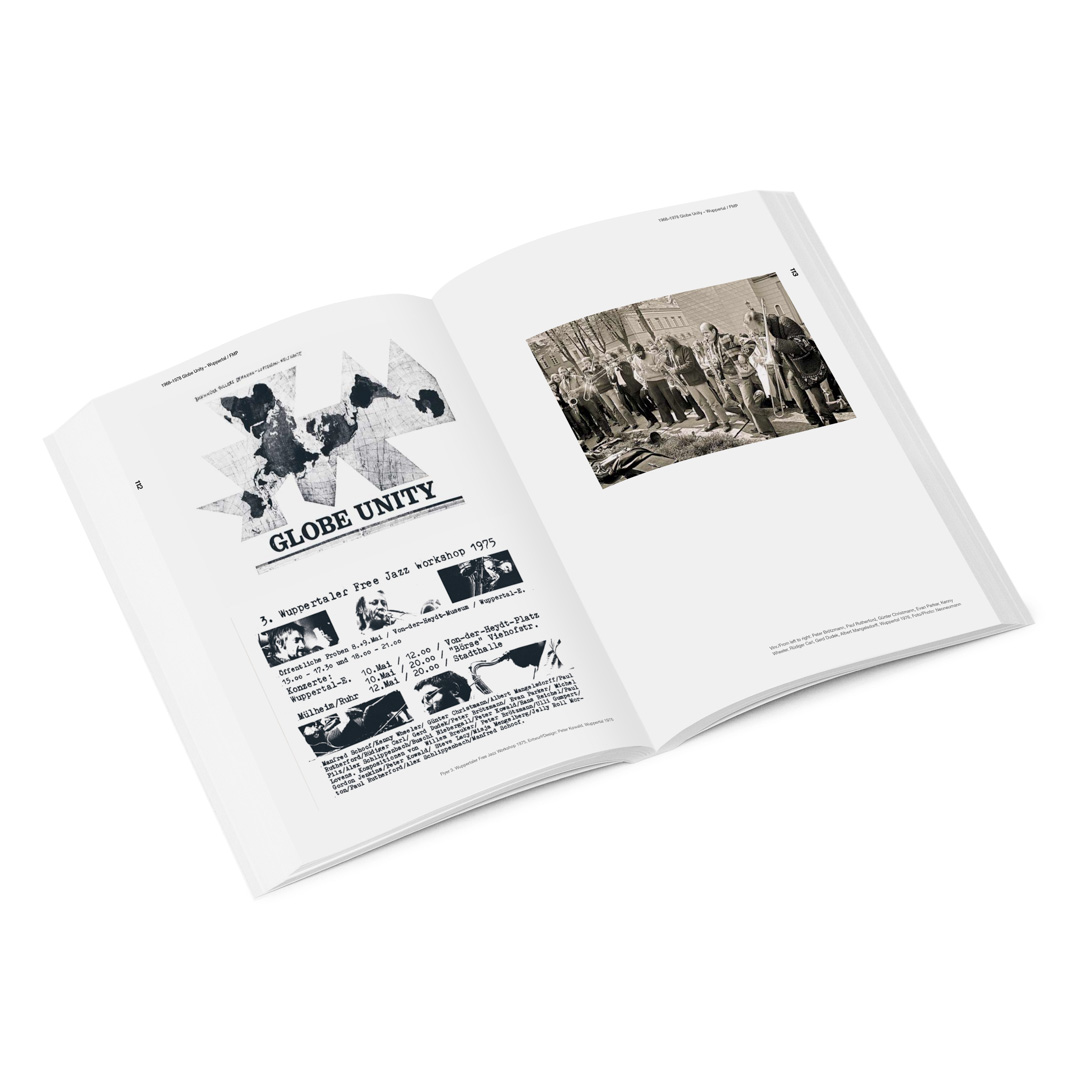
Founded in 1969 by Jost Gebers and Peter Brötzmann as a cooperative venture branching off from the New Artists Guild, an informal collective of musicians that had been running since the mid-1960s, Free Music Production, better known as FMP, stands among the most important record labels and publishing platforms dedicated to avant-garde, experimental, freely improvised music that history has known, playing host to radical sounds produced by Brötzmann, Alexander von Schlippenbach, Peter Kowald, Misha Mengelberg, Han Bennink, Cecil Taylor, Hans Reichel, Manfred Schoof, Fred Van Hove, Sven-Åke Johansson, Irène Schweizer, and a great many more. Back in 2022, Markus Müller, working in close collaboration with Jost Gebers, assembled the monograph, FMP Free Music Production - The Living Music, an astounding deep dive into the label’s history and output, which set a new high bar for books addressing history of avant-garde music. Since Gebers’ passing in 2023, Müller took over FMP’s helm, guiding the imprint into the future, while maintaining a careful attentiveness to its past. Four years after the appearance of The Living Music, this incredible spirit beautifully crystallizes across the pages of Globe Unity 60, a stunning 288-page volume that he has penned and assembled, celebrating the 60th anniversary of the founding of the Globe Unity Orchestra, the band launched in 1966 by Alexander von Schlippenbach, and led by the groundbreaking pianist over the years since. Featuring extensive, long form texts by Müller, framing the group and its radical political mission in context within Germany and the broader context of avant-garde music; as well as a sprawling array of material attending to the group’s recorded output (Schlippenbach’s own liner notes, cover images, and further exploratory texts by Paul Hubweber, John Corbett, Steve Lake, and Mats Gustafsson), a wealth of archival material, including scores, contemporaneous newspaper reviews, and rarely seen photographs, and numerous further texts charting the band and Schlippenbach’s activities over the course of more than a half-century, it is a monumental and engrossing piece of work: so compelling and immersive that it will compel nearly anyone toward the Globe Unity Orchestra’s incredible body of work. Published in both German and English by FMP, once again Markus Müller has pulled off something singular, spectacular, and historically important, producing, for a second time, one of the most significant books dedicated to avant-garde music we can call to mind.
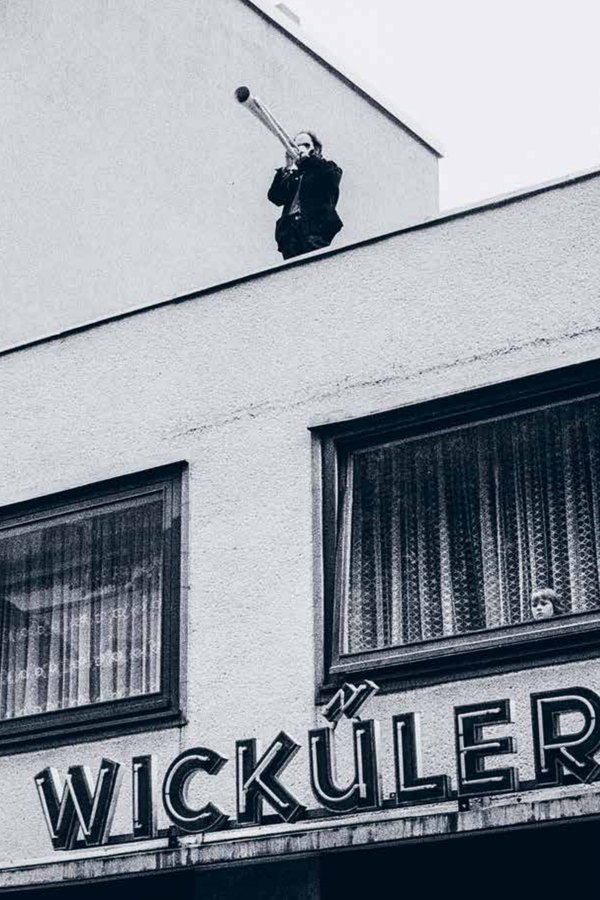
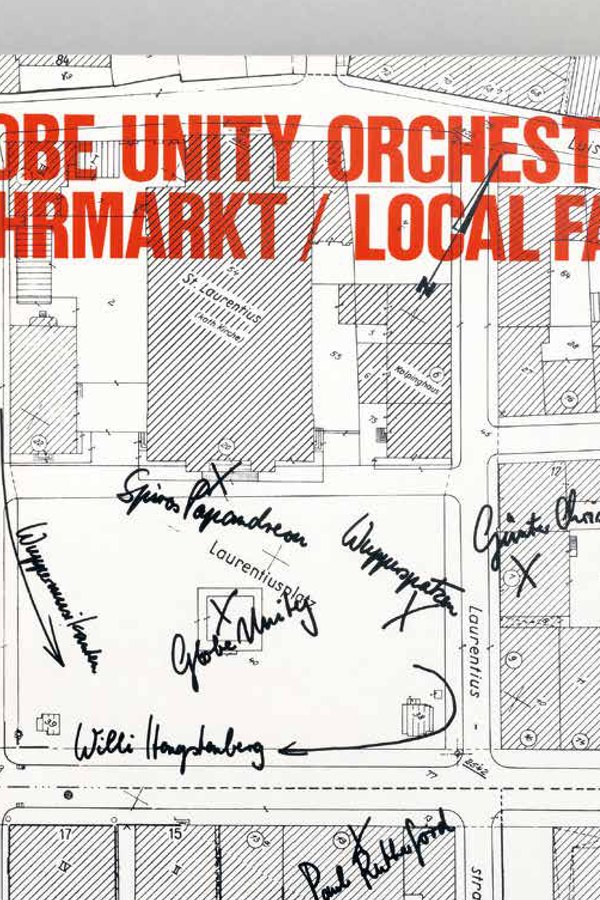
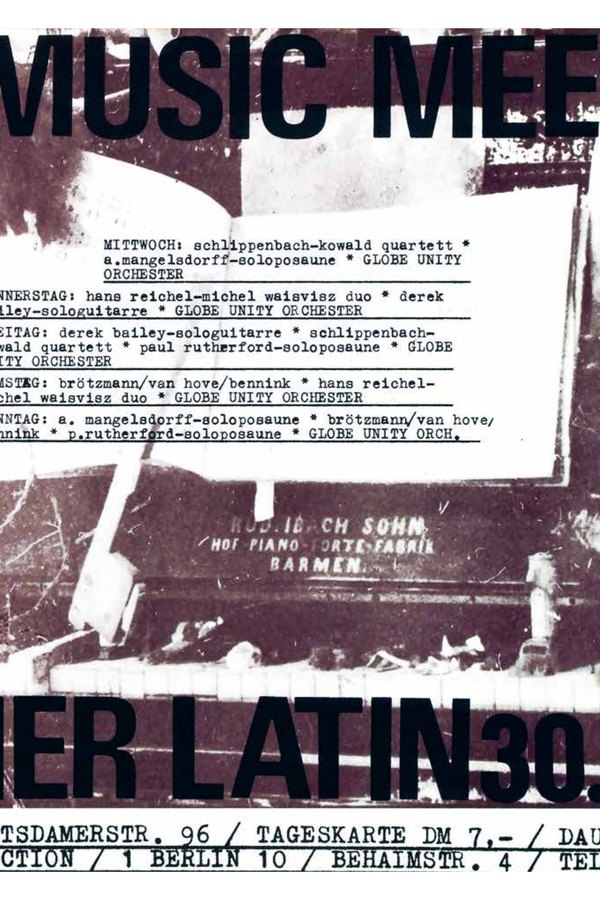
Since emerging during the early 1960s within Germany’s flowing context of free improvised music, Alexander von Schlippenbach has remained one of the most radical, forward thinking, and inspiring figures in the European avant-garde, charting a path forward not only through the organizations of sound, but also in ways organizing socially and creatively. Born in 1938, amongst his immediate peers and collaborators (artists like Peter Brötzmann, Peter Kowald, Han Bennink, Evan Parker, Paul Lovens, Sven-Åke Johansson, Gunter Hampel, Manfred Schoof, etc.), Schlippenbach represents a fairly unique link between the classical avant-garde and jazz, a factor that has defined the singularity of his playing and composing over the course of his career. Beginning his piano studies at the age of eight, he studied avant-garde music at the Staatliche Hochschule für Musik in Cologne under the composers Bernd Alois Zimmermann and Rudolf Petzold. It was during this same period that he encountered and befriended Manfred Schoof and was encouraged to join the trumpeter’s quintet with Gerd Dudek, Buschi Niebergall, and Jaki Liebezeit, among the earliest groups to play free jazz in Germany. The stage was set and Schlippenbach’s course was altered. In 1966 he stepped out as a band leader and assembled a cast of players, 14 deep, that contained many of his most talented peers, creating the foundations of the band, Globe Unity Orchestra, that would rise to become one of the most powerful and striking forces on the European scene.
Globe Unity Orchestra was formed in the autumn of 1966 following a commission received by Schlippenbach from the Berlin Jazz Festival. The group’s debut only a short time later that November, was a combination of Gunter Hampel’s quartet with Manfred Schoof’s quintet and Peter Brötzmann’s trio: Hampel, Schoof, Brötzmann, and Schlippenbach, alongside Willem Breuker, Gerd Dudek, Buschi Niebergall, Jaki Liebezeit, Peter Kowald, and Sven-Åke Johansson. Shortly thereafter, the group, with a slightly altered line up, would reassemble to record Schlippenbach’s debut as a leader, Globe Unity, issued by SABA, and a landmark in European free jazz. While Globe Unity is effectively a Schlippenbach album and Globe Unity Orchestra wouldn’t release an album under its own collective name until 1973, the group rapidly emerged as central to the pianist’s activities, as well as a singular force and gesture of transnational collaboration, enlisting players from across Europe, the United States, and Asia, including, in addition to those already mentioned, Johannes Bauer, Anthony Braxton, Rüdiger Carl, George Lewis, Günter Christmann, Toshinori Kondo, Steve Lacy, Paul Lovens, Paul Lytton, Albert Mangelsdorff, Evan Parker, Michel Pilz, Ernst-Ludwig Petrowsky, Enrico Rava, Paul Rutherford, Heinz Sauer, Bob Stewart, Tomasz Stańko, and Kenny Wheeler, and others.
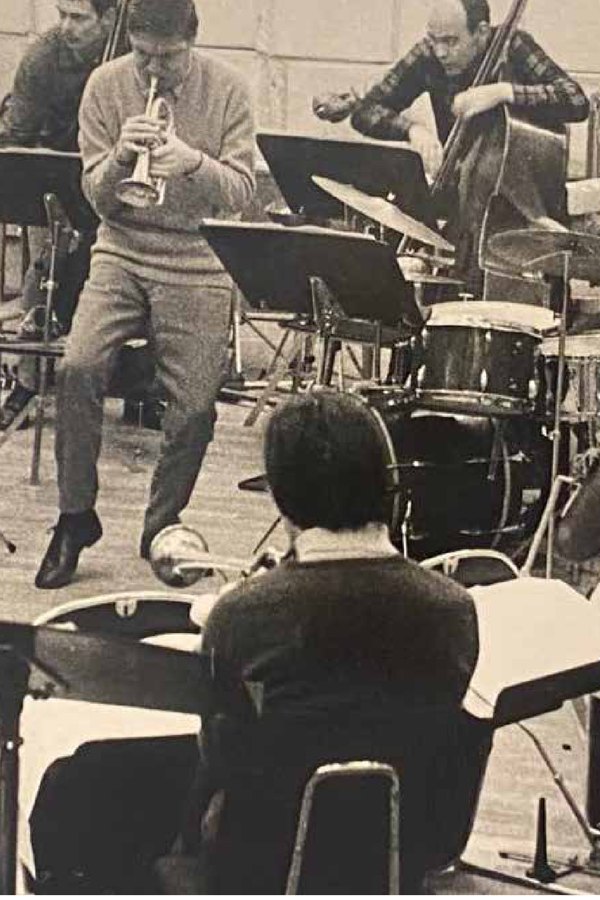
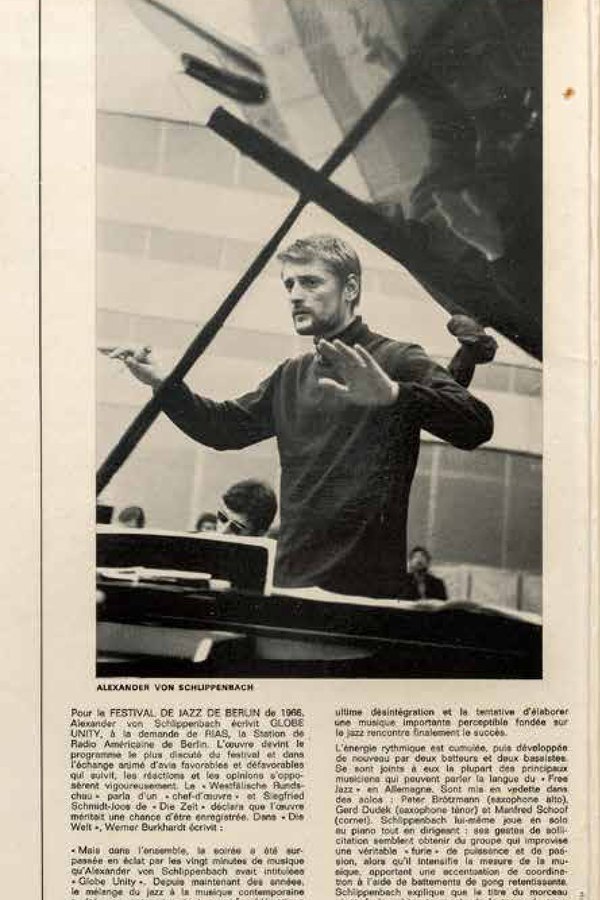
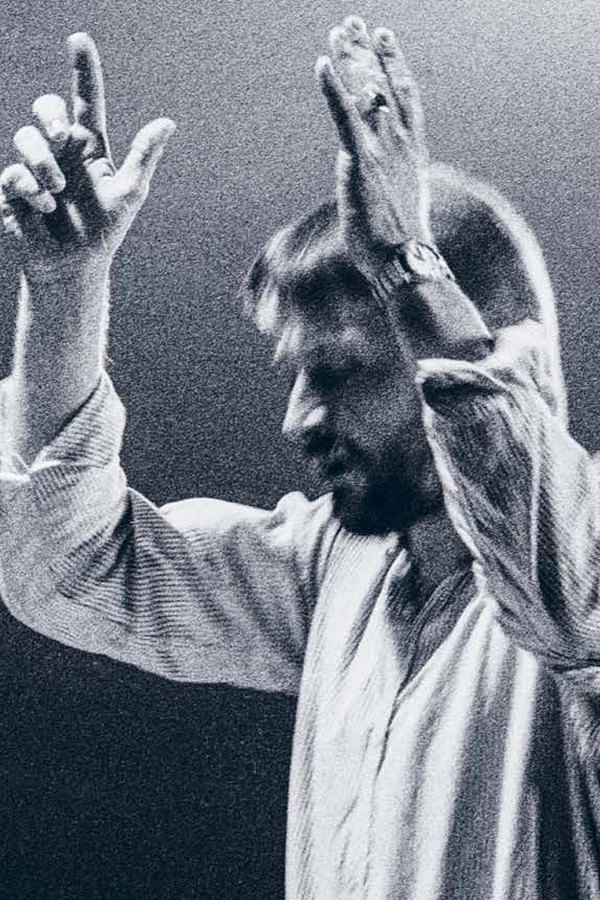
While Markus Müller’s truly incredible monograph, Globe Unity 60, celebrating the many enduring activities of Globe Unity Orchestra over the course of its sixty years, doesn’t need much rationalizing (it would be hard to think of any better or more deserving subject within the histories of 20th and 21st century music), the project began quite humbly with Alexander von Schlippenbach asking Müller if he’d like to publish a brochure marking Globe Unity’s auspicious anniversary. The project flowered, stretching in scope far from its original idea, becoming a definitive survey and statement attending to the group across the resulting 288-page volume. While Globe Unity 60 conveys a great deal, what is unmistakable is that it is the result of love of this music and deep respect for this group and its individual members.
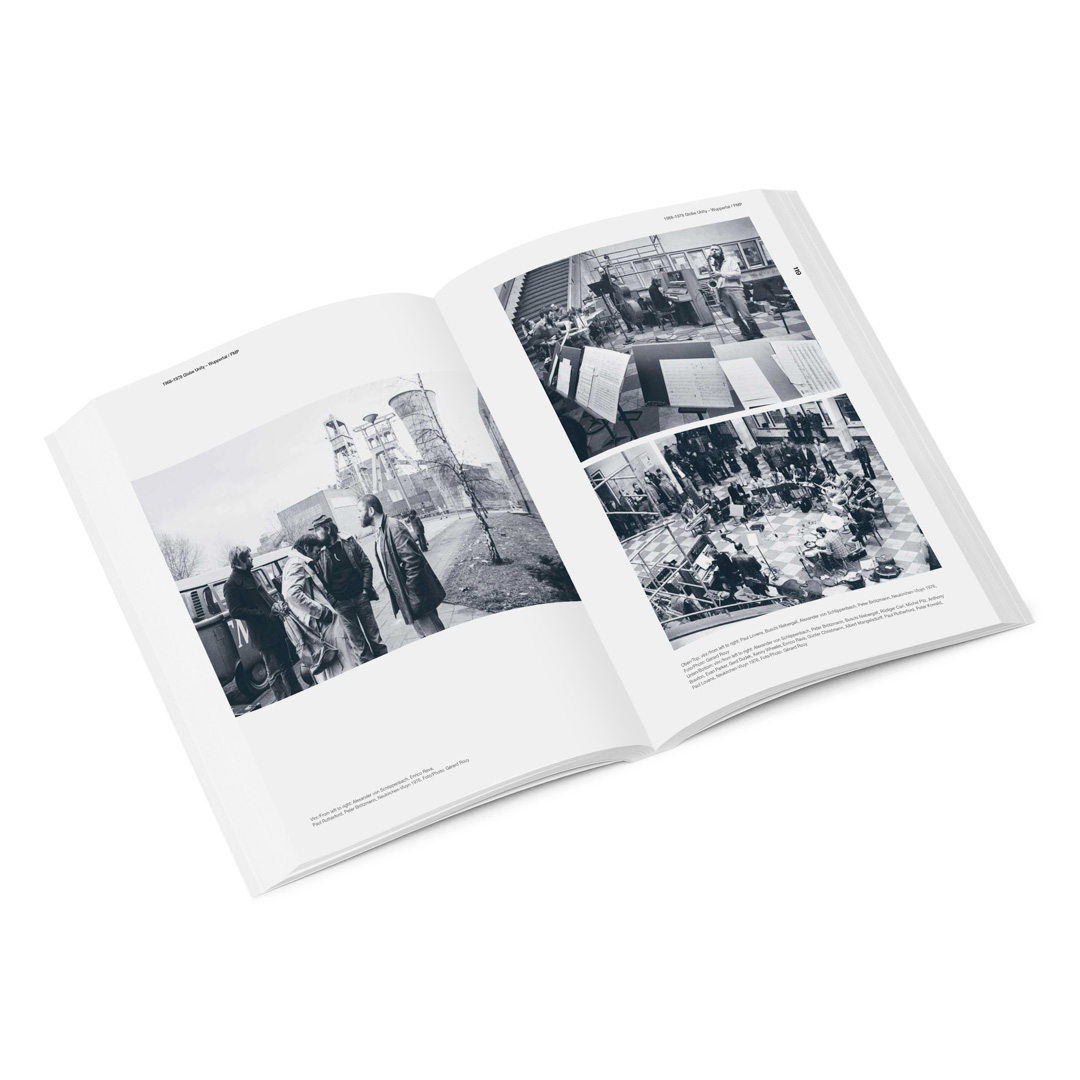
Drawing upon Schlippenbach’s own archives, as well as those of FMP, Globe Unity 60 sketches the first comprehensive narrative of Globe Unity Orchestra, spanning a remarkable breadth of activities, augmenting Müller’s deeply compelling and informative texts (doing especially noteworthy justice to Schlippenbach and the band’s political concepts and ambitions, their relationship to the larger history of jazz, and their place within the context of the German scene of avant-garde music from their beginnings until now) with amazing and rarely seen photographic material provided by Gérard Rouy and Cristina Marx; details about the recordings the Globe Unity Orchestra has released over the past 60 years, including cover artwork, various forms of related ephemera, and known liner note texts penned by Schlippenbach himself; as well as being supplemented by scores, contemporaneous newspaper reviews, and two exclusive interviews conducted by Maxi Broecking with Schlippenbach and George Lewis, and new texts and recollections by Paul Hubweber, John Corbett, Steve Lake, and Mats Gustafsson. The collective result borders on the profound, not only providing a hugely informative, insightful, and deeply sympathetic immersion into the orchestra and Schlippenbach, and thus a definitive historical document, but also becoming a deeply inspiring tool that illuminates a path forward into the future for those of us who build upon and follow in the group’s wake.
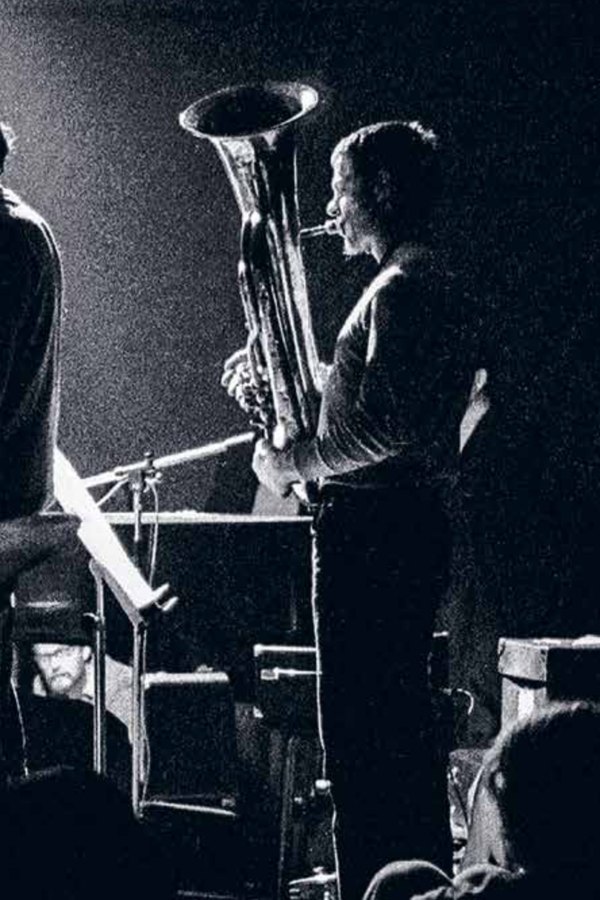


While the astounding accomplishment and importance of FMP Free Music Production - The Living Music, Markus Müller’s previous volume dedicated to the world of German free music, will certainly endure for many decades to come and should be allowed to stand on its own without comparison, what is achieved by Globe Unity 60, a sense of focus and expansiveness, marks new heights in his work.
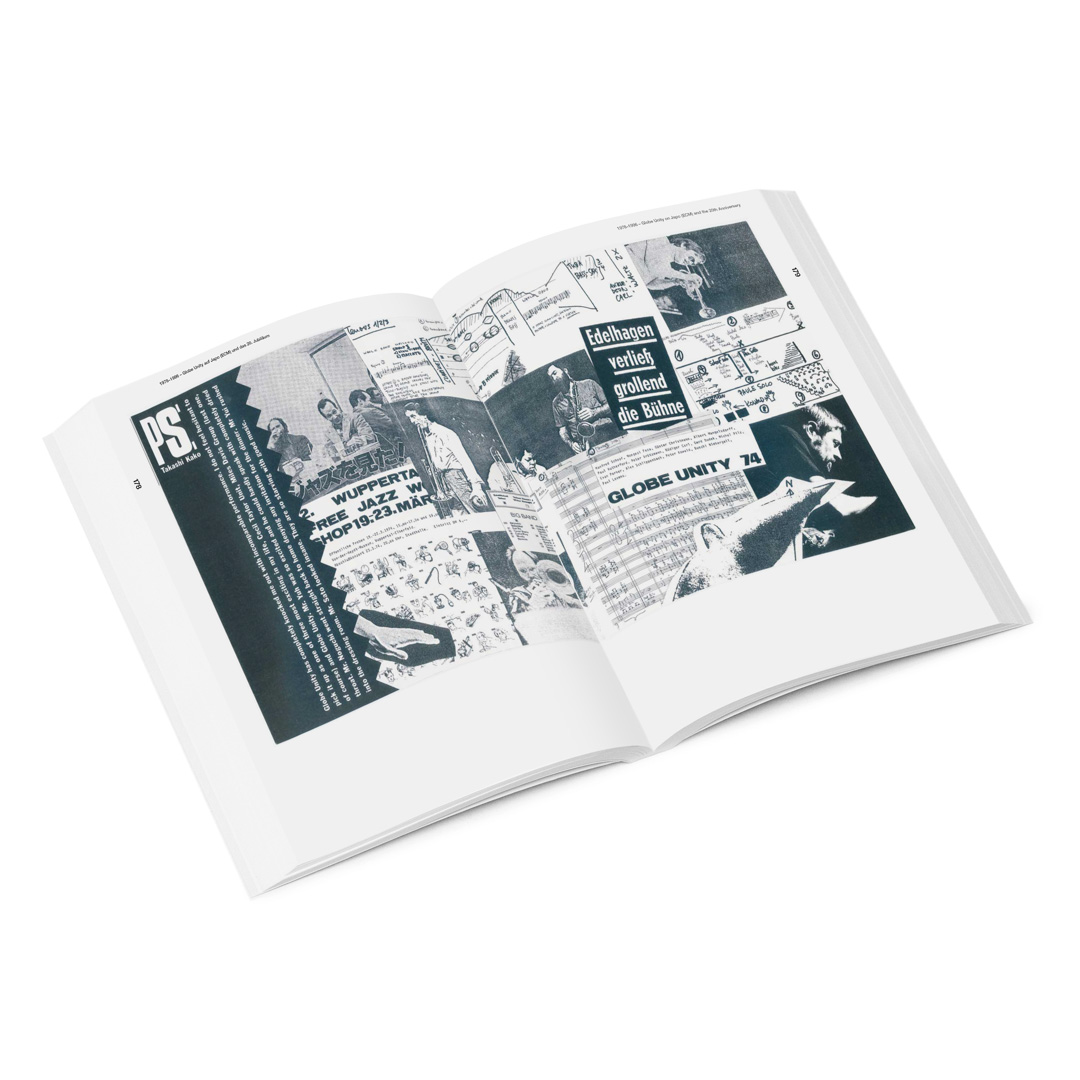
Published in both German and English, its 288 pages are dense and overflowing with generosity, bringing the band, its many members, and the truly thrilling, fire fueled music that they produce to life. Setting a new bar in publishing, it is impossible to sing this book’s praises enough.