We use cookies on our website to provide you with the best experience. Most of these are essential and already present.
We do require your explicit consent to save your cart and browsing history between visits. Read about cookies we use here.
Your cart and preferences will not be saved if you leave the site.

Ennio Morricone

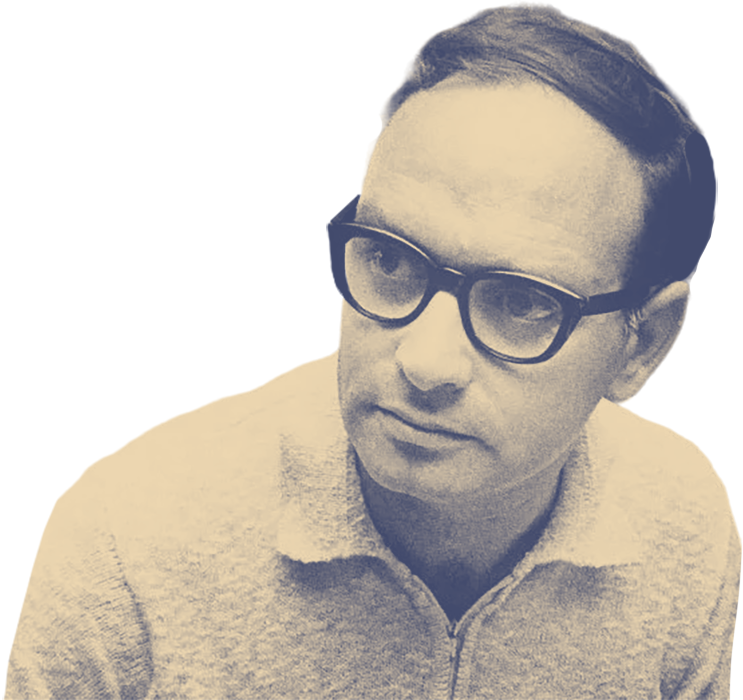
Few composers have shaped how a whole century of cinema sounds. Ennio Morricone (1928 to 2020) wrote music for more than five hundred films and television series, from the whistles, twangs and choirs of Sergio Leone's westerns to the long melodic lines of Once Upon a Time in America, Cinema Paradiso and The Mission. He received an honorary Oscar in 2007 and the award for best score in 2016 for The Hateful Eight. Born in Rome to a jazz trumpet player, he began composing at six and studied trumpet and composition at the Santa Cecilia Conservatory under Goffredo Petrassi.
Few composers have shaped how a whole century of cinema sounds. Ennio Morricone (1928 to 2020) wrote music for more than five hundred films and television series, from the whistles, twangs and choirs of Sergio Leone's westerns to the long melodic lines of Once Upon a Time in America, Cinema Paradiso and The Mission. He received an honorary Oscar in 2007 and the award for best score in 2016 for The Hateful Eight. Born in Rome to a jazz trumpet player, he began composing at six and studied trumpet and composition at the Santa Cecilia Conservatory under Goffredo Petrassi.
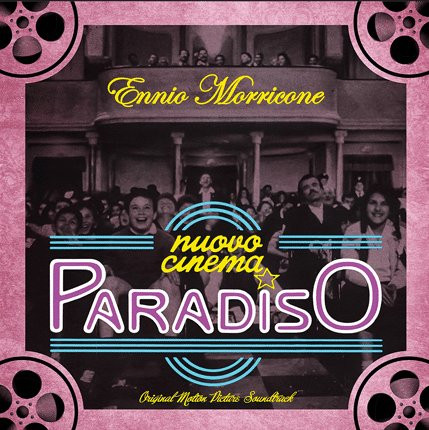
Nuovo Cinema Paradiso
The artist’s name and the title of the work alone would be enough to introduce this release: Ennio Morricone and “Nuovo Cinema Paradiso.” On one hand, the world’s most famous Italian composer and conductor; on the other, one of the most beloved and celebrated Italian films of all time, Giuseppe Tornatore’s masterpiece, which in 1990, two years after its theatrical release, won the Oscar for Best Foreign Language Film. Love, nostalgia, and melancholy permeate “Nuovo Cinema Paradiso” and come to l…
The Feed-Back
Still sealed copies of the long sold out 2014 on Schema LP+CD re-issue of the ultra-rare 1970 psychedelic experimental album by no less that the Gruppo d'Improvvisazione Nuova Consonanza in disguise.
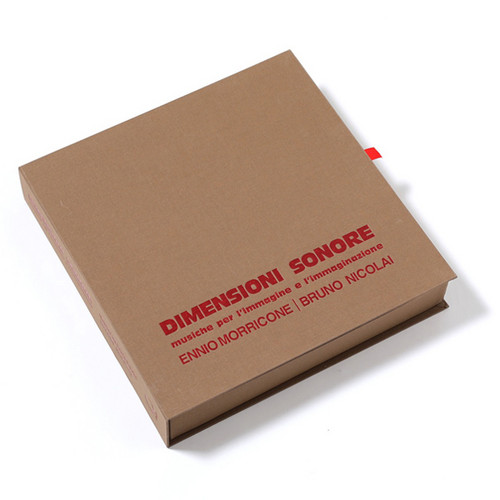
Dimensioni Sonore
Still sealed copy of the long sold out box set re-issue on Dialogo of one of the most amazing series od experimental library records originally released by RCA in 1982.
Ennio Morricone (book)
Very rare first ever full book on Morricone, a 1989 biography compiling interviews, international press excerpts, and deep analysis of his massive catalog up to the late 1980s.
Musica Sul Velluto (LP)
Original US edition on Elektra of the wonderful and tense soundtrack to the 1988 film by Roman Polanski. With original sticker on shrink.
Film Music 1966-1987 (2LP)
Excellent wide-ranging 2LP compilation on Virgin / General Music from 1986 with lots of (at the time) uncommon tracks. Promotional copy.
Frantic (LP)
Original US edition on Elektra of the wonderful and tense soundtrack to the 1988 film by Roman Polanski. With original sticker on shrink.
Maddalena / Questa Specie D'Amore (CD)
1994 first CD re-issue on GDM of one of Morricone's most experimental and psychedelic soundtracks for the 1971 film by Jerzy Kawalerowicz, coupled with the most traditional and evocative soundtrack for Alberto Bevilacqua's 1972 film.
Spasmo / Cosa Avete Fatto A Solange? (CD)
1997 first CD re-issue on RCA of two of Morricone's greatest experimental and psychedelic soundtracks respectively for Umberto Lenzi's 1974 and Massimo Dallamano's 1972 giallo films.
Giornata Nera Per L'Ariete / Gli Occhi Freddi Della Paura (CD)
1996 CD on Point with two previously unreleased and essential experimental soundtracks for two 1971 films respectively by da Luigi Bazzoni and Enzo G. Castellari, the latter performed by no less than the Gruppo di Improvvisazione Nuova Consonanza.
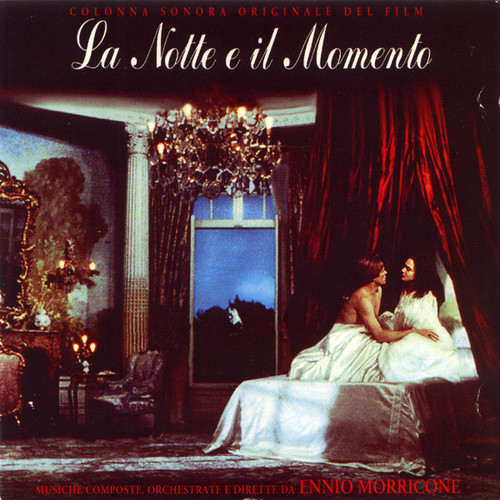
La Notte E Il Momento
Beat Records is pleased to reissue on CD the brilliant OST by Ennio Morricone for the romantic film La notte e il momento, directed in 1995 by Anna Maria Tatò with a screenplay by Anna Maria Tatò and Jean-Claude Carrière, photography by Giuseppe Rotunno, editing by Ruggero Mastroianni, music by Ennio Morricone, production by Arthur Pictures, Société Française De Production (Sfp), and Cecchi Gori Group - Tiger Cinematografica, distribution by Cecchi Gori Group, and a cast featuring Willem Dafoe, …
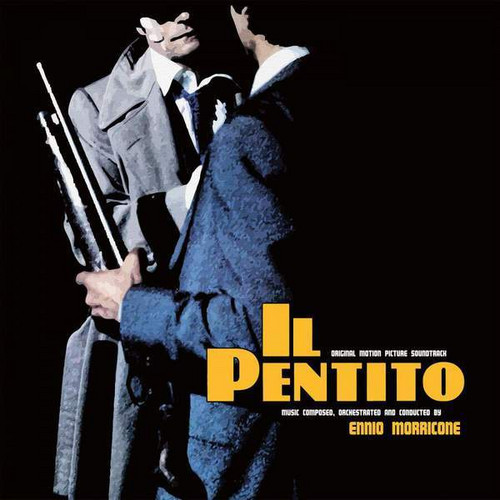
Il Pentito
Beat Records is pleased to reissue on CD the OST by Ennio Morricone for the drama film Il pentito, directed in 1985 by Pasquale Squitieri with a screenplay by Pasquale Squitieri, Laura Toscano, Lino Jannuzzi, Orazio Barrese, and Franco Marotta, photography by Silvano Ippoliti, editing by Mauro Bonanni, music by Ennio Morricone, production by C.G. Silver Film, Distribution Ceiad, and a cast featuring Franco Nero, Tony Musante, Erik Estrada, Max von Sydow, Rita Rusic, Marino Masé, Ivo Garrani, Imm…
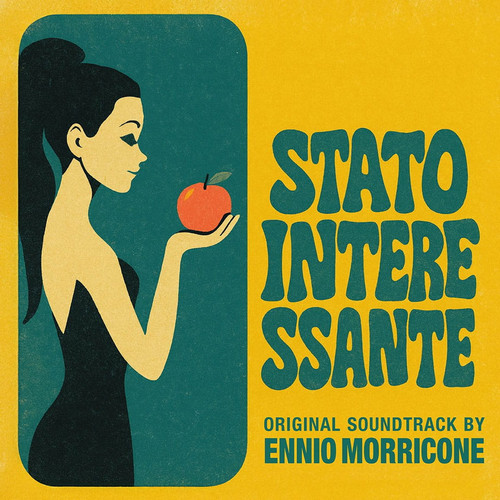
Stato Interessante
The premiere vinyl edition of Ennio Morricone's 1977 score for Sergio Nasca's Stato Interessante, pressed on 140-gram black vinyl.
Forza G
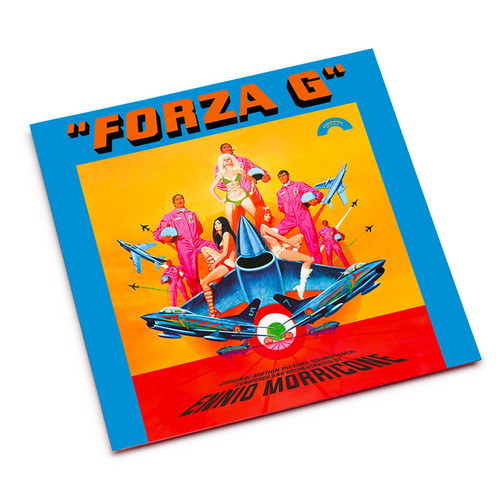
Mariachi parodies, experimental jazz, lounge cues for party scenes, and a main theme that returns in five different versions. Composed in 1972 for Duccio Tessari's aviation comedy, the score to Forza "G" is one of the least visited corners of Ennio Morricone's busiest year, and now arrives on vinyl for the first time, as part of Cinevox's new Hidden Gems series.
Il diavolo nel cervello
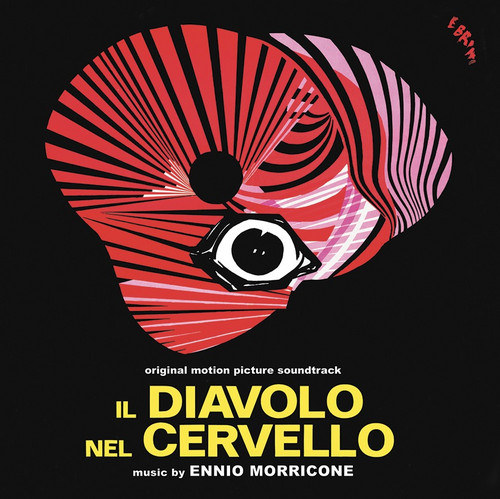
Beat Records returns with a new CD edition of Ennio Morricone's score for Il diavolo nel cervello, the 1972 psychological thriller directed by Sergio Sollima. Long absent from Italian shelves, this is a rare excursion into giallo territory for a director better known for westerns and crime pictures, and it drew from Morricone one of his most fully realised scores for the genre - a lyrical main theme carried by the voice of Edda Dell'Orso, set against dissonant string writing and passages of real…
Colori
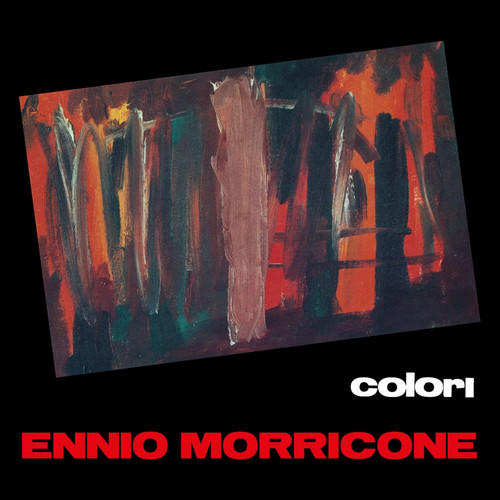
Quartet Records, in collaboration with GDM and EMI General Music, presents a reissue of Ennio Morricone’s iconic album Colori, celebrating its 55th anniversary. In the summer of 1971, Morricone entered the legendary Orthophonic Studios in Rome alongside his longtime collaborators Bruno Nicolai, Alessandro Alessandroni and Edda Dell’Orso, and recorded a selection of ten tracks drawn from some of his recent film scores, many of which had not yet been released. He remixed some cues and re-recorded …
La Cuccagna
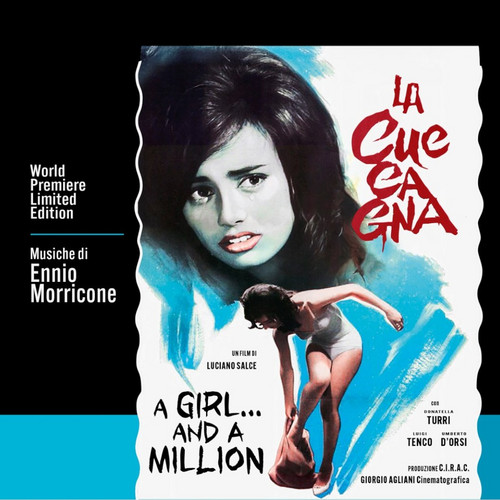
On La cuccagna, Ennio Morricone sketches early‑60s Italian life in miniature: light, bittersweet themes, small‑combo colours and gently ironic swings that mirror a young woman’s fragile hopes inside a consumerist daydream starting to fray.
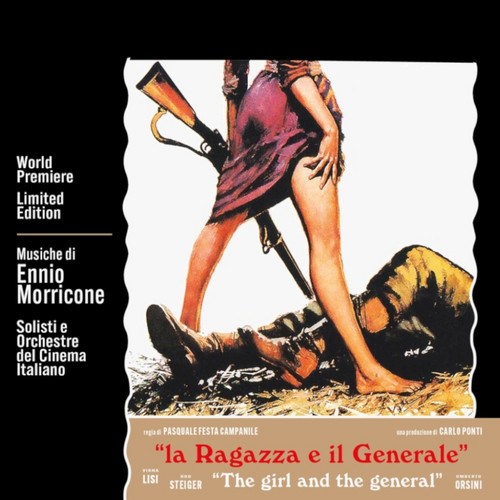
La ragazza e il Generale
In La ragazza e il generale, Ennio Morricone threads anti‑war irony through bittersweet melodies and marching figures, mixing folk‑tinged themes, choral snatches and tense orchestration into a score where tenderness and absurdity share the same battlefield.
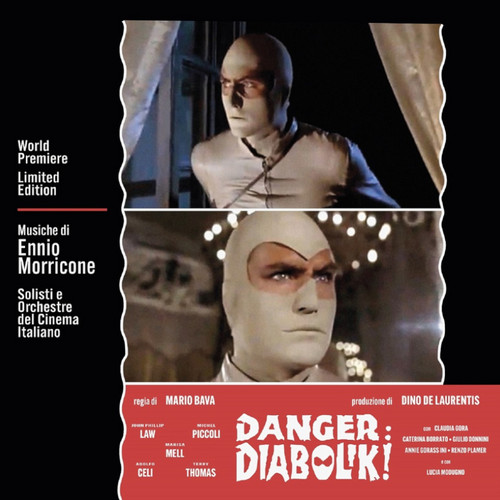
Danger: Diabolik
On Danger: Diabolik, Ennio Morricone weaponises pop, jazz and electronics into a hyper‑stylised heist engine: fuzz guitars, wordless vocals and mod orchestration turning Mario Bava’s comic‑book caper into a delirious, late‑60s sonic hallucination.
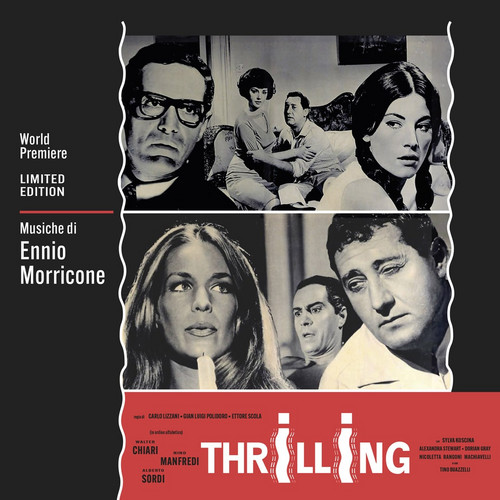
Thrilling
In Thrilling, Ennio Morricone’s widescreen sense of drama condenses into a tightly wound suite of themes: tense strings, ghostly choirs and razor‑edged rhythm figures that turn suspense into something almost voluptuously atmospheric.
1 2 3 4 5 6 11 16