We use cookies on our website to provide you with the best experience. Most of these are essential and already present.
We do require your explicit consent to save your cart and browsing history between visits. Read about cookies we use here.
Your cart and preferences will not be saved if you leave the site.

Helmut Lachenmann

Helmut Lachenmann (born 1935 in Stuttgart) studied piano with Jürgen Uhde and composition with Johann Nepomuk David, then privately with Luigi Nono in Venice (1958-1960). He is known for musique concrète instrumentale, where the way a sound is produced matters as much as the sound itself. Among his works are the string quartet Gran Torso (1971), Accanto for clarinet and orchestra (1975-76), Mouvement (- vor der Erstarrung) (1982-84) and the opera Das Mädchen mit den Schwefelhölzern (1990-96). He taught at the Musikhochschule Stuttgart from 1966 to 1999 and won the Ernst von Siemens Music Prize in 1997.
Helmut Lachenmann (born 1935 in Stuttgart) studied piano with Jürgen Uhde and composition with Johann Nepomuk David, then privately with Luigi Nono in Venice (1958-1960). He is known for musique concrète instrumentale, where the way a sound is produced matters as much as the sound itself. Among his works are the string quartet Gran Torso (1971), Accanto for clarinet and orchestra (1975-76), Mouvement (- vor der Erstarrung) (1982-84) and the opera Das Mädchen mit den Schwefelhölzern (1990-96). He taught at the Musikhochschule Stuttgart from 1966 to 1999 and won the Ernst von Siemens Music Prize in 1997.
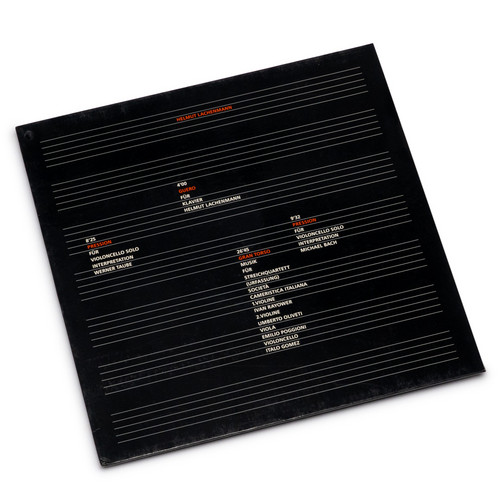
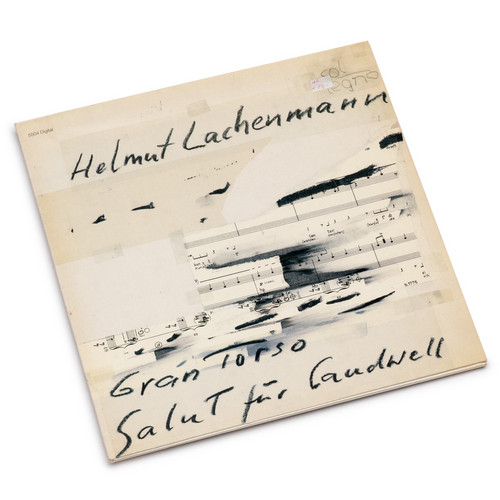
Gran Torso / Salut Für Caudwell (LP)
Two quite astonishing 1970's composition respectively for string quartet and 2 guitars, performed with extremely extended techniques, released by Col Legno in 1986 in a numbered and signed limited edition.
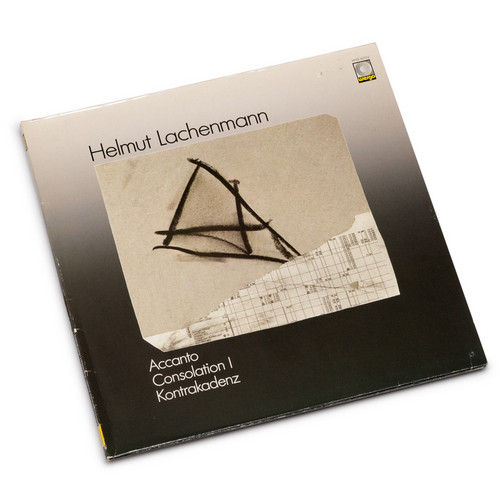
Accanto / Consolation I / Kontrakadenz (LP)
Three superb composition spanning from 1967 to 1976, respectively for clarinet and orchestra, 12 voices and 4 percussionists, grand orchestra, featuring Michael Ranta and Sigfried Fink among the performers, released on Wergo in 1985.
Guero / Pression / Gran Torso (LP)
Three timbrally amazing compositions for solo instrument (piano, cello) and string quartet from the late 1960's / early 1970's released by Edition RZ in 1990. With insert.
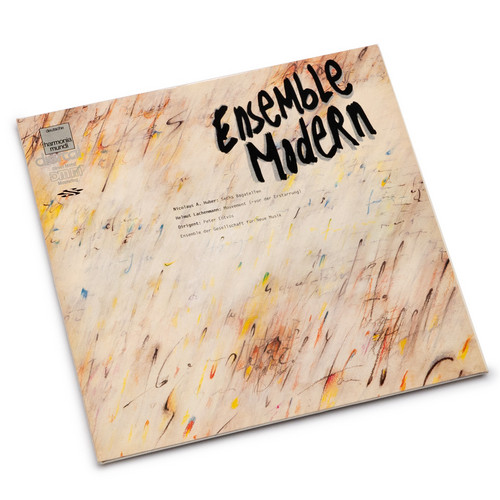
Sechs Bagatellen / Mouvement (- Vor Der Erstarrung) (LP)
Two timbrally rich pieces composed in the early 1980's and beautifully performed by the Ensemble Modern conducted by Peter Eötvös, released on Deutsche Harmonia Mundi in 1985.
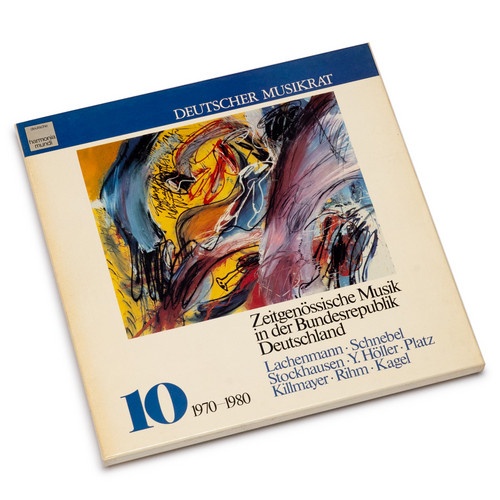
Zeitgenössische Musik In Der Bundesrepublik Deutschland 10 (1970-1980) (3LP box)
Tenth volume of the massive and exhaustive 3LP box series of "Contemporary Music from West Germany" released in the early 80's by Deutscher Musikrat, presenting pieces composed between 1970 and 1980 by Helmut Lachenmann, Dieter Schnebel, Karlheinz Stockhausen, York Höller, Robert HP Platz, Wilhelm Killmayer, Wolfgang Rihm, Mauricio Kagel. With insert.
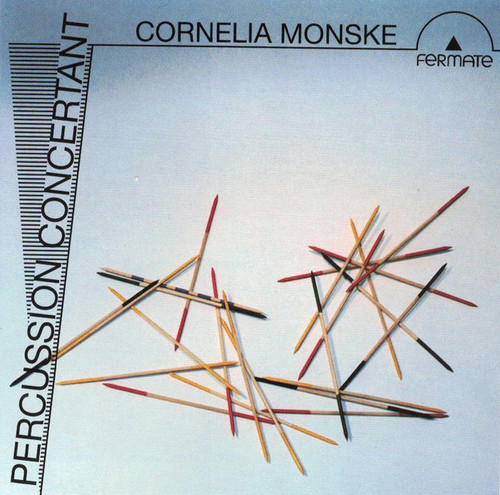
Percussion Concertant
1992 release ** "This audite recording pits percussion sounds from Europe and the Far East against each other, creating exciting contrasts. Significant twentieth-century Japanese composers place the marimba at the central point of their compositions and incorporate strongly extra-musical impressions in them. In Dream of the Cherry Blossoms, Keiko Abe was inspired by the blossoming of cherry trees celebrated annually in Japan; the work borrows elements from a traditional folksong. Akira Miyoshi's…
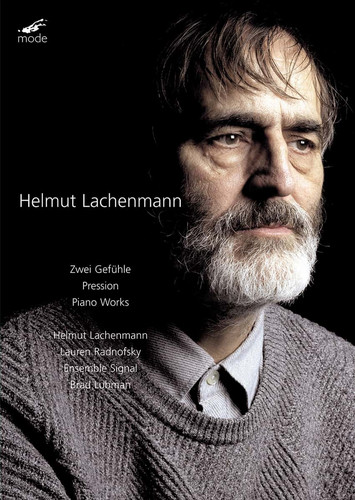
Zwei Gefühle and Solo Works
Helmut Lachenmann performs with and supervises Ensemble Signal in Zwei Gefühle, Musik mit Leonardo for speaker and ensemble, and plays three of his own piano works, recorded after a four-concert tour of the programme.
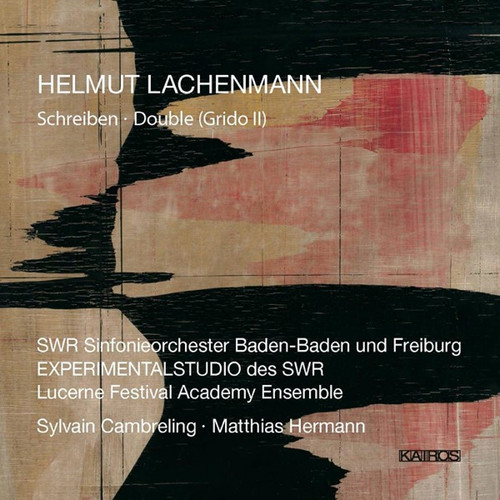
Schreiben
** In process of stocking ** If music’s relationship with reality is to be more than just a theoretical presumption, it cannot be limited merely to work titles, comments, dedications or quotations, but must also extend to permeate all musical dimensions: material, structure, form and content. And from the very beginning, Helmut Lachenmann has propagated the idea of a work that is based on the integral cohesiveness of all levels. For Lachenmann, thinking here in the tradition of Theodor W. Adorno…
Nun
Lachenmann seems to continue nurturing the modernist aesthetic,perhaps that it had passed/eclipsed the German experience, something Habermas has said, and that we do live in an age of new opacity, or complaisance (Undurchsichtlichkeit). It is fascinating still to contemplate the state of music Now,(Nun) from this fragile state,a broken timbre "zerbrechlichen klang", one where the creator/composer needs to begin again and renew timbre for the future,find new contexts for works or simply th…
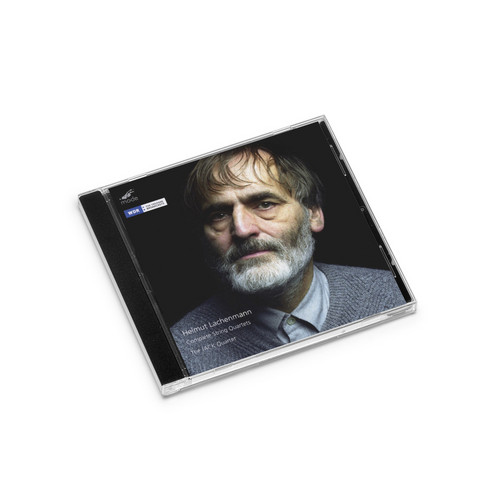
Complete String Quartets
The three string quartets of Helmut Lachenmann, Gran Torso, Reigen seliger Geister and Grido, played by the JACK Quartet in a recording endorsed by the composer.
Orchestral Works & Chamber Music
Hardly any other composer has ever been as far removed from conservatism as Helmut Lachenmann. In all his oeuvre his listeners are never permitted to lean back comfortably even for a moment in expectation of the well-known and familiar. Again and again Lachenmann succeeded, and still succeeds, in shaking the "aesthetic apparatus," the system of conventional formulas and phrases established throughout decades and centuries, to its very foundations. Intérieur I (1966), a piece for percussion solo,…
Piano Music
Music as a message without words from far away – from our inner selves. Piano music as metaphor for the thrilling adventures of human existence.
Klaviermusik
The sovereign and immediate approach Lachenmann takes in his Fünf Variationen über ein Thema von F. Schubert (1956) lends Schubert's slight Deutsche Tanz D 643a special and almost heroic flavor. But only five years later, Lachenmann had already travelled a considerable distance since those days as his Echo Andante of 1961 shows. Like Wiegenmusik (1963), the piece has been shaped by Lachenmann's studies with Luigi Nono whose influence and inspiration are clearly audible. A perfect example of the …
Ausklang / Tableau
The title Ausklang (Final Notes, or Fading Away) is intended to be understood literally. Lachenmann's Musik für Klavier und Or-chester is centrally concerned with final notes and sounds fading away. In particular, it is concerned with piano sounds created with certain techniques (playing silently at the keyboard, special ways of operating the piano pedals, etc.). It is also concerned with the fading away of sound as the sounds of the piano are being picked up by the orchestra just as they are ab…
Gran Torso / Salut für Caudwell
In 1988 the first issue of these recordings of Gran Torso and Salut für Caudwell was awarded the Preis der Deutschen Schallplattenkritik (German Record Critics' Award); and neither compositions nor recordings have lost any of their value up to today. In Gran Torso, Lachenmann tried to explore the “mechanic and energetic conditions of sound production”. This resulted in singular, unusual sounds which simultaneously exploded the barriers of audibility, playing technique and sound as such. The guit…
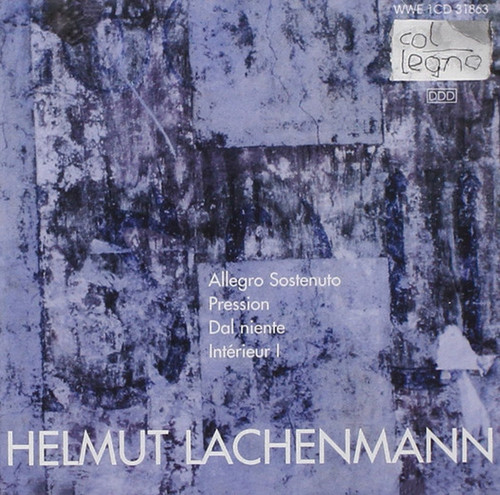
Allegro Sostenuto / Pression / Dal Niente / Intérieur I
Both Sostenuto and Dal niente were composed for the clarinetist Eduard Brunner. “As in the earlier Ausklang for piano and orchestra, the musical material is determined by the interplay of the experiences of resonance on the one hand and motion on the other. Both aspects of sound encounter one another in the conception of structure as a multiply ambivalent ‘arpeggio’, i.e. as a process of construction, deconstruction and reconstruction – experienced in temporal succession – which is conveyed both…
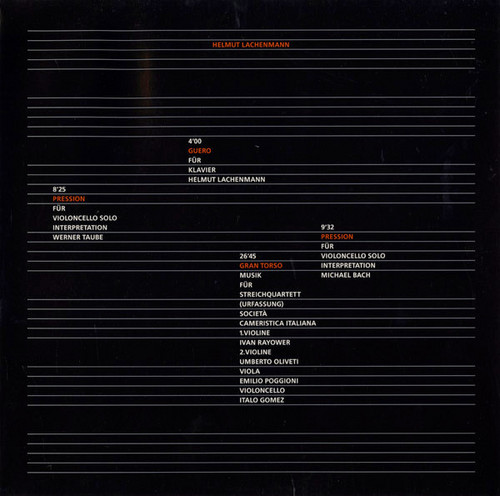
s/t
Sparse, minimal but sometimes heavy works from 1969-1978 by german composer Helmut Lachenmann (*1935), slow-motion instrumental breathing, plucking and string-scraping. Including the pieces 'Guero' for prepared piano (H. Lachenmann), 'Pression' for cello solo (W. Taube), 'Pression' for cello solo (M. Bach), and 'Gran Torso' (original version) for string quartet (Società Cameristica Italiana). Comes with 4-pahe 12" booklet.
1