Back in stock
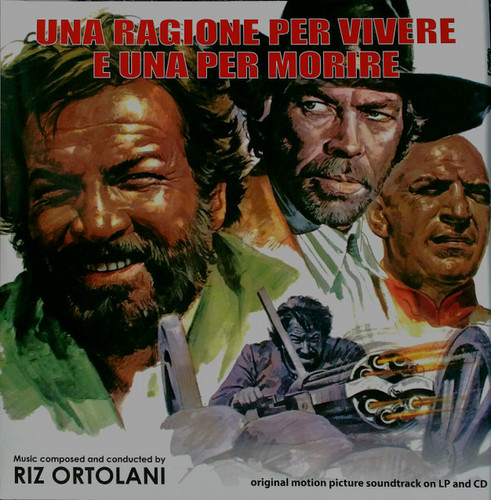
Una ragione per vivere e una per morire
**Limited edition of 250 copies.** Digitmovies is releasing the complete Ost by Riz Ortolani for the Spaghetti Western “A Reason to Live, A Reason to Die.” Riz Ortolani composed one of his best scores during his long career with this one, an epic symphonic score where a heroic main theme played by horns and orchestra follows the group of courageous men to their deaths. A western score, but one that's put together with a slightly different feel than usual – almost more straight dramatic at times,…
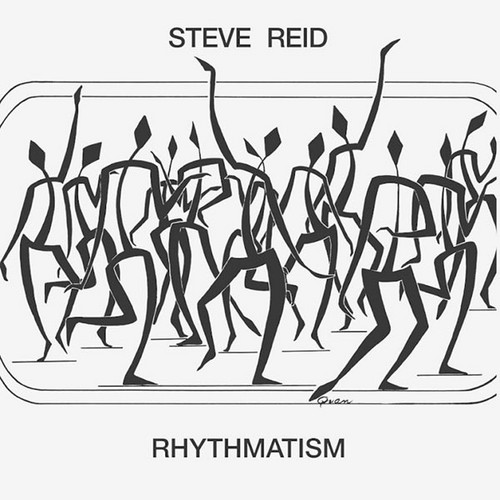
Rhythmatism
**1.000 copies on coloured vinyl** Drummer and composer extraordinaire Steve Reid’s Rhythmatism is one of his deepest and most radical of albums of all time and features some of the heaviest jazz players - Arthur Blythe AKA 'Black Arthur', Charles Tyler, David Wertman and others – joining Reid. The album was originally released on Reid’s own Mustevic Sound label in 1976.As a radical jazz artist, Steve Reid played with an extraordinary group of artists – including Miles Davis, Sun Ra, Fela Kuti, …
Occam Ocean Vol. 1
**Mindblowing edition, comes with a 40 page booklet** What can be said about Éliane Radigue? International treasure? Sonic saint? The most important composer living today? Even these grand designations fall short of doing the composer the justice she deserves. Born in 1932, beginning her life in music in Paris during the late 1950 and early 60’s, working under Pierre Schaeffer and Pierre Henry, for more than half a century she has carved a singular path in sound, sculpting one of the most astoni…
Occam Ocean Vol. 2
There’s little argument that Éliane Radigue is among the most important composers working today. She a titan of the avant-garde, forever pushing into the unknown, bending the very notion of what music is, with the depths it can penetrate, into a singular territory, entirely her own. Until the early 2000s, Radigue’s deeply meditative works sprang almost entirely from an intimate relationship with her ARP 2500, but, over the years since, she has turned her focus to a remarkably collaborate way of …
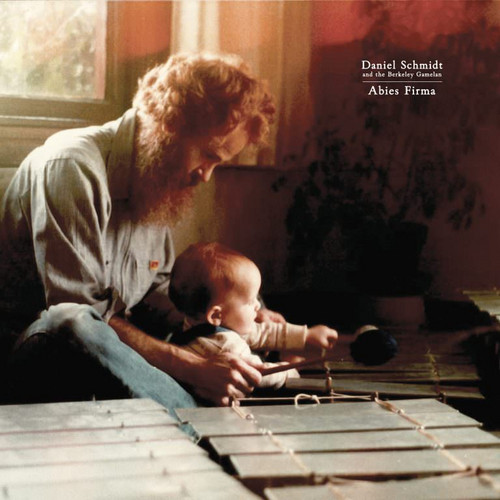
Abies Firma
**Last copies! Edition of 1000. 20-page pamphlet holding program notes, scores, & a new essay on American Gamelan by Jay Arms Complimentary CD version with additional 20-minute suite** The second album by the American Gamelan composer and instrument builder, Daniel Schmidt, following In My Arms, Many Flowers, his majestic debut on Recital. Abies Firma lies next chronologically, collecting works from 1976 to 1991, considered the second phase of his compositional form. “We were like children pla…
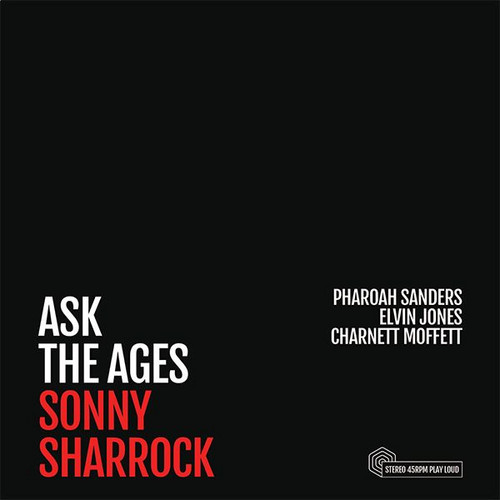
Ask the Ages
Prepare yourself for the first ever vinyl pressing of legendary free jazz guitarist Sonny Sharrock's seminal final album Ask the Ages, in a strictly limited edition 45rpm double 12” edition. Sonny's classic final album swings between deep, lyrical melodicism and passages of pure fire music and features jazz legends Pharoah Sanders on tenor saxophone and Elvin Jones, member of the John Coltrane Quartet, on drums. The album was produced by Bill Laswell and originally released in 1991 on his Axiom …
Just Dead Stars For Dead Eyes
"Just Dead Stars For Dead Eyes is the third release of the Swiss producer and sound artist Samuel Savenberg alias S S S S for the Lucerne-based Hallow Ground label. The multi-channel sound work is the result of a two-week-long artist residency at Lucerne’s Südpol in the summer of 2015, which in addition to its premiere in December 2015 has been presented live at Dampfzentrale Bern and London’s Café Oto.Originally briefly available as a small-run cassette release through the Italian Haunter impri…
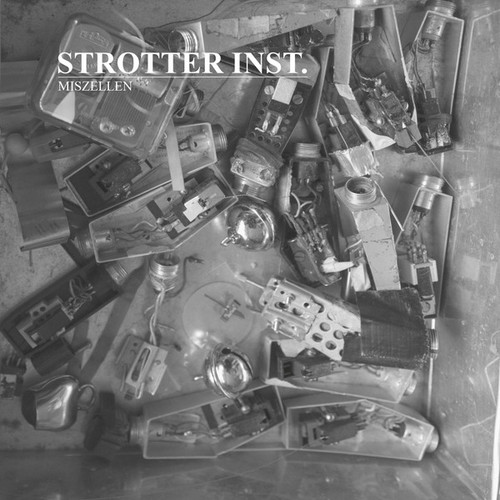
Miszellen
After more than ten years of making music with turntables, tapes and loops the swiss based musician, artist, performer and architect Christoph Hess started in 1998 the project Strotter Inst. to concentrate just on the manipulation of turntables not using any records or sounds made by someone or something else. Strotter Inst.rument's machineries have dual roles as objects and as instruments. The first live impact is as installations, then the sounds start to grab the listeners' attention. The aud…
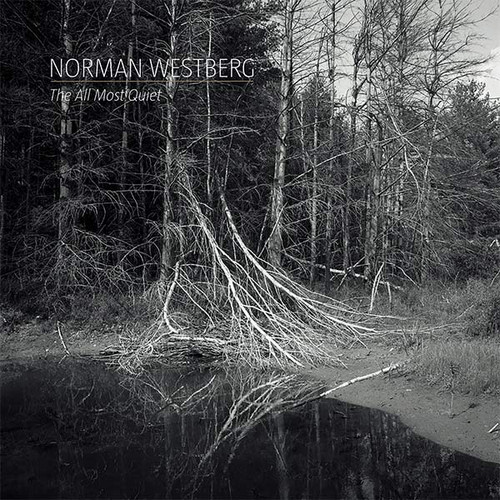
The All Most Quiet
Anyone who has experienced Swans live on one of their recent tours will know who Norman Westberg is: the almost stoic, tall man, who coaxes rhythmic sounds from his guitar with an incomparably minimalist power and elegance. The play on words in the title can be applied to Westberg's own musical work, because whereas Swans are hard to surpass in terms of brute force, the artist's solo work is much more subtle, and therefore also quieter. The resulting juxtaposition between the dense metropolis of…
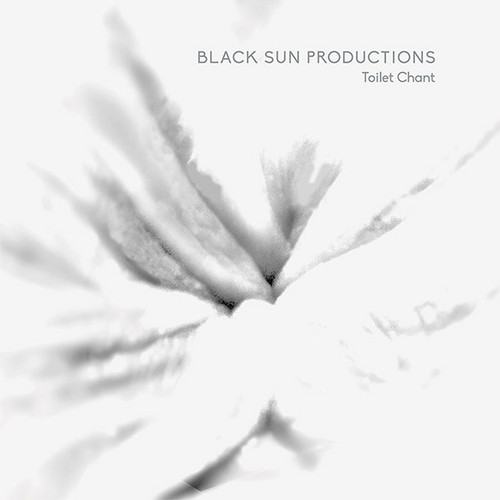
Toilet Chant
**300 copies, white vinyl** "Toilet Chant was originally released back in 2004, in an edition of 99 numbered CDrs that each featured a no doubt highly collectable thumbprint / shitstain (Massimo and Pierce were, of course, no strangers to the base and scatological). Despite its more deviant, transgressive, and earthbound trappings, however, Toilet Chant is actually quite a complex and otherworldly suite of songs. In fact, parts of it are legitimately brilliant. Hallow Ground seem to have valiant…
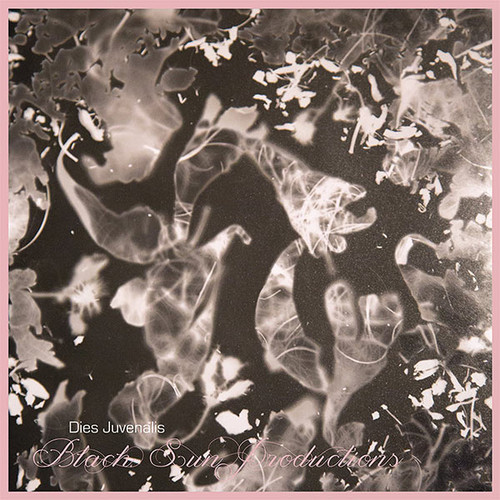
Dies Juvenalis
**300 copies** "Enchanted, curdled and chiming avant-techno rituals by the Italian Coil affiliates. The musicians and performance artists Pierce and Massimo aka Black Sun Productions initially acquired renown in the noughties with their impressive stage performances at Coil live shows. With Dies Juvenalis, the duo have served up a captivating concept album. The album opens with a reflection on one's own perception (Percettive Riflessioni), which sets an unusually upbeat tone for the duo. Pierce …
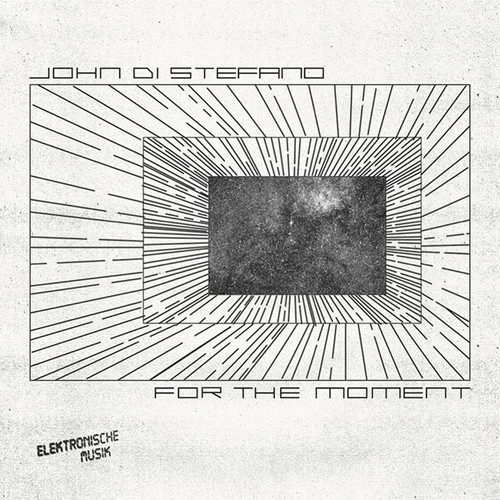
For the Moment
American-born, Japan-based composer John Di Stefano self-released a number of cassettes as part of the 80s DIY underground on his own imprint Oktron Produktions, including Klang's Drift, a collaboration with Joel Graham. Living in San Francisco, Di Stefano had access to multiple University electronic music studios, where he had an impressive array of synthesizers at his fingertips, including both Buchla and Serge modular systems. Combining his knowledge of modular synthesis with a background in …
Contagious
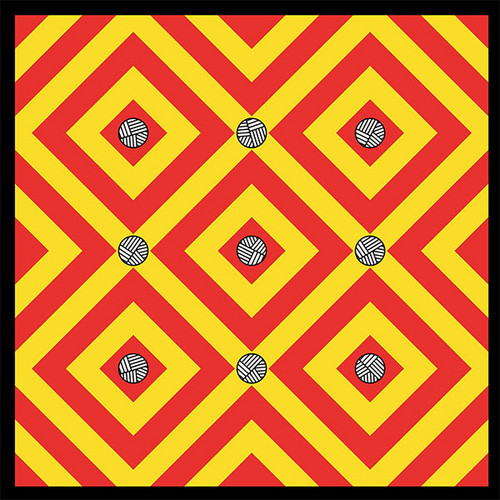
Contagious is a solid blending of avant-garde experimentation and electronic music. Formed by two innovative voices from the Improvisation scene of Berlin (Andrea Neumann and Sabine Ercklentz) and Mieko Suzuki, a well-crafted and creative DJ and musician who’s operating in Berlin venues and festivals since a long time.Contagious is one of the most forward thinking, mind-melting projects to hit the electronic music scene. Intense and powerful, yet rooted in a tradition of crafting and sculpturing…
Improvisie
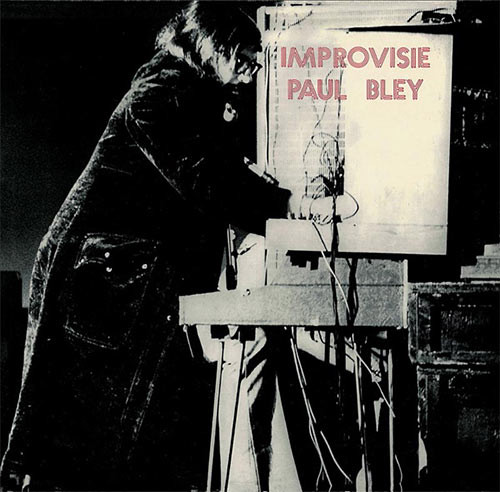
Bamboo present the first ever reissue of Paul Bley's Improvisie, originally released in 1971. Recorded Live March 26th, 1971 at Club B14 in Rotterdam, Netherlands, Improvisie is a part of the 1971 trilogy of Paul Bley and Annette Peacock's combined experimental recorded work. Together with recent reissues of 1971's The Bley Synthesizer Show and 1972's Dual Unity, Improvisie is taken from a compelling period for two iconic figures of the free jazz movement, and their pioneering use of the first-e…
Plays Stefan Goldmann's Ghost Hemiola
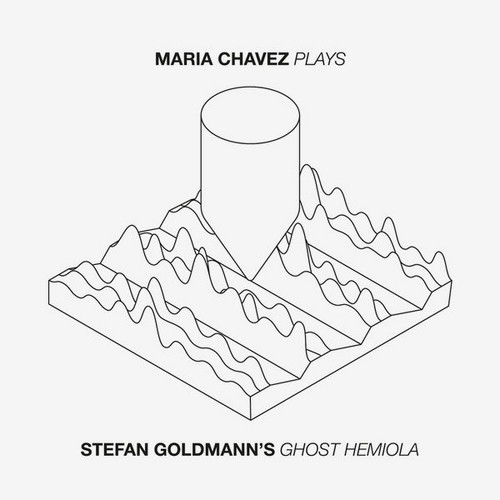
Turntablist and sound artist Maria Chavez turns in her first continuous full-length audio work. Plays Stefan Goldmann's Ghost Hemiola is a DJ mix CD that doesn't feature any tracks. It is a remix of a work whose original doesn't feature recorded sound. It is a minimalistic yet complex electroacoustic work, literally built from scratch, bootstrapping sound out of sheer silence: creatio ex nihilio.The story of this album starts with a record given to Chavez as a birthday present. It is Stefan Gold…
Templo del sonido
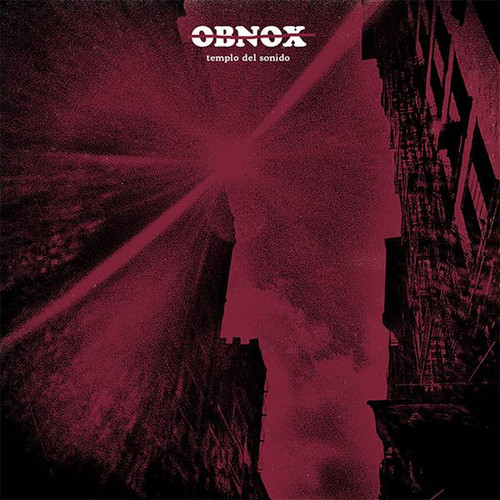
**500 copies** A few years ago I had this crazy idea... Why not ask Obnox aka Lamont "Bim" Thomas to make a free jazz record? After seeing him on tour playing drums with Cleveland out-rock legends X_X, I just had to try and make it happen. Bim, who is no stranger to making out-there genre defying records, surprised me a bit by happily agreeing. It seems a bit of a cliche to try and get rock people to make jazz records, or jazz folks to make rock records, but what the hell? Of all people, Obnox s…
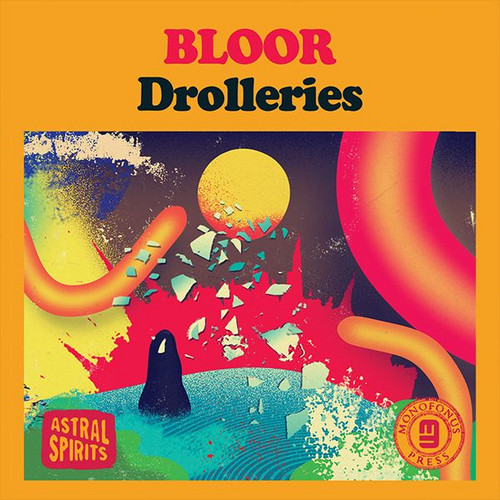
Drolleries
Saxophone jazz deviant Sam Weinberg joins with refugees from thrash jazz agent Little Women — Andrew Smiley, guitar; Jason Nazary, drums — to form a new trio, Bloor. It’s wild, acerbic and even a bit mathematical... Similar to the electric guitar-based free jazz units like Many Arms and Matta Gawa. Their new album Drolleries comprise of ten performances that are concise and never overlong. In contrast to another Weinberg project, W-2, there’s at least a sense of premeditated composition (seven o…
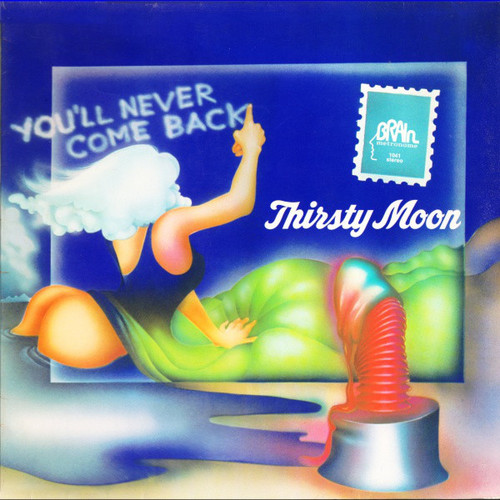
You'll Never Come Back (Lp)
This is Thirsty Moon's second album on the famous German label Brain, originally released in 1973. Despite the fact that their first album is accepted as a classic, many progressive rock fans consider You'll Never Come Back the band's best effort. On this album Thirsty Moon developed their unique sound. Not many other bands managed to capture the true character of acid-rock and placed it so effectively in a jazz-rock format. Thirsty Moon's sound is a mirror ball of images surrounding the listene…
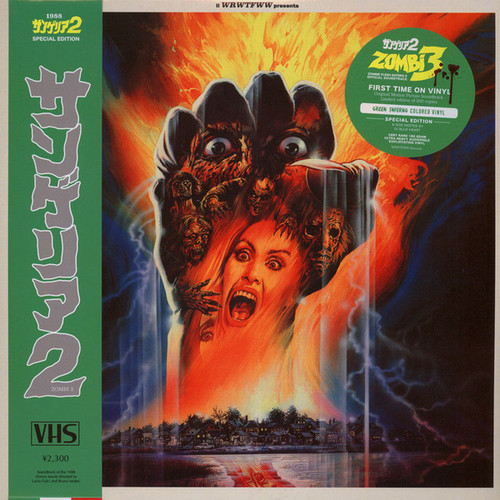
Zombi 3
Limited edition vinyl - 300 copies pressed on 180 gram "red is dead" vinyl and housed in heavy old style Stoughton casebound tip-on jackets with an original Japanese Sanguelia 2 VHS obi- We Release Whatever The Fuck We Want Records unleash the complete uncut soundtrack for Lucio Fulci and Bruno Mattei's 1988 cult zombie-ploitation gem Zombi 3 (aka Zombie Flesh Eaters 2, aka Sanguelia 2) for the first time ever on vinyl, available on two different collector's edition vinyl, the "Classic Version" …
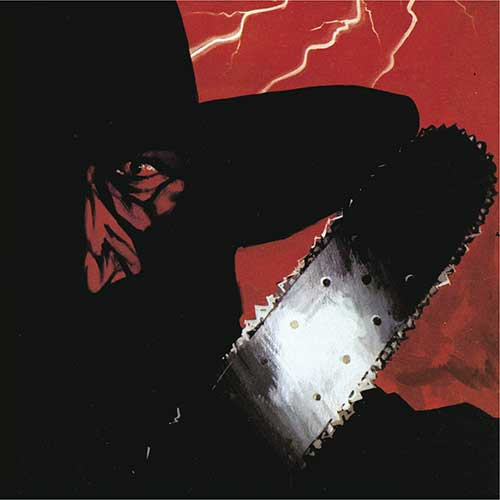
Pieces (Soundtrack) Lp
"You do not have to go to Texas for a chainsaw massacre!" The soundtrack for cult slasher movie Pieces (1982) is now available for the first time ever on vinyl. A plot filled with so many holes it's impossible to follow, chainsaws cutting heads left and right, downright terrible acting, hilariously absurd scenes, and a brilliant soundtrack -- Pieces is exactly what you think it is: one of the best movies ever made! Praised by the likes of Eli Roth (Hostel (2005), Inglourious Basterds (2009), Gri…