Back in stock
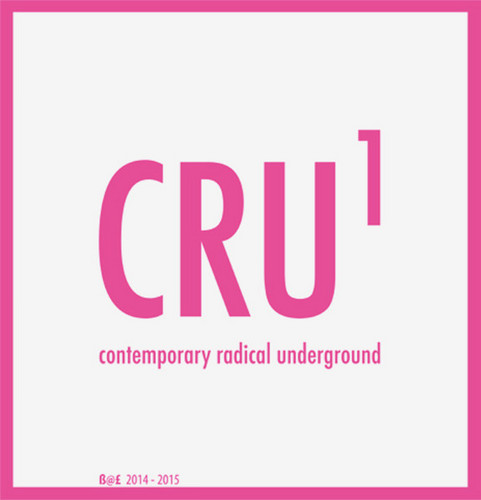
Cru 1 (Alvin Lucier, Phill Niblock, Bernard Heidsieck)
CRU (Contemporary Radical Underground), is the annual magazine that documents what’s happening at La Plaque Tournante, a non commercial artist space in Berlin and run by French composer Frédéric Acquaviva and English mezzo-soprano Loré Lixenberg. This first issue of Frédéric Acquaviva and La Plaque Tournante’s audio / video hybrid magazine, includes a CD with music by Frédéric Acquaviva and Phill Niblock, a DVD with performances by Tomomi Adachi, Bernard Heidsieck, Katherine Liberovskaya, Jacque…
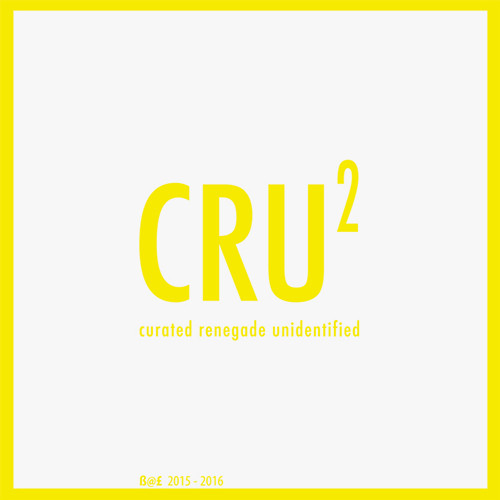
Cru 2 (Pauline Oliveros, Henri Chopin, T. Wishart, Gil J Wolman)
Second issue of CRU Magazine, the annual magazine of the Berlin art space La Plaque Tournante ran by french composer Frédéric Acquaviva and english mezzo soprano Loré Lixenberg, which states what has happened or could have happened in the last year at La Plaque Tournante. This issue, printed at 500 copies, includes this time 3 catalogues under the form of affiche + postcard + list of material exhibited + poster of the 3 main exhibs of last year, on Broutin (lettrist since 1968), Gil J Wolman (wi…
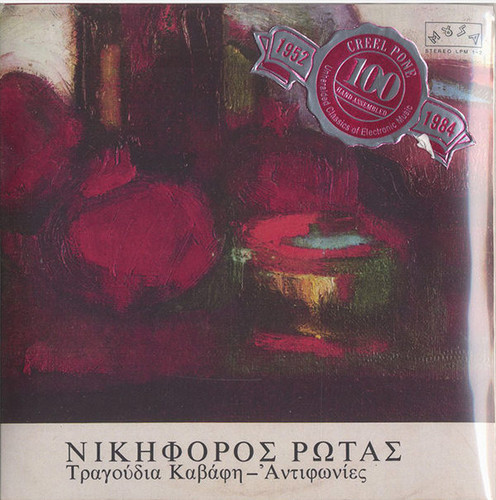
Kavafis Songs, Antiphonies
ncredible, unheralded set of music by Νικηφόρος Ρώτας (Nikiforos Rotas), incorporating Electronic & Experimental modes into mid-70s Éntekhno & Sound-Poetry forms.The first record, "Τραγούδια Καβάφη" (Kavafis Songs) sets works by early 20th Century Alexandrian poet Constantine P. Cavafy to music. Much in the vein of "Works of Electronic Music" contributor Thanos Mikroutsikos' experiments formulating a more Avant-Garde strain of Éntekhno from the mid-70s onwards, Rotas' use of non-musical sounds, …
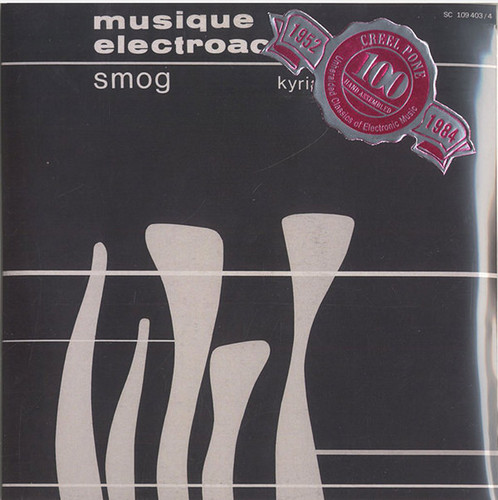
Smog, Musique Electroacoustique
Despite the all-time top-ten C.P. GOAT title "Greek Electronic Music-1" & it's counterpart "Works of Electronic Music", the series has seen precious little Greek Early Electronic Music. Attempts to secure copies of key Nikiforos Rotas, Nikos Mamagakis, & Dragatakis Koutouki sides have been futile for some time, until one of the key C.P. cabal struck gold in the form of this epic double-LP Tape Music suite by Greek Composer Kyriakos Sfetsas, released alongside the two Roland Hollinger LPs on the …
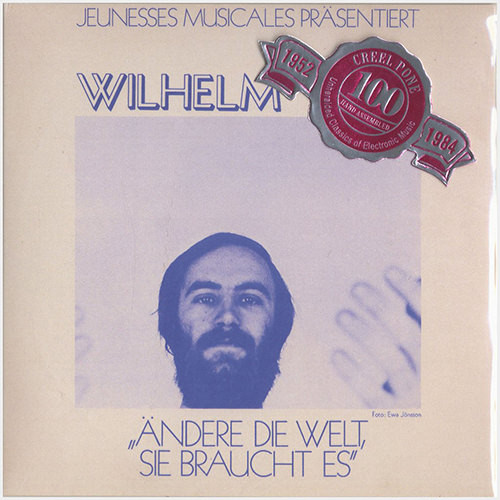
Ändere Die Welt, Sie Braucht Es
It’s raining “Musikalische Jugend Österreichs” titles! This collection of agit-prop tape music & raw tone-combination studies by the Austrian composer Wilhelm Zobl was recorded (with Eugeniusz Rudnik’s invaluable aid) at Studio Eksperymentalne & Vienna’s Institut Für Elektroakustik der Musikhoschule Wien in 1973 & 1971 (respectively) & remains (other than an appearance on a super-weird 1985 collection entitled “Antithesis” - where he appears alongside “Works of Electronic Music” alum Thanos Mikr…
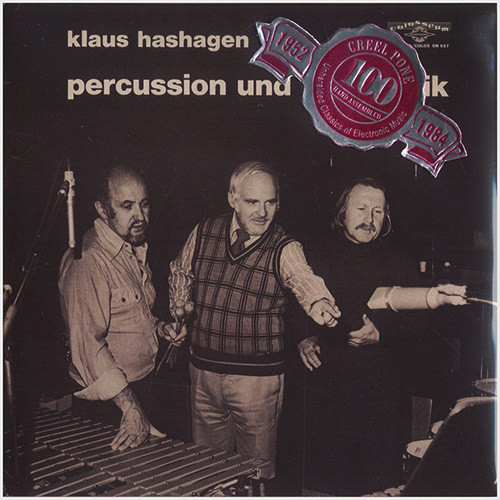
Percussion und Elektronik
Quite hard-to-find - I've had the original on my personal wantlist for ages - set of "Percussion und Elektronik" works from German Composer Klaus Hashagen, notable for being the only non-Roland Kayn Electronic title on Colosseum - the label that issued the latter's run of mammoth LP boxes.On the surface a square, Academic "Drumsploitation" number, this is in fact a beast of pointillist Live-Electronics; the A-side's opening number "Percussion VI - musik für tonband (1959-1973)" offers a fine moo…
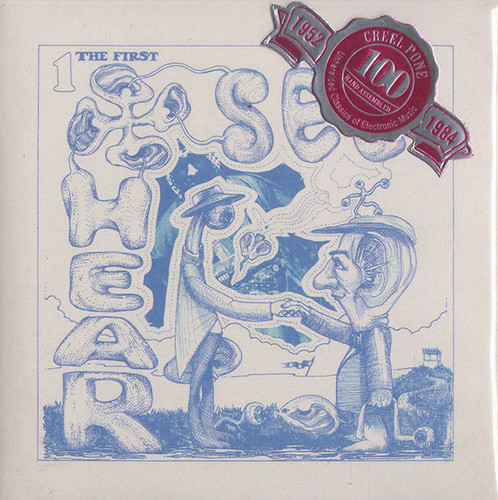
The First See + Hear, Oh See Can You Say
Amazingly well-timed compendium of See/Hear 1 & 2, both released exactly 49 years ago this month (well, going on 50 actually, in September 1968; this one's been in the works for a few months, mainly due to the insanely effort-oriented reproduction of all of the printed ephemera present in the inner pocket of "The First See + Hear" - all recreated here in perfect 5/12 scale in the form of ten separate inserts grouped into four "folios") &, other than Bill Bissett & Th Mandan Massacre's canonic "A…
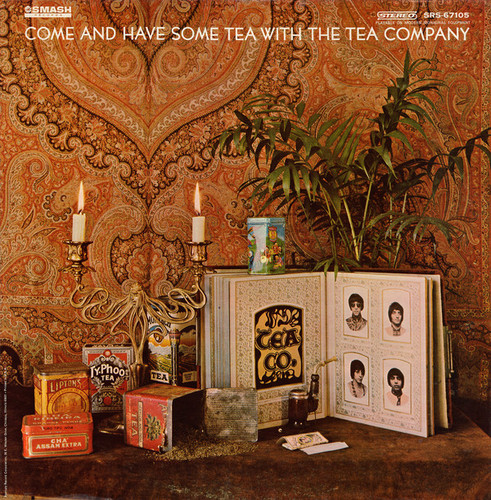
Come And Have Some Tea With The Tea Company
Repress. From New York City, The Tea Company was one of the early birds from the US psychedelic underground scene, with an LP on the market, originally released on Smash Records, in '68. This album stands for the evolution of the 45 rpm psych-garage bands to the upcoming LP-generation with extended improvisation parts. Tea Company evolved from the Naturals, which were founded in 1963 and played the big ballroom supporting Mamas and the Papas, The Lovin Spoonful, Bob Dylan, Ritchie Havens, and ma…
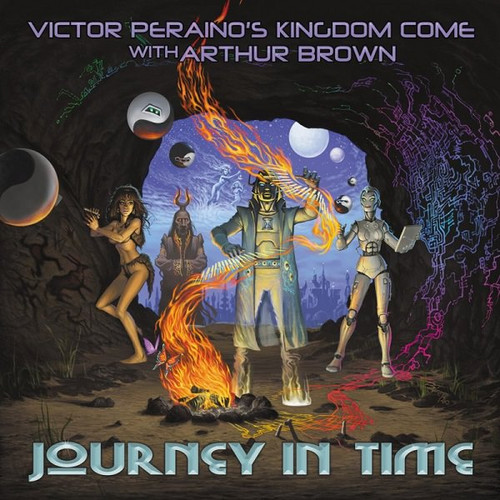
Journey In Time
Victor Peraino was the final keyboardist in Arthur Brown's great, unusual, drummerless band Kingdom Come. When that band fell apart, Victor took the name for his new band and the band put out one hopelessly rare album in the 70s which was recently reissued.Now, Victor is back, Kingdom Come is back and Arthur Brown is back and it's a excellent comeback album for both of them. There's some new material and some re-workings of old material and Victor plays a ton of his old, analog keyboards, which …
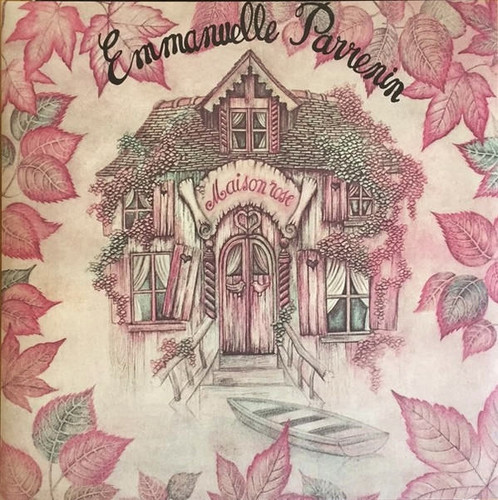
Maison Rose
We begin by saying that this is an album unlike any other. A bold statement, perhaps. Yet look in the Scented Gardens of the Mind book and you will see this description: "a revelation of a folk album, with songs of incredible beauty and innovative arrangements. It features traditional instruments you've hardly ever heard before and touches of the avant-garde. Play this album directly after that of another randomly chosen female folk album, and you will notice the difference! This is one of the b…
Chaos Primaire
Unreleased first Album recorded in 1982 in the serie Archives des musiques industrielles de France. A.I.Z. stands for Atrophisme Interne Z, and it was a very obscure French industrial band connected with Die Form or Pacific 231.This music remind some electronic material of Throbbing Gristle, and it's absolutely killer!
Plasmoglitch
Machinistic processings by Le Syndicat and Pharmakustik, recorded between 2008 and 2014 in France at the Noisecraft Workshop and in Germany at Pharmakustik studio. The original concept for these recordings was developed by Pharmakustik in 2008. The final mix and arrangements were done by Le Syndicat in 2014. This project was dedicated to the gourmets of acoustic scramjets, rotational speed, sensoric rhythmofractures and metallurgical decompostition.
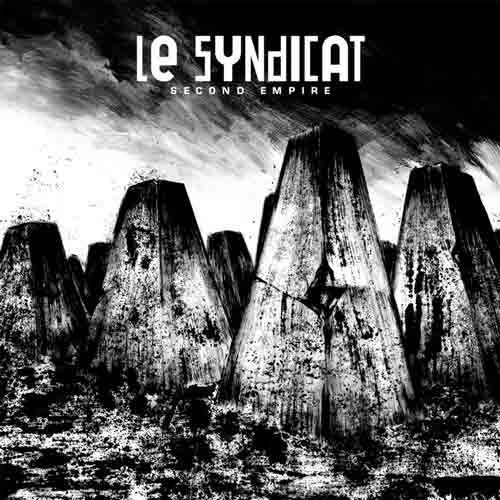
Second Empire
Limited and numbered edition of 300 copies on black vinyl in a deluxe silver cover. Bruitism, Empirism, Explosion, Process, Labor, Loss, Fracture, Abstraction, to throw, to rebuilt, to leave, to doubt, to corrupt, to wrap up, to close, to forget, to macerate, to forsake, perforate, energy, pleasure, method, existence, survival, exhibition, abstraction, History, Terror, Resistance, Construction, Progression, Music, Second Empire
Invisible Threads
Mark Van Hoen on Invisible Threads: "In mid-2016 I did a brief tour of the west coast with Philip Jeck, Simon Scott, Daniel Mensche, Lee Bannon, Kara-Lis Coverdale, Pye Corner Audio, and Marcus Fischer. The music of all these great artists and the experience of playing these shows with them all informed what would become Invisible Threads which was primarily composed and recorded in the latter half of 2016. I had not played live at dates in such a dense cluster for many years, and the exposure t…
Beton-studie / Zeitmass Fur Funf Holzblaser
A collection of some of Karlheinz Stockhausen's earliest work, including his earliest piece of musique concrète "Beton-Studie" (aka "Étude") written by Stockhausen in 1952-53 at Pierre Schaeffer's studio at the RTF in Paris. Until 1992 this piece was believed to have been lost. The LP also includes the celebrated "Zeitmass" (1955), and "Klavierstück XI, parts I-IV" (1956), both of which helped to cement Stockhausen's role as one of the leading German composers of the 20th century
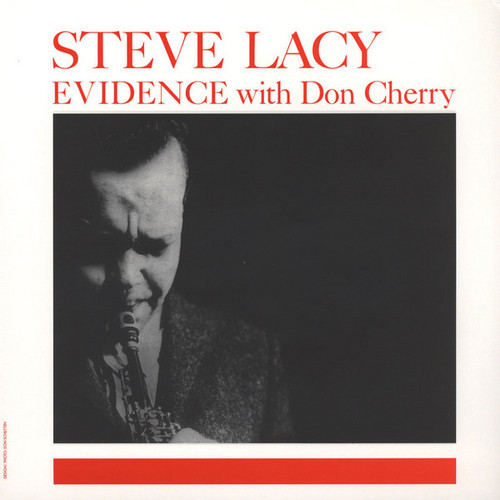
Evidence
Soprano saxophonist Steve Lacy continued his early exploration of Thelonious Monk’s compositions on this 1961’s Evidence Lacy worked extensively with Monk, absorbing the pianist’s intricate music and adding his individualist soprano saxophone mark to it. On this date, he employs the equally impressive Don Cherry on trumpet, who was playing with the Ornette Coleman quartet at the time, drummer Billy Higgins, who played with both Coleman and Monk, and bassist Carl Brown. Cherry proved capable of p…
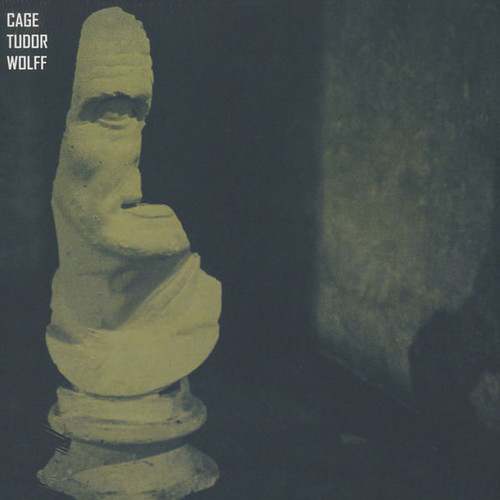
San Francisco Museum Of Art, January 16th, 1965
Recorded live by KPFA Radio in the halls of the sculpture court of the San Francisco Museum of Art on January 16, 1965, the day of 39th birthday of fellow pianist and longtime associate David Tudor, this historic concert with John Cage opens with a duet for Cymbal with contact microphones agitated by a wide gamut of objects and concludes with Variations IV in which loudspeakers outside the performance space interacted with speakers next to the audience. First release on vinyl for a very importan…
Embedded Environments
**In Stock** Through a remarkable and singular body of work, over the course of the last decade, like storm beginning as whisper on the horizon, the composer and percussionist Sarah Hennies has slowly emerged as one of the definitive voices of her generation. Initially coming to focus as a member of Austin’s experimental music scene during the early 2000’s, before relocating to upstate New York, with a delicate, clattering grace, she has continuously offered vision, conceptual armature, crucial …
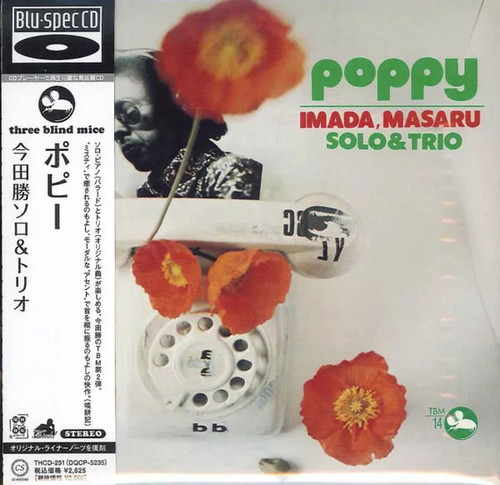
Poppy
Poppy was pianist Masaru Imada's second album for the Three Blind Mice label. Imada brought the idea of playing slow ballads by himself to the TBM producer Takeshi Fujii, who greenlit the project but requested Imada to perform his original compositions with his current trio. The result was this album. Side A consists of four solo piano performances of jazz standards, and the trio takes on Imada's three originals on Side B.Produced by Takeshi Fujii. Recorded at Aoi Studio in Tokyo on January 25 a…
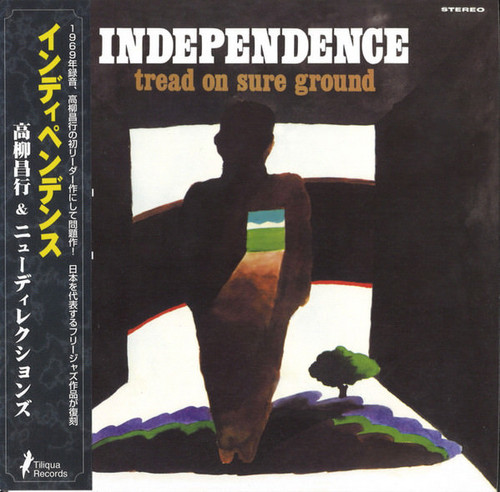
Independence: Tread On Sure Ground
**2008 release, long out of print, very few copies available** New release in Tiliqua Records ongoing Archival Series is this quintessential album by Takayanagi Masayuki. It was his debut recording as a leader with his newly erected unit The New Directions, a trio consisting out of bassist Yoshizawa and drummer Toyozumi "Sabu" Yoshisaburo. Recorded at the Teichiku Kaikan studios on 18 September 1969 (released in 1970), "Independence – Tread on Sure Ground," is largely regarded as the first true …