Music from Germany
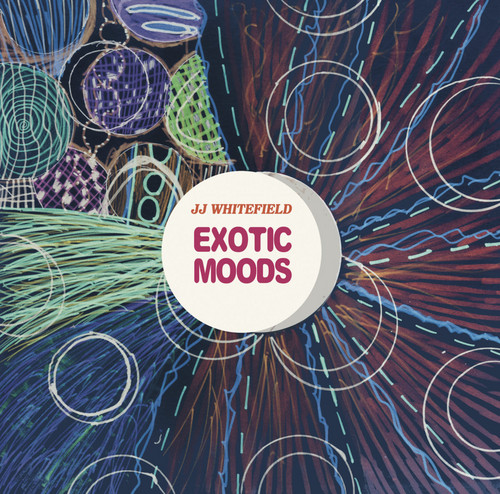
Exotic Moods
JJ Whitefield dives deep into the golden era of library music, drawing inspiration from KPM, De Wolfe, Bruton Music, CAM and the composers who shaped the genre. Slow Moods presents 14 original instrumentals packed with atmospheric grooves, exotic touches and meticulously layered overdubs. East Asian and East African influences meet locked-in rhythms and sharp arrangements.

Pop
"Pop, the album that has become widely recognized as the defining moment in which Wolfgang Voigt brought us into a clearing of his deep, psychedelic forest. A landmark release in the GAS odyssey that drew international attention, Pop was originally released in 2000 on the iconic Frankfurt imprint Mille Plateaux. Pop was heralded by Pitchfork at the time of release as being “an exercise in sonic texture… pure sonic velvet, the layered drone radiating a palpable warmth.”"Pop blossoms to life in on…

In Moll
*300 copies limited edition* Twenty-five years after its original release, Markus Guentner's debut album In Moll returns in a special anniversary reissue on Black Knoll Editions, reaffirming its place as one of the defining ambient recordings of the early 21st century.
Released in 2001 during the formative years of Kompakt's influential Pop Ambient series, In Moll emerged from a period of rapid transformation in electronic music. New technologies, expanding digital networks, and shifting creativ…
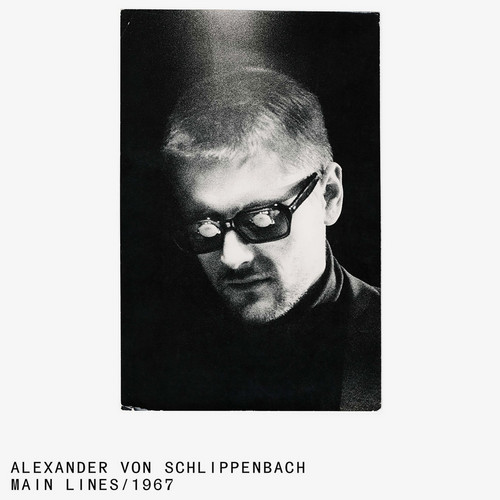
Main Lines / 1967
In September, 1967, three of the primary ensembles of free music in Northern Europe gathered for a mini-festival on Radio Bremen: the Manfred Schoof Quintet, the Peter Brötzmann Quartet, and the Irène Schweizer Trio. Pianist Alexander von Schlippenbach appeared as part of the Manfred Schoof Quintet, but in these sets, which mixed the dozen members of the ensembles, as well as presenting them on their own, Schlippenbach in fact either led or was at the center of several groupings, presenting two …
Error
2006 release (storage wear) ** Oversize booklet cover. The history of our music is arguably defined by a tendency to push things to the extreme—by the ability to transform what might once have been dismissed as mere flaws into genuine new qualities. These are the very qualities that a whole host of copycats usually latch onto, often to the point of suffocation. Let me reassure you right away: Monno are not among the copycats. Their music is saturated—in the truest "noise" sense of the word. Nois…
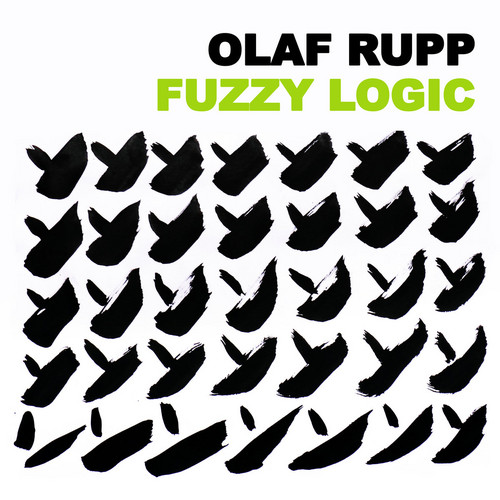
Fuzzy Logic
German guitarist Olaf Rupp combines elements of traditional flamenco (rasgueados, arpeggios, picados) with the fractured cadences of Derek Bailey, fusing them together with a blast-furnace tone recalling John Lee Hooker's most blown-out extremes. And yet, despite decades of concerts and releases on FMP and Emanem, often with marquee-grabbing collaborators like John Zorn, Peter Brötzmann, Butch Morris, Paul Lovens and Lol Coxhill, Rupp's music is largely unknown outside of European free improvisa…

Saat
Recording in a good studio in 1972 with an accomplished engineer/musician such as Dieter Dierks (Ash Ra Tempel, Cosmic Jokers, Tangerine Dream, and yes, the Scorpions), certainly enabled Emtidi to expand their musical style on 'Saat.' The end result was a shimmering, lush cosmic folk trip, with multi-tracked and treated acoustic guitars plus electric piano, fragile angelic femme vocals, vibes, and mellotron, (punctuated by the occasional acid guitar solo). Yes, 'Saat' is an elevated cosmic folk …

Consequenz III
On Consequenz III, Conrad Schnitzler and Wolf Sequenza (Wolfgang Seidel) drive their most “pop‑adjacent” collaboration to a razor’s edge. Eleven short rhythmic études balance strict, serial electronics against near‑song structures, turning drum‑tight patterns and sequenced pulses into miniature, dance‑optional experiments in post‑Berlin‑school repetition.
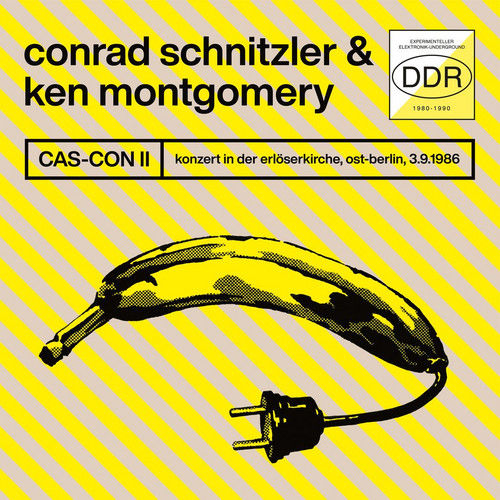
Cas-Con II
As part of our series "Experimental Electronic Underground GDR", we are very pleased to be able to make a very special recording available again. On the evening of 3.9.1986, the privately announced and illegal concert took place in the Erlöserkirche in East Berlin/GDR. Montgomery mixed Schnitzler's music live from the tapes. Jörg Thomasius recorded the performance and released the recording in 1987 on his own underground cassette label Krötenkassetten. The elaborately restored original recording…

Con-Struct
The German pioneer of electronic music Conrad Schnitzler (1937-2011) amassed a vast archive of sounds for use in combination with each other in live performances. In 2011 the idea came up of con-structing new compositions, not remixes, from this material. The Con-Struct series was born. This release features con-structions by Baal & Mortimer who writes about it in the linernotes: It was exciting to break open existing material, peeling something out of the past and thus transgressing it and open…
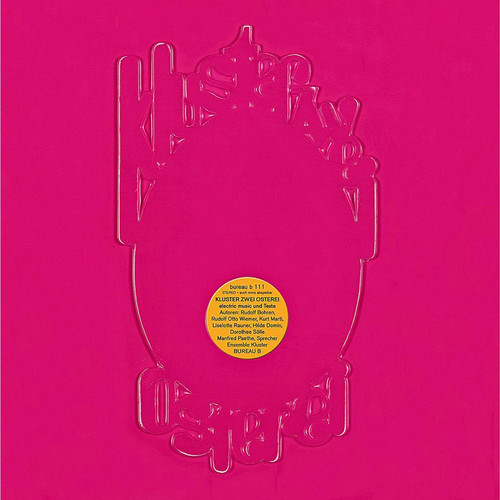
Zwei-Osterei
CD version. Zwei Osterei is the second half of a recording session which took place on a single day in November 1970. Klopfzeichen is the first part. Yet the uncompromising Zwei Osterei surpasses the earlier Klopfzeichen album by some distance in terms of its harsh noisiness and near brutal sonic attacks. Everything that was left of the revolutionary verve of the late 1960s seems to have been distilled into this music with a burning glass: aesthetic destruction to liberate the mind and ears for …

Nachtfalter
Günter Schickert's debut Samtvogel (1975) was one of the most significant guitar albums of the krautrock era. Points of comparison from today's perspective are Syd Barrett or Pink Floyd's more adventurous early recordings. Schickert's follow-up, Überfällig (1980) was released on the legendary Sky label. Once again a milestone recording, it showcased Schickert's hypnotic echo guitar which developed into one of the hallmarks of the krautrock sound. Schickert's new album Nachtfalter, translating as…
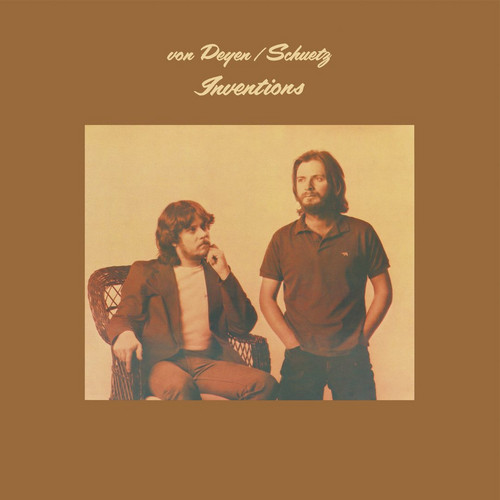
Inventions
Thumbing through the back pages of German electronic music, Bureau B uncovers another hidden gem from the Sky Records archive: 'Inventions', the 1983 collaboration between Adelbert von Deyen and Dieter Schütz. Fusing expansive kosmische textures with biting rock guitars, motorik rhythms, and the growl of '80s synth-pop, the duo conjure a sonic singularity which still sounds like the future today. Compact yet cosmic, 'Inventions' distils ambient drift and experimental edge into taut, three-minute…
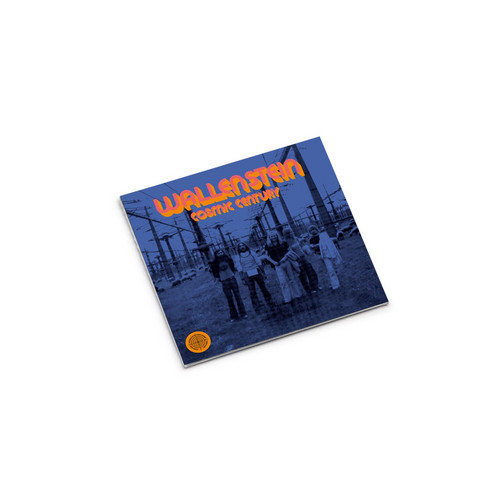
Cosmic Century
The third album from Wallenstein, originally released in 1973, stands as the band's definitive statement and one of the peak achievements of the entire Kosmische Musik movement. Led by keyboardist Jürgen Dollase and guitarist Bill Barone, the group had evolved from their earlier heavy progressive sound into something far more expansive and cosmic in scope.
Cosmic Century is exactly what its title promises - a journey through infinite space rendered in swirling synthesizers, celestial guitar work…
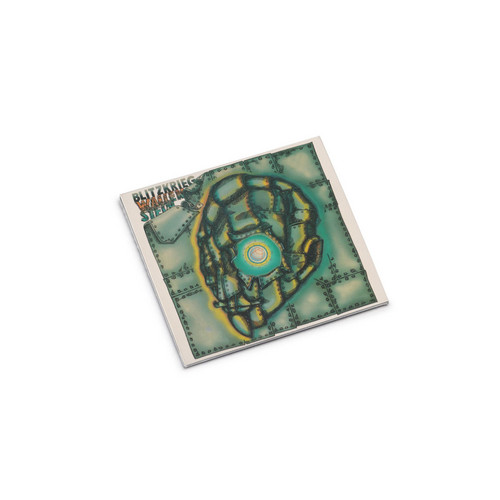
Blitzkrieg
One of Germany's longer lasting bands had first started as Blitzkrieg (until they found out a British band used the name as well) and changed their name to Wallenstein and kept their former name for the album, gracing it with a war-themed gatefold cover. Produced by the unavoidable Dieter Dierks and released on the ultra collectible Pilz label in early 72, this debut album is stunning effort that transformed the 200 MPH speed notion into music. Keyboardist Jurgen Dollasse's very international gr…
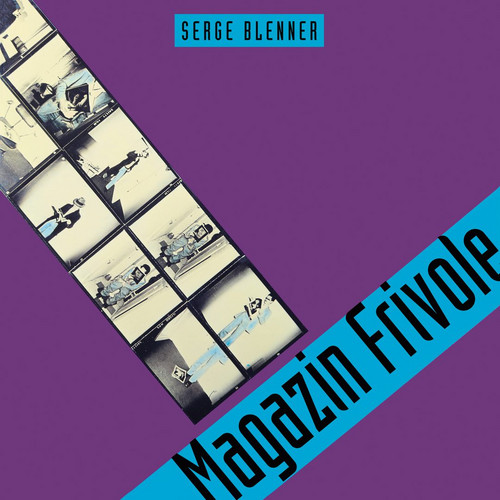
Magazin Frivole
On Magazin Frivole, Serge Blenner pushes his cold, concise analogue synth instrumentals toward a subtly pop‑inflected edge. Dark harmonies and clipped electronic patterns intertwine with clearer song structures, yielding an early‑80s blueprint where minimal synth severity brushes against the nascent shadows of synth‑pop.

La Vogue
On La Vogue, Serge Blenner distills early-80s anxieties into dark, monotone synthesizer miniatures. Minimal Berlin‑school pulses and crystalline melodic “phrases” sketch an electronic soundtrack to Cold War Germany, where somber patterns, pop‑tinged harmonies and stark repetition feel like signals beamed from a haunted control room.

12 Conversations
Noton is pleased to announce12 Conversations, a collaborative album by Ryuichi Sakamoto and Alva Noto to be released on 18 September 2026.

Turning Japanese: The Nakano Sun Plaza Radio Broadcast
Recorded in 1981, Turning Japanese captures Kraftwerk at the absolute height of their creative dominance, but sometime before their true induction into the household name superstar category of artists. Still representing a very forward thinking, boundary pushing and - as a result - specialist sound, this nine-track live recording feels like yesterday's tomorrow.
Opening with a stunning neo-classical synth overture, we're then taken on a journey through the mind of the man machine, an industrial …

Exotica, The Great Learning, Cybernetics III / Contrappunto Dialettico Alla Mente
Earlier this year, Deutsche Grammophon announced and delivered one of the most exciting initiatives in recent memory: a brand-new audiophile vinyl reissue series dedicated to crucial avant-garde and experimental works from its own extensive catalog. Beginning with Luc Ferrari's Presque Rien No.1 / Société II (1970), Mauricio Kagel's Acustica (1972), and Tōru Takemitsu's Quatrain / A Flock Descends Into The Pentagonal Garden (1980), these deluxe limited editions completely blew us away, returning…