Music from Japan

Glass Torso
“Joe Fujinoki centered the compositions of his latest album Glass Torso around the idea of the fragility of the human body. Fujinoki described the narrative thread of the album as that of “holding the shape of a human body as if it might shatter like glass”. The precariousness of the body, the essence of the body as defined by Fujinoki as the torso, and the object relations between the boundaries of dialectical exercises pack themselves into his creative process. Fujinoki recorded Glass Torso ex…

Phew
Why did so many of the world’s most forward-thinking musicians gravitate toward Conny Plank’s studio at that time? Released in 1981, Phew was recorded at the legendary Conny’s Studio—home to seminal works by Kraftwerk, Neu!, D.A.F., and Brian Eno—featuring Phew, formerly of Aunt Sally.
The album brings together Can members Holger Czukay and Jaki Liebezeit, whose contributions, combined with Plank’s masterful engineering and Czukay’s innovative editing techniques, result in a strikingly original …

The Alternative Counter Organization
Taco weaponise the very idea of “tako” - octopus, kite, bunion, drunk, bald head - into a mutating post‑punk organism, a rotating guerrilla cell whose songs behave like incidents rather than compositions.

Revolutionary Pekinese Opera
On Revolutionary Pekinese Opera, Ground Zero - under the ferociously precise direction of Otomo Yoshihide - detonates a cut‑and‑splice orchestra where free improv, noise, opera and plunderphonics collide with undimmed urgency.

Naïve
All music composed and produced by Takahiro MukaiMastered by minereedCover Art by chereshenkaa

Double Beat Sequencer Vol.2
Double Beat Sequencer Vol.2 continues Merzbow’s deep dive into a particularly vicious corner of his archive: mid‑2010s sessions built around a relentless “double beat” framework, then buried under signature torrents of noise. Where Vol.1 sketched the template - rigid sequencer patterns hammered into shape and then abused - this instalment feels even more single‑minded. A handful of cycling pulses become the spine for entire pieces, driven by a strict, mechanical insistence that Masami Akita trea…

Double Beat Sequencer Vol.1
Double Beat Sequencer Vol.1 finds Merzbow threading a hard, skeletal pulse through the heart of his noise, treating rhythm less as a scaffold for genre than as another engine of excess. Across these tracks, fixed and cycling beats - the “double” sequences of the title - form blunt, looping structures that Masami Akita subjects to his typical barrage of distortion, feedback, metallic scree and feral electronics. The result is not noise suddenly tamed, but rhythm subjected to the same merciless tr…

Daguri
On Daguri, Kosuke Mine Quintet channel early‑70s Coltrane fire into a distinctly Japanese voice, fusing spiritual intensity, modal lyricism and subtle exotic color into a taut, forward‑rushing statement that stands among Mine’s finest recordings.

Majel's Slumber
Kenichiro Isoda, known for his work on "Oscilation Circuit - Serie Reflexion 1", has selected some of his best tracks from the Apollon label's 90's masterpieces and re-recorded them with a modern approach to create a superb Japanese ambient/new age album!
In addition to his own performance, he added the performance of saxophone master Masashi Oshiro, as well as his own field recordings of natural sounds. The result is a collection of four supreme compositions, each with a texture that melts gent…
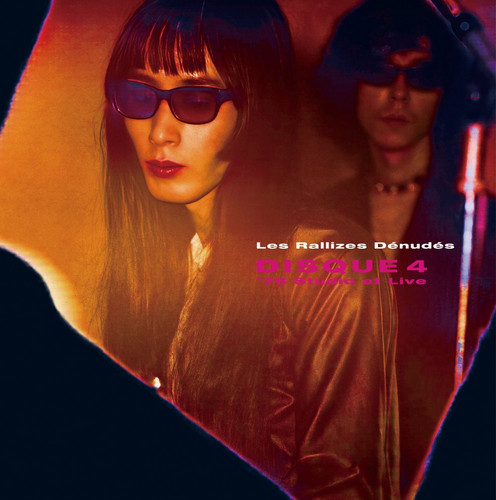
Disque 4 (’76 Studio et Live)
Les Rallizes Dénudés returns with Disque 4 -’76 Studio et Live-, the latest in the ongoing series of official archival releases from the celebrated Japanese underground band.
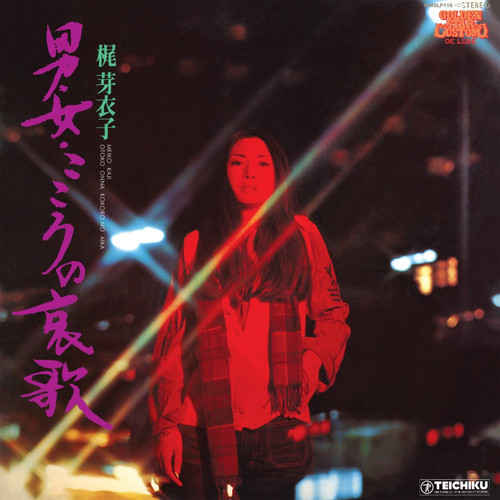
Otoko Onna Kokoro No Aika
Wewantsounds is delighted to continue its extensive reissue program of Meiko Kaji's early discography, originally released by Teichiku Records in Japan between 1972 and 1974. The Quentin Tarantino muse—famous for her starring roles in Lady Snowblood and Stray Cat Rock—was also a gifted singer. Otoko Onna Kokoro No Aika is another collection of superb cinematic songs featuring Kaji's signature mix of Japanese Pop and Groove, backed by lush, atmospheric orchestrations. This includes her rendition …

Harumi
Somewhere between 1967 and 1968, at the very nerve of the psychedelic era, Japanese singer and composer Harumi recorded in New York an album that today sounds like a lost manifesto of cosmopolitan psychedelic pop. Harumi is a rare example of delicate, almost fragile psychedelia - where Eastern melodic sensibility meets soft American folk-rock and the studio imagination of the late 1960s. Recorded with New York musicians, the album moves between dream-pop long before the term existed, baroque pop…

Kokkyou Junreika
Tokyo playwright, director and artist J.A. Caesar sprang to prominence in the early '70s largely through his work with Shuji Terayama's Tenjo Sajiki Theatre, specializing in vaguely sinister music reminiscent of a Hammer House Of Horrors soundtrack. 1973's Kokkyou Junreika release, often considered Caesar's finest work, was culled from the 5 hours of music written for the original play, distilled down to an album's worth of ageless chants, Buddhist mantras, heavenly invocations and fuzztone guit…

Poulaine
When you’re creating something loosely referred to as “art” with another person, you’re mining the depths of minds and experience, searching connections with pasts, each of us producing from a different place. Communication exists as unspoken and simultaneous, more carnal than collaborative, and dwelling rather than saying. We all miss that, wrapped up fantasies of perfectness and lovesick doves. Youth, how fleeting and naive. "Created by commission for the University of California at Irvine as …

TripleAkuma
TripleAkuma is the third in a series of essential live documents from Merzbow. The stage and the studio are not the same place, and Merzbow has an acute understanding of this juxtaposition. Whilst the sheer density of the music might be maintained across both spheres, the live experience of Merzbow is truly something that exists as profoundly physical and moreover, overtly performative.
Merzbow’s live methodologies draw not just from a saturation of frequency at all levels, but a recognition of …

Soundsphere
Akio Suzuki has always been an artist in search of unexpected sound, and curiosity has been his guiding principle. Whether that be curiosity for objects, spaces or places, his work has been guided by a porousness and pliability which has allowed him to explore an enormous sonic terrain. This freedom has also allowed him to develop a language in sound that remains utterly his own. Nowhere is this more evident than in his approach to instrument creation. During the 1970s Akio Suzuki devised a seri…

Live Blood
Formed in Japan after the collapse of the noisy, SPK-ish White Hospital — the other half of which, Jun Konagaya, went on to continue as Grim — Vasilisk consisted of Tomo Kuwabara and Yukio Nagoshi, with other members (including longtime fixture of the Japanese underground, drummer Tatsuya Yoshida) joining in from time to time.
Live Blood was compiled from two live sessions held in Tokyo in 1992 and 1993, music is like a looser version of the explorations into African tribal music manifested by a…

Holocaust
Re-issue of industrial music's 'holy grail', released back in 1984 on Eskimo Records. Not much is known about this obscure Japanese band, White Hospital are a duo, Jun Konagaya of Grim and Tomo Kuwahara of Vasilisk. In the early 80s Jun formed White Hospital together with Tomasada Kuwahara. They released one album called “Holocaust” in 1984 and a 7″ “We Wish You Are Merry X’mas”. Kuwuhara moved on to Vasilisk, while Jun released a number of solo records as Grim and one track as Howling Of Himala…

Godzilla
*2026 repress* Celebrated composer Akira Ifukube's formidable score for the legendary monster film, 'Godzilla,' continues to resonate nearly seven decades after its debut. Renowned for its groundbreaking blend of dark and evocative music, Ifukube's visionary compositions encapsulate the horror and devastation portrayed in Ishiro Honda's classic film.
As viewers immerse themselves in the unrelenting chaos unleashed by Godzilla, Ifukube’s score serves as both a powerful narrative force and an emot…

Scenery
On Scenery, Ryo Fukui turns a late‑start passion into a quietly astonishing debut: airy, confident trio swing and luminous ballads that distil a distinctly Hokkaido sense of space, light and seasonal melancholy into six perfectly breathing performances.