Music from United Kingdom


Dart drug
Jamie Muir, percussion; Derek Bailey, guitar. Carminative (08.48), I soon learned to know this flower better (07.14), Jara (07.49), Dart drug (25.50). Recorded at Crane Grove, London in August 1981. Cover photograph (reproduced above) by Jamie Muir. CD is a re-issue of the LP issue which is no longer available.
s/t
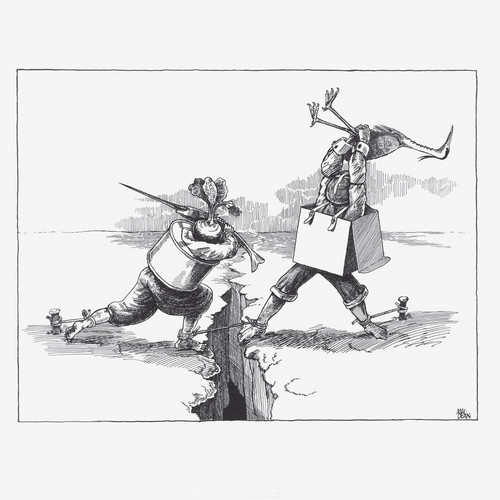
Recorded live at Verity's 1972, this CD represents possibly the finest duo performance of Derek Bailey and Han Bennink. Reissue of the rare LP on Incus

Solo guitar. Volume 2 (1991)
Recorded on the 22th june 1991 at approximately the times indicated. (Discogs)

Solo guitar. Volume 1 (1971)
Derek bailey plays electric guitar plus VCS3 synthesiser on Where is the police?; on Christiani Eddy he plays electric guitar unamplified and on The squirrel and the ricketty-racketty bridge he plays two acoustic guitars at the same time (not double-tracked). The improvisations are on electric guitar.' Recorded February 1971; equipment and recording Hugh Davies and Bob Woolford. Improvisations 4, 5, 6, and 7 and the three compositions were previously released on incus LP 2 in 1971. In 1978 the r…

Fairly early with postscripts
IMPROVISED GUITAR SOLOS also with: Anthony Brax ton flute & sopranino saxophone (on 3 & 4 only) .Kent Carter: double bass (on 9 & 10 only). John Stevens: percussion (on 9 & 10 only).
Blue Maqams
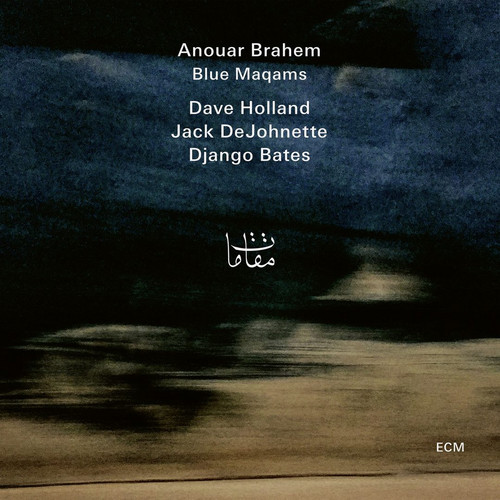
Quartet album by Tunisian oud player Anouar Brahem with Dave Holland (double bass), Jack DeJohnette (drums) and Django Bates (piano), nine Brahem compositions recorded May 2017 at Avatar Studios, New York, produced by Manfred Eicher.

Piano Music 1959-70
‘Piano Music 1959-70’ is a reissue of an album that enjoys cult status
among Cardew aficionados. The standout piece remains Volo solo (1965),
conceived originally for Tilbury as an attempt to coin a new type of
virtuosity. Cornelius Cardew expected it to be taken at a reckless tempo so that,
as he wrote, ‘the piano should seem to be breaking apart’. But the
material he gives the pianist – 60 inchoate fragments interlinked by
pauses – trips impetus up, the structure left with a hiccuping
s…

Chamber Music 1955-64
Restocked, reduced price. The works on this CD represent arguably the most experimental and radical works to come out of Britain in the past 40 years. Cornelius Cardew's scores from the early 1960's are notable for their elegant, original and precise notational scores, labyrinthine blueprints for realisation as totally new and original compositions. They are open to ever new interpretations whose possibilities are restricted only by the creativity of the performer. It is this responsibility laid…

Cornelius Cardew. A reader
A very nice book brings together a diverse collection of Cornelius Cardew's major essays and writings from different stages of his career, together with commentaries by other writers associated with his work. It reflects developments, changes and contradictions in his thinking about music from the late 1950s to the end of his life. As a companion volume to John Tilbury's biography 'Cornelius Cardew a life unfinished', Copula, 2006 (ISBN 0 9525492 3 9) it provides essential material for the study…

The First Two Gigs
An improvising quartet featuring four of the finest and most innovative musicians, who have extended the ranges of their respective instruments - piano, saxophones, harp and double bass - into new, uncharted territories. As well as having exceptional techniques, they are all virtuoso listeners, so that these first two performances as a quartet sound as if they have being working together for years. 68 minutes.
Brewster's Rooster
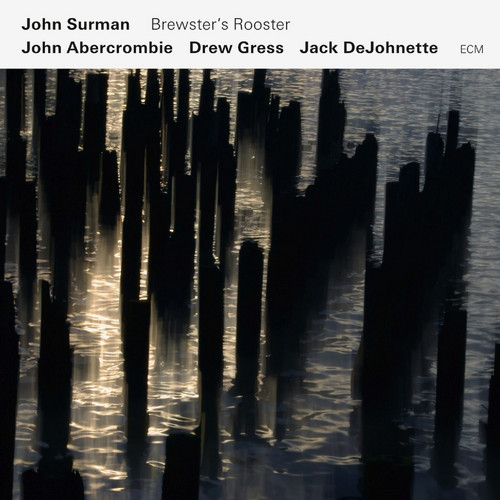
Jazz quartet album by John Surman (baritone and soprano saxophones) with John Abercrombie (guitar), Drew Gress (double bass) and Jack DeJohnette (drums). Seven Surman originals plus tunes by John Warren and Billy Strayhorn. Recorded September 2007, Avatar Studios, New York.
Rain On The Window
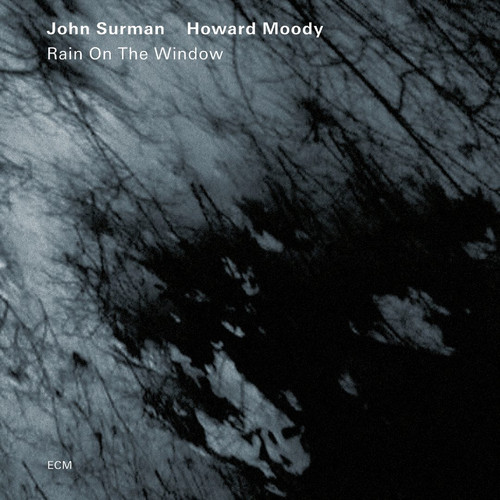
Rain on the Window (ECM 1986, 2008): duets by John Surman (baritone and soprano saxophones, bass clarinet) and organist Howard Moody, recorded January 2006 at Ullern Church, Oslo, produced by Manfred Eicher.
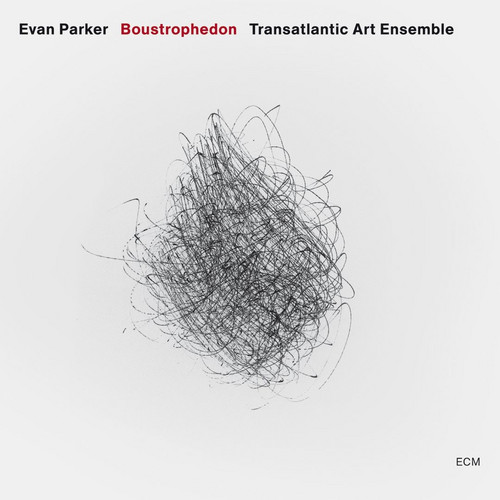
Boustrophedon
Eight-part suite composed and conducted by Evan Parker for the 14-piece Transatlantic Art Ensemble, co-founded with Roscoe Mitchell, with Craig Taborn, Barry Guy, Paul Lytton and others. Recorded live September 2004 at the Muffathalle, Munich.
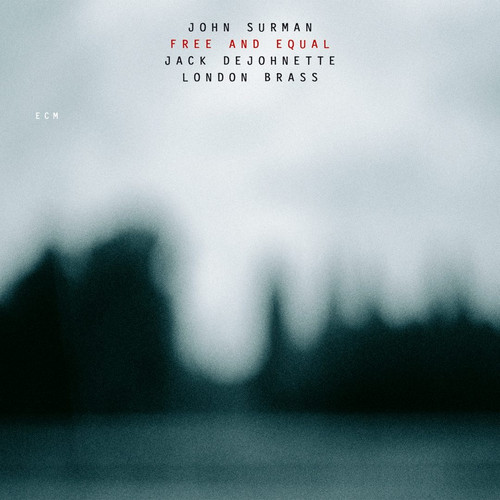
Free And Equal
Nine-part suite by John Surman (soprano and baritone saxophones, bass clarinet) with Jack DeJohnette (drums, piano) and the ten-piece London Brass, a BBC Radio 3 commission. Recorded live in June 2001 at the Queen Elizabeth Hall, London. ECM 1802, 2003.
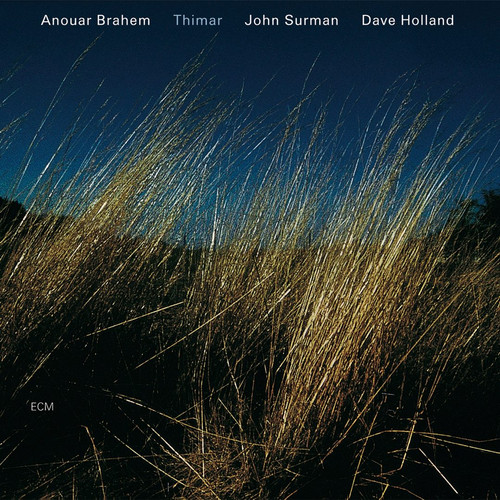
Thimar
Trio album by Anouar Brahem (oud), John Surman (soprano saxophone, bass clarinet) and Dave Holland (double bass), recorded on 13-15 March 1997 at Rainbow Studio, Oslo, produced by Manfred Eicher and released by ECM in 1998.
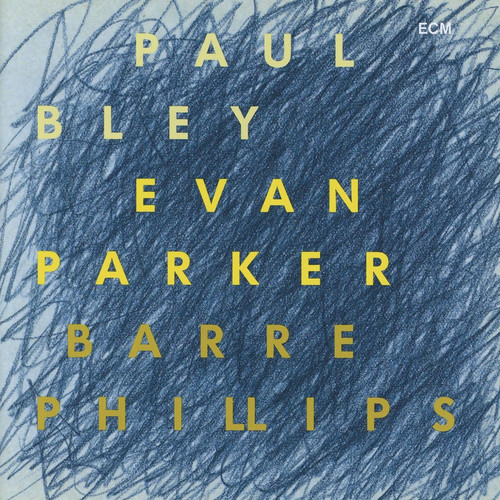
Time Will Tell
Free improvisations by Paul Bley (piano), Evan Parker (tenor and soprano saxophones) and Barre Phillips (double bass), the first recorded Bley/Parker meeting. Recorded January 1994 at Rainbow Studio, Oslo, produced by Steve Lake. ECM 1537, 1995.
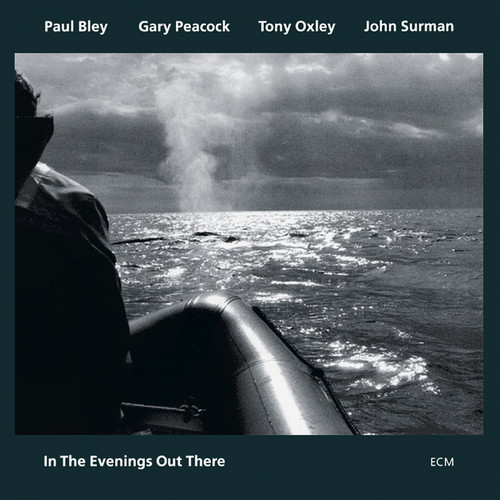
In The Evenings Out There
Free improvisation session by Paul Bley (piano), Gary Peacock (bass), Tony Oxley (drums) and John Surman (baritone saxophone, bass clarinet), recorded September 1991 at Rainbow Studio, Oslo, produced by Manfred Eicher. ECM 1488, released 1993.
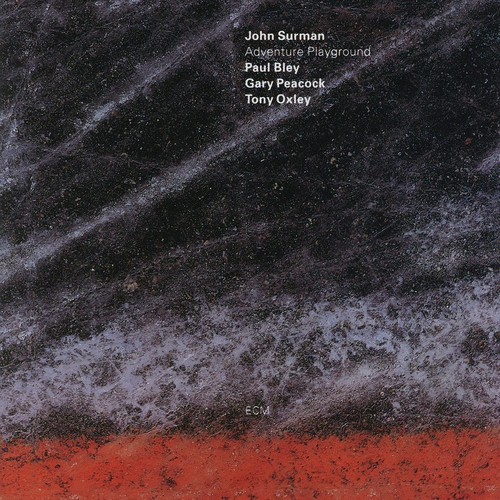
Adventure Playground
Quartet album led by John Surman (baritone and soprano saxophones, bass clarinet) with Paul Bley (piano), Gary Peacock (bass) and Tony Oxley (drums), recorded in September 1991 at Rainbow Studio, Oslo, produced by Manfred Eicher. ECM 1463, 1992.