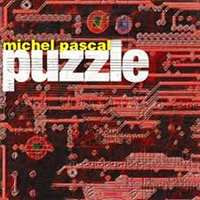
Puzzle
"Produced by Centre international de recherche musicale, Nice, France. Project involving 22 instrumentists featuring Pierre-Yves Artaud (flutes), Alexandre Ouzounoff (bassoon), Daniel Kientzy (saxophone), Vinko Globokar (trombone), Elisabeth Chojnacka (harpsichord). Puzzle 1999 (14-17) commissioned by INA-GRM." (Discogs)"An extension of the 'virtual orchestra' in which composer Pascal composes music out of gathered individual instrumental tones and lines (with the musicians never having met …
Michael von Biel
An astonishing CD with the usual RZ deluxe touch by the well-known fluxus related cellist. Michael von Biel (born 30 June 1939 in Hamburg) a German composer, cellist, and graphic artist. Von Biel studied piano, theory, and composition in Toronto (1956–57), Vienna (1958–60), New York (1960, with Morton Feldman, amongst others), London (1960, with Cornelius Cardew), and Cologne (with Karlheinz Stockhausen). From 1961 to 1963 he attended the Darmstadt Vacation Courses for New Music. In 1964 he rec…
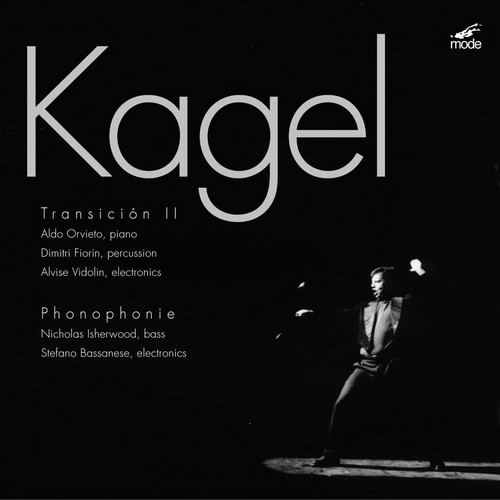
Transición II. Phonophonie
First recordings, supervised by the composer, of two early works by Mauricio Kagel: Transición II (1958-59) for piano, percussion and tapes with live electronics, and Phonophonie (1963-64), four melodramas for two voices and other sound sources.
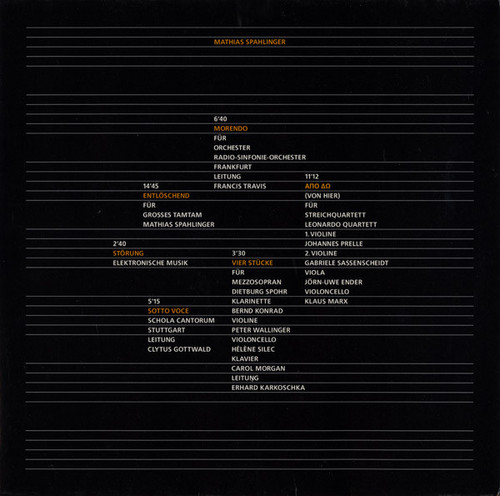
Morendo
1990 release. Six compositions by the German composer Mathias Spahlinger: ("Morendo" for orchestra), ("Yon Hier" for string quartet), ("Vier Stücke"), ("Entlöschend"), ("Storung" -- electronic music), ("Sotto Voce" -- choral work).Mathias Spahlinger is a composer. His compositions play out in the area of tension encompassing the most diverse musical influences and style directions: Spahlinger’s works portray conflicts for which there are no defined models as such, between Renaissance and jazz…
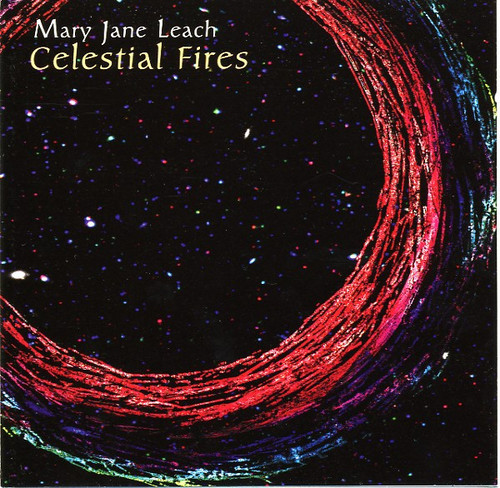
Celestial Fires
The works of Mary Jane Leach explore the physicality of sound, working very carefully with the timbres of instruments, creating combination, difference, and interference tones. Space is also an important concern: how sound changes when it is moved around a room. Celestial Fires features the New York Treble Singers, (Virginia Davidson, conductor) performing four 8-part pieces for a capella women's voices; Shannon Peet performing Feu de Joie for 7 bassoons; and Barbara Held and Ms. Leach performin…
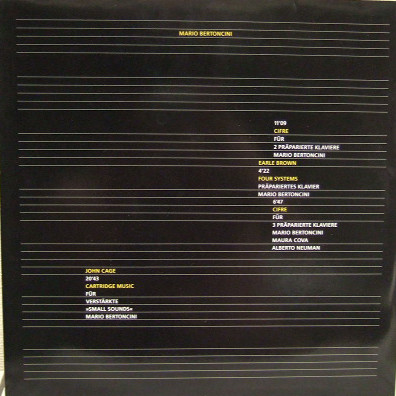
Cartridge Music, Cifre, Four Systems
Works performed and arranged by Italian composer and Nuova Consonanza member Mario Bertoncini in 1970. Includes pieces by Cage ("Cartridge Music" for amplified "small sounds"), Earl Brown ("Four Systems" for prepared piano), and Bertoncini ("Cifre" for two or more pianos).
Pianopera I & II
2004 release **
"Another joint production by Edition Wandelweiser and Radio Bremen testifies to the originality of the Japanese composer Makiko Nishikaze. Her idiosyncratic diptych pianopera l & II (2002), with its unpredictably alternating sound structures, follows no discernible logic, yet its musical structure never seems arbitrary, so that the music, despite the great aesthetic distance, certainly seems related to Luigi Archetti's CD discussed at the beginning. It is the varied penetration i…
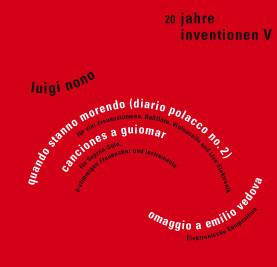
20 Jahre Inventionen V - live electronic
The live electronics that Nono worked with for the first time in the early 1980?s at the Freiburg Experimental Studio also serves the musical displacement: the music moves away from clear spatial and timbral assignations. Due to electronic processing, the sonic characteristics of both instruments, bass flute and cello, can hardly be recognized. Tones and gestures are lengthened into seeming infinity and move in space
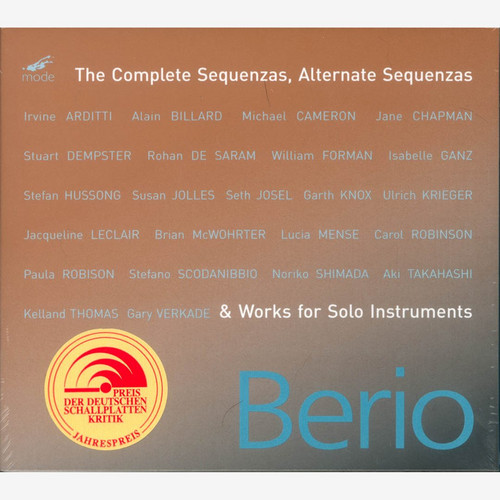
The Complete Sequenzas, Alternate Sequenzas
The first complete recording of Luciano Berio's Sequenzas for solo instruments, with the alternate versions and nine further solo works, on four CDs with verses by Edoardo Sanguineti and a 104-page book.
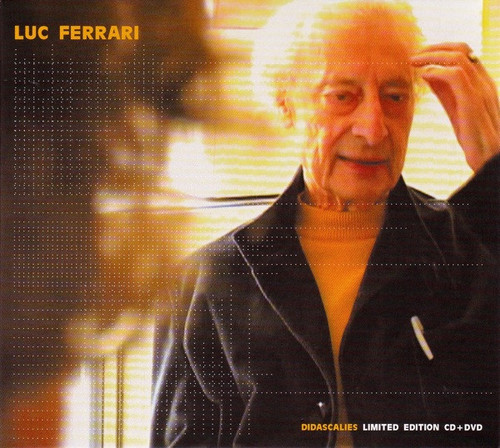
Didascalies
The idea of bringing together Rencontres fortuites, Didascalies and Tautologos III - two recent works for piano, viola and electronics, and one open-ended work - imposed itself at a concert at the Boendael Chapel in Brussels, where Collard-Neven and Royer performed Didascalies, with Ferrari attending. A few months later, we found ourselves in the legendary Brème studios, having to deal with the waiting, the Tonmeister's mood swings, and Luc, sick, having a hard time with long commutes and schedu…
Interrupteur/Tautologos 3
Luc Ferrari -- along with Pierre Schaeffer, Pierre Henry, François Bayle, and others -- is one of the pioneers of the particular style of tape music known as 'musique concrète'. More significantly, he must be counted as one of the most complexly, most idiosyncratically compelling of post-War composers. Ferrari has time and again ranged far afield of musique concrète, and Interrupteur/Tautologos 3 is one such foray into instrumental music. But what a setting-forth! Mon dieu! These particular real…
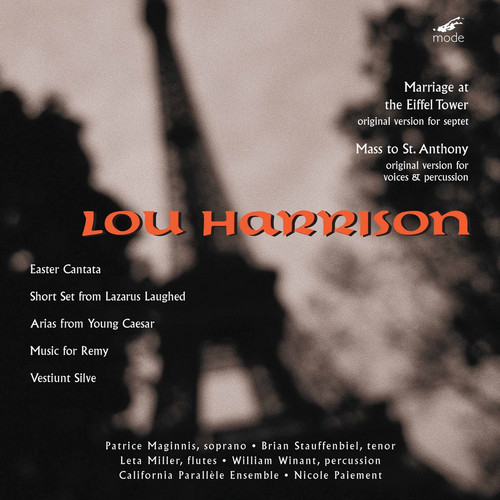
Works 1939 - 2000
Overview of Lou Harrison's work from 1939 to 2000, with first recordings including the original septet version of Marriage at the Eiffel Tower, Mass to St. Anthony, Easter Cantata, arias from Young Caesar and Music for Remy.
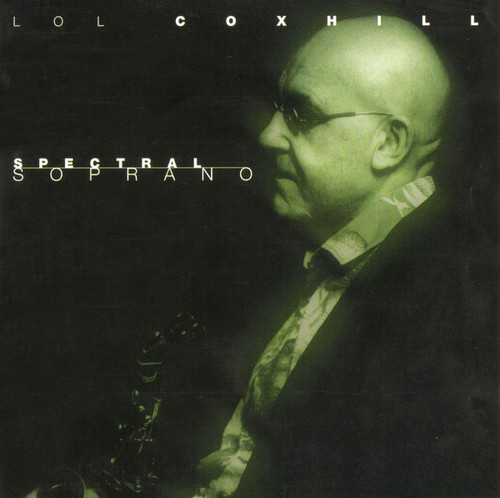
Spectral soprano
This retrospective double CD gives examples of Coxhill's early to recent work involving elements of improvisation including R & B, formally structured jazz, electronics, spontaneous music, an open rendition of an old play, and the odd bit of singing. An enormous variety of music ranging from straight-ahead jazz, to a concerto performance with the London Improvisers Orchestra, to an underwater slide saxophone solo recorded using a microphone in a condom. 135 minutes -- mostly previously unissued.
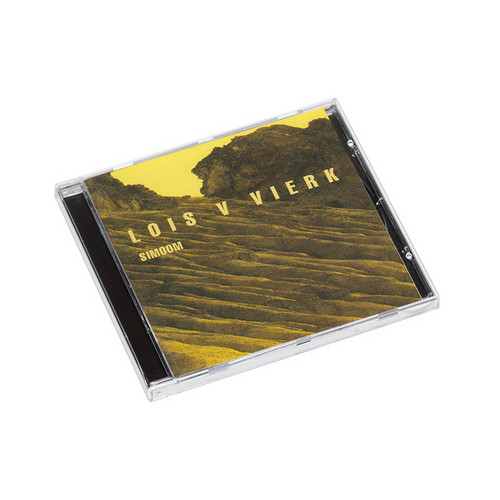
Simoom
On Simoom we hear three of Lois V. Vierk's works for "big instruments," that is, multiples of the same instrument, treated more like single entities than like groups of voices: Go Guitars for five electric guitars tuned microtonally around "E," Cirrus for six trumpets, and Simoom for eight cellos. All three works employ what Vierk describes as "Exponential Structure," which utilizes exponential relationships to control time, pitch movement and rates of change. Within this system, Vierk creates v…
Einfalt. stille.
Austrian composer in a work for flute, viola, percussion, and voice aboout the inner state and flow we perceive when listening and concentrating on a piece of music.
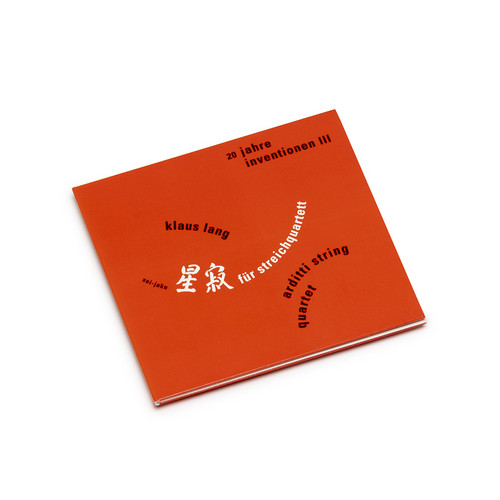
Sei-jaku für Streichquartett
Documentation '20 Years Inventionen', CD III. The string quartet 'sei-jaku' by German composer Klaus Lang, documented on this CD, was performed on 6/30/2002 in the Großer Sendesaal of the SFB Berlin by the Arditti String Quartet during the festival Inventionen 2002.
Trauermusiken
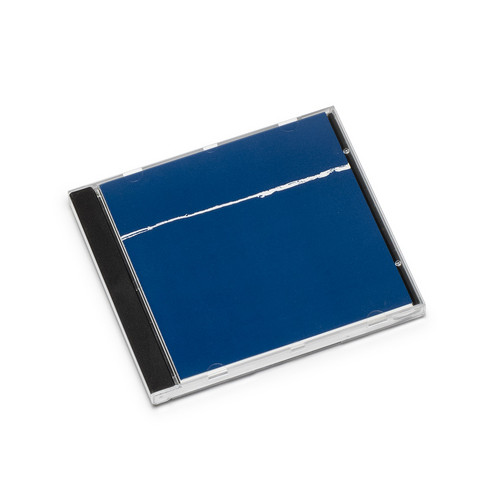
Two compositions by the young Austrian composer/organist Klaus Lang who currently lives in Berlin/Germany. Der Wind und das Meer for viola (Barbara Konrad, viola) The Sea of Despair for String Quartet (Amras Streichquartett)
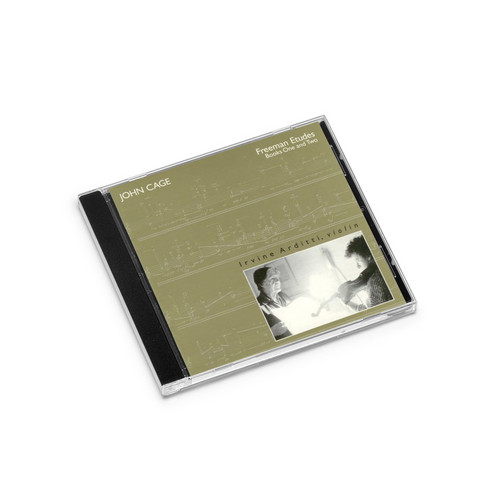
Freeman Etudes, Books One and Two
John Cage's Freeman Etudes, Books 1 and 2 (the first sixteen etudes for solo violin), played by Irvine Arditti at blistering speed under the composer's supervision.
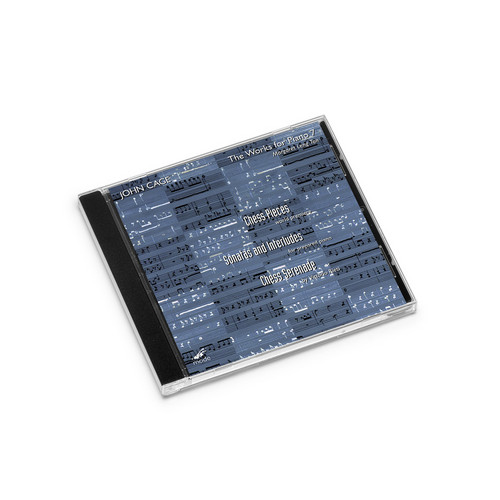
The Piano Works 7 - Chess Serenade
First recording of John Cage's Chess Pieces (1944), rediscovered in a painting and transcribed by Margaret Leng Tan, with her recording of Sonatas and Interludes and the first recording of Vittorio Rieti's Chess Serenade.
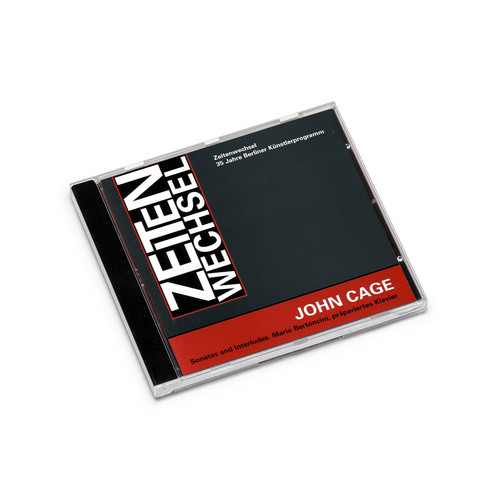
Sonatas and Interludes
This landmark recording of John Cage’s prepared piano works performed by Mario Bertoncini was recorded back in December 1991. The sonatas are divided into four groups, each divided by the less overtly structured, rhapsodic interlude pieces. Bertoncini sensitivity to the displaced sonic characteristics of the piano is remarkable and suggests a rigorous dedication to Cage’s work.