★Bureau B
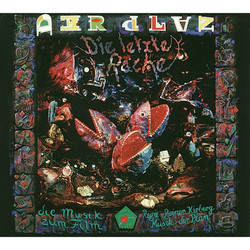
Die letzte Rache
The Ata Tak pranksters score a film. Der Plan's soundtrack to 'Die letzte Rache' is gleeful, cracked electronic pop: toy synths, absurd humour and genuine invention. The mischievous engine room of German new wave.
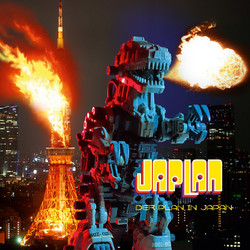
Japlan
Der Plan were invited to Tokyo in 1984 to play six concerts for Seibu, a Japanese department store chain. Seibu were staging a “German Week”. But how did they come to choose Der Plan, of all bands? Why not an Oktoberfest combo or the Scorpions? Moritz Reichelt explains: “German New Wave was really popular in Japan. They knew more about it than people here at home. Catalogues and magazines detailed every obscure record and depicted the covers. This particular department store chain was linked …
Sold Out
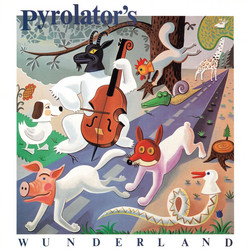
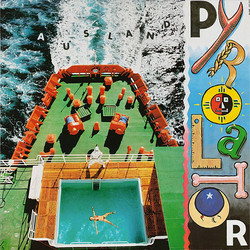
Pyrolator's Wunderland
LP version, on 180 gram vinyl. Bureau B reissues Pyrolator's Wunderland, originally released on Ata Tak in 1984. Quote 1: "I have always strived for the opposite of whatever is hip at the time." (Pyrolator in June 2013) Quote 2: "Wunderland is so beautiful -- the first time I heard this record, I cried." (Andreas Dorau). New York City, 1983. Andreas Dorau has a gig at Danceteria and Pyrolator accompanies him as sound engineer. Back then, it really looked as if Ata Tak could make a go of it in th…
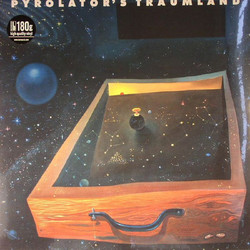
Pyrolator's Traumland
LP version, on 180 gram vinyl. Bureau B reissues Pyrolator's Wunderland, originally released on Ata Tak in 1984. Quote 1: "I have always strived for the opposite of whatever is hip at the time." (Pyrolator in June 2013) Quote 2: "Wunderland is so beautiful -- the first time I heard this record, I cried." (Andreas Dorau). New York City, 1983. Andreas Dorau has a gig at Danceteria and Pyrolator accompanies him as sound engineer. Back then, it really looked as if Ata Tak could make a go of it in th…
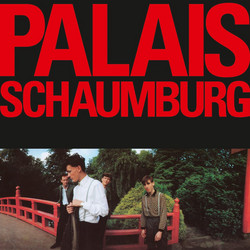
Palais Schaumburg
The influential German post-punk electronic pop band Palais Schaumburg has reunited in the classic line-up. Since its release in 1981, their debut album has remained in a league of its own: fleet-footed and peculiar, abstract and pop, amateurish and savvy, it showed real alternatives to the then-pervasive crude search for identity found in the "new German wave." The band, which consisted entirely of divergent personalities, has reunited in this formation to rediscover their common ground, …
Sold Out
Schwarz (Eruption)
Kluster was a short-lived project of three musicians/artists/performers: Dieter Moebius, Hans-Joachim Roedelius and Konrad Schnitzler. They recorded two albums in 1970, unprecedented in their experimental radicalism. Chaotic, apocalyptic (noise) improvisations, a sound later termed industrial music. Kluster disbanded as Moebius and Roedelius found the financial risk of bringing out a third album too daunting. Schnitzler decided to go ahead on his own, releasing the material they had recorded tog…
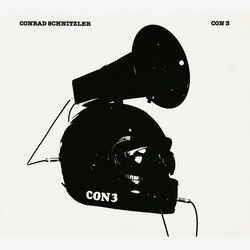
Con 3
This album saw Conrad Schnitzler head further in the direction of pop music. Like Consequenz, Con 3 (1981) is a collaborative effort with Wolfgang Seidel, alias Sequenza. Con 3 is a really odd mixture of numerous ingredients which Schnitzler was capable of combining with dexterity and taste. His musical handwriting is immediately apparent in the foreground. Effervescent electronic sequences can be heard on all nine pieces, coming from somewhere and appearing to go wherever -- this is Schnit…
Sold Out
Consequenz
Commercial Schnitzler? How quickly, how prematurely are opinions and judgements bandied about when an artist suddenly changes the form of his work. Conrad Schnitzler fell under such a cloud when, after 1978, his songs, for a time at least, did not exceed the catchy compactness of pop songs, while their harmonies and rhythms seemed to be drifting towards pop. Produced by Peter Baumann (Tangerine Dream) the Con (1978) album and the Auf dem schwarzen Kanal 12" EP (1980) ushered in this phase, …
Sold Out

Produkt der Deutsch-Amerikanischen Freundschaft
Bureau B reissues the first Deutsch-Amerikanische Freundschaft album, originally released in 1979. True D.A.F. connoisseurs will, of course, be aware of the early phase of the Düsseldorf-Wuppertal combo. But most fans of the subsequently world-famous duo may well be taken aback when confronted with their debut album: forceful synth bass sounds, snappy rhythms, Gabi Delgado and leather all conspicuously absent. In their place, pure instrumental, unstructured noise-rock, played by long-haire…
Sold Out

Normalette Surprise
Der Plan sharpen their cracked pop craft. 'Normalette Surprise' fizzes with cheap synths, tape trickery and gleeful absurdity, the Düsseldorf collective turning DIY electronics into surreal, catchy miniatures. Essential NDW.

Uberfallig
180 gram LP version. Bureau B reissues Günter Schickert's album Überfällig, originally released in 1979 on Sky Records. "No sooner had electronic music broken through in Germany, principally aligned in the two schools of Düsseldorf and Berlin, than Günter Schickert also began his first musical experiments. Although GAM, the group he founded in 1973, did not then release a record, he did issue his first solo effort, Samtvogel, a year later -- an album which was eagerly snapped up and re-rele…
Sold Out
Klopfzeichen
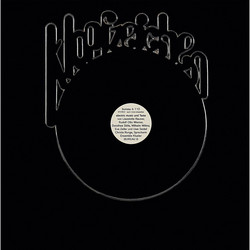
180 gram vinyl version. Imagine finding a message in a bottle, forty years after it was dispatched. That is what it feels like when you listen to Kluster's Klopfzeichen for the first time, mysterious, hard to decipher, a relic of a time long since passed. The handwriting is archaic, barely legible, the complex contents only falling into place when examined through the light of historical context. Klopfzeichen is an incredibly important release for the time in which it appeared (1971), an …
Sold Out

Zwei-Osterei
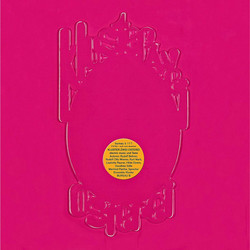
CD version. Zwei Osterei is the second half of a recording session which took place on a single day in November 1970. Klopfzeichen is the first part. Yet the uncompromising Zwei Osterei surpasses the earlier Klopfzeichen album by some distance in terms of its harsh noisiness and near brutal sonic attacks. Everything that was left of the revolutionary verve of the late 1960s seems to have been distilled into this music with a burning glass: aesthetic destruction to liberate the mind and ears for …
Sold Out

Moebius + Tietchens
With Asmus Tietchens and Dieter Moebius, two artists counting among the greats of German avant-garde electronic music have come together. Both have been active for well over 30 years: Moebius (since 1970) as a member of Kluster/Cluster and Harmonia, as well as solo and in numerous collaborations (Brian Eno, Mani Neumeier, Conny Plank, Mayo Thompson and many more), and Tietchens (since 1979) almost exclusively as a solo artist, beginning in the fields of electronic music and musique concrète…

Blau
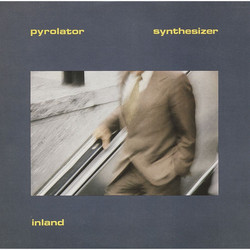
P version on 180 gram vinyl. On the Red Album Rot, Conrad Schnitzler laid down the direction his musical artistry would take. His second solo , The Blue Album Blau, originally released in 1974, offered confirmation of his intent. Maybe the "Red" and "Blue" tracks were recorded in the same session. The structure, sound and timbre of both LPs are so similar as to suggest that this was the case (an unverified assumption nevertheless!). Far more important than this historical pedantry is the fa…
Sold Out

Rot
LP version on 180 gram vinyl. There was a particular type of artist who could only have emerged in the legendary early 1970s. Few musicians fit the bill better than Conrad Schnitzler (Tangerine Dream, Kluster). Revolution, pop art and Fluxus created a climate which engendered unbridled artistic and social development. Radical utopias, excessive experimentation with drugs, ruthless (in a positive way) transgression of aesthetic frontiers were characteristic of the period. The magic words were "su…
Sold Out
Balcony Sunset / Sonnenaufgang 4:46 Uhr
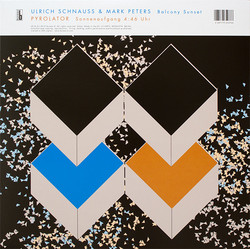
The first collaboration between Ulrich Schnauss & Mark Peters, “Underrated Silence” has been one of Bureau B’s most successful releases so far. Ulrich Schnauss (famous for his three solo albums as well as for his remix work) teamed up with Mark Peters (bass player, guitarist and singer of the British band Engineers) to create a bacchanalian instrumental combination of ambient, electronica and shoegaze sounds. “Balcony Sunset” is a track from this session that was not released on the album.
Kurt …
Lustwandel
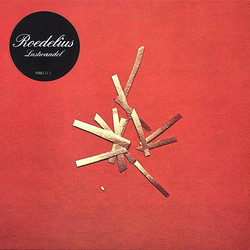
180 gram LP version. The third studio album by Hans-Joachim Roedelius, originally released by Sky Records in 1981, fulfilled a dream he had long cherished. A series of chamber music pieces, with grand piano solos taking center stage in some places, archaised percussion patterns in others. Lustwandel represents a logical progression, following on from Jardin Au Fou (re-released on Bureau B in 2009). Both albums were recorded at Paragon Studios in 1979 and produced by Peter Baumann (Tangerine Drea…
STUNDEN
A quiet meeting of minds. Roedelius and Schneider let delicate electronic and acoustic textures unfold over 'hours' of patient, meditative music: serene, spacious and gently kosmische throughout.
Wasser im Wind
'Water in the wind': Roedelius conjures flowing, weightless keyboard music of great delicacy. Melodies drift and eddy like the title, serene, warm and quietly transporting. Solo kosmische at its most graceful.
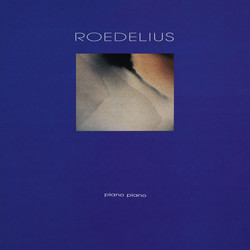
Piano Piano
Roedelius at the keyboard, alone and unguarded. 'Piano Piano' offers spare, melodic sketches of great intimacy: neoclassical in feeling, ambient in spirit. The quiet, human centre of a pioneering body of work.

Momenti Felici
'Happy moments', and it sounds it. Roedelius spins fragile, looping keyboard miniatures of great warmth and melodic grace, the gentler, sunlit side of the Cluster and Harmonia mastermind. Quietly radiant kosmische ambience.
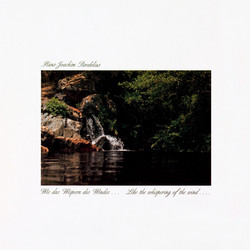
Wie Das Wispern Des Windes ... / Like The Whispering Of The Wind...
*2023 stock* If we can agree on 1969 as the year of Cluster's inception, then Roedelius needed a good 17 years to discover the aural qualities and musical beauty of the grand piano for his own compositions. Rarely has the title of a Roedelius album so poetically and yet so accurately described its content. On "Like The Whispering Of The Wind" from 1986 Roedelius expands his Études towards amorphousness, then suddenly a disarmingly familiar melody appears, from a completely different source perha…
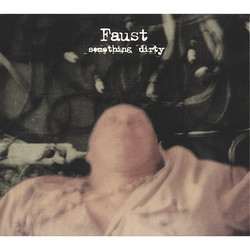
Something Dirty
Faust reactivated. 'Something Dirty' pairs founding members with new collaborators for grinding, groove-driven experiments: raw guitars, motorik pulse and studio mischief, the old subversive spirit alive and unbowed.
Geschenk des Augenblicks / Gift of the moment
LP version, on 180 gram vinyl. This is the tenth solo album by German keyboardist Hans-Joachim Roedelius, originally released in 1984 on Editions EG. On Geschenk Des Augenblicks - Gift Of The Moment, Roedelius broke away unequivocally from purely electronic music. If Lustwandel (BB 055CD/LP) and Jardin Au Fou (BB 023CD/LP) had seen the process set in motion, this was the album that completed the transition. Following the Selbstportraits, which had at least been created through the use of electr…
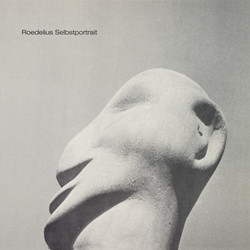
Selbstportrait
LP version on 180 gram vinyl. This is the third solo album by German keyboardist Hans-Joachim Roedelius, originally released in 1979 on Sky Records. Alongside his ongoing work with Cluster and Harmonia, Roedelius amassed an almost incalculable number of musical notations during his time in the idyllic Weser Uplands. Fleeting sketches, spontaneous improvisations, implied miniatures, rough compositions -- Roedelius recorded virtually every idea he came up with outside the studio sessions on h…
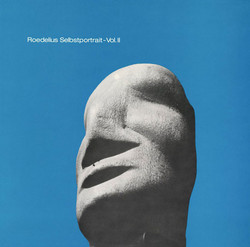
Selbstportrait - Vol. II
This is the fourth solo album by German keyboardist Hans-Joachim Roedelius, originally released in 1980 on Sky Records. With Selbstportrait, Roedelius gave unequivocal confirmation that he no longer was treading the hitherto common paths of electronic music. Selbstportrait - Vol. II corroborated the findings: for Roedelius, electronics would no longer be a means of creating abstract, noise-like music in the future, nor of generating utopian, mechanical rhythmic structures. His own utopia was …

Neuland /2
*2023 stock*The former Der Plan man and NDW legend offers more sleek experiments in mesmerizing Techno minimalism on the 2nd 'Neuland' session. A-side 'Minato Mirai' is a beautifully fluid Teutonic techno groove with a rolling, elliptical bassline and tranced-out melody while the scuttling, insectoid hi-hats balance the slickness with a bit of much needed grit. Meanwhile 'Vostok' is like a less subtle version of The Field's sophisticated Trance arrangements, stirring up some ecstatic, almost exp…
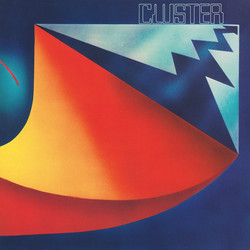
Cluster 71
The abrasive, epochal debut. Moebius and Roedelius push organ, guitar and homemade electronics through banks of effects into three untitled slabs of proto-ambient drift. Year zero for German electronic music, still startling fifty years on.
Sold Out
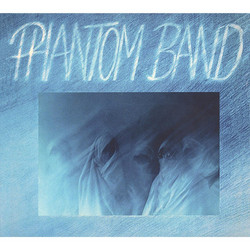
Phantom Band
The self-titled debut of Jaki Liebezeit's post-Can group. Motorik pulse meets echo, dub and electronic haze: loose, driving and deeply hypnotic. Krautrock's rhythmic genius stretching out on his own terms.
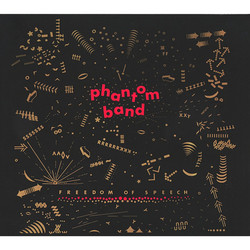
Freedom Of Speech
Can drummer Jaki Liebezeit's own vehicle. Phantom Band ride his inexhaustible groove into dubwise, hypnotic krautrock: spacious, propulsive and endlessly funky. Rhythm as pure hypnosis, from one of the great German drummers.
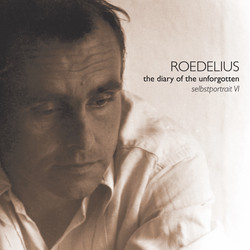
The Diary Of The Unforgotten - Selbstportrait VI
*2023 stock* A beautiful collection of recordings from 1972 to 1978, first released in 1990 (with different artwork). "Selbstportrait VI" contains compositions Roedelius did in addition to his work with Cluster, Harmonia and Brian Eno in the legendary Forst years. In the booklet Roedelius looks back on this personal and artistical important period of his life. He explains the magic of the idyllic place and its influence on his music.
The Diary Of The Unforgotten (Selbstportrait VI)
The sixth Selbstportrait, a musical diary. Roedelius revisits fragile keyboard improvisations, each a small remembered moment: intimate, melodic and deeply personal. The ongoing self-portrait of a kosmische master.